Stablecoins

Stablecoins are digital assets pegged to a stable reserve, such as the US Dollar or Gold, to minimize price volatility. Serving as the primary medium of exchange in Web3, tokens like USDT, USDC, and PYUSD facilitate global payments and DeFi liquidity. In 2026, the focus has shifted toward yield-bearing stablecoins and compliant stablecoin frameworks under global regulations like MiCA. This tag covers the intersection of traditional finance (TradFi) and crypto through stable on-chain liquidity solutions.

23232 Articles
Created: 2026/02/02 18:52
Updated: 2026/02/02 18:52
Japan’s Minna Bank Explores Use of Stablecoins on Solana Platform in Fireblocks-Led Research

Japan’s Minna Bank Explores Use of Stablecoins on Solana Platform in Fireblocks-Led Research

PANews reported on July 4 that according to Decrypt, Japan's first pure digital bank, Minna Bank, is exploring the use of stablecoins and digital wallets to support daily financial services

Author: PANews
Boshi Fund is suspected of planning stable currency business and publishing related job recruitment

Boshi Fund is suspected of planning stable currency business and publishing related job recruitment

PANews reported on July 4 that according to China Securities Journal, Bosera Funds (International) recently issued a recruitment notice for product managers in the field of virtual assets, requiring applicants

Author: PANews
Giants join forces to bet on crypto banks, and a group of Silicon Valley bigwigs are preparing to build Erebor

Giants join forces to bet on crypto banks, and a group of Silicon Valley bigwigs are preparing to build Erebor

Author: BitpushNews The collapse of Silicon Valley Bank (SVB) in 2023 brought a huge shock to the technology finance industry, and also left a service gap that urgently needs to

Author: PANews
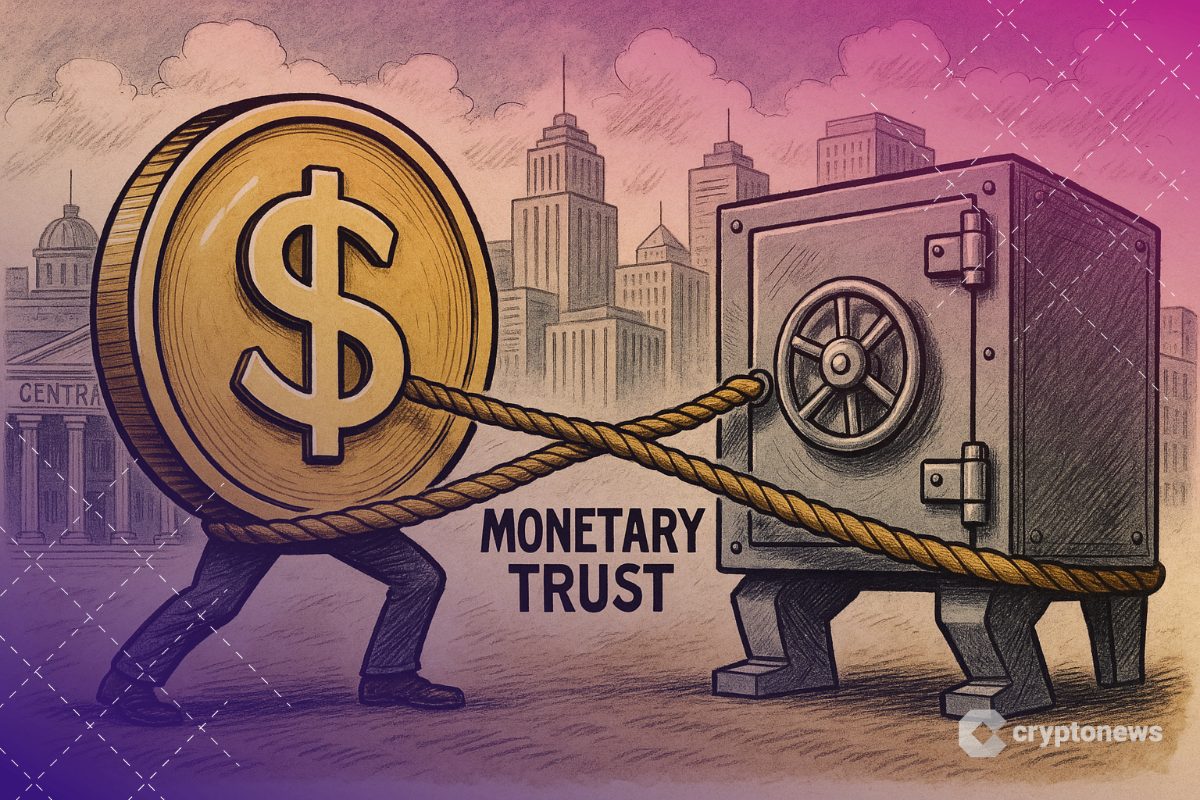
BoE Governor Warns Stablecoin Boom Could Undermine Monetary Trust – Central Banks on Alert

BoE Governor Warns Stablecoin Boom Could Undermine Monetary Trust – Central Banks on Alert

Key Takeaways: BoE Governor Andrew Bailey said the definition of a reserve currency is shifting, now centered on liquidity and safety rather than convertibility. He warned that stablecoins could weaken monetary trust if widely adopted outside regulatory frameworks. Bailey called on central banks to reassess their role amid payment innovation and cross-border liquidity risks. Bank of England Governor Andrew Bailey cautioned that emerging digital forms of money, including stablecoin, could introduce risks to the financial system if not properly regulated. According to remarks published on July 3 from Bailey’s speech at the Andrew Crockett Memorial Lecture, the concept of a “reserve currency” has evolved over time and now depends less on a fixed monetary anchor and more on the presence of secure, liquid assets such as U.S. Treasuries and the provision of contingent liquidity by central banks. Stablecoin Growth May Disrupt Financial Trust He noted that the use of reserves has shifted from backing currency convertibility to preserving financial stability in the face of capital flows. “First, at least for the large economies, it could be asked today, what is the point of official reserves?” he said. He argued that in current conditions, reserves serve to support liquidity in moments of stress, not to manage currency pegs. Bailey added that any changes in the structure of money, such as the introduction of private stablecoins, should be monitored closely for potential effects on monetary trust and the “singleness of money.” “If, for instance, stablecoins emerge as a new form of money, we have to decide how to ensure the singleness of money and therefore trust in money in this world, and what role the notion of reserve currency should play here,” he said. The Monetary Policy Committee voted by a majority of 6-3 to keep interest rates at 4.25% Find out more: https://t.co/rcGJUYFkWZ pic.twitter.com/VkO9vZyjgS — Bank of England (@bankofengland) June 19, 2025 Bailey Flags Risks to Monetary Unity He framed these developments as a challenge for central banks, especially if stablecoin gains widespread use outside regulated frameworks. Bailey said future work should focus on defining the role of reserve currencies in systems where new payment technologies may bypass traditional oversight. Bailey emphasized the adaptive nature of the reserve currency concept and the need for clarity in how these terms are applied in future monetary systems. Some regulators are warning that uncoordinated adoption of stablecoins could lead to fragmented monetary systems. Without shared rules, private tokens might circulate outside central oversight, weakening policy tools and complicating cross-border financial stability measures. Interoperability is also under review. Authorities are assessing how stablecoins can maintain consistent value while meeting legal and risk standards. This includes deciding whether such instruments should be treated as part of the official monetary system or kept in separate frameworks. Frequently Asked Questions (FAQs) What does Bailey mean by the “singleness of money”? He refers to the idea that all money used in an economy should be interchangeable at face value and backed by a common framework. Multiple forms of money without unified standards could compromise this trust. What role do central bank swap lines play in reserve currency status today? Swap lines and repo facilities provide liquidity backstops that reinforce the dollar’s reserve currency role, especially in stressed conditions, replacing gold or pegged exchange rates from earlier systems. Is there any precedent for privately issued money disrupting state monetary systems? In the 19th century, U.S. banks issued their own notes, leading to instability and prompting the creation of a national currency framework. Stablecoins raise comparable risks in a digital context. Could stablecoins be integrated into official reserves? It’s theoretically possible, but they would need to meet high standards for security, liquidity, and legal clarity. Most current stablecoins do not meet these thresholds.

Author: CryptoNews
In 2025 USD saw the worst performance since 1973. What challenges does the American dollar face these days?

In 2025 USD saw the worst performance since 1973. What challenges does the American dollar face these days?

The dollar had the worst start of the year since 1973, analysts say. Its value against other fiat currencies drops as the world’s confidence in the U.S. policies declines. What challenges does the American dollar face these days, and what…

Author: Crypto.news
In the first half of the year, stablecoins accounted for 74.6% of the total institutional OTC transactions, of which USDC trading volume increased 29 times year-on-year

In the first half of the year, stablecoins accounted for 74.6% of the total institutional OTC transactions, of which USDC trading volume increased 29 times year-on-year

PANews reported on July 3 that according to The Block, Finery Markets' latest report shows that stablecoins accounted for 74.6% of institutional OTC trading volume in the first half of

Author: PANews
Bank of England Governor Warns: Stablecoins Threaten Public Trust in Money

Bank of England Governor Warns: Stablecoins Threaten Public Trust in Money

PANews reported on July 3 that according to Bloomberg, Bank of England Governor Andrew Bailey warned that the rise of stablecoins could undermine public trust in currency as experts warned

Author: PANews
July Altcoin Outlook: Hyperliquid Eyes $100, Solana Rides ETF Wave, and Stablecoins Heat Up

July Altcoin Outlook: Hyperliquid Eyes $100, Solana Rides ETF Wave, and Stablecoins Heat Up

Key Takeaways : Hyperliquid surged 250% in three months and could hit $80 by Q3, analysts say. Solana’s staked ETF has been approved in the U.S., boosting ecosystem optimism. Raydium and Orca remain strong short-term plays as spot ETF approval odds reach 95% in 2025. Raydium ranked fifth among Solana DeFi projects in June with $6.17M revenue, while Pump.Fun stays the top earner despite falling numbers. Ethena flagged as a short-term watch due to regulatory shifts and its growing USDe stablecoin. The first month of summer has passed, with Bitcoin (BTC) holding firm at the top while the rest of the market stays quiet, waiting for a real altseason to arrive. In this monthly report, we look at the altcoins that analysts say could show the most potential in July. Table of Contents In This Article Hyperliquid Eyes $100 – Too Ambitious or Within Reach? Solana’s ETF Wave – Which Projects Could Surf It? Stablecoin Summer – Set to Sizzle or Stay Cool? Conclusion In This Article Hyperliquid Eyes $100 – Too Ambitious or Within Reach? Solana’s ETF Wave – Which Projects Could Surf It? Stablecoin Summer – Set to Sizzle or Stay Cool? Show Full Guide Conclusion Hyperliquid Eyes $100 – Too Ambitious or Within Reach? Hyperliquid (HYPE) has become one of the most talked-about new crypto projects. Its price has jumped nearly 250% over the past three months, while Bitcoin and many altcoins remain in a holding pattern. On June 16, HYPE hit its all-time high of $45.57. Eneko Knörr , CEO and co-founder of Stabolut , told Cryptonews that the altcoin may keep climbing: Hyperliquid leads with gasless perpetual trading and HyperBFT consensus. Price could reach $80 by Q3 2025. In 2025, crypto projects with real value and utility often struggle to grow, while meme coins continue to lead the market. Hyperliquid hasn’t broken this pattern entirely, but shows that non-meme projects can also rally. Its gasless perpetual trading platform has secured a strong niche . Daniil Kozin , Head of Business Development at EASY MM and CBDO , shared his view with Cryptonews : It’s predominantly organic growth, and the numbers support this. They’ve become the undisputed leader in decentralized perpetuals in record time. Solana’s ETF Wave – Which Projects Could Surf It? Eneko Knörr also noted that Solana’s (SOL) ecosystem could become more attractive soon, thanks to the first Solana staked exchange-traded fund (ETF) registered in the U.S.: Riding the ETF wave and scalability gains, key Solana tokens like RAY and ORCA remain strong short-term plays. Raydium (RAY) and Orca (ORCA) are decentralized exchanges (DEXs) on Solana with their own tokens listed across platforms. Raydium remains one of the most popular projects, especially after launching its meme coin launchpad, LaunchLab. In June, Raydium ranked fifth among Solana’s top 15 DeFi projects by revenue, earning $6.17 million. Pump.Fun continues to lead in revenue, although a recent Cryptonews study showed its numbers have dropped significantly from peak levels. Meme coins and their “infrastructure” remain some of the most profitable segments on Solana. For example, Axiom ranked second by revenue in June. It’s a wallet and platform mainly used for meme coin trading. However, with the Solana staked ETF, this picture could change. Moreover, a spot Solana ETF approval is expected this year, potentially bringing even more liquidity and institutional interest. This could help shift Solana’s reputation away from being just a meme coin blockchain and attract a new class of investors. Knörr added: Ecosystem projects drive adoption, while ETF approval odds for SOL sit at 95% in 2025. Potentially unlocking $1B+ inflows. Stablecoin Summer – Set to Sizzle or Stay Cool? Stablecoins remain one of crypto’s most promising markets . They serve as a bridge between traditional finance and crypto while also adding liquidity to DeFi. In 2024, they even surpassed Visa in transaction count. Knörr highlighted Ethena (ENA) as a short-term project to watch amid regulatory shifts. Ethena issues its own stablecoin, USDe (USDE), along with its ENA token. USDE launched in April 2024 and is already among the top five stablecoins by market cap. While it’s still far behind giants like Tether (USDT) and USDC, no project can compete with their scale for now. Ethena, however, is part of Ethereum’s (ETH) ecosystem and offers its own protocol and yield programs. Frank Combay , COO of Next Generation , told Cryptonews : More and more companies are integrating digital payment solutions into their systems, drawn by the key advantages of digital asset transactions: lowest transaction costs, near-instant processing speeds, and transparency. As a result, a growing number of market participants are engaging with blockchain projects to enhance their payment infrastructure and leverage these benefits. Conclusion July could bring strong momentum for Hyperliquid and select Solana projects, while stablecoins continue to cement their role as crypto’s backbone. But as always, liquidity flows and regulatory headlines will shape where altcoins go next.

Author: CryptoNews
JPMorgan Chase expects the stablecoin market to reach $500 billion in 2028, far below optimistic forecasts

JPMorgan Chase expects the stablecoin market to reach $500 billion in 2028, far below optimistic forecasts

PANews reported on July 3 that according to CoinDesk, JPMorgan Chase released a research report predicting that the global stablecoin market will grow to US$500 billion in 2028, far lower

Author: PANews
JD.com and Ant Group push for yuan-pegged stablecoins to challenge dollar’s digital dominance

JD.com and Ant Group push for yuan-pegged stablecoins to challenge dollar’s digital dominance

China’s leading tech giants JD.com and Ant Group are actively lobbying Chinese regulators as part of a push to counter the U.S. dollar’s growing digital dominance. Both companies have urged the People’s Bank of China to authorize the issuance of…

Author: Crypto.news