Lending

Lending protocols form the backbone of the decentralized money market, allowing users to lend or borrow digital assets without intermediaries. Using smart contracts, platforms like Aave and Morpho automate interest rates based on supply and demand while requiring over-collateralization for security. The 2026 lending landscape features advanced permissionless vaults and institutional-grade credit lines. This tag covers the evolution of capital efficiency, liquidations, and the integration of diverse collateral types, including LSTs and tokenized RWAs.

14068 Articles
Created: 2026/02/02 18:52
Updated: 2026/02/02 18:52
Best Altcoins to Invest in Today: Top Cryptos for 10-15x Returns

Best Altcoins to Invest in Today: Top Cryptos for 10-15x Returns

The post Best Altcoins to Invest in Today: Top Cryptos for 10-15x Returns  appeared on BitcoinEthereumNews.com. Investors are keeping a close eye on altcoins with strong momentum and tremendous potential. One such altcoin is Mutuum Finance (MUTM), which is making headlines as a force to reckon with among traders seeking revolutionary decentralized finance solutions. The DeFi token is at presale stage 6 at a price of $0.035. It will be up by 14.29% to $0.04 in step 7.  Investors who enter in this phase will get at least 400% returns when the token is listed. Mutuum Finance has already crossed more than $15 million and over 15700 investors. As Cardano (ADA) continues to have a regular market presence, the limelight is shifting to Mutuum Finance (MUTM) for its unique method of DeFi lending. Cardano (ADA) Price Analysis  Cardano is priced at $0.92 after a modest 1.33% climb in the last 24 hours. The altcoin is gearing up for a rally past $1 after months of consolidation. Cardano remains in the top 15 cryptos with a $31 billion market cap. Analysts predict a 10x rally that could see ADA hit $10 by 2026. However, in 2025 bigger attention is shifting to DeFi’s new crypto Mutuum Finance (MUTM)  Mutuum Finance (MUTM) Two-Tier DeFi Lending Framework Mutuum Finance (MUTM) is an innovative non-custodial decentralized DeFi protocol. The project is capable of Peer-to-Contract lending and Peer-to-Peer lending with great flexibility and efficiency of operations. Peer-to-Contract utilizes the smart contract feature to lend with minimal or no human interference. Peer-to-Peer eliminates middlemen and has lenders and borrowers directly transact and exchange with each other. The model is extremely easy to handle risky assets like meme coins. Mutuum Finance (MUTM) Presale Success Mutuum Finance (MUTM) is blazing with presale making headlines. It is currently at stage 6 at $0.035. It will also shoot up by 14.29% to $0.04 in the next phase.…

Author: BitcoinEthereumNews
Securitize says ethereum is set to lead real-world asset tokenization

Securitize says ethereum is set to lead real-world asset tokenization

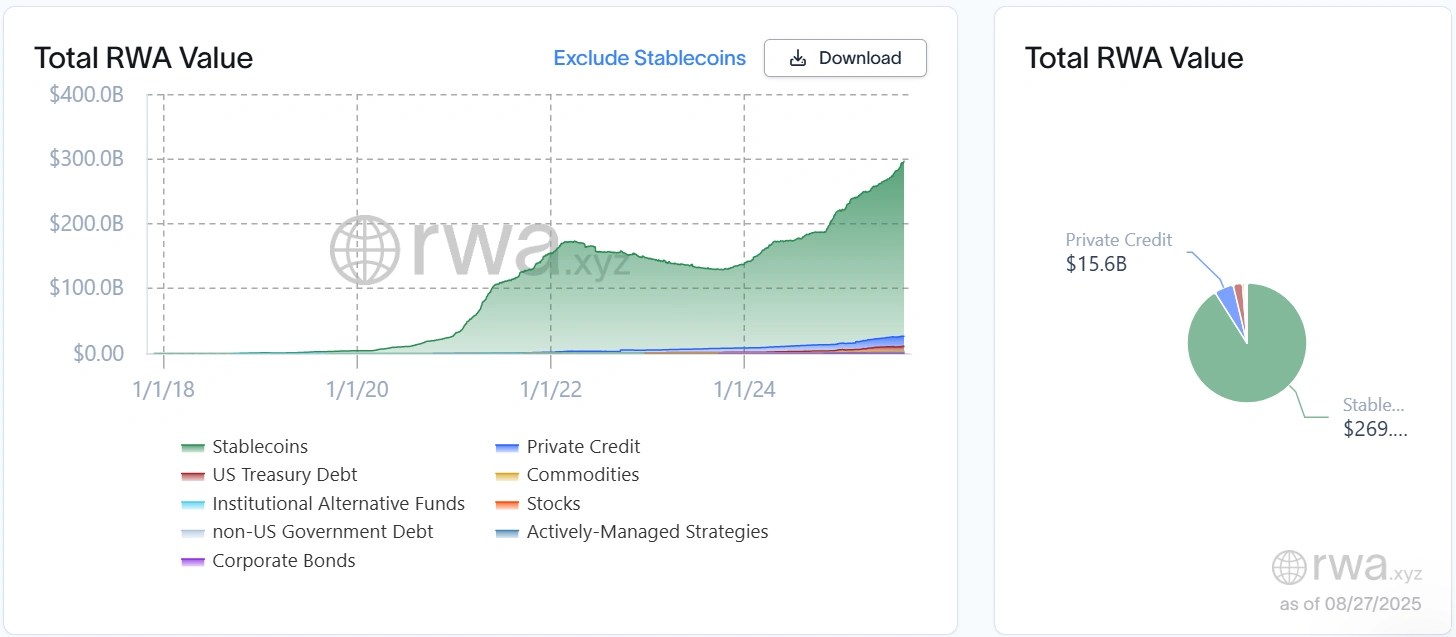
The post Securitize says ethereum is set to lead real-world asset tokenization appeared on BitcoinEthereumNews.com. Tokenization platform Securitize has predicted that Ethereum will be the future hub for real-world asset (RWA) markets, pointing to the blockchain’s dominance in institutional adoption and its potential to capture a multi-trillion-dollar opportunity. In a guest thread posted on Ethereum’s X account, Carlos Domingo, CEO and founder of Securitize, pointed out the tokenization market’s growth to a $26.5 billion sector, with Ethereum hosting $7.5 billion worth of tokenized RWAs and $5.3 billion in tokenized Treasuries, giving it a 72% market share of on-chain Treasuries. “It’s where institutions are deploying capital,” the company wrote, adding that even a 1% slice of the $20 trillion-plus RWA opportunity could unlock over $200 billion in on-chain value. Domingo described 2025 as the year “RWAs found real utility onchain,” highlighting daily dividend payouts, programmability, and faster settlement as key institutional incentives to adopt tokenization. Global market overview of the total RWA value. Source: RWA.xyz Ethereum’s grip on RWA tokenization Ethereum has emerged as the leading blockchain for tokenized RWAs by market capitalization. According to data from RWA.xyz, the network accounts for more than half of all tokenized assets, with over $7.5 billion minted on its mainnet. The share expands further when factoring in Ethereum Layer 2 networks such as Polygon, Arbitrum, Mantle, and Optimism, which together with the main chain, account for around 85% of Securitize’s tokenized assets on Ethereum’s Mainnet. Industry analysts say Ethereum’s dominance is a product of its deep liquidity pools, composability with decentralized finance (DeFi) protocols, and regulatory-ready token standards such as ERC-1400 and ERC-3643. “Ethereum offers some of the most secure, composable, and censorship-resistant foundations for tokenized financial products,” Domingo noted in the thread. Securitize backs institutional adoption to gather pace Global market overview of the total RWA value, excluding stablecoin data. Source: RWA.xyz Major asset managers are already experimenting…

Author: BitcoinEthereumNews
Jupiter Lend Launches Public Beta With $2M Incentives and 40+ Vaults

Jupiter Lend Launches Public Beta With $2M Incentives and 40+ Vaults

TLDR: Jupiter Lend launches on Solana with over 40 vaults and $2M incentives from Jup, Fluid, and partners. Borrowers can access higher LTVs with 100x lower liquidation penalties and isolated vaults. Earn vaults automate deposits for the best returns using SOL, stables, and JUP collateral. Jupiter Lend completed two audits, with three more underway and [...] The post Jupiter Lend Launches Public Beta With $2M Incentives and 40+ Vaults appeared first on Blockonomi.

Author: Blockonomi
Putting Money In XRP or Chainlink Can Double It in Q4 But XYZVerse (XYZ) Can Be Even Better Opportunity On Current Market

Putting Money In XRP or Chainlink Can Double It in Q4 But XYZVerse (XYZ) Can Be Even Better Opportunity On Current Market

Discover why investing in XRP or Chainlink could potentially double your money in Q4, and how XYZVerse (XYZ) might offer an even greater opportunity in the current crypto market landscape.

Author: Cryptodaily
UBS Issues Crucial Revised Outlook

UBS Issues Crucial Revised Outlook

The post UBS Issues Crucial Revised Outlook appeared on BitcoinEthereumNews.com. The world of Forex trading is a dynamic landscape, constantly shaped by institutional insights and economic forecasts. When major players like UBS speak, the market listens. Recently, UBS made a significant announcement regarding its EUR/NOK forecast, shifting its timeline while firmly maintaining a bearish outlook. For cryptocurrency enthusiasts who also dabble in traditional financial markets, understanding these shifts is crucial. It offers a glimpse into how macroeconomic factors influence currency valuations, providing valuable context that can even indirectly impact crypto asset perceptions and investment flows. Understanding the Latest EUR/NOK Forecast from UBS: What Has Changed? UBS, a global financial services giant, has revised its projections for the Euro against the Norwegian Krone. While the core belief in a stronger Krone remains, the expected timeline for this appreciation has been extended. Initially, market participants might have anticipated a quicker move, but the new forecast suggests a more patient approach is warranted. This isn’t a change in direction, but rather a recalibration of the speed at which that direction is expected to unfold. What does a “shift in timeline” truly mean for traders and investors? It implies that the factors supporting the Norwegian Krone’s strength might take longer to fully materialize or exert their influence. This could be due to persistent global uncertainties, slower-than-expected economic recoveries in key regions, or even the gradual nature of Norges Bank’s monetary policy adjustments. For those holding positions or planning trades based on the EUR/NOK forecast, this extension signals the need for patience and potentially longer holding periods to see the anticipated returns. Decoding UBS Currency Outlook: Why the Bearish Stance Persists Despite the timeline adjustment, UBS’s fundamental bearish stance on the EUR/NOK pair remains robust. This outlook is rooted in a comprehensive analysis of several key economic drivers that favor the Norwegian Krone. Understanding these…

Author: BitcoinEthereumNews
Dogecoin (DOGE) vs Mutuum Finance (MUTM): Which One Should You Buy Ahead of September 2025?

Dogecoin (DOGE) vs Mutuum Finance (MUTM): Which One Should You Buy Ahead of September 2025?

With cryptocurrency markets preparing for September 2025’s rollercoaster, one name that is building steam under the radar is Mutuum Finance (MUTM). Mutuum Finance (MUTM) is available at $0.035 during presale phase 6. It will be 14.29% more expensive at $0.04 during phase 7. Early adopters who have already invested will be able to get a […]

Author: Cryptopolitan
Ripple Team: The Leaders Behind XRP

Ripple Team: The Leaders Behind XRP

Ripple Labs built a world-class leadership team that blends deep experience in technology, finance, law, and global business strategy. At the helm are visionaries who not only steered the company through rapid growth but also positioned it as a leader in blockchain innovation and cross-border payments.The Ripple TeamBradley Kent Garlinghouse — Ripple CEOBradley Kent Garlinghouse was born on Feb. 6, 1971, in Topeka, Kansas, and is the dynamic CEO of Ripple Labs. He earned a Bachelor of Arts in Economics from the University of Kansas and subsequently completed his MBA at Harvard Business School in 1997. Early in his career, Garlinghouse gained experience at Home Network and venture capital firm Ventures before stepping into the CEO role at Dialpad in 2000. From 2003 to 2009, he served as Senior Vice President at Yahoo!, overseeing flagship products like Flickr, Yahoo! Mail, Yahoo! Messenger, and the Homepage—as well as penning the now-famous “Peanut Butter Manifesto,” a call for the company to focus on its core strengths. He continued his executive journey as President of Consumer Applications at AOL (2009–2011), then led Hightail (formerly YouSendIt) as CEO until a board disagreement in 2014. Garlinghouse joined Ripple as COO in 2015 and assumed the CEO role in December of 2016, guiding the company through its Series C funding round in 2019 and navigating high-profile regulatory challenges with the US SEC. He is recognized not only for his strategic leadership but also for his advocacy of digital assets.Chris Larsen — Co-Founder & Executive Chairman, Ripple LabsChris Larsen, born in 1960 in San Francisco, California, earned a B.S. in International Business and Accounting from San Francisco State University in 1984 and later completed his MBA at Stanford Graduate School of Business in 1991. Early in his career, he worked at Chevron by conducting financial audits across Brazil, Ecuador, and Indonesia—an experience that shaped his understanding of global finance systems. In 1996, he co-founded E‑Loan, one of the first online mortgage lenders in the US, pioneering open access to consumers’ FICO credit scores and pushing transparency in the financial industry. During his tenure, E‑Loan went public and reached a market valuation of around $1 billion. In 2005, Larsen co-founded Prosper Marketplace, the first peer-to-peer lending platform in the US, which introduced an innovative model for matching borrowers and investors and facilitated hundreds of millions in loans. In 2012, he co-founded OpenCoin (which was later renamed Ripple Labs), creating a blockchain-based protocol and digital asset (XRP) that enables instant, low-cost international payments—an ambition at the heart of Ripple’s. Larsen describes himself as “radically pro-consumer,” and even co-founded the coalition Californians for Privacy Now and personally backed financial privacy initiatives. He’s not just an entrepreneur but also a vocal advocate for consumer rights, digital privacy, and financial inclusivity—values that still influence Ripple’s ethos and direction.Monica Long — President, Ripple LabsMonica Long, President of Ripple Labs since January 2023, was born and raised in the San Francisco Bay Area. She holds a Bachelor of Arts in Development Studies (which is also referred to as Political Economy and Journalism) from the University of California, Berkeley. Her professional journey began in strategic marketing and communications—initially in PR roles for startups across B2B and B2C sectors (including fintech firms like Prosper), and later as a PR manager in Intuit’s Small Business Group, where she managed public relations for QuickBooks. Monica joined Ripple in 2013 as the company's first marketing and communications hire and quickly became a central figure in shaping Ripple’s brand, messaging, and product communications. Over the years, she advanced through leadership roles including SVP of Marketing and Design and General Manager of RippleX, steering developer platforms, user experience, and public messaging. As President, she now leads Ripple’s Business, Product, and Engineering teams, overseeing innovations like stablecoins, CBDCs, tokenization strategies, and global remittance solutions—and champions inclusive company culture as Executive Sponsor of Ripple’s Women Employee Resource Group. She was recognized as one of the Bay Area’s Most Influential Women in Business in 2020, she is still a pivotal driver of Ripple’s transition from startup to institutional innovator in blockchain-enabled financial infrastructureDavid Schwartz — Ripple CTO & Chief CryptographerDavid Schwartz, widely known in crypto circles by his pseudonym “JoelKatz,” is the Chief Technology Officer and Chief Cryptographer at Ripple. He was born in the early 1970s in the United States, and earned a Bachelor’s degree in Electrical Engineering from the University of Houston, graduating in 1990. Schwartz founded David Schwartz Enterprise in 1988 after inventing a hierarchical distributed computing system and securing patents. In 1991, he joined Re/Max as a software developer and built systems to identify over-assessed homes for property tax reductions. Between 1992 and the mid‑1990s, he co-founded Cardiophonics, which developed non-invasive medical devices for detecting heart murmurs, and later joined Worldwide Internet Solutions as a senior network manager, overseeing complex network implementations. From 1998 to 2011, Schwartz ascended at WebMaster Incorporated—based in Santa Clara—from Director of Software Development to CTO—where he developed encrypted cloud storage and secure enterprise messaging systems for high-profile clients including CNN and the NSA. In 2011, he joined Ripple as Chief Cryptographer, later being named CTO in July 2018. He played a pivotal role as one of the original architects of the XRP Ledger and led technological innovations across Ripple’s blockchain-based infrastructure, including tools like xCurrent and xRapid. Schwartz is a respected thought leader in blockchain, cryptography, and DeFi, and is well known for his contributions to secure, scalable global payments systems, as well as his active engagement with the crypto community.Jon Bilich — Ripple CFOJon Bilich is Ripple’s Chief Financial Officer, a position he has held since January of 2024. An MIT MBA (2012–2014) and Bucknell alumnus in Mechanical Engineering and Economics, Jon's career commenced in global capital markets at Morgan Stanley where he focused on mergers, acquisitions, and financing.He then transitioned to solar energy pioneer Sunrun, overseeing financial planning and forecasting across sales, marketing, and operations. Bilich joined Ripple in 2016, and he steadily rose through the ranks—from Senior Director to VP, then to CFO. His deep expertise in FP&A, financial modeling, Anaplan, and Bloomberg have been instrumental in guiding Ripple’s strategic decision‑making. His promotion to CFO was formally acknowledged in late 2023, with recognition of his strong financial leadership and dedication to the company’s values.Eric van Miltenburg — Senior Vice President, Strategic Initiatives, Ripple LabsEric van Miltenburg serves as Ripple’s Senior Vice President of Strategic Initiatives, a role that he assumed in July of 2022. He holds an MBA from Dartmouth’s Tuck School of Business and a B.A. from Pomona College. Eric brings over 25 years of leadership across startups and Fortune 500 firms, including Adobe, Yahoo!, Hightail, RedSwoosh, and Work.com. Since joining Ripple, he has helmed corporate strategy, global operations, strategic partnerships, business development, and marketing, all while consistently delivering growth and operational excellence.Kiersten Hollars — Senior Vice President, Corporate Marketing and Communications, Ripple LabsKiersten Hollars is Ripple’s Senior Vice President of Corporate Marketing and Communications, also overseeing People and Workplace strategy. She joined Ripple in 2018 and has since led communications, HR, and marketing functions. Previously, she was a partner at The Hatch Agency, where she helped develop Ripple’s early communications strategy, and also advised firms like Ancestry, Dropbox, and Stitch Fix. Her prior experience includes shaping award-winning media campaigns and managing crisis communication efforts for Hightail, AOL, Yahoo!, Oracle, and Salesforce.Eric Jeck — Senior Vice President, Corporate and Business Development, Ripple LabsEric Jeck holds the position of Senior Vice President of Corporate and Business Development at Ripple. His career spans 25 years across high-growth tech companies as a founder, operator, investor, and executive. Previously, he served as Chief Strategy Officer at Indigo Ag, Executive Chairman of Outmatch, Managing Director at Trident Capital and Wand Partners, and was CEO of Perfect Escapes and The Intagio Group. He began his career in M&A at Wasserstein Perella & Co. He earned a B.S. from the Wharton School at the University of Pennsylvania and an MBA from Harvard Business School. At Ripple, he leads strategic partnerships, acquisitions, and growth initiatives to drive global development.Stuart Alderoty — Ripple CLOStuart Alderoty, Ripple’s Chief Legal Officer, joined the company in January of 2019 and reports directly to the CEO Brad Garlinghouse. He holds a B.A. from Rutgers University and a J.D. from Rutgers Law School–Newark. Stuart comes with over 30 years of experience in litigation, regulatory affairs, and financial services law. Some of his prior roles include Managing Counsel at American Express (2002–2010), General Counsel at HSBC North America (2010–2016), and General Counsel at CIT Group (2016–2019). At Ripple, he oversees global legal, policy, and compliance teams, including Bank Secrecy Act responsibilities, and has been a key figure in navigating the company’s regulatory challenges—especially during the SEC lawsuit, offering strategic legal leadership through pivotal court victories.Mariel Kelley — Senior Vice President, People and Places, Ripple LabsMariel Kelley is Ripple’s Senior Vice President of People and Places. She holds a B.S. in Organizational Communication from Western Michigan University. Before her promotion, she served as Vice President, People & Places at Ripple starting in June of 2020. Her prior HR leadership includes roles at Lyft (scaling the company to over 6,000 employees through IPO), Tesla, and Stryker, focusing heavily on mergers, cultural integration, and organizational effectiveness. At Ripple, she leads diverse functions including Total Rewards, Diversity, Equity & Inclusion, and Learning & Development, and serves on Chief’s executive women’s network—championing inclusive culture and strategic HR growth for Ripple’s global teams.

Author: Coinstats
Revolutionary: Ava Labs Unveils Horizon for Secure RWA-Backed Loans

Revolutionary: Ava Labs Unveils Horizon for Secure RWA-Backed Loans

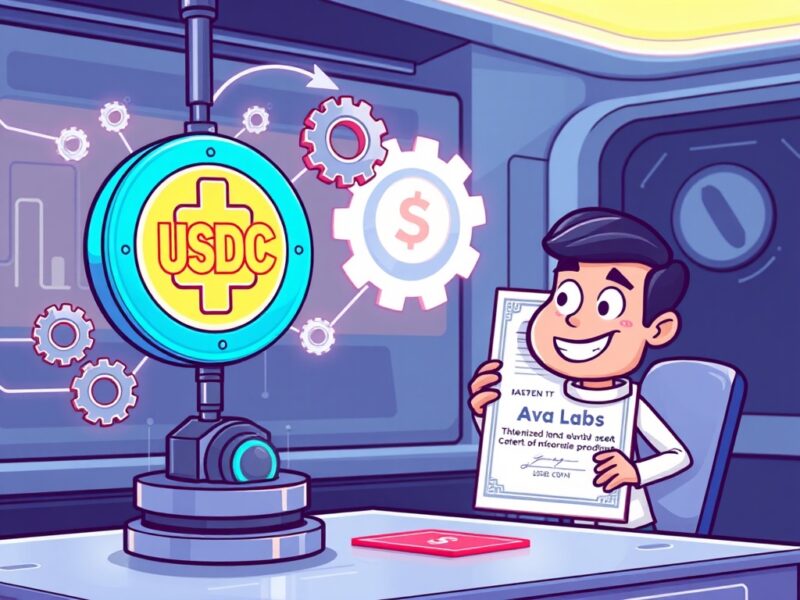
BitcoinWorld Revolutionary: Ava Labs Unveils Horizon for Secure RWA-Backed Loans A groundbreaking development is reshaping the intersection of traditional finance and decentralized finance (DeFi). Ava Labs, the innovative developer behind the high-performance Avalanche (AVAX) blockchain, has officially unveiled Horizon. This cutting-edge platform introduces a novel approach to lending, providing stablecoin loans that are securely collateralized by tokenized real-world assets (RWA). This move, as reported by The Block, marks a significant step towards bridging the gap between conventional financial instruments and the efficiency of blockchain technology, especially in the realm of RWA-backed loans. What Exactly Are RWA-Backed Loans and Why Do They Matter? Understanding RWA-backed loans begins with grasping what real-world assets are and how they integrate with blockchain. Simply put, RWAs are tangible or intangible assets that exist in the traditional financial world—think real estate, commodities, or even government bonds. Tokenization transforms these assets into digital tokens on a blockchain, making them programmable, divisible, and easily transferable. Horizon leverages this concept by allowing institutional borrowers to obtain stablecoin loans, such as USDC, RLUSD, and GHO. These loans are not backed by volatile cryptocurrencies, but by the stability of tokenized U.S. Treasury bonds. This mechanism introduces a new layer of security and predictability to the DeFi lending landscape, making RWA-backed loans an attractive option for sophisticated investors. How Does Ava Labs’ Horizon Platform Function for RWA-Backed Loans? Ava Labs designed Horizon specifically for institutional players, ensuring a robust and compliant environment. The platform’s operational flow is straightforward yet powerful: Collateralization: Institutional borrowers deposit tokenized U.S. Treasury bonds as collateral. These digital representations of traditional assets are held securely on the blockchain. Stablecoin Issuance: In return, Horizon issues leading stablecoins like USDC, RLUSD, and GHO. These stablecoins provide immediate liquidity to the borrowers. Institutional Focus: The platform caters exclusively to institutions, ensuring adherence to regulatory standards and managing larger transaction volumes effectively. This streamlined process facilitates efficient capital deployment and access to liquidity, all while maintaining the integrity of underlying real-world assets. The innovation here lies in the seamless integration of traditional financial stability with blockchain’s inherent advantages, driving the utility of RWA-backed loans. What Are the Key Benefits of Embracing RWA-Backed Loans? The introduction of platforms like Horizon brings several compelling advantages to the financial ecosystem. These benefits extend beyond just the borrowers and lenders, potentially reshaping broader market dynamics: Enhanced Stability: By collateralizing loans with stable, regulated assets like U.S. Treasury bonds, Horizon significantly reduces the volatility often associated with crypto lending. This stability makes RWA-backed loans more appealing to risk-averse institutions. Increased Liquidity: Tokenization unlocks illiquid assets, allowing them to be used as collateral for immediate access to stablecoin liquidity. This can free up capital that would otherwise be tied up. Transparency and Efficiency: Blockchain technology provides unparalleled transparency for collateral management and loan terms. Smart contracts automate processes, reducing manual errors and increasing transactional efficiency. Bridging TradFi and DeFi: Horizon acts as a crucial bridge, enabling traditional financial institutions to participate in the DeFi space with familiar asset classes, fostering broader adoption and innovation in RWA-backed loans. Navigating the Future: Challenges and Opportunities for RWA-Backed Loans While the potential of RWA-backed loans is immense, their widespread adoption also presents certain challenges and exciting opportunities. Understanding these aspects is vital for assessing the long-term impact of platforms like Horizon. Potential Challenges: Regulatory Clarity: The evolving regulatory landscape for tokenized securities and DeFi remains a significant hurdle. Clear guidelines are essential for institutional confidence and scalability. Legal Frameworks: Ensuring the legal enforceability of tokenized asset ownership and collateral in various jurisdictions requires robust legal frameworks. Oracles and Data Integrity: Reliable and secure oracles are necessary to bring accurate, real-time data from the real world onto the blockchain, especially for asset valuation and liquidation processes. Exciting Opportunities: New Financial Products: Horizon paves the way for a new generation of financial products that blend the best of traditional finance with blockchain’s innovation. Broader Institutional Adoption: As more traditional assets are tokenized, more institutions will likely enter the DeFi space, driving massive growth. Global Accessibility: Tokenized RWAs can make traditionally exclusive assets accessible to a wider global audience, democratizing investment opportunities. Ava Labs’ Horizon is not just a platform; it represents a significant leap forward in integrating the stability of traditional assets with the innovation of decentralized finance. By offering secure RWA-backed loans to institutional borrowers, Horizon is setting a new standard for how value is exchanged and leveraged in the digital economy. This pioneering effort by Ava Labs and Avalanche is poised to unlock vast new markets and redefine the future of lending, making finance more efficient, transparent, and accessible for a global audience. Frequently Asked Questions About Horizon and RWA-Backed Loans What is Ava Labs’ Horizon platform?Horizon is a new platform developed by Ava Labs that facilitates stablecoin loans for institutional borrowers. These loans are uniquely collateralized by tokenized real-world assets (RWAs), such as U.S. Treasury bonds. Which stablecoins are available on Horizon for RWA-backed loans?Horizon currently offers stablecoins like USDC, RLUSD, and GHO to institutional borrowers, providing them with reliable liquidity against their tokenized collateral. What types of assets are used as collateral for RWA-backed loans on Horizon?The primary collateral used on Horizon includes tokenized U.S. Treasury bonds. This approach links the stability of traditional government securities with the efficiency of blockchain technology. Who is the target audience for Horizon’s RWA-backed loans?Horizon is specifically designed to serve institutional borrowers. This focus ensures the platform meets the stringent requirements and compliance needs of large-scale financial entities. How do RWA-backed loans benefit the DeFi ecosystem?RWA-backed loans introduce greater stability, transparency, and efficiency to DeFi. They bridge traditional finance with decentralized finance, attracting institutional capital and unlocking new liquidity by tokenizing previously illiquid assets. Did you find this deep dive into Ava Labs’ Horizon platform and the future of RWA-backed loans insightful? Share this article with your network on social media to spread awareness about this pivotal development in the crypto space! Let’s discuss how this innovation could shape the financial world together. To learn more about the latest crypto market trends, explore our article on key developments shaping tokenized assets institutional adoption. This post Revolutionary: Ava Labs Unveils Horizon for Secure RWA-Backed Loans first appeared on BitcoinWorld and is written by Editorial Team

Author: Coinstats
Aave Labs Launches Horizon for Institutional Tokenized Asset Lending

Aave Labs Launches Horizon for Institutional Tokenized Asset Lending

Detail: https://coincu.com/news/aave-labs-tokenized-asset-platform/

Author: Coinstats
Aave Labs launches new platform Horizon, allowing institutions to borrow tokenized assets as stablecoins

Aave Labs launches new platform Horizon, allowing institutions to borrow tokenized assets as stablecoins

PANews reported on August 27 that Aave Labs has launched a new platform, Horizon, which aims to enable institutional borrowers to use tokenized versions of real-world assets (RWAs), such as U.S. Treasuries, as collateral to obtain stablecoins. At launch, institutions will be able to borrow Circle's USDC, Ripple's RLUSD, and Aave's GHO in exchange for a range of tokenized assets, including Superstate's short-term U.S. Treasury and cryptocurrency holding funds, Circle's income fund, and Centrifuge's tokenized Janus Henderson product. The platform aims to provide accredited investors with short-term financing for their RWA holdings and allow them to deploy income strategies. The platform's setup blends permissioned and permissionless functionality: collateralized tokens are embedded with issuer-level compliance checks, while lending pools remain open and composable. Chainlink's oracle services provide real-time pricing data, starting with NAVLink, which delivers the net asset value of tokenized funds directly on-chain to ensure that loans are properly collateralized. Launch partners include a range of asset issuers, including Ethena, OpenEden, Securitize, VanEck, Hamilton Lane, and WisdomTree, with plans to expand collateral options to more tokenized assets.

Author: PANews