Index

A crypto Index provides a way for investors to gain diversified exposure to a specific basket of digital assets through a single tokenized product. These indices often track specific sectors, such as DeFi, DePIN, or RWA, and are automatically rebalanced via smart contracts. In 2026, AI-managed thematic indices have become the gold standard for passive investing, allowing users to track the "blue chips" of the Web3 economy without manual portfolio management. This tag covers index methodology, rebalancing frequency, and the benefits of diversified crypto baskets.

25437 Articles
Created: 2026/02/02 18:52
Updated: 2026/02/02 18:52
Bitcoin Hyper Nears $13M in Presale

Bitcoin Hyper Nears $13M in Presale

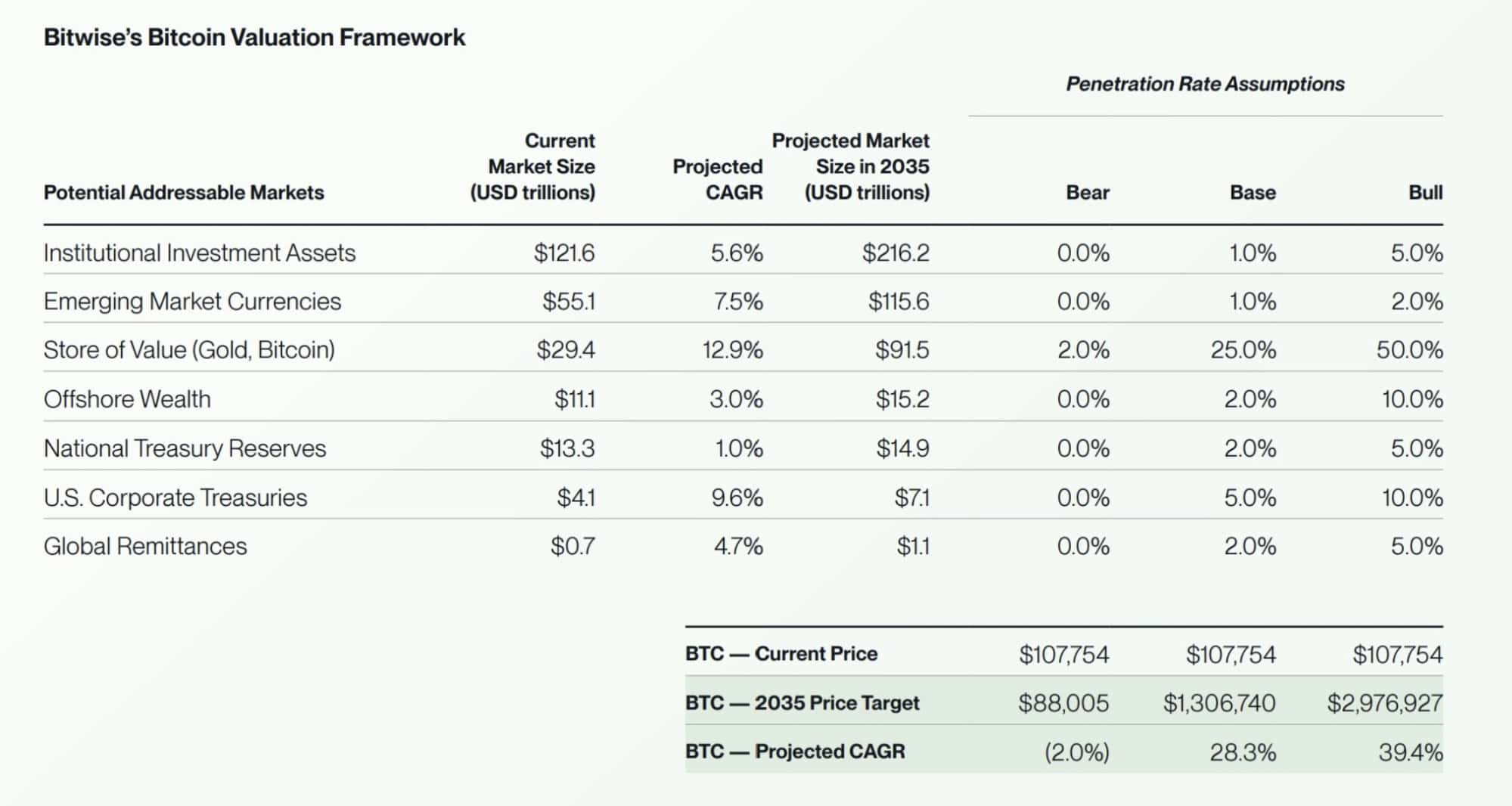
The post Bitcoin Hyper Nears $13M in Presale appeared on BitcoinEthereumNews.com. Bitcoin Hyper boldly reimagines Bitcoin as the new Web3 hub, tapping into the Solana Virtual Machine (SVM) to build a Layer 2 that brings speed, smart contracts, and cross-chain utility to Bitcoin without sacrificing safety. Why Bitcoin Needs More Than Digital Gold Status Bitcoin is often called “digital gold” because of its massive value appreciation over the years. But this also reveals Bitcoin’s biggest weakness. It can’t do much beyond sitting pretty in a wallet. To put it simply, Bitcoin is stupendously slow. The network can only handle about seven transactions per second. By comparison, Visa and Solana process thousands per second. This means each Bitcoin transaction can take several minutes to confirm. If the network gets busy, you can wait much longer and pay much higher fees, sometimes over $10 just to send as little as $20. This makes everyday payments with Bitcoin impractical. For developers, Bitcoin is hopeless. It doesn’t have smart contract support, and can’t power apps, lending platforms, NFTs, or games like other blockchains. So it’s no surprise that most of the innovation has moved to other chains like Ethereum and Solana. Bitcoin remains valuable owing to its place in history, but it has been left behind in the Web3 race. The Stars Are Aligning for Bitcoin And yet, despite its shortcomings, the long-term case for Bitcoin has never been louder. Coinbase CEO Brian Armstrong, Ark Invest’s Cathie Wood, and Block Inc.’s Jack Dorsey have all projected $BTC could hit $1M or more by 2030. The latest forecast comes from Bitwise, which expects Bitcoin to trade near $1.3M by 2035. Bitcoin Valuation Framework. Source: Bitwise That confidence is backed by real action in the market. Institutional adoption is growing, with traditional finance firms expanding their crypto exposure. On the regulatory side, the SEC’s Project Crypto and…

Author: BitcoinEthereumNews
New Report Reveals States With Heaviest Occupational Licensing Burdens

New Report Reveals States With Heaviest Occupational Licensing Burdens

The post New Report Reveals States With Heaviest Occupational Licensing Burdens appeared on BitcoinEthereumNews.com. Teacher Helping Students Training To Become Beauticians Painting Nails getty More than 20% of America’s workers need permission from the government in the form of an occupational license before they can practice their profession. The occupational licensing burden placed on Americans varies from state to state, and a new report from the Archbridge Institute reveals the states that impose the heaviest burdens. Occupational licenses are permits issued by governments that are legally required before someone can work in certain occupations. State policymakers largely decide which occupations require a license and the process for obtaining a particular license, though there are some professions, such as pilot, that require a federal license. States can also impose barriers on professions that are not job-specific licenses. For example, Alabama does not have an acupuncturist license, but it does require all acupuncturists to be licensed physicians. Archbridge’s report, co-authored by economists Edward Timmons, Noah Trudeau, and Benjamin Seevers, uses data on specific licenses and these other barriers to rank the states. The five states with the most occupational licensing and related barriers are Oregon, Tennessee, Texas, Kentucky, and Florida. The five states with the fewest licensing and related barriers are Kansas, Missouri, Wyoming, Indiana, and New York. The map below shows each state’s ranking by quintile: Red states have the most licensing barriers and purple states have the fewest licensing barriers. Some of the occupations included in the ranking are barbers, cosmetologists, funeral directors, piping contractors, and real estate appraisers. State licensing burdens Archbridge Institute https://www.archbridgeinstitute.org/state-occupational-licensing-index/ As shown in the map, many of the most heavily licensed states are in the Southeast. In addition to Florida and Tennessee, Arkansas, South Carolina, Alabama, and Kentucky have large licensing burdens. Many of the states with the smallest licensing burdens are in the middle of the country, including…

Author: BitcoinEthereumNews
Fed’s favorite inflation gauge surges 0.4% in July, cementing a September rate cut

Fed’s favorite inflation gauge surges 0.4% in July, cementing a September rate cut

The U.S. economy just gave the Federal Reserve its next move. The Personal Consumption Expenditures price index, the central bank’s preferred tool for tracking inflation, climbed 0.4% in July, confirming that pricing pressures haven’t gone away. The data came directly from the U.S. Bureau of Economic Analysis and now feeds into a broader story: the […]

Author: Cryptopolitan
Institutions Seek High-Yield Bitcoin Returns—BitFuFu Cloud Mining Delivers

Institutions Seek High-Yield Bitcoin Returns—BitFuFu Cloud Mining Delivers

This content is provided by a sponsor. Institutional interest in Bitcoin has entered a new phase in 2025, propelled by landmark developments that firmly integrated the cryptocurrency into mainstream finance. The start of U.S. President Donald Trump’s second term brought a wave of pro-crypto policy shifts in Washington, while record-breaking inflows into the spot Bitcoin […]

Author: Bitcoin.com News
Setback amid tariff uncertainty – Standard Chartered

Setback amid tariff uncertainty – Standard Chartered

The post Setback amid tariff uncertainty – Standard Chartered appeared on BitcoinEthereumNews.com. Our Renminbi internationalisation tracker fell in May-July, with most components edging down. Lingering uncertainty on US-China tariffs may have weighed on global Renminbi usage. Cross-border payments to receive policy support; further outbound relaxation to lift CNH bond demand, Standard Chartered’s economists report. The worst may have passed “The Standard Chartered Renminbi Globalisation Index (RGI), our proprietary measure of international Renminbi usage, fell for a third straight month to 4,666 in July from the recent peak of 5,169 in April. This takes YTD performance to -2.1%, likely reflecting the impact of US-China tariff uncertainty on market sentiment. Four out of five RGI components – ‘CNH FX turnover’, ‘CNH deposits’, ‘cross-border payments’ and ‘Dim Sum bonds’ – fell in May-July; only ‘foreign holdings of onshore RMB assets’ rose. That said, the decline moderated in July versus June as a US-China trade truce was reached and trade talks continued.” “Supply-demand dynamics for the CNH bond market have remained favourable since our May update, though net issuance of CNH bonds and certificates of deposit (CDs) combined was negative during the May-July. The decline in CNH deposits may have been driven by issuance of Renminbi-denominated Hong Kong green bonds and infrastructure bonds, CNH China Government Bonds (CGBs), and PBoC offshore bills, as well as the upbeat performance of the mainland equity market.”   “On the positive side, the worst of the US-China trade war is likely behind us, although we see twists and turns ahead. While the Renminbi’s share of global cross-border payments through SWIFT fell to two-year lows in June and July, average daily transactions via the Cross-Border Interbank Payment System (CIPS) reached a new high in Q2. In addition, China’s authorities have signalled that they will promote global usage of Renminbi. Further relaxation of outbound investment and payments since June should boost mainland demand for CNH bonds for the rest of 2025.” Source: https://www.fxstreet.com/news/offshore-renminbi-setback-amid-tariff-uncertainty-standard-chartered-202508290918

Author: BitcoinEthereumNews
Layer-2 Magic: Bitcoin Hyper Presale Rockets Toward $13M

Layer-2 Magic: Bitcoin Hyper Presale Rockets Toward $13M

Bitcoin Hyper ($HYPER) is about to cross $13M in its hot presale, reflecting growing demand for a faster and more versatile Bitcoin.

Author: Brave Newcoin
PCE inflation report July 2025:

PCE inflation report July 2025:

The post PCE inflation report July 2025: appeared on BitcoinEthereumNews.com. Inflation edged higher in July, according to the Federal Reserve’s preferred inflation measure, indicating that President Donald Trump’s tariffs are weaning their way through the U.S. economy. The personal consumption expenditures price index showed that core inflation, which excludes food and energy costs, ran at a 2.9% seasonally adjusted annual rate, according to a Commerce Department report Friday. That was up 0.1 percentage point from the June level but in line with the Dow Jones consensus forecast. On a monthly basis, the core PCE index increased 0.3%, also in line with expectations. The all-items index showed the annual rate at 2.6% and the monthly gain at 0.2%, also hitting the consensus outlook. The Fed uses the PCE price index as its primary forecasting tool. Though it watches both numbers, policymakers consider core inflation to be a better indicator of longer-term trends as it excludes the volatile gas and groceries figures. Central bankers target inflation at 2%, so Friday’s report shows the economy still a distance from where the Fed feels comfortable. Nevertheless, markets expect the Fed to resume lowering its benchmark interest rate when policymakers convene next month. Fed Governor Christopher Waller reiterated his support for a cut in a speech Thursday, saying he would entertain a larger move if labor market data continue weakening. Along with the inflation moves, consumer spending increased 0.5% on the month, in line with forecasts and indicative of strength despite the higher prices. Personal income accelerated 0.4%, rounding out a report that saw all figures hit the consensus outlook. Stock market futures remained negative after the release while Treasury yields held gains. This is breaking news. Please refresh for updates. Source: https://www.cnbc.com/2025/08/29/pce-inflation-report-july-2025.html

Author: BitcoinEthereumNews
U.S. consumer spending grew steadily in July, but inflationary pressures remained stubborn

U.S. consumer spending grew steadily in July, but inflationary pressures remained stubborn

PANews reported on August 29th that, according to Jinshi, despite persistently high inflation, U.S. consumer spending grew at its fastest pace in four months in July, demonstrating resilient demand. Data from the U.S. Bureau of Economic Analysis on Friday showed that inflation-adjusted consumer spending rose 0.3% month-over-month. Income growth fueled the increase, with goods consumption being the primary driver. The core personal consumption expenditures price index, excluding food and energy, rose 0.3% month-over-month, bringing the year-over-year increase to 2.9%, the highest level since February.

Author: PANews
The U.S. core PCE price index rose by 2.9% in July, the highest level since February 2025.

The U.S. core PCE price index rose by 2.9% in July, the highest level since February 2025.

PANews reported on August 29 that according to Jinshi, the annual rate of the U.S. core PCE price index in July was 2.9%, the highest since February 2025. The expected rate was 2.90%, and the previous value was 2.80%. The U.S. core PCE price index rose by 0.3% month-on-month in July, in line with expectations of 0.30% and the previous value of 0.30%.

Author: PANews
XRP crashes 5% in a day erasing $10 billion

XRP crashes 5% in a day erasing $10 billion

The post XRP crashes 5% in a day erasing $10 billion appeared on BitcoinEthereumNews.com. XRP price crashed more than 5% in the past 24 hours, erasing $10 billion in market capitalization as technical weakness and mixed ETF sentiment weighed on the token. The price dropped to $2.84, down from $3.05 support and below the $3 psychological threshold, with the decline pushed XRP’s market cap from $179.82 billion to $169.72 billion, underperforming the broader crypto market’s 3.35% decline over the same period. XRP 1-day market cap chart. Source: CoinMarketCap Technical indicators confirm the bearish shift. XRP’s MACD histogram printed at –0.0146, while the relative strength index (RSI) fell to 46.58, signaling downside momentum. The breakdown also triggered $113 million in long liquidations, according to CoinMarketCap’s community data. $2.88 is the next key Fibonacci retracement level (78.6%). A sustained move below $2.75, the swing low, could open the door to a deeper correction. Crypto trading expert weighs in The intraday slide also arrived amid a public forecast shift from on-chain analyst Ali Martinez.  On August 25, Martinez posted on X that “it won’t take long” before XRP returned to $3.70, a call Finbold noted looked unlikely at the time with the token trading below $3, pointing out that it was much more likely for XRP to trade at $2.70 instead. Four days later, on August 28, Martinez wrote that “$XRP continues to retrace toward $2.83 as anticipated!” bringing his outlook in line with the prevailing downside momentum as price action gravitated toward that level. The selloff follows a week of mixed sentiment around potential XRP spot ETF approval. While CME XRP futures open interest recently crossed $1 billion in record time, optimism has been tempered by broader market weakness and uncertainty over regulatory decisions. Source: https://finbold.com/xrp-crashes-5-in-a-day-erasing-10-billion/

Author: BitcoinEthereumNews