DeFi

DeFi eliminates intermediaries by using smart contracts on blockchains to provide financial services like lending, borrowing, and trading. In 2026, the "DeFi 3.0" era is defined by Institutional DeFi and the integration of Real-World Assets (RWA). From liquidity provisioning on Uniswap to advanced lending on Aave, this tag tracks the evolution of autonomous financial systems, yield optimization, and the rise of AI-driven portfolio management in the decentralized economy.

68426 Articles
Created: 2026/02/02 18:52
Updated: 2026/02/02 18:52
Bitpanda Launches DeFi Wallet to Power Europe’s Journey to an Onchain Future

Bitpanda Launches DeFi Wallet to Power Europe’s Journey to an Onchain Future

The post Bitpanda Launches DeFi Wallet to Power Europe’s Journey to an Onchain Future appeared on BitcoinEthereumNews.com. Press Releases are sponsored content and not a part of Finbold’s editorial content. For a full disclaimer, please . Crypto assets/products can be highly risky. Never invest unless you’re prepared to lose all the money you invest. Vienna, Austria, August 19th, 2025, Chainwire The Bitpanda DeFi Wallet is the second product in the Bitpanda Web3 suite, designed to bring real utility to the onchain world Built to be simple enough for beginners, and powerful enough for experienced users The wallet combines onchain flexibility with Bitpanda’s trusted security standards Users can now trade, earn, and interact with DeFi across multiple chains – without ever leaving the app Bitpanda, Europe’s leading crypto innovator, has launched the Bitpanda DeFi Wallet, the next step in its Web3 expansion. The wallet is designed to give users simple, secure, and seamless access to the world of decentralised finance, whether they’re exploring Web3 for the first time or are already deeply involved in the onchain community. Bitpanda has already helped millions of Europeans take control of their financial future and now wants to offer the same secure and intuitive access to Web3. Most importantly, Bitpanda’s Web3 design ethos is centred around shaping Web3 to meet users where they are today, instead of pushing them to adapt to complex new technologies that offer no clear benefits.  The Bitpanda DeFi Wallet provides everything users need to trade, earn, and manage assets onchain across major blockchain networks, all from a single, intuitive app. At launch, the wallet will support over 5,000 tokens, and multiple chains including Ethereum, Solana, Polygon, BNB Chain, Avalanche, Optimism, Base, and Arbitrum. Lukas Enzersdorfer-Konrad, Co-CEO of Bitpanda, commented: “Bitpanda’s mission is to help investors take control and fast-track their financial freedom. That means giving our users the tools they need to manage their investments – on…

Author: BitcoinEthereumNews
Finnovex Saudi Arabia 2025  – Coin Edition

Finnovex Saudi Arabia 2025  – Coin Edition

The post Finnovex Saudi Arabia 2025  – Coin Edition appeared on BitcoinEthereumNews.com. 1 MONTH TO GO: EMPOWERING THE FINTECH ECOSYSTEM – SAUDI ARABIA GEARS UP FOR ITS LEADING FINTECH SUMMIT  Date: September 2–3, 2025 Location: Radisson Blu Hotel & Convention Center, Riyadh Minhal, Saudi Arabia Website: https://ksa.finnovex.com Riyadh, Saudi Arabia – With just one month to go, the countdown has officially begun for the 32nd global edition of the Finnovex Series — Finnovex Saudi Arabia 2025, taking place on September 2–3, 2025, at the prestigious Radisson Blu Hotel & Convention Center, Riyadh.  Under the theme “Empowering the Fintech Ecosystem: From Disruption to Collaboration”, this year’s summit will bring together over 300+ senior decision-makers, fintech innovators, regulators, and financial industry leaders to accelerate the Kingdom’s digital transformation in line with Vision 2030.  Key Themes to Be Explored:  �� Fintech Disruption and Collaboration  Explore the impact of digital wallets, blockchain, embedded finance, and digital identity on redefining customer experiences, and how strategic collaboration between regulators, banks, and startups is essential for scale.  �� Building a Digital-First Financial Future  Unpack intelligent automation, agile banking, and customer-centric digital transformation models that are redefining operational excellence and innovation across Saudi financial institutions.  �� Regulatory Innovation and Governance  Sessions will deep-dive into SAMA’s sandbox initiatives, digital bank licensing, and enhanced compliance frameworks around KYC, AML, cybersecurity, and digital assets.  Why You Should Attend:  �� Visionary Keynotes & Panel Debates featuring C-level leaders, regulators, and disruptors. �� Live Spotlights on neobanks, open banking, metaverse finance, RPA, and AI in BFSI. �� Real-World Insights into data strategy, financial inclusion, and cross-border payments. �� Unmatched Networking with 300+ attendees from banks, fintech firms, regulatory bodies, and tech providers.  Glimpse of our Esteemed Speakers who will be joining us:  Hamad Alqunaibet- Acting Chief Executive Officer, Vision Bank  Elie El Asmar- CEO, HSBC – Oman  Nizar Altwaijri- CEO, STC Bank  Louai Alzaher- Chief Wholesale…

Author: BitcoinEthereumNews
Changelly API Fuels 50% YoY MAU Growth, 90% Bigger Checks for Coinomi

Changelly API Fuels 50% YoY MAU Growth, 90% Bigger Checks for Coinomi

Coinomi’s Changelly API integration boosts MAUs 50% YoY and AOV 90%, proving in-app swaps drive engagement, bigger trades, and long-term growth.

Author: Blockchainreporter
Circle Launches Unified Cross-Chain USDC Access Solution

Circle Launches Unified Cross-Chain USDC Access Solution

Detail: https://coincu.com/news/circle-unified-cross-chain-usdc-access/

Author: Coinstats
1 on Ethereum, Avalanche, and Polygon

1 on Ethereum, Avalanche, and Polygon

The post 1 on Ethereum, Avalanche, and Polygon appeared on BitcoinEthereumNews.com. The Stablecoin yen giapponese debuts in a regulated form: JPYC has obtained the license of funds transfer service provider from the Japanese regulator Financial Services Agency (FSA), a key requirement for the issuance of a token with peg 1:1 to the yen on Ethereum, Avalanche, and Polygon. In this context, scenarios open up for digital payments, remittances, and Web3 integrations aligned with Japanese anti-money laundering regulations. According to the data collected by our research team (monitoring updated to August 2025), JPYC has completed the regulatory procedures required by the FSA and has declared a policy of monthly attestations for reserves. Industry analysts note that the explicit requirement for segregation of reserves and periodic reporting should increase transparency compared to unregulated models. What changes: regulated model and FSA supervision JPYC now operates as a fund transfer service provider (Kawase) under the revised Payment Services Act as of June 2023, which outlined a specific framework for Electronic Payment Instruments (stablecoin) FSA. It should be noted that the new status entails requirements on minimum capital, KYC/AML procedures, reserve segregation, and periodic reporting under FSA supervision. For an overview of AML/CFT compliance best practices for digital assets, refer also to the international guidelines FATF. Reserves and guarantees: yen in the bank and JGB with 1:1 coverage The peg is supported by bank deposits in JPY and by Japanese Government Bonds (JGB) with short maturity, held to cover 100% of the tokens in circulation. For information on the liquidity and market characteristics of short-term JGB, see the official website of the Japanese central bank. Coverage: 1 JPYC = 1 yen, supported by immediately available liquidity (deposits) and liquid government securities. Transparency: independent attestations on reserves on a monthly basis, as indicated in the issuer’s preliminary white paper JPYC. Redemption: conversion to JPY in the account…

Author: BitcoinEthereumNews
Stablecoin Zuid-Korea: banken bereiden lancering voor

Stablecoin Zuid-Korea: banken bereiden lancering voor

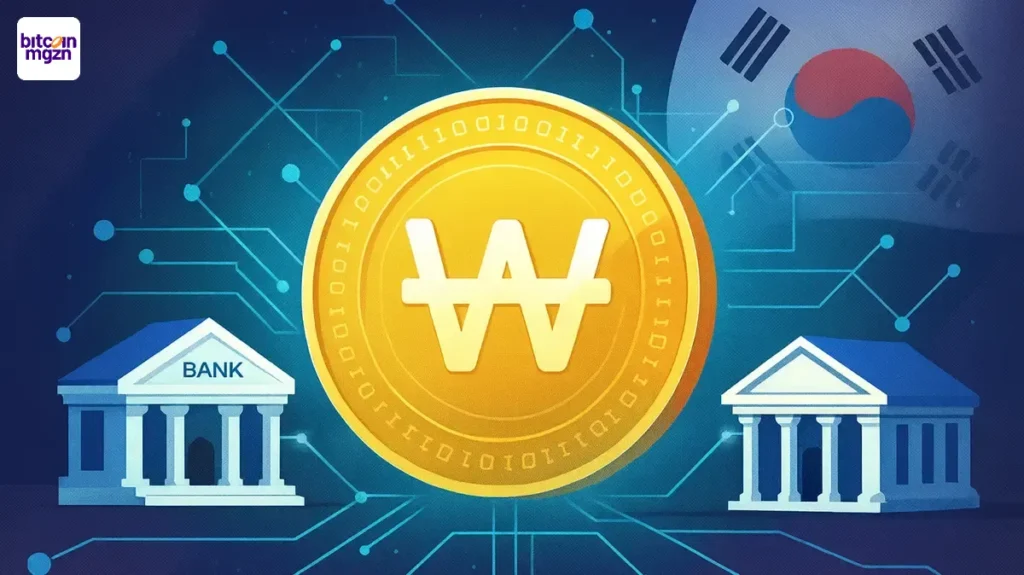
Snelle crypto updates? Connect op Instagram! Check onze Instagram   De Zuid-Koreaanse overheid werkt aan duidelijke regels voor stablecoins. Grote banken en internationale partijen zoals Circle bereiden zich voor op de lancering van een eigen won-stablecoin. Een nieuwe wetgeving moet duidelijkheid scheppen en innovatie stimuleren binnen het gereguleerde digitale financiële landschap. Wetgeving stablecoin Zuid-Korea in voorbereiding De Zuid-Koreaanse Financial Services Commission (FSC) is bezig met een wetsvoorstel dat de uitgifte van stablecoins moet reguleren. Deze wet vormt onderdeel van de tweede fase van de Virtual Asset User Protection Act en wordt in oktober 2025 aan het parlement voorgelegd. De regelgeving moet onder meer richtlijnen bieden voor collateralbeheer, interne controlemechanismen en risicobeheersing. De focus ligt op won-gedekte stablecoins, waarmee Zuid-Korea zijn afhankelijkheid van buitenlandse stablecoins zoals USDT en USDC wil verkleinen. De FSC wil met deze wet zorgen voor duidelijkheid en stabiliteit op de markt. Er worden strikte voorwaarden gesteld aan uitgiftepraktijken, waaronder transparantie in reserves en naleving van compliance-eisen. Deze stap plaatst Zuid-Korea in de voorhoede van landen die stablecoins binnen het reguliere financiële systeem proberen te integreren zonder de risico’s van ongecontroleerde adoptie. South Korea to Roll Out Won-Based Stablecoin Law This Octoberhttps://t.co/hjR2IjwUOZ — John Morgan (@johnmorganFL) August 19, 2025 Grote banken staan klaar voor stablecoin uitgifte Institutionele interesse en strategische positionering Vier van de grootste banken van Zuid-Korea: KB Kookmin, Shinhan, Hana en Woori hebben hun interesse kenbaar gemaakt in het uitgeven van eigen won-stablecoins. Ze hopen met hun gevestigde naam het vertrouwen van het publiek in digitale valuta te versterken. Ze willen zo hun rol in het digitale betalingsverkeer versterken. Met innovatieve producten spelen ze in op de groeiende vraag naar snelle, grensoverschrijdende betalingen. Daarbij hopen ze marktaandeel te behouden in een financiële sector die snel digitaliseert. In voorbereiding op de uitgifte van stablecoins zijn deze banken al gestart met het opzetten van testomgevingen, het ontwikkelen van blockchaingebaseerde betalingsoplossingen en het trainen van interne compliance-teams. Ze nemen hiermee een proactieve rol aan binnen het kader dat de FSC zal opstellen, en bereiden zich voor op integratie van traditionele en digitale financiën onder toezicht van de FSC waarin traditionele en digitale financiën samenkomen onder toezicht van één regelgevend regime. Hybride modellen en concurrentiepositie ten opzichte van DeFi Naast technologische ontwikkeling spelen ook strategische overwegingen mee. De betrokken banken willen voorkomen dat decentrale stablecoins, zoals DAI of algoritmische tokens, terrein winnen in de Koreaanse markt. Door vroeg in te stappen met gereguleerde alternatieven kunnen zij voldoen aan de toenemende vraag naar digitale activa en tegelijk hun concurrentiepositie als gecentraliseerde instellingen behouden. Dit heeft geleid tot discussies over hybride modellen, waarbij traditionele banken digitale stablecoins uitgeven die opereren op publieke blockchainnetwerken, maar onder centrale controle blijven. Volgens analisten kan deze aanpak Zuid-Korea positioneren als pionier in een gematigd gereguleerd stablecoin-ecosysteem. Het combineert de technologische voordelen van blockchain met de betrouwbaarheid van gevestigde financiële instellingen. Volgens analisten kan dit niet alleen de binnenlandse markt stabiliseren, maar ook buitenlandse investeerders aanspreken die op zoek zijn naar compliant toegang tot Aziatische cryptomarkten. Chinese tech giants pushing the country’s central bank for currency backed stable, South Korea payment firm planning to launch a korean pegged stable coin. Bhutan and Kazakhstan working on their BTC reserve. I wonder will India ever embrace crypto? — sandeeponchain (@sandeeppaths) July 28, 2025 Samenwerkingen met Circle en fintechs in opkomst Om de stap naar stablecoins mogelijk te maken, zoeken de banken actief samenwerking met buitenlandse partijen zoals Circle, de uitgever van USDC. Deze partnerschappen kunnen technologische kennis en operationele schaalbaarheid bieden. Circle werkt al internationaal samen en weet hoe je een compliant stablecoin-infrastructuur opzet die past binnen lokale regels. Voor banken biedt dit de mogelijkheid om snel betrouwbare systemen op te zetten, terwijl fintechs via deze brug toegang krijgen tot gereguleerde financiële netwerken. Vooral voor kleinere fintechs betekent dit een kans om mee te bouwen aan innovatie binnen een gecontroleerd kader, zonder direct zelf de volle verantwoordelijkheid voor regelgeving te dragen. Zuid-Koreaanse banken werken samen met Circle om internationale standaarden en betere aansluiting op wereldwijde netwerken te realiseren. Tegelijkertijd stellen ze duidelijke grenzen. Buitenlandse stablecoins mogen alleen functioneren in overeenstemming met de nieuwe wetgeving. Hierdoor ontstaat een gecontroleerde integratie van globale technologie met lokaal toezicht. Voor fintechs biedt dit kansen, maar ook uitdagingen. De nieuwe regelgeving vereist uitgebreide compliance, wat voor kleinere partijen lastig kan zijn. Samenwerking met gevestigde banken kan hier uitkomst bieden. Zo ontstaat een speelveld waarin banken richting geven en startups de ruimte krijgen om vernieuwend te werken. Op termijn kan dit model dienen als voorbeeld voor andere landen. Kansen en risico’s voor kleine spelers in de markt Hoewel de ontwikkelingen rond stablecoin Zuid-Korea positieve vooruitzichten bieden voor efficiënt betalingsverkeer en financiële inclusie, waarschuwen experts voor mogelijke uitsluiting van kleinere spelers. Voor zelfstandige fintechs zonder bankpartner kan de regelgeving een flinke hobbel zijn. Toch betekent dit niet dat innovatie stil hoeft te staan. Door strategische partnerschappen en gezamenlijke innovatielabs kunnen startups profiteren van de ervaring en infrastructuur van banken. Bovendien houdt de FSC toezicht op markttoegang en concurrentie, om te voorkomen dat enkel grote instellingen profiteren van de nieuwe wetgeving. Zuid-Korea zet koers naar gereguleerde stablecoin-markt Met de introductie van een won-gedekte stablecoin en duidelijke wetgeving, positioneert Zuid-Korea zich als koploper in de wereldwijde stablecoin-ontwikkeling. De samenwerking tussen banken, toezichthouders en internationale partijen zoals Circle zorgt voor betrouwbare randvoorwaarden voor het gebruik van stablecoins op grote schaal. Voor kleinere spelers blijven er hobbels, maar het model kan leiden tot een stabielere en inclusieve digitale betaalinfrastructuur. Koop je crypto via Best Wallet Best wallet is een topklasse crypto wallet waarmee je anoniem crypto kan kopen. Met meer dan 60 chains gesupport kan je al je main crypto coins aanschaffen via Best Wallet. Best wallet - betrouwbare en anonieme wallet Best wallet - betrouwbare en anonieme wallet Meer dan 60 chains beschikbaar voor alle crypto Vroege toegang tot nieuwe projecten Hoge staking belongingen Lage transactiekosten Best wallet review Koop nu via Best Wallet Let op: cryptocurrency is een zeer volatiele en ongereguleerde investering. Doe je eigen onderzoek. Het bericht Stablecoin Zuid-Korea: banken bereiden lancering voor is geschreven door Sebastiaan Krijnen en verscheen als eerst op Bitcoinmagazine.nl.

Author: Coinstats
SEC Moves Forward With Crypto Regulation Following Ripple Settlement — Here’s What’s Coming

SEC Moves Forward With Crypto Regulation Following Ripple Settlement — Here’s What’s Coming

Soon after the Ripple settlement, the U.S. Securities and Exchange Commission (SEC) began taking new steps to set crypto rules in the country. With a focus on proactive oversight and clearer standards for companies and investors, SEC Chair Paul Atkins says the agency is following President Donald Trump’s plan to make America the world’s crypto […]

Author: Bitcoinist
Ethereum Treasury Firm BTCS to Pay Dividends in ETH to Stop ‘Predatory Short Sellers’

Ethereum Treasury Firm BTCS to Pay Dividends in ETH to Stop ‘Predatory Short Sellers’

The post Ethereum Treasury Firm BTCS to Pay Dividends in ETH to Stop ‘Predatory Short Sellers’ appeared on BitcoinEthereumNews.com. BTCS will pay up to $0.40 per share in Ethereum to reward holders and counter short-seller activity. Public blockchain infrastructure company BTCS Inc. said it will distribute a one-time dividend in ETH or cash, along with a separate loyalty payment, to holders who lock up their shares until next year. The firm’s CEO described the reward program as a defense against “predatory short sellers.” BTCS CEO Charles Allen said in a Monday post on X that the company will pay $0.05 per share in ETH in what the firm is calling a one-time “Bividend” — a “blockchain dividend” — to all holders of common stock and Series V preferred stock. Shareholders who keep their common shares at BTCS’ transfer agent, Equity Stock Transfer, through Jan. 26, 2026, will receive an additional $0.35 per share in ETH, the company said. Holders who want to receive their dividends in ETH can receive it on “any valid Ethereum wallet address,” the firm clarified on its website. Investors who don’t opt in will receive the $0.05 in cash and won’t qualify for the loyalty payment. In a commentary to The Defiant, Allen said that this is a “special one-time distribution,” noting that the company made a similar dividend payment in BTC back in 2022. BTCS is the eleventh-largest ETH treasury company, holding around 70,000 ETH, or 0.06% of ETH supply, per data from Strategic ETH Reserve. Fighting Shorters Back By having shareholders keep their shares at the transfer agent, the company seems to be limiting market liquidity, which could make it harder for short sellers to borrow shares. As of July 31, about 2.99 million shares were sold short, representing 10.4% of the float, a 35% increase from June, according to MarketBeat data. BTCS Short Interest Data. Source: MarketBeat Allen, the largest shareholder of…

Author: BitcoinEthereumNews
Next Crypto to Explode: Cold Wallet, Bitcoin Hyper, Snorter, and SUBBD Presales Heating Up

Next Crypto to Explode: Cold Wallet, Bitcoin Hyper, Snorter, and SUBBD Presales Heating Up

Presales often give early buyers a rare chance to secure tokens at steep discounts before public listings push valuations higher. In today’s market, several projects are standing out with strong adoption potential and clear utility. Among them, Cold Wallet is leading the pack thanks to its cashback-driven design and a presale-to-launch price gap that sets it apart. Meanwhile, Bitcoin Hyper leverages Bitcoin’s brand while introducing faster transactions and DeFi features. Snorter merges trading with social engagement, turning insights into income. SUBBD addresses subscription management using blockchain. Each of these projects has unique strengths, but for those asking which could be the next crypto to explode, Cold Wallet’s numbers and growth model put it at the top. Cold Wallet (CWT): A Built-In 50× Growth Gap Cold Wallet is redefining what a self-custody wallet can be. Instead of charging users with endless fees, it rewards them. Every gas payment, coin swap, or on/off-ramp transaction returns cashback in the native CWT coin. Users who hold more CWT unlock higher tiers of rewards, up to 100% cashback on gas fees. The urgency lies in the presale math. Cold Wallet has already raised $6.2 million and is now in Stage 18, with coins priced at just $0.00998. The confirmed launch price of $0.3517 locks in a 35×+ gap for current buyers before the market even begins natural price discovery. Its presale is structured across 150 stages, each one incrementally increasing the coin price. This means that waiting even a few rounds could mean paying much more for the same allocation. With strong fundamentals, cashback utility, and a ready-made user base through the Plus Wallet acquisition, Cold Wallet is gaining traction fast. These factors make it one of the strongest candidates for the next crypto to explode in 2025. Bitcoin Hyper: Extending Bitcoin’s Reach Bitcoin Hyper takes advantage of Bitcoin’s massive reputation but aims to go further. By building on a Layer-2 solution powered by Solana’s Virtual Machine, it introduces faster transactions, lower costs, and DeFi functionality. This approach not only improves Bitcoin’s scalability but also makes it more versatile for payments, finance, and applications. The presale is attracting attention due to its favorable pricing compared to the expected listing value. Tapping into Bitcoin’s established brand and user community gives Bitcoin Hyper a strong foundation. Snorter: Turning Social Trading Into Rewards Snorter blends trading with social finance, creating a platform where users can monetize their insights. Traders earn rewards when others follow their strategies, and the native token powers tipping, staking, and access to premium analytics. Currently in presale, Snorter’s token is selling at a fraction of its expected exchange rate, giving early participants a price advantage. Social finance platforms often see rapid adoption, and Snorter’s gamified reward structure could help drive viral growth. By combining community-driven engagement with financial incentives, Snorter holds a promising place among projects competing for the next crypto to explode title. SUBBD: Decentralizing Subscription Management SUBBD is tackling a problem nearly everyone faces: managing recurring subscriptions. Whether for streaming, software, or services, tracking costs across multiple platforms can be difficult. SUBBD offers a blockchain-based solution where subscription credits are tokenized and can be shared or transferred peer-to-peer. The crypto presale pricing is far lower than its intended listing value, providing early buyers with a significant discount. Given the sheer size of the subscription economy, a decentralized solution like SUBBD could appeal to a wide user base. With strong utility tied to a growing industry, SUBBD earns its place as one of the promising presale projects to watch in 2025. Final Thoughts Crypto presales are short windows of opportunity, and the current group includes some of the most promising projects for those looking ahead to 2025. Cold Wallet leads with a $6.2M presale, Stage 18 pricing at $0.00998, and a cashback model that ties rewards to real use. Bitcoin Hyper adds layered functionality to Bitcoin’s trusted base, Snorter monetizes social trading, and SUBBD streamlines subscription management through blockchain. For those wondering which project could be the next crypto to explode, Cold Wallet stands out for its locked-in 35× price gap, self-custody utility, and clear adoption pathway.

Author: Coinstats
Testnet Live, $376M+ Raised: Why BlockDAG Is the Best Crypto to Buy Now In August 2025

Testnet Live, $376M+ Raised: Why BlockDAG Is the Best Crypto to Buy Now In August 2025

See how BlockDAG’s live testnet, $376M presale momentum, and 2,660% early ROI confirm it as the best crypto to buy now. Explore how BDAG’s path to adoption and future cash flow makes it stand out.

Author: Blockchainreporter