DeFi

DeFi eliminates intermediaries by using smart contracts on blockchains to provide financial services like lending, borrowing, and trading. In 2026, the "DeFi 3.0" era is defined by Institutional DeFi and the integration of Real-World Assets (RWA). From liquidity provisioning on Uniswap to advanced lending on Aave, this tag tracks the evolution of autonomous financial systems, yield optimization, and the rise of AI-driven portfolio management in the decentralized economy.

68426 Articles
Created: 2026/02/02 18:52
Updated: 2026/02/02 18:52
Kendra Scott And The Vision And Discipline Of Growth

Kendra Scott And The Vision And Discipline Of Growth

The post Kendra Scott And The Vision And Discipline Of Growth appeared on BitcoinEthereumNews.com. It’s news today that Kendra Scott is stepping back into the role of interim chief executive officer of her company. The departures of CEO Tom Nolan, CFO Jason Friesen, and Chief People Officer Danielle Stewart were confirmed, along with Scott’s return to day-to-day leadership supported by longtime executive Neal Bronzo as interim CFO and COO, and the return of Beth Ley as Chief People Officer. The company described this as the start of an exciting new chapter of expansion following a year of record growth and a new private equity investment, a moment that will test the importance of vision and discipline in growth. I have no insider knowledge about why these changes were made. What I am offering here is interpretation, based on extensive experience working with companies that are facing the very challenges Kendra Scott is navigating now: how to expand rapidly while maintaining cultural integrity, brand vision, and profitability. AUSTIN, TEXAS – SEPTEMBER 24: Kendra Scott, CEO, designer and philanthropist attends the unveiling of the Women’s Entrepreneurial Leadership Institute At The University Of Texas At Austin on September 24, 2019 in Austin, Texas. (Photo by Rick Kern/Getty Images for Kendra Scott) Getty Images for Kendra Scott Vision and Discipline in Growth:Why Founders Step Back In It is not unusual for a founder to return to the CEO role. Sometimes the reason is crisis. In this case, the company is not in trouble, but is expanding aggressively. The risk is not decline, but dilution of identity and purpose. I often say the most dangerous thing a company can do is grow, because if you do not lay the track before the train, the momentum of growth can take you off course. That is when the founder’s hand can be most valuable. Kendra Scott is no ordinary founder. She…

Author: BitcoinEthereumNews
Morning Minute: Solana Hits 100K TPS

Morning Minute: Solana Hits 100K TPS

The post Morning Minute: Solana Hits 100K TPS appeared on BitcoinEthereumNews.com. Morning Minute is a daily newsletter written by Tyler Warner. The analysis and opinions expressed are his own and do not necessarily reflect those of Decrypt. Subscribe to the Morning Minute on Substack. GM! Today’s top news: Crypto majors are slightly green after volatile day; BTC at $115,600 Tom Lee buys $1.7B in ETH in the past week, becomes 2nd largest DAT Tether signs on former White House crypto director Bo Hines as advisor Chamath launches $250M SPAC, includes DeFi as 1 of 4 pillars LIGHT jumps 50% to a new ATH as revenue & buybacks increase ⚡ Solana Hits 100K TPS The Solana network just set a new throughput record. And it’s coming at a very important time. 📌 What Happened Solana briefly processed over 100,000 transactions per second (TPS) in a live stress test. That’s well above Visa’s ~65,000 TPS benchmark and 25x Solana’s normal throughput. But the test used “no-op” transactions – empty instructions that don’t represent real-world transfers or swaps. Today, actual economic activity on Solana still averages closer to 1,000–1,400 TPS once validator votes are excluded. 🗣️ What They’re Saying “The main point I want to get across is that Solana needs more efficient programs and an efficient token standard. High capacity enables the world’s markets to all be on-chain. Without the capacity, we can only ever hope to support a handful.” – Dr. Cavey PHD He added that with efficient programs, Solana could realistically hit 80k–100k token transfers per second, or 10k–20k swaps, estimating deployment could happen “three months at best, six months at worst.” “It means that Solana is ready to support web-scale applications today.” – Kyle Samani (Multicoin Capital) 🧠 Why It Matters There are a few key items of note here. First, this milestone shows Solana’s raw technical ceiling but also the gap between stress-test performance and live…

Author: BitcoinEthereumNews
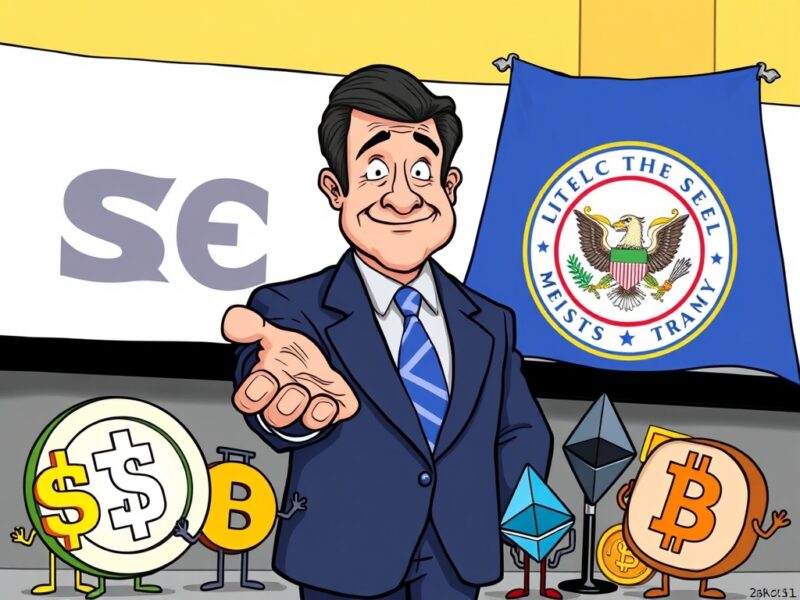
Crypto Regulation: SEC’s ‘Project Crypto’ Unveils a Game-Changing Approach

Crypto Regulation: SEC’s ‘Project Crypto’ Unveils a Game-Changing Approach

BitcoinWorld Crypto Regulation: SEC’s ‘Project Crypto’ Unveils a Game-Changing Approach The landscape of crypto regulation in the United States is on the cusp of a dramatic transformation. In a move that has sent ripples of excitement throughout the digital asset community, U.S. SEC Chair Paul Atkins recently unveiled a groundbreaking initiative: “Project Crypto.” This significant announcement, made at the Wyoming Blockchain Symposium, signals a profound shift in how the Securities and Exchange Commission plans to engage with the burgeoning cryptocurrency industry. What is Project Crypto and Why Does it Matter for Crypto Regulation? For years, the U.S. Securities and Exchange Commission (SEC) has largely adopted a “regulation by enforcement” stance towards cryptocurrencies. This approach often left crypto businesses in a state of uncertainty, leading many to consider establishing operations outside the U.S. However, the introduction of Project Crypto aims to reverse this trend, actively seeking to attract and retain crypto innovation within American borders. This ambitious new initiative represents a fundamental pivot. Instead of reacting to potential violations, the SEC under Atkins plans to offer a more proactive and supportive regulatory framework. This includes: Tailored Disclosures: Providing clear, customized guidelines for crypto projects. Exemptions: Offering specific relief from certain traditional securities laws. Safe Harbors: Creating protected spaces for certain types of crypto offerings to develop without immediate regulatory fear. This is a stark departure from previous SEC positions and offers a glimmer of hope for a more predictable regulatory environment. Redefining Tokens: Are Most Crypto Assets Not Securities? Perhaps the most impactful statement from Chair Atkins, as reported by Decrypt, was his assertion that “most crypto tokens are not securities by nature.” This declaration challenges the long-held assumption that many digital assets automatically fall under the purview of securities law. It’s a critical point for the future of crypto regulation. For a long time, the debate around whether a crypto token is a security has been a major hurdle for projects. The “Howey Test,” traditionally used to define investment contracts, has been applied to various tokens, often leading to enforcement actions. Atkins’ statement suggests a re-evaluation of this application, potentially paving the way for a more nuanced understanding of digital assets. This reclassification could significantly reduce the regulatory burden on a wide array of crypto projects, from initial coin offerings (ICOs) to network rewards and even airdrops. It recognizes the unique characteristics of decentralized technologies and their potential to operate outside traditional financial paradigms. What Benefits Could Project Crypto Bring to the US Crypto Landscape? The implications of Project Crypto are far-reaching and potentially transformative for the U.S. as a hub for blockchain innovation. A clearer, more accommodating regulatory environment could: Attract Talent and Investment: Crypto businesses, previously hesitant due to regulatory ambiguity, may now find the U.S. a more attractive destination. Foster Innovation: With reduced fear of enforcement, developers and entrepreneurs might feel more confident in launching new projects and experimenting with novel decentralized applications. Enhance Consumer Protection: By establishing clear rules, the SEC can still protect investors while fostering growth, rather than stifling it. This balanced approach is crucial for sustainable development. Boost Economic Growth: A thriving crypto sector can create jobs, generate tax revenue, and solidify the U.S.’s position as a global leader in emerging technologies. This proactive approach to crypto regulation is a welcome change for an industry eager for clarity. Navigating the Path Ahead: Challenges and Opportunities for Crypto Regulation While the announcement of Project Crypto is overwhelmingly positive, the path forward will undoubtedly present its own set of challenges. Implementing these tailored disclosures, exemptions, and safe harbors will require significant effort and collaboration between regulators and industry participants. Defining the precise criteria for what constitutes a non-security token will be paramount. Moreover, ensuring that this new approach maintains robust investor protections while fostering innovation will be a delicate balancing act. The crypto space is dynamic, and regulations must be adaptable to keep pace with technological advancements. This initiative signals a commitment from the SEC to engage more constructively, fostering an environment where both innovation and integrity can thrive. In conclusion, SEC Chair Paul Atkins’ unveiling of “Project Crypto” marks a monumental shift in U.S. crypto regulation. Moving away from a punitive “regulation by enforcement” model towards a more supportive and tailored approach could unlock immense potential for the digital asset industry within the United States. This commitment to clarity and innovation offers a compelling future for crypto businesses and enthusiasts alike. Frequently Asked Questions (FAQs) Q1: What exactly is “Project Crypto”? A1: “Project Crypto” is a new initiative announced by U.S. SEC Chair Paul Atkins aimed at fundamentally shifting the SEC’s approach to cryptocurrency regulation. It seeks to attract crypto businesses to the U.S. by moving away from “regulation by enforcement” towards offering tailored disclosures, exemptions, and safe harbors. Q2: Who announced this new initiative? A2: U.S. SEC Chair Paul Atkins unveiled “Project Crypto” during his address at the Wyoming Blockchain Symposium. Q3: How will Project Crypto change the SEC’s regulatory approach? A3: Instead of primarily relying on enforcement actions after issues arise, the SEC plans to proactively provide clearer guidelines, specific exemptions, and safe harbors for various crypto offerings like ICOs, airdrops, and network rewards. This aims to provide more certainty and reduce regulatory friction. Q4: Does “Project Crypto” mean all crypto tokens are no longer considered securities? A4: SEC Chair Atkins stated that “most crypto tokens are not securities by nature,” marking a significant shift. However, this does not automatically mean all tokens are exempt. The initiative aims to provide clearer frameworks for distinguishing between securities and non-securities, and to offer pathways for compliance for those that are. Q5: What are “safe harbors” in the context of Project Crypto? A5: Safe harbors are specific provisions within regulations that protect certain activities or entities from liability, provided they meet defined conditions. For crypto, this could mean creating a temporary period or specific conditions under which certain token offerings can operate without being immediately subject to full securities laws, allowing them to develop and mature. Q6: What does this policy shift mean for crypto businesses operating in or considering the U.S.? A6: This shift is largely positive. It suggests a more welcoming and predictable regulatory environment, potentially reducing legal risks and operational uncertainties. Businesses may find it easier to launch new projects, raise capital, and innovate within the U.S., making the country a more attractive hub for blockchain development. If you found this insight into the future of crypto regulation helpful, please share this article with your network! Let’s spread the word about this significant development in the digital asset space. To learn more about the latest crypto market trends, explore our article on key developments shaping crypto regulation and its impact on institutional adoption. This post Crypto Regulation: SEC’s ‘Project Crypto’ Unveils a Game-Changing Approach first appeared on BitcoinWorld and is written by Editorial Team

Author: Coinstats
Pepeto vs Little Pepe, Which One Is The Best Crypto To Buy, While Bitcoin And Ethereum Are Consolidating

Pepeto vs Little Pepe, Which One Is The Best Crypto To Buy, While Bitcoin And Ethereum Are Consolidating

As Bitcoin and Ethereum consolidate, memecoin presales heat up. Pepeto’s zero-fee DEX and staking utility give it an edge over Little Pepe’s L2 pitch.

Author: Blockchainreporter
S&P affirms US credit rating at AA+ despite soaring debt

S&P affirms US credit rating at AA+ despite soaring debt

The post S&P affirms US credit rating at AA+ despite soaring debt appeared on BitcoinEthereumNews.com. S&P Global has upheld its rating on US government debt, stating that revenues from President Donald Trump’s aggressive tariff policies are expected to offset the effects of the administration’s major tax and spending bill.  The agency confirmed late Monday that the US sovereign credit rating remains at ‘AA+/A-1+’, its second-highest tier, supported by a resilient economy and “credible, effective” monetary policy. S&P analysts believe that the US’s budget deficits will decline in the years to come  Analysts said that Broad revenue buoyancy, including robust tariff income, will offset any fiscal slippage from tax cuts and spending increases planned in the coming years. The announcement follows the Trump administration’s tariffs on dozens of trading partners, with import duties reaching their highest levels in nearly a century—raising concerns about potential impacts on global growth.  Meanwhile, Congress approved Trump’s $5 trillion tax and spending package, which is expected to push federal debt past its post-World War II peak and raise the borrowing limit to $41 trillion. On the other hand, Moody’s, S&P’s major competitor, downgraded the US’s credit rating earlier this year over concerns about rising debt and widening budget deficits. Even after this, S&P analysts still believe that while the deficit between government spending and revenue “will not meaningfully improve,” they do not expect a persistent deterioration over the next several years. The US tariff revenues surged nearly $50 billion in Q2, the first full quarter after the new tariffs were implemented. At the same time, deficit spending remains high, with the budget shortfall at 6.2% of GDP, according to the Federal Reserve Bank of St. Louis. The 30-year US Treasury bond yield has climbed to 4.9%, near its two-year high, amid expectations of increased debt issuance. S&P projects net government debt could approach 100% of GDP due to spending pressures, including…

Author: BitcoinEthereumNews
Revolutionary: Fed Employees Crypto Holdings Proposal Sparks Debate

Revolutionary: Fed Employees Crypto Holdings Proposal Sparks Debate

BitcoinWorld Revolutionary: Fed Employees Crypto Holdings Proposal Sparks Debate A fascinating and potentially revolutionary discussion is unfolding within the highest echelons of the U.S. financial system. U.S. Federal Reserve Governor Michele Bowman recently put forward a compelling idea: allow Fed employees crypto holdings in small amounts. This isn’t just a casual suggestion; it’s a strategic move aimed at enhancing the central bank’s understanding of the rapidly evolving digital asset landscape. Bowman’s remarks, delivered ahead of the Wyoming Blockchain Symposium, underscore a critical shift. She emphasized that “change is coming” and that embracing technologies like artificial intelligence and cryptocurrency is essential. Therefore, for the Federal Reserve to truly grasp crypto-based products and their implications, direct experience among Fed employees crypto seems a logical next step. Why Empower Fed Employees with Crypto Knowledge? The core rationale behind Governor Bowman’s proposal is straightforward: practical experience breeds deeper understanding. It’s difficult to regulate or even comprehend a technology without hands-on interaction. Allowing Fed employees crypto exposure could offer numerous benefits: Enhanced Understanding: Employees gain firsthand insight into how crypto products function, their underlying technology, and user experience. Informed Policymaking: Direct engagement can lead to more nuanced, effective, and forward-thinking regulatory frameworks. Staying Ahead: The Fed, as a key financial regulator, needs to remain at the forefront of technological innovation to adequately protect consumers and maintain financial stability. Bridging the Gap: It helps bridge the conceptual divide between traditional finance and the burgeoning world of digital assets. Currently, strict rules govern financial holdings for Federal Reserve employees to prevent conflicts of interest. These rules typically restrict or prohibit investments in certain assets that could be influenced by Fed policy decisions. The discussion around Fed employees crypto holdings would necessitate a careful review and potential amendment of these existing guidelines. Navigating the Challenges of Fed Crypto Policy While the benefits of allowing Fed employees crypto holdings are clear, the proposal also brings potential challenges that require careful consideration. Maintaining public trust and preventing perceived conflicts of interest are paramount for any central bank. Here are some key concerns: Conflict of Interest: Even small holdings could raise questions about impartiality in policy decisions affecting the crypto market. Market Influence: Though individual holdings would be small, the aggregate effect or public perception could be sensitive. Security Risks: Employees would need robust education on securing digital assets to prevent personal losses or data breaches. To mitigate these risks, any policy allowing Fed employees crypto would likely include stringent safeguards. These could involve very low investment caps, strict disclosure requirements, and perhaps limitations on the types of cryptocurrencies employees could hold. Transparency and clear ethical guidelines would be crucial for successful implementation. What Does This Mean for Future Crypto Regulation? Governor Bowman’s statement signals a growing recognition within traditional financial institutions that cryptocurrencies are not a fleeting trend but a significant technological shift. Her advocacy for Fed employees crypto participation suggests a more proactive, rather than reactive, approach to digital asset regulation. This initiative could pave the way for more innovative and adaptive regulatory frameworks in the United States. If Fed employees gain practical experience, they can contribute to policies that are not only robust but also foster innovation. This could accelerate the development of clearer guidelines for stablecoins, central bank digital currencies (CBDCs), and broader digital asset markets. The move reflects a pragmatic understanding that regulation thrives on knowledge. In conclusion, the proposal to allow Fed employees crypto holdings represents a forward-thinking approach by the Federal Reserve. It acknowledges the inevitable integration of digital assets into the financial landscape. While challenges exist, careful implementation with clear guidelines can transform this initiative into a powerful tool for informed policymaking, ultimately benefiting the entire financial ecosystem. This bold step could truly redefine how traditional institutions engage with the future of finance. Frequently Asked Questions (FAQs) What did Fed Governor Michele Bowman say about crypto? Governor Michele Bowman stated that Fed employees should be allowed to hold small amounts of cryptocurrency to better understand crypto-based products. Why does Bowman believe Fed employees should hold crypto? She believes direct experience helps employees better understand crypto products, which is crucial for informed policymaking and embracing technological change. Are Fed employees currently allowed to hold cryptocurrency? Generally, strict rules prevent conflicts of interest, often restricting or prohibiting such investments. Bowman’s proposal would require a review of these existing guidelines. What are the potential benefits of this proposal? Benefits include enhanced understanding, more informed policymaking, staying ahead of technological trends, and bridging the gap between traditional finance and digital assets. What are the potential challenges or concerns? Concerns include potential conflicts of interest, public perception issues, and the need for robust security education for employees holding digital assets. Did you find this insight into the Federal Reserve’s evolving view on digital assets compelling? Share this article with your network to spark further discussion about the future of crypto policy! To learn more about the latest crypto market trends, explore our article on key developments shaping Bitcoin institutional adoption. This post Revolutionary: Fed Employees Crypto Holdings Proposal Sparks Debate first appeared on BitcoinWorld and is written by Editorial Team

Author: Coinstats
$376M Presale, Mining Tech, Roadmap Risks & Investor Sentiment Explained

$376M Presale, Mining Tech, Roadmap Risks & Investor Sentiment Explained

The post $376M Presale, Mining Tech, Roadmap Risks & Investor Sentiment Explained appeared on BitcoinEthereumNews.com. With presales frequently setting sky-high expectations, separating hype from actual value is crucial. BlockDAG, a project claiming to reshape blockchain infrastructure, has made headlines for its fundraising success and marketing push. But how does it measure up when examined critically? This review focuses on the real strengths, potential concerns, and current market sentiment surrounding BlockDAG. Strengths That Stand Out BlockDAG’s presale has crossed $376 million, placing it among the top five largest in crypto history. The marketing strategy, including viral campaigns, international sponsorships, and social media pushes, has significantly amplified its visibility. Partnerships with names like Inter Milan, and the Seattle Orcas have helped position the brand across both tech and sports audiences, further enhancing trust among early adopters. On the technical front, BlockDAG introduces a hybrid model that merges Proof of Work with a DAG structure, promising both scalability and network security. Its mining ecosystem, from X100 hardware miners to the X1 mobile app, appeals to both seasoned miners and casual users. Additionally, staking options introduce a passive income model for BDAG holders, potentially offering long-term utility beyond initial speculation. The project also stands out for building practical applications early. The testnet is already live with dApp support, a blockchain explorer, and EVM compatibility, allowing developers to mint NFTs, launch smart contracts, and simulate transactions without deep coding expertise. Potential Risks and Roadmap Realism Despite these strengths, a few concerns deserve attention. The roadmap, while ambitious, includes milestones that are yet to be completed, including the mainnet launch, which is promised for early 2025. Investors should assess whether the timeline is achievable or at risk of delays, a common issue in blockchain projects that attempt broad technical scope. While the hybrid architecture sounds promising, integrating PoW with DAG presents significant challenges in synchronization, consensus, and real-world throughput. There is…

Author: BitcoinEthereumNews
Robinhood Partners with Kalshi to Launch Football Prediction Markets

Robinhood Partners with Kalshi to Launch Football Prediction Markets

The post Robinhood Partners with Kalshi to Launch Football Prediction Markets appeared on BitcoinEthereumNews.com. The financial services company looks to take on Polymarket in the sports betting arena ahead of the NFL and NCAA football seasons. Fintech giant Robinhood is expanding its prediction market offerings through a new partnership with Kalshi to offer NFL and NCAA football prediction markets on its app. Users will be able to speculate on the outcomes of the United States’ most popular sport, and the feature “will be available to all eligible customers in the coming days.” Robinhood’s plans to offer initial contracts for the first two weeks of the professional and collegiate seasons, and will continue to add weekly matches over time. The trading platform revealed its first prediction markets, known as “event contracts,” in March. With the launch, Robinhood is challenging not only Polymarket as a competing prediction market, but legacy sports betting platforms such as FanDuel and DraftKings. Unlike traditional betting platforms, prediction market contracts have the market set the prices and outcome odds, whereas legacy apps rely on professional bookmakers and prediction models. “Football is far and away the most popular sport in America,” said JB Mackenzie, VP & GM of Futures and International at Robinhood. “Adding pro and college football to our prediction markets hub is a no-brainer for us as we aim to make Robinhood a one-stop shop for all your investing and trading needs.” Kalshi, which is based in the United States, recently announced support for SOL deposits on its platform in addition to existing options such as BTC, USDC, and XRP. While the platform supports crypto deposits, crypto-natives tend to prefer Polymarket due to factors such as market liquidity, and Kalshi’s controversial tactics, which were allegedly used to slander Polymarket when the Federal Bureau of Investigation (FBI) raided Polymarket CEO Shayne Coplan’s home. Prediction markets have been exploding over the last…

Author: BitcoinEthereumNews
Cryptocurrencies in Latin America: the Silent Revolution of Digital Payments

Cryptocurrencies in Latin America: the Silent Revolution of Digital Payments

A New Financial Scenario A New Financial Scenario Nel mondo degli investimenti, i termini "bull" e "bear" sono comunemente usati per descrivere le tendenze del mercato. Un mercato "bull" indica un periodo di crescita, mentre un mercato "bear" rappresenta un periodo di declino. { "symbols": [ [ "NASDAQ:AAPL|1D" ], [ "NASDAQ:GOOGL|1D" ] ], "chartOnly": false, "width": "100%", "height": "400", "locale": "en", "colorTheme": "light", "autosize": true, "showVolume": false, "showMA": false, "hideDateRanges": false, "hideMarketStatus": false, "hideSymbolLogo": false, "scalePosition": "right", "scaleMode": "Normal", "fontFamily": "-apple-system, BlinkMacSystemFont, Trebuchet MS, Roboto, Ubuntu, sans-serif", "fontSize": "10", "noTimeScale": false, "valuesTracking": "1", "changeMode": "price-and-percent", "chartType": "area", "lineColor": "#2962FF", "topColor": "rgba(41, 98, 255, 0.3)", "bottomColor": "rgba(41, 98, 255, 0)", "lineWidth": 2, "container_id": "tradingview_widget" } Gli investitori devono essere preparati a navigare tra questi due scenari per massimizzare i loro rendimenti e minimizzare i rischi.

Author: The Cryptonomist
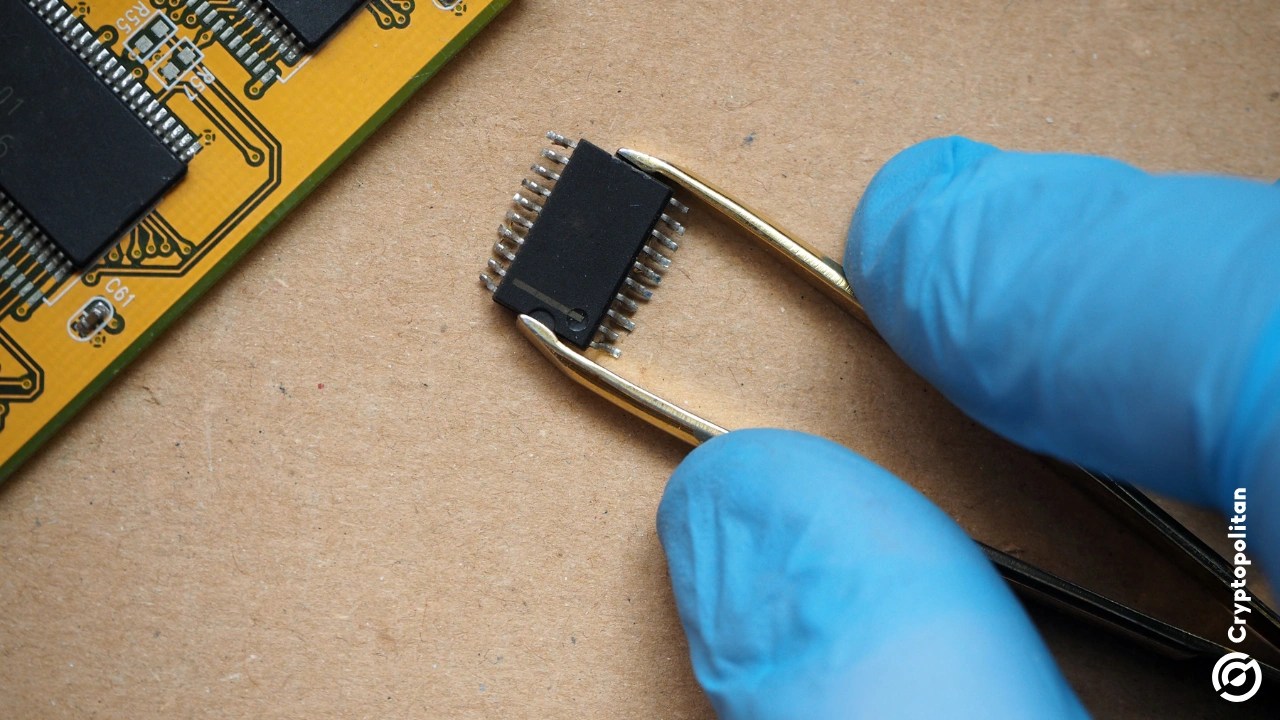
Nvidia prepares a new AI chip for China: the B30A surpasses the H20

Nvidia prepares a new AI chip for China: the B30A surpasses the H20

Nvidia accelerates on artificial intelligence in China

Author: The Cryptonomist