NFT

NFTs are unique digital identifiers recorded on a blockchain that certify ownership and authenticity of a specific asset. Moving past the "PFP" craze, 2026 NFTs emphasize utility, representing everything from IP rights and digital fashion to RWA titles and event ticketing. This tag explores the technical standards of digital ownership, the growth of NFT marketplaces, and the integration of non-fungible tech into the broader Creator Economy and enterprise solutions.

13397 Articles
Created: 2026/02/02 18:52
Updated: 2026/02/02 18:52
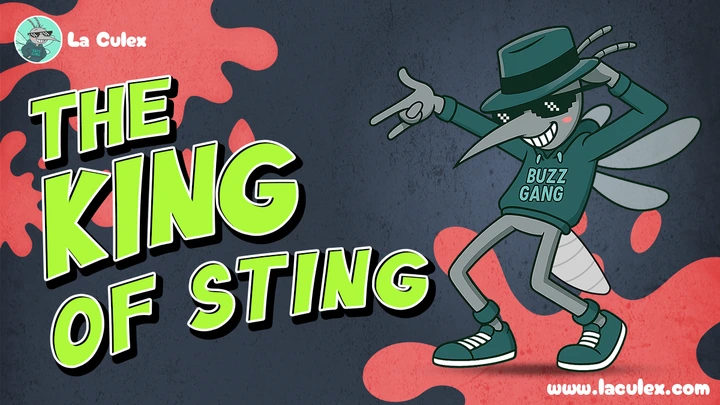
La Culex, Dogecoin, and Pudgy Penguins: The Next 1000x Meme Coin Battle Begins

La Culex, Dogecoin, and Pudgy Penguins: The Next 1000x Meme Coin Battle Begins

They say laughter is the best medicine, unless you bought the wrong meme coin. The crypto market has always had […] The post La Culex, Dogecoin, and Pudgy Penguins: The Next 1000x Meme Coin Battle Begins appeared first on Coindoo.

Author: Coindoo
Top NFT Collection: The Weird Realms NFT Collection and Its Surreal Allure on Base

Top NFT Collection: The Weird Realms NFT Collection and Its Surreal Allure on Base

Top NFT Collections: The Weird Realms Key Points:

Top NFT Collection: The Weird Realms NFT Collection and Its Surreal Allure on Base was originally published in Coinmonks on Medium, where people are continuing the conversation by highlighting and responding to this story

Author: Medium
Solana Leader Challenges XRP Community to Debate On-Chain Activity Data

Solana Leader Challenges XRP Community to Debate On-Chain Activity Data

The post Solana Leader Challenges XRP Community to Debate On-Chain Activity Data appeared on BitcoinEthereumNews.com. COINOTAG recommends • Exchange signup 💹 Trade with pro tools Fast execution, robust charts, clean risk controls. 👉 Open account → COINOTAG recommends • Exchange signup 🚀 Smooth orders, clear control Advanced order types and market depth in one view. 👉 Create account → COINOTAG recommends • Exchange signup 📈 Clarity in volatile markets Plan entries & exits, manage positions with discipline. 👉 Sign up → COINOTAG recommends • Exchange signup ⚡ Speed, depth, reliability Execute confidently when timing matters. 👉 Open account → COINOTAG recommends • Exchange signup 🧭 A focused workflow for traders Alerts, watchlists, and a repeatable process. 👉 Get started → COINOTAG recommends • Exchange signup ✅ Data‑driven decisions Focus on process—not noise. 👉 Sign up → Solana Foundation’s Vibhu Norby has challenged the XRP community to a public debate based on verifiable on-chain data, highlighting stark differences in network activity between Solana and XRP. With XRP showing around 25,000 daily active accounts over three years, compared to Solana’s 2.5 million, Norby aims to address misconceptions about XRP’s growth. XRP Ledger’s daily active accounts have hovered at about 25,000 for the past three years, per XRPScan data. Solana boasts over 2.5 million daily active accounts, demonstrating rapid ecosystem expansion. XRP processes 1 to 1.5 million daily transactions, while Solana handles around 100 million, underscoring activity disparities. Solana’s Vibhu Norby challenges XRP community to on-chain data debate amid growth concerns. Explore key metrics and implications for crypto ecosystems. Stay informed on blockchain performance trends today. What is the Solana Vibhu Norby Challenge to the XRP Community? Solana Vibhu Norby challenge refers to an invitation by Vibhu Norby, head of Product Marketing at the Solana Foundation, for a live public debate with XRP advocates using only verifiable on-chain data. This stems from Norby’s observations of XRP’s stagnant network…

Author: BitcoinEthereumNews
The CS2 skin market lost 14 billion overnight. Is the "electronic gold" of Gen Z no longer appealing?

The CS2 skin market lost 14 billion overnight. Is the "electronic gold" of Gen Z no longer appealing?

Written by: Wang Dong, Phoenix.com Recently, many people have seen posts on social media about "taking in a heartbroken college student." At first glance, it seems like a meme, but a quick browse through QQ groups and forums reveals a large number of heartbroken men are indeed being manufactured. Many of them have just experienced their first major investment failure: However, these male college students neither fully invested in A-shares nor bought gold at high prices. What caused them so much distress was the virtual skin trading market for the shooting game CS2. According to media reports, the market lost $2 billion (approximately RMB 14.2 billion) on the 24th alone. Countless people's assets turned to ashes overnight (this is an exaggeration; in reality, it only took a few hours). Wait a minute, isn't CS2 a shooting game? Why does it sound like the stock market? Well, it's a long story. The collapse was devastating; how many people spent a sleepless night? Many days later, facing empty accounts, CS skin resellers will remember that distant afternoon when Valve (the developer of CS2) announced the opening of skin alchemy. Last Thursday, Valve announced a "regular" game update, which included a clause that surprised many. In summary, top-tier knife and glove skins that were previously only obtainable by opening crates can now be crafted using lower-tier skins. To give an example, what used to be natural diamonds can now be synthesized from glass beads. How can the price not drop? This regulation directly impacted the long-standing CS skin trading market. In CS2, a single case costs approximately 17 RMB, with a mere 0.26% chance of obtaining a top-tier skin. Knife and glove skins are considered top-tier cosmetic items. Obviously, it's too difficult to get knife skins and gloves yourself, so the best way is to just buy them from the market. Scarcity drives up value. If you want to buy a knife skin or gloves in good condition, a few thousand yuan is just enough to make friends. It's not uncommon to find skins that cost hundreds of thousands of yuan. However, under Valve's new policy, lower-quality red skins can now be crafted into top-tier gold skins, which netizens are calling: "Red-skinned Alchemy". Countless players logged into their accounts, dug out their long-forgotten red-tier weapons, and threw themselves into the forging of swords: With the forging technique, those top-tier equipment that were once considered divine have become no longer rare. The price of the popular butterfly knife has been halved: Those who were hit the hardest were the "shopping guides" (a term of endearment used by players to refer to middlemen who resell skins) who had stockpiled large quantities of skins. Someone lost 600,000 in one night: Some college students even put all their living expenses into it. In the group chat, everyone was wailing and lamenting: On social media, people are vehemently criticizing Valve's owner, Gabe Newell. Besides the sales assistants, professional players with a lot of skins also got hit hard. After clearing out his inventory, Spinx of the MOUZ team wrote a heartfelt post on Twitter: "Everyone has dreams, and everyone's life is wonderful." While no snowflake is innocent, some people bravely venture into the avalanche. Sometimes, you simply do nothing, and the game is automatically won at the end. Former professional player Niko escaped the market crash because he never resells game skins. He expressed sympathy for those who invest in jewelry trading: People like NiKo who have a vast mansion are a minority; most players say they just find it noisy. In their view, those dogs that suffered heavy losses deserved their fate. This was originally a game focused on entertainment and competition, but now it's been turned into a mess by these resellers who resell in-game skins. This is a perfect opportunity to eliminate them all and restore order to the CS community. In their view, Gabe Newell's iron-fisted new policies are actually a great benefit to ordinary players. Once exclusive and exclusive skins, they are now available to ordinary people. Players who were wearing straw sandals the day before are now living in villas by the sea. Gabe Newell's latest attack was nothing short of deadly; he could kill a man in ten steps and leave no trace for a thousand miles; he accomplished his task and vanished without a trace. So, is Gabe Newell (GabeN) really a saint who wholeheartedly cares about the players? It's probably not that simple. How was the multi-billion dollar cyber market created? Making money by selling in-game skins is a common profit model for almost all online games. Adding loot box mechanics to games is also very mainstream, and even microtransaction systems in games are nothing new. But it is only Valve's games that have spawned such a huge over-the-counter market. This was not accidental, but rather the result of a careful plan by Gabe Newell and Valve. The "root of all evil" is Team Fortress 2, a game released by Valve in 2007. In this game, Valve introduced a hat system where players can buy all sorts of hats for their characters. These hats do not affect the game's balance and are purely decorative. Some of these hats will drop in-game, some can be crafted, and some require completing quests... Of course, you can also pay money to open the box and get it directly. Due to differences in appearance, special effects, and drop rates, many rare and sought-after hats quickly appeared in the game. Players who couldn't get them simply chose to buy them from other players. Gabe Newell slapped his forehead: "If someone wants to make this money, why can't it be me?" So Valve launched an official trading platform where everyone can buy and sell freely. Valve doesn't interfere; it just takes a cut. The players' enthusiasm far exceeded Gabe Newell's expectations. The trading system became increasingly popular, even leading to inflation and deflation... Gabe Newell (GabeN) realized this wouldn't do and had to take it seriously. In 2012, Valve hired a real economist to help them design and optimize their economic system; this guy is shown below: His name is Yannis Varoufakis, and he is a professor of economics at the University of Athens. During his time at Valve, his title was "Internal Economic Advisor." There are still some articles he published on Valve's official website, but I personally don't understand them very well. In short, Valve has really taken a lot of effort into creating a complex virtual economic system. According to Yannis Varoufakis, this system is more complex than the economic systems of many small countries in the world. He certainly has the right to say that, because two years after leaving Valve, he became the Greek Minister of Finance. CS:GO, released in 2013, can be considered the culmination of this system. In CS:GO, players can obtain skins by opening cases and crafting them. Skins are divided into different tiers such as white, blue, purple, red, and gold. Each skin has a wear level, which affects its rarity. The same skin can have vastly different prices depending on its wear level. In addition to skins, there is also a separate sticker system, which is divided into player signatures, team logos, and patterns. Each type of sticker is further divided into different levels. In addition to stickers, some skins also have unique patterns and textures, "StatTrak (counter)" and various other attributes; ... In short, CS skins can be combined in thousands of different ways, each with a unique ID and even traceable transaction records, several versions ahead of today's NFTs. You see, this thing was born for trading. So, not long after its release, the market surrounding the skins flourished rapidly. Live unboxing videos have become a key to attracting viewers for many streamers. When top-tier items like the Dragon Lore Sniper Rifle or Butterfly Knife are unboxed, a collective frenzy from the streamer and the chat is inevitable. In the market, all sorts of stories of getting rich overnight have begun to appear, such as getting a top-tier gun skin and exchanging it for a house, or a knife that can cover four years of tuition fees. However, at this stage, the stories of getting rich overnight are still limited to unpacking. Around 2020 or 2021, a large number of speculators began to enter the market, and CS skins began to be compared with cryptocurrencies and NFTs, causing prices to suddenly rise. With such frenzied speculation, doubling in value is hardly a big deal, and even a hundredfold increase is not uncommon. Many people are starting to tout CS skins as the next Bitcoin, and those who missed out are in for a rough time: Counter-Strike (CS) has gradually transformed from a competitive game into a massive financial derivatives platform. At its peak, the entire CS skin market was valued at over $6 billion (approximately 43 billion RMB). The main users active in this market have also changed from gamers to speculators. Until that crazy Thursday. As for why Valve would destroy its own foundation, the reason is quite simple: This is not Valve's own Great Wall at all. According to Valve's rules, official transactions not only incur a 15% fee, but also make subsequent withdrawals difficult. Therefore, the main trading venues are currently third-party platforms, and no matter how high the price is driven up, Valve doesn't receive a single penny. These people not only don't pay taxes to Gabe Newell, they don't even log into the game. Now that the new policy is in place, players no longer need to worry about opening worthless red skins; they can simply use them for alchemy. This gives ordinary players even more motivation to open chests. Previously inexpensive skins can now fetch a decent price; previously prohibitively expensive skins are now affordable for ordinary players. The liquidity in the official market has also improved dramatically. Markets fluctuate, and some people will always lose, but Gabe Newell, or the big players, always win. There is nothing new under the sun. Valve's economic system has always been highly controversial. Just a month ago, the CS community was rocked by a shocking scam: the Black Egg incident. The so-called "black egg" refers to a limited-time team sticker released during the 2021 Stockholm Championship. This seemingly ordinary sticker saw its price skyrocket from 5 yuan to 3,000 yuan in just two months, from July to September this year. Many people are saying that Black Egg will become the next "Holographic Titan". Holographic Titan, a sticker exclusive to the Titans team released in 2014, became discontinued after the Titans disbanded. Its price, which started at a few cents, has skyrocketed to hundreds of thousands of RMB. Those worried about missing out on the Holographic Titan went all in on the Black Egg. However, although this skin is no longer available, there is a large number of people who own it, so there is no reason for it to be sold at such a high price. Sure enough, after reaching a high of 3,000 yuan, the price of black eggs plummeted to a few dozen yuan in just two days. Prices may return to rationality, but money will not. As an investment product, CS skins have serious inherent flaws: This market is unregulated; Valve has the final say in everything. In the T+7 market, one wrong move and you're buried in the ground. All products are non-standard, and there is no fundamental basis for their pricing. ... You can list 100 drawbacks, but as long as there is arbitrage opportunity, people will keep coming. In Valve's games, similar "Tulip Incidents" keep repeating themselves, from hats in Team Fortress 2 to Steam Trading Cards and Dota 2 Immortal items. Gabe Newell (GabeN) is certainly not some "people's GabeN." He designed this active system, full of arbitrage opportunities and risks, and exploited human weaknesses to reap huge profits. From building the infrastructure of the Steam Wallet to establishing the community marketplace, opening interfaces to third-party trading platforms, and then controlling supply through the loot box system, Valve has mastered a huge virtual market that can directly interact with the real world. Nowadays, Valve is more like a financial company than a game company. Thus, like all financial derivatives, this place generates stories of sudden wealth and collapse every day. There is nothing new under the sun. Whether in the real world or in the virtual space, humanity is repeating the same melody: the eternal melody of desire and greed.

Author: PANews
KITE Foundation: Airdrop tracking is now available; airdrops will be available for collection on November 3rd.

KITE Foundation: Airdrop tracking is now available; airdrops will be available for collection on November 3rd.

PANews reported on November 2 that the KITE Foundation tweeted that the KITE token airdrop query is now available, and airdrop collection will begin on November 3 at 20:00 (UTC+8). Previously, it was reported that Kite had completed its testnet and NFT snapshots, and 48% of KITE tokens would be allocated to the community and ecosystem.

Author: PANews
Which One is the Best Crypto to Buy in Q4 2025?

Which One is the Best Crypto to Buy in Q4 2025?

The post Which One is the Best Crypto to Buy in Q4 2025? appeared on BitcoinEthereumNews.com. Crypto markets feel like a zoo again, and not the cute “pet the baby goats” kind. More like “one wrong move and a monkey throws a chair.” November is shaping up hot, social feeds are buzzing, and bags are getting itchy. While heavyweights stretch and flex, one mosquito meme coin keeps buzzing near trader portfolios like “hey, future millionaire, you gonna swat or collect me?” That mosquito is La Culex, currently in the La Culex presale and turning heads faster than a new GPU drop. It is biting into attention, draining boredom, and dragging classic coins into a cage match for the best crypto to buy crown. And yes, every time someone says meme coins are done, crypto history just sips tea and smirks. This month, 8 coins stand in the spotlight. One is tiny, hilarious, and wants your wallet to itch. Seven are giants trying not to get stung. Time to see who earns the best crypto to buy tag. La Culex: The Mosquito Meme Coin Sneaking Toward the Best Crypto to Buy Title If crypto had a “meme villain origin story,” this would be it. La Culex is not trying to be polite. It is not here to ask for permission. It is the meme coin version of “I bite first and debate ethics later.” While some projects meditate about adoption, La Culex pulls up like “bro, just join the swarm.” Built on Ethereum, La Culex brings real mechanics instead of empty memes. There are staking rewards to reward the swarm, viral referral perks to recruit more bugs, and token burns to keep supply spicy. The tone? Pure chaos meets smart tokenomics. The Culex presale runs in stages, switching every 5 days or when funding hits target checkpoints. The earliest buyers already enjoyed gains, and the next price…

Author: BitcoinEthereumNews
NFT Market Volume Plummets Amid Rise in Buyer and Seller Activity

NFT Market Volume Plummets Amid Rise in Buyer and Seller Activity

The post NFT Market Volume Plummets Amid Rise in Buyer and Seller Activity appeared on BitcoinEthereumNews.com. Key Points: Market sees 30% drop in NFT transaction volume despite rising buyer and seller numbers. Ethereum network transaction volume increases, contrasting with Bitcoin’s decline. Major NFT collections record high-value sales, indicating ongoing market interest. NFT market transactions fell by 30.73% to $95.8 million last week, with increased buyer and seller activity, reports Crypto.news via CryptoSlam data. Despite declining volumes, Ethereum showed increased activity while Bitcoin transactions dropped. NFT Market Volume Plummets Amid Rise in Buyer and Seller Activity The NFT sector saw a notable drop in transaction volume, despite a significant uptick in user engagement. Reports highlighted a 30.73% decline in overall volume, while buyer activity rose by 22.82%, and seller participation by 13.54%. Market analyses indicate a complex interaction between declining volumes and rising involvement. This change affected Ethereum and Bitcoin volumes differently. Ethereum volume increased by 12.94%, showcasing continued interest, while Bitcoin’s transaction volume decreased. The base network saw moderate growth, underscoring diverging trajectories across networks. The factors leading to these shifts remain under advisement, with current sentiment focused on fleeting fluctuations rather than enduring trends. “Despite the dip in NFT trading volume, we’re seeing increased participation from both buyers and sellers, illustrating resiliency in the community.” — Greg Solano, CEO, Yuga Labs Crypto Market Insights: Price Fluctuations and Maturity Indicators Did you know? In previous market cycles, sharp downturns in NFT volumes often paralleled broader cryptocurrency market shifts, pointing to the interconnected nature of digital asset markets. According to CoinMarketCap, Ethereum (ETH) currently trades at $3,867.27 with a market cap of $466.77 billion, holding a 12.61% market dominance. The 24-hour trading volume decreased by 56.17% to $16.43 billion. Ethereum saw a 0.78% price increase over the last 24 hours but a 13.56% drop over 30 days. Ethereum(ETH), daily chart, screenshot on CoinMarketCap at 00:32 UTC on…

Author: BitcoinEthereumNews
NFT transaction volume fell by about 30% this week to $95.8 million.

NFT transaction volume fell by about 30% this week to $95.8 million.

PANews reported on November 2nd that, according to Crypto.news, CryptoSlam data shows that NFT market transaction volume decreased by 30.73% to $95.8 million in the past week. The number of NFT buyers increased by 22.82% to 626,234, while the number of sellers rose by 13.54% to 469,316. The number of NFT transactions decreased by 5.08% to 1,458,311. Ethereum network transaction volume reached $40.28 million, up 12.94% from the previous week. Bitcoin network transaction volume reached $11.52 million, down 12.12%. Base network transaction volume reached $10.09 million, up 8.73%. This week's high-value deals include: CryptoPunks #8407 sold for $413,469.94 (100 ETH). Bored Ape Yacht Club #3105 sold for $359,769.63 (90 ETH). V1 Cryptopunks Wrapped #4350 sold for $248,839.14 (62.9 ETH). Autoglyphs #256 sold for $222,558.91 (59 WETH). CryptoPunks #7378 sold for $212,360.44 (51 ETH).

Author: PANews
Shiba Inu Advances Shibarium Security Upgrade Amid October Price Decline

Shiba Inu Advances Shibarium Security Upgrade Amid October Price Decline

The post Shiba Inu Advances Shibarium Security Upgrade Amid October Price Decline appeared on BitcoinEthereumNews.com. COINOTAG recommends • Exchange signup 💹 Trade with pro tools Fast execution, robust charts, clean risk controls. 👉 Open account → COINOTAG recommends • Exchange signup 🚀 Smooth orders, clear control Advanced order types and market depth in one view. 👉 Create account → COINOTAG recommends • Exchange signup 📈 Clarity in volatile markets Plan entries & exits, manage positions with discipline. 👉 Sign up → COINOTAG recommends • Exchange signup ⚡ Speed, depth, reliability Execute confidently when timing matters. 👉 Open account → COINOTAG recommends • Exchange signup 🧭 A focused workflow for traders Alerts, watchlists, and a repeatable process. 👉 Get started → COINOTAG recommends • Exchange signup ✅ Data‑driven decisions Focus on process—not noise. 👉 Sign up → The Shiba Inu team has launched a Shibarium security upgrade through the RPC Migration Network, enhancing decentralization by closing legacy endpoints and eliminating single points of failure for improved network stability and long-term reliability. Legacy Endpoint Closure: The old public RPC connection will retire within two weeks, shifting to a more distributed system. Post-September incident recovery includes restored Plasma Bridge access for BONE tokens with new safeguards like address blacklisting. Shiba Inu token ended October down 15.9%, marking its first monthly loss, but rebounded 2.29% to $0.00001013 amid market green. Discover the Shibarium security upgrade boosting decentralization and Shiba Inu’s October performance recovery. Learn key enhancements and market insights for SHIB investors today. What is the Shibarium Security Upgrade? The Shibarium security upgrade is a pivotal initiative by the Shiba Inu development team aimed at fortifying the layer-2 blockchain’s infrastructure against vulnerabilities. This upgrade, known as the RPC Migration Network, is actively underway and focuses on migrating to a more robust, decentralized RPC system. By retiring the legacy public RPC endpoint within the next two weeks, it eliminates potential…

Author: BitcoinEthereumNews
XRP Ledger Records Sharp Rise in Transactions Despite October Drop

XRP Ledger Records Sharp Rise in Transactions Despite October Drop

The post XRP Ledger Records Sharp Rise in Transactions Despite October Drop appeared on BitcoinEthereumNews.com. TLDR XRP Ledger recorded an 8.9% increase in average daily transactions during Q3 2025, rising from 1.6 million to 1.8 million. NFT activity on the platform surged 51.1% quarter-over-quarter, with average daily NFT transactions jumping from 50,400 to 76,100. Average daily NFT mint transactions climbed 70.8% during the quarter, increasing from 37,800 to 64,600. Active sender addresses on XRP Ledger grew 15.4% from 21,900 to 25,300, while total new addresses surged 46.3% to 447,200. XRP token closed Q3 at an all-time high of $2.85, representing a 27.2% quarterly gain and outperforming major cryptocurrencies. The XRP Ledger (XRPL) recorded increased network activity during the third quarter of 2025, according to a Messari report. Daily transactions rose 8.9% while NFT activity jumped 51.1% during the period. The network also saw strong growth in user addresses and engagement metrics. Network Activity Shows Consistent Growth Average daily transactions on the XRP Ledger increased from 1.6 million in Q2 to 1.8 million in Q3. This represents an 8.9% quarter-over-quarter rise in transaction volume. The XRP Ledger data confirms sustained user activity across the network. The average daily active sender addresses increased by 15.4% during the same period. The metric rose from 21,900 to 25,300 addresses. Meanwhile, the total number of new addresses surged 46.3% to reach 447,200. The total number of addresses on the XRP Ledger grew 6.1% to 6.9 million. However, the average daily number of receiver addresses declined by 30.1%, from 72,000 to 50,300. Messari attributed this pattern to distribution events, such as airdrops. The report noted that active receiver addresses outnumbered sender addresses for the fifth consecutive quarter. This trend typically indicates airdrop campaigns where many wallets receive tokens from a small number of senders. The Midnight network conducted a snapshot in June for its NIGHT token airdrop targeting XRP Ledger users.…

Author: BitcoinEthereumNews