Lending

Lending protocols form the backbone of the decentralized money market, allowing users to lend or borrow digital assets without intermediaries. Using smart contracts, platforms like Aave and Morpho automate interest rates based on supply and demand while requiring over-collateralization for security. The 2026 lending landscape features advanced permissionless vaults and institutional-grade credit lines. This tag covers the evolution of capital efficiency, liquidations, and the integration of diverse collateral types, including LSTs and tokenized RWAs.

14261 Articles
Created: 2026/02/02 18:52
Updated: 2026/02/02 18:52

Shiba Inu Launches 40 Million SHIB Giveaway to Mark Historic Listing

Shiba Inu Launches 40 Million SHIB Giveaway to Mark Historic Listing

TLDR Shiba Inu launched a special giveaway to celebrate its debut on the cross-chain lending market. The giveaway rewards one lucky winner with $500 worth of SHIB tokens, approximately 40.45 million SHIB. To participate, users must like and repost the Folks Finance announcement and follow both Shiba Inu and Folks Finance on social media. Participants [...] The post Shiba Inu Launches 40 Million SHIB Giveaway to Mark Historic Listing appeared first on CoinCentral.

Author: Coincentral
Chainlink Marks 8 Years, Plans to Bring the World Onchain

Chainlink Marks 8 Years, Plans to Bring the World Onchain

The post Chainlink Marks 8 Years, Plans to Bring the World Onchain appeared on BitcoinEthereumNews.com. Key Notes Chainlink took to X to acknowledge the eighth anniversary of its whitepaper release. It noted that its next big project is “bringing the whole world onchain”. Chainlink already has a partnership with Mastercard that pushes this narrative. September 4, 2025, marks eight years since the Chainlink LINK $22.65 24h volatility: 4.4% Market cap: $15.38 B Vol. 24h: $758.17 M Whitepaper was first released to the public, laying the foundation for the protocol that would become the industry-standard oracle platform. Looking ahead, the protocol is aiming even higher, unveiling plans to “bring the whole world onchain” and expand its role in bridging traditional finance and decentralized ecosystems. The Chainlink Journey in 8 Years Over the past eight years, Chainlink has grown from a simple concept into the leading oracle platform in the crypto space. It now supports tens of trillions in transaction value and has secured nearly $100 billion for most DeFi markets. Chainlink’s next big goal is to bring the whole world onchain. Over the past months, the protocol has been taking strategic steps toward this vision. In June, it partnered with Mastercard to improve onchain crypto trading, allowing Mastercard’s 3 billion cardholders to buy cryptocurrencies directly on-chain. On this date 8 years ago, the Chainlink whitepaper was released to the world. Since 2017, Chainlink has evolved from just an idea to becoming the industry-standard oracle platform enabling tens of trillions in transaction value and securing nearly $100B for the vast majority of… pic.twitter.com/PIEZ7gpnqF — Chainlink (@chainlink) September 4, 2025 It uses Mastercard’s global payments network with blockchain infrastructure and Chainlink’s interoperability protocol to achieve the goal. Chainlink co-founder Sergey Nazarov broke the silence on the partnership, hinting that it “is the type of traditional finance and decentralized finance convergence that Chainlink was built to make possible.” With the…

Author: BitcoinEthereumNews
Justice Department Launches Criminal Mortgage Fraud Investigation into Fed Governor Lisa Cook

Justice Department Launches Criminal Mortgage Fraud Investigation into Fed Governor Lisa Cook

TLDR The U.S. Justice Department is investigating Lisa Cook over alleged mortgage fraud related to properties in Michigan, Georgia, and Massachusetts. President Trump’s attempt to fire Cook was based on the mortgage fraud allegations, leading to a legal battle over the Fed’s independence. Cook denies the allegations and argues that any discrepancies were disclosed during [...] The post Justice Department Launches Criminal Mortgage Fraud Investigation into Fed Governor Lisa Cook appeared first on CoinCentral.

Author: Coincentral
Chainlink Celebrates 8 Years, Eyes Next Big Move to “Bring the World Onchain”

Chainlink Celebrates 8 Years, Eyes Next Big Move to “Bring the World Onchain”

September 4, 2025, marks eight years since the Chainlink LINK $22.64 24h volatility: 4.3% Market cap: $15.35 B Vol. 24h: $763.09 M Whitepaper was first released to the public, laying the foundation for the protocol that would become the industry-standard oracle platform. Looking ahead, the protocol is aiming even higher, unveiling plans to “bring the whole world onchain” and expand its role in bridging traditional finance and decentralized ecosystems. The Chainlink Journey in 8 Years Over the past eight years, Chainlink has grown from a simple concept into the leading oracle platform in the crypto space. It now supports tens of trillions in transaction value and has secured nearly $100 billion for most DeFi markets. Chainlink’s next big goal is to bring the whole world onchain. Over the past months, the protocol has been taking strategic steps toward this vision. In June, it partnered with Mastercard to improve onchain crypto trading, allowing Mastercard’s 3 billion cardholders to buy cryptocurrencies directly on-chain. On this date 8 years ago, the Chainlink whitepaper was released to the world. Since 2017, Chainlink has evolved from just an idea to becoming the industry-standard oracle platform enabling tens of trillions in transaction value and securing nearly $100B for the vast majority of… pic.twitter.com/PIEZ7gpnqF — Chainlink (@chainlink) September 4, 2025 It uses Mastercard’s global payments network with blockchain infrastructure and Chainlink’s interoperability protocol to achieve the goal. Chainlink co-founder Sergey Nazarov broke the silence on the partnership, hinting that it “is the type of traditional finance and decentralized finance convergence that Chainlink was built to make possible.” With the new trend of institutional clients adopting a crypto reserve asset, LINK, the native cryptocurrency of Chainlink, has entered the spotlight. In August, Nasdaq-listed real estate asset manager Caliber announced that its Board approved a groundbreaking digital asset treasury (DAT) strategy, a comprehensive DAT Policy, and a dedicated Crypto Advisory Board. The Caliber DAT strategy involves the allocation of treasury funds to acquire and stake LINK tokens. There is also Bitwise Asset Management that has submitted an S-1 filing to the United States Securities and Exchange Commission (SEC) for a spot Chainlink ETF that tracks the price of LINK. The asset manager is yet to receive any green light from the commission, but the fund will be structured as a Delaware statutory trust. Its Net Asset Value (NAV) will be linked to the CME CF Chainlink-Dollar Reference Rate (New York Variant), a benchmark maintained by CF Benchmarks. In the coming years, Chainlink hopes to build on this broad adoption to revolutionize RWA tokenization. PepeNode Presale Rockets Past $579K, Join the Mine-to-Earn Meme Coin Craze After Chainlink, PepeNode (PEPENODE) is shaping up to be the next major digital asset, moving from concept to the spotlight. PepeNode is the first and only mine-to-earn meme coin, blending virtual mining with meme coin rewards. Its gamified system lets users build rigs, earn rewards, burn supply, and participate in staking with an eye-popping 2,751% APY. PepeNode’s Current Presale Stats The presale has already raised over $579,000, putting it on track to join the top crypto presales of 2025. With momentum building fast, early participants are getting in at a prime opportunity. Current price: $0.0010407 Amount raised so far: $579K Ticker: PEPENODE Purchases can be completed using credit or debit cards, as well as cryptocurrency. Feel free to check out our guide on how to buy PepeNode if you’re interested in joining the presale. nextThe post Chainlink Celebrates 8 Years, Eyes Next Big Move to “Bring the World Onchain” appeared first on Coinspeaker.

Author: Coinstats
Revolutionary EV Charging Crypto Payments: Blink Charging Unlocks Seamless Transactions

Revolutionary EV Charging Crypto Payments: Blink Charging Unlocks Seamless Transactions

BitcoinWorld Revolutionary EV Charging Crypto Payments: Blink Charging Unlocks Seamless Transactions The landscape of electric vehicle (EV) charging is undergoing a significant transformation. In a groundbreaking move, Nasdaq-listed Blink Charging has announced its intention to accept cryptocurrency payments for its services, signaling a bold step into the future of digital transactions. This development positions Blink Charging at the forefront of innovation, making EV charging crypto payments a reality for countless drivers. It’s a game-changer that merges the burgeoning worlds of electric mobility and decentralized finance, promising a new era of convenience and accessibility for EV owners. What’s Driving the Shift to EV Charging Crypto Payments? Blink Charging’s decision reflects a growing trend towards integrating digital assets into everyday transactions. As the adoption of electric vehicles accelerates globally, so does the demand for more flexible and secure payment options. Cryptocurrencies, with their inherent benefits of speed and reduced transaction fees, offer a compelling alternative to traditional payment methods. This move by Blink Charging is not just about embracing new technology; it’s about enhancing the user experience for its rapidly expanding customer base. For EV drivers, the prospect of using EV charging crypto payments brings several advantages: Enhanced Convenience: Pay directly from a digital wallet without needing physical cards or cash. Increased Security: Blockchain technology often provides a more secure transaction environment. Global Accessibility: Ideal for international travelers, eliminating currency conversion issues. Faster Transactions: Crypto payments can often process quicker than traditional bank transfers. How Will EV Charging Crypto Payments Work in Practice? While specific details are still emerging, the general process for making EV charging crypto payments is expected to be straightforward. Users will likely connect their digital wallets to the Blink Charging network, possibly through a QR code scan at the charging station or via the Blink mobile application. The system will then facilitate the payment, potentially converting the chosen cryptocurrency into fiat currency instantly for Blink. This seamless integration aims to make the payment experience as smooth and efficient as possible, removing friction points often associated with traditional methods. This approach highlights a commitment to user-centric design, ensuring that even those new to cryptocurrency can easily adopt this payment method. Blink Charging is clearly aiming to simplify the process, making it an attractive option for a wider audience of EV owners. The Broader Impact: Benefits and Opportunities The ripple effect of Blink Charging’s announcement extends far beyond just its own network. This move sets a precedent for the entire EV charging industry, potentially encouraging other major players to explore similar payment solutions. For Blink Charging itself, it represents a significant competitive advantage, attracting tech-savvy consumers and showcasing its innovative spirit. Furthermore, it contributes to the broader mainstream adoption of cryptocurrencies, proving their utility in real-world applications. The integration of EV charging crypto payments could also: Boost Innovation: Encourage further development of crypto payment infrastructure for various services. Diversify Revenue Streams: Open new financial avenues for charging providers. Attract a New Demographic: Appeal to a younger, more digitally native consumer base. Enhance Data Security: Leverage blockchain’s inherent security features for transaction integrity. This strategic decision underscores a forward-thinking approach, positioning Blink Charging as a leader in both sustainable transportation and financial technology. Navigating Potential Hurdles with EV Charging Crypto Payments While the benefits are clear, integrating EV charging crypto payments is not without its challenges. The inherent volatility of many cryptocurrencies could pose a risk for both consumers and businesses. A sudden price drop between payment initiation and processing could affect the value. Regulatory uncertainty across different jurisdictions also presents a complex landscape that companies like Blink will need to navigate carefully. Moreover, user education will be crucial to ensure widespread adoption, as many consumers are still unfamiliar with using digital assets. To mitigate these issues, Blink Charging may opt for stablecoins or implement instant conversion mechanisms, minimizing exposure to price fluctuations. Robust customer support and clear guidelines will also be essential in building user confidence and addressing any concerns. A Glimpse into the Future of Digital Payments and EV Charging Blink Charging’s embrace of cryptocurrency for its services marks a pivotal moment. It signifies a future where our daily transactions are increasingly digital, decentralized, and seamless. This pioneering step could pave the way for a more integrated ecosystem where EV charging, smart grids, and digital finance converge. Imagine a world where your electric vehicle not only charges efficiently but also pays for its energy using the most advanced digital currencies. This move is more than just a payment option; it’s a statement about the future. It encourages other industries to consider how they can leverage blockchain technology to enhance their services. For consumers, it’s an invitation to explore the growing utility of cryptocurrencies in practical, everyday scenarios. In conclusion, Blink Charging’s decision to accept EV charging crypto payments is a significant milestone, blending the future of transportation with the innovation of digital finance. It promises enhanced convenience, security, and accessibility for EV owners while setting a new standard for the industry. As this trend evolves, we can anticipate a more interconnected and digitally-driven future for electric mobility. Frequently Asked Questions (FAQs) Q1: What cryptocurrencies will Blink Charging accept for EV charging? A1: While Blink Charging has announced its intention to accept cryptocurrency, specific details regarding the types of cryptocurrencies (e.g., Bitcoin, Ethereum, stablecoins) have not yet been fully disclosed. It is expected that popular and widely accepted digital assets will be included. Q2: How does paying with crypto for EV charging work? A2: Typically, you will use a digital wallet on your smartphone. At the charging station, you might scan a QR code or select a crypto payment option in the Blink app. The system will then process the payment from your chosen cryptocurrency, often with instant conversion to fiat currency for the service provider. Q3: What are the main benefits of using crypto for EV charging? A3: Key benefits include enhanced convenience by paying directly from a digital wallet, increased transaction security through blockchain technology, global accessibility for travelers, and potentially faster payment processing compared to some traditional methods. Q4: Are there any risks associated with using crypto for EV charging? A4: The primary risk is cryptocurrency volatility, where the value of your digital asset could change rapidly. Regulatory uncertainties and the need for user education are also factors. However, companies often mitigate volatility risks by using stablecoins or instant conversion processes. Q5: Will other EV charging networks start accepting crypto payments? A5: Blink Charging’s move sets a significant precedent. It is highly probable that other major EV charging networks will follow suit, especially as cryptocurrency adoption grows and the demand for diverse payment options increases among EV drivers. Q6: Do I need a special app or wallet to make EV charging crypto payments? A6: You will need a cryptocurrency wallet capable of holding the accepted digital assets. Blink Charging may integrate this functionality directly into its existing app or partner with specific crypto payment platforms to facilitate transactions. Did you find this article insightful? Share your thoughts on the future of EV charging crypto payments and spread the word about this exciting development! Join the conversation on social media and let your friends know about the innovative steps Blink Charging is taking. To learn more about the latest crypto market trends, explore our article on key developments shaping Bitcoin institutional adoption. This post Revolutionary EV Charging Crypto Payments: Blink Charging Unlocks Seamless Transactions first appeared on BitcoinWorld and is written by Editorial Team

Author: Coinstats
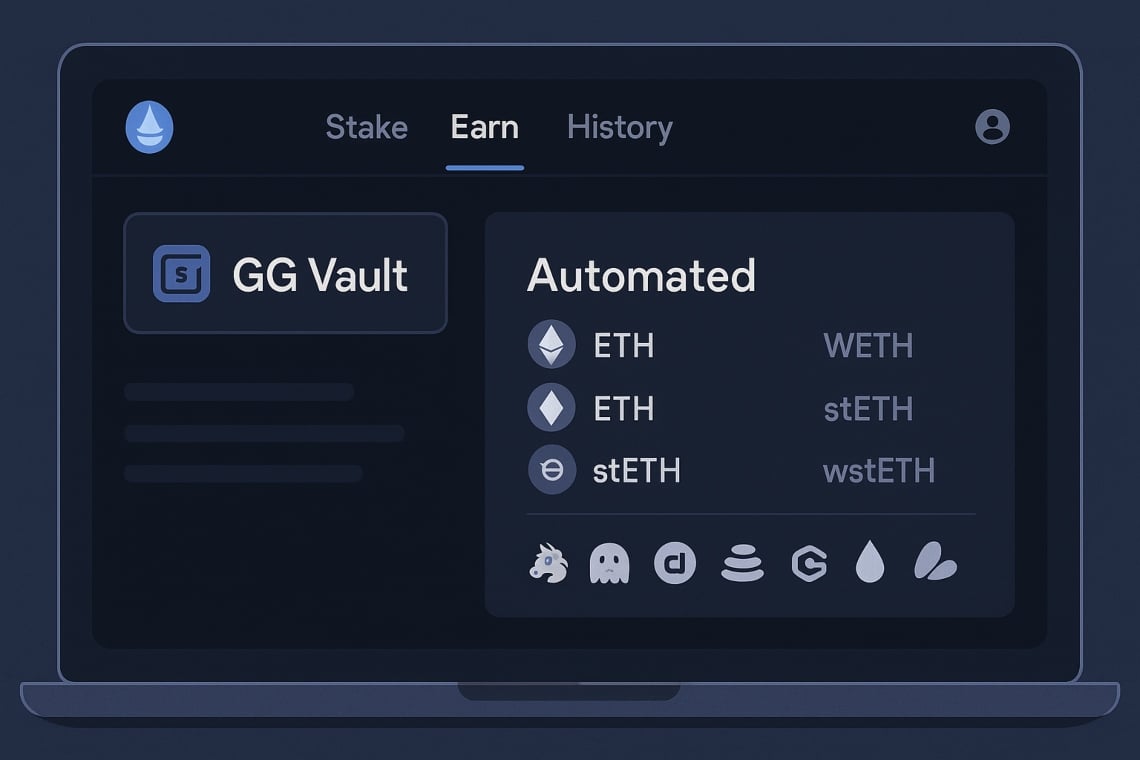
Lido launches GG Vault: automated DeFi yields on ETH, WETH, stETH, and wstETH in the Earn tab

Lido launches GG Vault: automated DeFi yields on ETH, WETH, stETH, and wstETH in the Earn tab

On September 3, 2025, Lido activated GG Vault (GGV), a vault that automates the allocation of ETH, WETH, stETH, and wstETH.

Author: The Cryptonomist
Wyoming Hedera Stablecoin: A Monumental Breakthrough for State-Backed Digital Currency

Wyoming Hedera Stablecoin: A Monumental Breakthrough for State-Backed Digital Currency

BitcoinWorld Wyoming Hedera Stablecoin: A Monumental Breakthrough for State-Backed Digital Currency The digital finance landscape is constantly evolving, and a groundbreaking development is unfolding in the heart of the American West. Wyoming, known for its forward-thinking approach to blockchain, has made a significant move by selecting Hedera (HBAR) as a candidate network for its state-backed stablecoin. This pivotal decision positions the Wyoming Hedera stablecoin initiative at the forefront of state-level digital currency innovation, capturing the attention of crypto enthusiasts worldwide. Why is Hedera the Chosen Network for Wyoming’s Stablecoin? Wyoming’s Stable Token Commission (WYST) officially announced Hedera’s selection for the Frontier Stable Token (FRNT), highlighting its unique capabilities. Indeed, Hedera was the sole network that fully satisfied the commission’s stringent criteria. These requirements centered on crucial factors like exceptional speed, unwavering reliability, and robust regulatory compliance, which are paramount for any state-backed financial instrument. This selection is a testament to Hedera’s underlying technology, the Hashgraph consensus mechanism. Unlike traditional blockchains, Hashgraph offers high transaction throughput and near-instant finality, making it ideal for high-volume, secure financial operations. Furthermore, Hedera’s governance model, managed by a diverse council of global organizations, instills confidence regarding its long-term stability and integrity. This combination of technical prowess and sound governance made the Wyoming Hedera stablecoin partnership a clear choice. What Exactly is the Frontier Stable Token (FRNT)? The FRNT token, which was issued just last month, represents a significant step towards a regulated digital dollar. It is meticulously designed to be 100% backed by U.S. dollars and short-term U.S. Treasury bills, ensuring its inherent stability and trustworthiness. This robust backing structure aims to provide users with absolute confidence, knowing that each FRNT token holds a tangible, equivalent value in traditional, liquid assets. The transparent nature of its reserves is paramount for fostering trust in this novel state-backed digital asset. By offering such clarity and a strong peg, the FRNT token seeks to mitigate the volatility often associated with other cryptocurrencies, positioning itself as a reliable medium of exchange and store of value within Wyoming’s economy. This commitment to stability is a core principle of the Wyoming Hedera stablecoin project. The Monumental Advantages of a Wyoming Hedera Stablecoin The decision to pursue a Wyoming Hedera stablecoin brings a host of potential benefits, not just for the state but also for the broader digital economy. This pioneering effort could unlock new avenues for financial efficiency and innovation. Enhanced Financial Efficiency: Stablecoins have the power to streamline payments, significantly reduce transaction costs, and accelerate settlement times for businesses and individuals operating within Wyoming. Regulatory Clarity: By issuing a state-backed stablecoin, Wyoming proactively provides a clear regulatory framework. This clarity can attract more blockchain businesses and investment, fostering economic growth and job creation. Innovation Showcase: This initiative boldly positions Wyoming as a leading hub in financial technology. It demonstrates a forward-thinking, proactive approach to integrating digital assets into its core economic infrastructure, setting an example for other states. Increased Trust: The 100% backing by U.S. dollars and Treasury bills, combined with explicit state oversight, is intended to instill a far higher level of trust compared to many privately issued stablecoins. What Challenges Might the Wyoming Hedera Stablecoin Face? While the prospects are undoubtedly exciting, the journey for the Wyoming Hedera stablecoin is not without its potential challenges. Navigating these obstacles will be key to its long-term success and widespread acceptance. Adoption Hurdles: Educating the public and encouraging widespread adoption among businesses and residents will be a crucial, ongoing effort. Familiarity with traditional finance is deeply ingrained, requiring clear communication and tangible benefits. Technical Integration: Integrating the FRNT token seamlessly into existing financial systems, point-of-sale terminals, and consumer applications requires significant development, collaboration, and ongoing maintenance. Evolving Regulations: The regulatory landscape for digital assets is dynamic and constantly changing at both state and federal levels. This necessitates continuous monitoring, adaptation, and potential policy adjustments. Competition: Other stablecoins and digital payment solutions already exist and are widely used. FRNT will need to demonstrate unique value, superior efficiency, or specific benefits tailored to Wyoming to gain significant traction. A Blueprint for the Future: Wyoming’s Stablecoin Impact Wyoming’s pioneering move with Hedera could serve as a vital blueprint for other states and even nations considering their own digital currencies. This real-world application of advanced blockchain technology by a governmental entity provides invaluable insights into the practicalities, benefits, and challenges of state-backed stablecoins. It represents a tangible step towards bridging the gap between traditional finance and the burgeoning digital asset economy. As more states and central banks explore digital transformation, the success and lessons learned from the Wyoming Hedera stablecoin project will undoubtedly be closely watched and analyzed. It marks a significant step towards mainstream acceptance and integration of digital assets within established financial systems, potentially accelerating a global shift towards more efficient and transparent financial infrastructures. Conclusion: A New Era for State-Backed Digital Assets The selection of Hedera by Wyoming for its state stablecoin is a landmark event in the cryptocurrency space. It underscores a growing recognition of blockchain’s immense potential to revolutionize financial systems and provides a tangible example of regulatory bodies actively embracing digital innovation. This bold step by Wyoming, leveraging Hedera’s robust and compliant platform, could very well pave the way for a new era of state-backed digital currencies, blending the inherent stability of traditional finance with the efficiency and transparency of decentralized technology. The future of finance is certainly looking more digital, and Wyoming is confidently leading the charge. Frequently Asked Questions (FAQs) 1. What is the Frontier Stable Token (FRNT)? The Frontier Stable Token (FRNT) is Wyoming’s official state-backed stablecoin, designed to provide a stable digital currency for transactions within the state’s economy. 2. Why did Wyoming choose Hedera for its stablecoin? Wyoming selected Hedera because it was the only network that met the state’s strict requirements for speed, reliability, and regulatory compliance, crucial factors for a state-backed digital asset. 3. How is the FRNT token backed? The FRNT token is 100% backed by U.S. dollars and short-term U.S. Treasury bills, ensuring its stability and trustworthiness by pegging its value to traditional, liquid assets. 4. What are the potential benefits of the Wyoming Hedera stablecoin? Benefits include enhanced financial efficiency, greater regulatory clarity for blockchain businesses, a showcase of state-level innovation, and increased user trust due to its robust backing and state oversight. 5. Could other states follow Wyoming’s example? Yes, Wyoming’s pioneering initiative with the Wyoming Hedera stablecoin could serve as a vital blueprint for other states and even nations considering their own digital currencies, offering valuable insights into implementation and benefits. What are your thoughts on Wyoming’s groundbreaking move with Hedera? Share this article with your network and join the conversation about the future of state-backed digital currencies! To learn more about the latest crypto market trends, explore our article on key developments shaping stablecoin institutional adoption. This post Wyoming Hedera Stablecoin: A Monumental Breakthrough for State-Backed Digital Currency first appeared on BitcoinWorld and is written by Editorial Team

Author: Coinstats
Top Crypto to Buy for September, ETH for Steady Gains or a DeFi Crypto Poised for 60x Upside

Top Crypto to Buy for September, ETH for Steady Gains or a DeFi Crypto Poised for 60x Upside

Ethereum (ETH) has earned its place as one of the strongest names in the digital asset space. Its network stability, vast ecosystem of decentralized applications, and strong institutional adoption make it an obvious choice for those who want steady, reliable exposure to the market. For many, ETH is the “blue chip” of crypto investing, offering [...] The post Top Crypto to Buy for September, ETH for Steady Gains or a DeFi Crypto Poised for 60x Upside appeared first on Blockonomi.

Author: Blockonomi
Top 5 Meme Coins to Buy Now as The Market Consolidates at $66 Billion

Top 5 Meme Coins to Buy Now as The Market Consolidates at $66 Billion

Meme coins continue to defy skeptics, carving out a $66 billion niche within the crypto market despite their reputation for volatility and speculation. For investors, timing remains critical, not only in spotting key accumulation ranges but also in identifying the best meme coins to buy before momentum returns. Recent projects have shown just how quickly […]

Author: The Cryptonomist
6 Best Crypto Presales to Buy in September 2025

6 Best Crypto Presales to Buy in September 2025

The crypto market is full of new ideas and opportunities, especially in presales, where investors can buy tokens early at lower prices before they launch on major exchanges. With Bitcoin holding steady above $100,000 and altcoins gaining strength lately, these presales allow buyers to get in early on projects that mix memes, AI, DeFi, and […]

Author: The Cryptonomist