Lending

Lending protocols form the backbone of the decentralized money market, allowing users to lend or borrow digital assets without intermediaries. Using smart contracts, platforms like Aave and Morpho automate interest rates based on supply and demand while requiring over-collateralization for security. The 2026 lending landscape features advanced permissionless vaults and institutional-grade credit lines. This tag covers the evolution of capital efficiency, liquidations, and the integration of diverse collateral types, including LSTs and tokenized RWAs.

14367 Articles
Created: 2026/02/02 18:52
Updated: 2026/02/02 18:52
Paxos Ties PayPal to Hyperliquid With USDH Push and $20M Incentives

Paxos Ties PayPal to Hyperliquid With USDH Push and $20M Incentives

TLDR: Paxos launched USDH Proposal V2 with PayPal support, HYPE listing, and $20M incentives to expand Hyperliquid globally. The proposal sets a TVL-based revenue model, capping Paxos earnings at 5% and linking all fees to HYPE tokens. PayPal will integrate USDH across Venmo, Checkout, Braintree, Hyperwallet, and Xoom for global reach. Paxos confirmed USDH issuance [...] The post Paxos Ties PayPal to Hyperliquid With USDH Push and $20M Incentives appeared first on Blockonomi.

Author: Blockonomi
Former Celsius CEO Alex Mashinsky Heads to Prison After Fraud Conviction

Former Celsius CEO Alex Mashinsky Heads to Prison After Fraud Conviction

The post Former Celsius CEO Alex Mashinsky Heads to Prison After Fraud Conviction appeared on BitcoinEthereumNews.com. Crime 10 September 2025 | 09:30 Alex Mashinsky, the former head of bankrupt crypto lender Celsius, is set to begin serving his prison sentence this Friday. Court documents show he must surrender to federal authorities by 2:00 pm ET, with the Bureau of Prisons recommending he be housed at the minimum-security Federal Prison Camp in Otisville, New York. Mashinsky’s downfall marks one of the most high-profile criminal cases in the crypto sector. Once seen as a pioneer of digital lending, Celsius collapsed in July 2022 amid the industry-wide turmoil following Terra’s implosion. Months later, Mashinsky stepped down as CEO while the company navigated bankruptcy proceedings. Celsius ultimately exited bankruptcy in early 2024, distributing roughly $3 billion to creditors. The former executive was indicted in July 2023 on seven felony counts, including commodities fraud and market manipulation tied to Celsius’s CEL token. His legal team attempted to have some charges thrown out but was unsuccessful. By May 2025, he reached a plea deal and was sentenced to federal prison. Court filings also confirmed he forfeited all claims to Celsius during bankruptcy. Mashinsky’s case isn’t isolated. Former Celsius revenue chief Roni Cohen-Pavon admitted guilt to four felonies and awaits sentencing in September. Across the industry, several other high-profile executives have faced justice: Sam Bankman-Fried is serving 25 years, Changpeng Zhao completed a four-month sentence, and Do Kwon is awaiting his own judgment after pleading guilty. Mashinsky’s imprisonment underscores the growing trend of U.S. courts holding crypto leaders accountable, a signal that enforcement actions are intensifying against misconduct in the sector. The information provided in this article is for informational purposes only and does not constitute financial, investment, or trading advice. Coindoo.com does not endorse or recommend any specific investment strategy or cryptocurrency. Always conduct your own research and consult with a licensed financial…

Author: BitcoinEthereumNews
Can the popular RWA really make money?

Can the popular RWA really make money?

In the cryptocurrency world, consensus is never lacking. To some extent, as the carrier of the dream economy, consensus is the gold of the cryptocurrency world. From the summer of DeFi to the once-popular NFTs, from the glimpse of the future of Web3 to the sudden explosion of AI, the continuous rise of the cryptocurrency world has all stemmed from consensus itself. Now, the wind of consensus is blowing towards RWA. As institutions continue to bridge the gap between crypto and traditional markets, RWA, the tokenization of real-world assets, is considered the next major trend poised to generate substantial growth. In Hong Kong, internet giants, financial institutions, and major banks appear to be waiting and observing this potential future trend. In mainland China, projects under the RWA banner are also mushrooming, hoping to dispel the industry's stagnation with RWA's momentum. But after unveiling the veil of “everything can be tokenized”, whether the real RWA is really the gold to be mined as the market imagines is still a big question mark. 01. Current Status of RWA Development: Overseas Focus on Finance, while Mainland China Develops Industry RWAs, short for Real World Assets, broadly refer to any real-world physical asset that is tokenized and mapped onto a blockchain. Strictly speaking, stablecoins are also a form of RWA. From an asset perspective, RWAs offer numerous advantages. First, divisibility. Compared to traditional assets, which are sold in fixed units, tokenization allows for fragmentation and sale of assets in smaller units. This not only lowers the barrier to entry for financing but also allows for greater trading flexibility for large assets constrained by scale. Second, it offers broader price discovery and liquidity. Under existing financial product trading infrastructure, financial asset transactions are subject to significant time and space constraints. However, on-chain tokenization enables 24/7 trading and global pricing, more in line with the characteristics of a free market. Finally, efficiency is enhanced. On-chain tokenization offers high transparency and reduces intermediary costs and time, making RWAs generally more efficient in issuance. With these advantages, traditional institutions have flocked to the market. Beginning in 2019, JPMorgan Chase, Goldman Sachs, DBS Bank, UBS, Santander, Societe Generale, and Hamilton Lane, among others, began exploring this sector and testing and issuing some products. But why has RWA only recently exploded in popularity? The underlying reasons are policy and cyclical factors. First, a shift in the policy environment. The United States, in particular, significantly reduced regulatory pressure on tokenized assets this year and even expressed a heightened interest in stablecoins and RWA assets. Hong Kong has also seen this. This relaxed regulatory environment has given previously hesitant institutions the freedom to conduct pilot projects. Second, there are issues related to industry cycles. To date, the core driving force of the cryptocurrency industry has shifted from technology and applications to capital. The prominent problem restricting the cryptocurrency industry is the serious lack of incremental growth. The market can no longer support development by relying solely on the existing resources within the circle. It is necessary to introduce flows of people and funds from outside the circle. The large-scale influx of traditional institutions just corresponds to this solution. Therefore, RWA, as the best entry point for traditional institutions and crypto finance, has also been popular. As with their current development, the paths of RWA development in China and abroad, like their attitudes toward blockchain, differ significantly. Overseas RWAs, primarily in the United States, focus on finance, with tokenized assets often consisting primarily of government bonds and money market funds. In contrast, domestic RWAs emphasize real-world empowerment, with underlying assets possessing a distinct industrial nature. Currently, due to their early start and maturing development, overseas RWAs are exhibiting a diverse range of underlying assets. According to Rwa.xyz data, after excluding stablecoins, the total on-chain RWA has reached $28.44 billion, a 14.74-fold increase from $1.929 billion in 2022. The number of asset issuers has reached 274, with total asset holders exceeding 380,000. In terms of asset classes, private credit is the core area of RWA, with a scale of 16.1 billion yuan, accounting for 56.61%. US Treasuries rank second with $7.5 billion, followed by commodities ($2 billion), institutional alternative funds ($1.8 billion), and public equity ($4.2 million). Non-US Treasury bonds and corporate bonds are the least involved, with a combined total of only $600,000. While private lending appears to be leading the way, Figure, an on-chain mortgage lender, alone accounts for $15.5 billion in private lending. However, Figure merely records transactions on the Provenance blockchain after backing its core HELOC mortgage product. Strictly speaking, it merely uploads data to the blockchain and is not a true RWA company. Therefore, the most attractive sector in the RWA sector remains US Treasury bonds. Institutional investors flock to the U.S. Treasury bond market. The top three holdings are all large institutions. BlackRock's tokenized fund, BUIDL, currently holds $2.283 billion in assets, followed by WisdomTree's WTGXX (US$830 million) and Franklin Templeton's government money fund, BENJI (US$740 million). Together, these three companies hold 37.78% of the Treasury bond market. Precious metals dominate the commodity market, with gold holdings exceeding $1.88 billion, representing over 70% of the market. Shifting our focus from overseas to domestically, the target composition shifts. China's RWA practice is still in its early stages, with the industrial chain still evolving. Development pathways are primarily focused on empowering the real economy, with applications currently underway in financial assets, physical assets, trade financing, supply chain traceability, cultural heritage preservation, and tourism. Typical examples include the Longxin Group charging pile asset project, the GCL Energy photovoltaic asset project, the Green Energy battery swap asset project, the Malu grape agricultural product project, and the Greenland Jinchuang real estate project. For example, the first charging pile asset RWA project in China, a collaboration between Ant Digital and Longxin Technology, successfully raised 100 million RMB in tokenized financing, leveraging 9,000 charging piles owned by GCL Energy. Source: Huaxi Securities There are also differences in infrastructure. Overseas RWAs are mostly hosted on public blockchains, with Ethereum holding over 57% of the market share. Domestic RWAs, however, adhere to traditional principles, primarily relying on consortium blockchains, supplemented by public blockchains. Currently, blockchain companies such as Ant Digits and Shuqin Technology are developing dedicated RWA platforms. Despite differences in infrastructure and underlying assets, a preliminary consensus has emerged both domestically and internationally regarding the rush to establish RWAs. According to a joint forecast by Boston Consulting Group (BCG) and ADDX, the global asset tokenization market will reach $16.1 trillion by 2030. Against this backdrop, not only large enterprises are eager to capitalize, but even small and medium-sized businesses are jumping on this new gold mine of wealth. However, despite this seemingly limitless potential, is RWA truly flawless in its current development? Is issuing an RWA truly as easy as taking something out of a bag? 02. The dilemma of RWA: high issuance threshold and liquidity problems The answer is no. First, despite the slogan "everything can be tokenized," RWAs are not without requirements for their underlying assets. The term "asset" implies that the issued RWA must be an objectively yielding asset. Therefore, a relatively good underlying asset should possess three basic qualities: standardization, high liquidity, and a more attractive return. Essentially, on-chain asset issuance merely provides a new financing and issuance channel. The key to attracting market liquidity lies in the inherent value of the asset. From a scalability perspective, scalable assets must possess stable value, clear legal title, and verifiable off-chain data; otherwise, widespread distribution is difficult. This also explains why government bonds are the largest overseas RWA product: their inherent high liquidity, guaranteed returns, and high compliance certainty naturally align with the RWA concept. Even if the asset issue is resolved, issuing RWAs is still not an easy task under my country's current environment. Currently, due to the inherent securities nature of RWAs, the RWA issuance process involves both legal compliance and technical complexity. For example, issuing private RWAs in Hong Kong requires initial asset screening to ensure that the assets are clear and tradable. Typically, a special purpose vehicle (SPV) entity is established to connect domestic and overseas markets, facilitating the compliant cross-border flow of funds and assets. License application and sandbox testing must also be completed in Hong Kong. After ensuring compliance, technical implementation must ensure data and asset interoperability. Comprehensive solution providers are now available, focusing on asset on-chain integration, smart contract auditing, and cross-chain interoperability. The entire process, relying solely on private companies to issue RWAs in Hong Kong, would take at least eight months. The complex process leads to high costs. According to a PAnews report, the cost of issuing a single RWA product in Hong Kong can reach 3-6 million RMB, covering legal compliance, technology integration, brokerage costs, and fundraising and QFLP costs. Brokerages, as the core of RWA transactions, account for the majority of these costs, with channel fees reaching 2-3 million RMB. From a long-term strategic perspective, issuance costs rise even further. Obtaining a Hong Kong license alone can cost over one million RMB, and the extremely challenging Virtual Asset Service Provider (VASP) license can cost tens of millions RMB, making participation accessible only to large, well-resourced players. More importantly, issuance is just the beginning; liquidity challenges remain. In fact, even in larger overseas markets, the liquidity of RWA products is far from optimistic. Take BlackRock's BUIDL, for example. With a market capitalization of $2.238 billion and monthly transaction volume exceeding $170 million, BUIDL is a market leader overseas. However, it has only 89 holders, 51 monthly transfer addresses, and fewer than 20 monthly active addresses, highlighting the market's high dependence on issuers and a small number of large institutions. This is consistent with the performance of the traditional government bond market, where such assets typically generate interest through scale rather than relying on a trading market. Tokenization hardly changes the underlying nature of these assets. Across the institutional RWA market, these characteristics of high market capitalization, concentrated control, and low liquidity are common. Only products with relatively widespread trading channels, such as gold RWAs, can break this mold. This shows that the threshold for issuing RWAs is not only high, but also quite high. Companies hoping to achieve huge profits through RWAs and create something out of nothing may need to think twice before taking action. After all, if there is a good asset, there will naturally be no shortage of sellers. However, if the underlying asset cannot be classified as a high-quality asset in the first place, tokenization will not only fail to achieve good results, but may even lead to losses. In fact, a large number of RWA products currently flooding the market are simply skirting the rules, covering junk assets with a conceptual shell to package them as new products. This not only fails to meet the original intention of RWAs, but also poses compliance risks. Take Hainan Huatie, a project that has recently gained widespread attention in the market, for example. The company, relying on the "Brother Hornet" digital collectible, has tied the collectible to a cash dividend of 50,000 stock income rights each year from 2025 to 2027. As a further development strategy, the company has also officially announced the issuance of a 10 million yuan non-financial RWA product, which will digitize the use and operating rights of all its equipment on the blockchain in the form of "membership cards," allowing users to circulate through on-chain transfers, consignments, and other methods while enjoying certain usage rights or benefits. Although both projects were quite successful, with the Hornet Brother digital collectible seeing its floor price leap from 200 to 15,000 yuan in just three days, a closer look reveals that both NFTs and RWAs have very unclear ownership structures, extremely vague disclosure information, and involve the splitting of securitized proceeds, posing obvious compliance risks. 03. The Future of RWA: A Dialectical Unity of Brightness and Twists In summary, although RWA has developed rapidly in the past two years driven by both policies and markets, the industrial chain has been steadily extended, the coverage of underlying assets has continued to increase, product types have shown a trend of diversification, and the issuing entities have been continuously expanded, it also faces objective challenges such as insufficient infrastructure, long issuance cycle, high cost, low liquidity, and lack of regulatory chain. If long-term development is to be achieved, it is indispensable to improve infrastructure technically, build an ecosystem for service providers, and create a structure in the market. Fortunately, the market is taking action. Technically, specialized platforms for RWA issuance are springing up, along with accelerators, organizations, and associations focused on RWA services. The standard system for product issuance continues to improve. Even with the daunting challenge of liquidity, the market is attempting to address it by opening up the DeFi space and developing on-chain distribution. On the regulatory front, both the United States and Hong Kong are providing a better environment for innovation within their rules. Hong Kong's Ensemble Sandbox is a prime example. The future is bright, but the road ahead is tortuous. Behind the gold rush, there are also obstacles. For RWA, there is still a long way to go.

Author: PANews
Aptos Welcomes Chainlink CCIP, Driving Institutional DeFi Adoption

Aptos Welcomes Chainlink CCIP, Driving Institutional DeFi Adoption

Chainlink has announced that its Cross-Chain Interoperability Protocol (CCIP) is now officially live on the Aptos mainnet. The new development is the introduction of the initial CCIP integration on a chain based on the Move protocol, an extension that creates connectivity across over sixty EVM and non-EVM networks. High-throughput Layer 1 chain Aptos gets direct […]

Author: Tronweekly
Klarna's IPO prices above expectations, valuing it at $15 billion

Klarna's IPO prices above expectations, valuing it at $15 billion

PANews reported on September 10th that Swedish online lending platform Klarna priced its IPO at $40 per share, higher than the originally expected range of $35 to $37, valuing the company at approximately $15 billion. The total raised was $1.37 billion, of which $1.17 billion was distributed to existing shareholders and $200 million went to the company. Klarna's second-quarter net loss widened year-over-year to $53 million, while revenue increased 20% year-over-year to $823 million. The company will list on the New York Stock Exchange under the ticker symbol "KLAR." Earlier in February, Klarna CEO said that Klarna and individuals will embrace cryptocurrencies .

Author: PANews
Best Crypto Coin to Buy Is Not the Usual BTC, ETH or SOL, But an Altcoin Ready to Go Past $2.5 Level

Best Crypto Coin to Buy Is Not the Usual BTC, ETH or SOL, But an Altcoin Ready to Go Past $2.5 Level

Bitcoin (BTC), Ethereum (ETH), and Solana (SOL) have long been the pillars of crypto investing. They provide stability, institutional credibility, and a proven track record. Yet their upside potential is increasingly limited. Investors seeking outsized returns are turning to utility-driven altcoins that combine real-world use cases with structural demand mechanics. Among these, Mutuum Finance (MUTM) [...] The post Best Crypto Coin to Buy Is Not the Usual BTC, ETH or SOL, But an Altcoin Ready to Go Past $2.5 Level appeared first on Blockonomi.

Author: Blockonomi
Pioneering Milestone: KODA Achieves First South Korean VASP Venture Company Certification

Pioneering Milestone: KODA Achieves First South Korean VASP Venture Company Certification

BitcoinWorld Pioneering Milestone: KODA Achieves First South Korean VASP Venture Company Certification In a groundbreaking development for South Korea’s digital asset landscape, Korea Digital Asset (KODA), a prominent digital asset custody firm, has achieved a significant milestone. KODA has become the first virtual asset service provider (VASP) in the nation to receive the coveted KODA venture company certification from the Ministry of SMEs and Startups. This pivotal moment signals a major shift in how blockchain and cryptocurrency businesses are recognized and supported within the country’s regulatory framework. What Does KODA’s Venture Company Certification Truly Mean? For years, virtual asset service providers in South Korea faced an uphill battle when seeking venture company status. Historically, many VASPs were denied or even had their certifications revoked, primarily due to their registration with the Financial Intelligence Unit (FIU). This created a unique challenge for legitimate crypto businesses looking to expand and innovate within the traditional startup ecosystem. Regulatory Hurdle: Previously, the very act of being a regulated VASP was a barrier to venture status. Policy Evolution: A recent, crucial policy change has reshaped this landscape. This new policy now explicitly makes blockchain-based crypto asset trading and brokerage businesses eligible for the certification. KODA’s approval under these updated rules isn’t just a win for the company; it represents a broader acceptance and integration of digital asset businesses into South Korea’s innovation-driven economy. The Journey to KODA Venture Company Certification: A Regulatory Shift The path to achieving KODA venture company certification wasn’t straightforward for the industry. The initial reluctance to grant such status stemmed from regulatory caution surrounding the nascent and often volatile cryptocurrency market. The government aimed to prevent potential misuse or instability, leading to strict interpretations of existing venture company eligibility criteria. However, as the blockchain industry matured and more robust regulatory frameworks for VASPs were established, the need for a more progressive approach became evident. The Ministry of SMEs and Startups, recognizing the innovative potential of these firms, initiated a review of its policies. This led to the landmark decision to include blockchain-based crypto asset services in the eligibility criteria. KODA, a joint venture between Hashed and KB Kookmin Bank, stands out as a leader in digital asset custody. Its strong backing and commitment to regulatory compliance likely played a significant role in its successful application, setting a precedent for other VASPs. Why is This KODA Venture Company Certification a Game-Changer? The attainment of KODA venture company certification offers a multitude of benefits, not only for KODA itself but for the entire South Korean digital asset sector. Venture company status often comes with various government incentives, which can include: Tax Benefits: Reduced corporate taxes and other fiscal advantages. Funding Opportunities: Easier access to government grants, subsidies, and preferred lending rates. Talent Attraction: Enhanced credibility and attractiveness to skilled professionals. Increased Investor Confidence: A stamp of approval that can draw more private investment. Moreover, this certification provides legitimacy and recognition to the virtual asset industry as a whole. It signifies that digital asset businesses are now seen as genuine contributors to technological innovation and economic growth, rather than just speculative entities. Looking Ahead: The Future Impact of KODA Venture Company Certification What does this mean for the broader landscape of virtual asset service providers in South Korea? KODA’s achievement paves the way for other eligible VASPs to pursue similar certifications. This could foster a more competitive and innovative environment, encouraging more companies to adhere to high standards of operation and compliance. The policy change reflects a growing understanding and acceptance of blockchain technology’s role in the future economy. It suggests a progressive regulatory stance that seeks to balance innovation with necessary oversight. As more VASPs potentially gain this status, it could lead to a surge in investment, job creation, and the development of new, cutting-edge digital asset services. This move positions South Korea as a more welcoming jurisdiction for blockchain innovation, potentially attracting international attention and investment in its burgeoning crypto sector. The ripple effect of KODA’s pioneering KODA venture company certification is likely to be felt for years to come. KODA’s historic achievement of becoming the first South Korean VASP to secure venture company certification is more than just a corporate success story. It represents a significant policy evolution, validating the digital asset industry’s role in the national economy. This milestone not only empowers KODA with new opportunities but also sets a crucial precedent, fostering a more inclusive and innovative environment for blockchain and cryptocurrency businesses across South Korea. It’s a clear signal that the future of finance is increasingly intertwined with digital assets, recognized and supported at the highest levels. Frequently Asked Questions (FAQs) 1. What is KODA? KODA, or Korea Digital Asset, is a digital asset custody firm jointly established by prominent entities Hashed and KB Kookmin Bank. It provides secure storage and management services for digital assets. 2. What is a VASP? VASP stands for Virtual Asset Service Provider. It refers to any business that conducts activities involving virtual assets for or on behalf of another natural or legal person, such as exchanges, custodians, and transfer services. 3. Why is KODA’s venture company certification significant? It’s significant because KODA is the first VASP in South Korea to receive this certification. Historically, VASPs were often denied due to regulatory complexities. This marks a major policy shift, recognizing digital asset businesses as legitimate innovators and opening doors to government incentives and greater industry legitimacy. 4. What kind of benefits does venture company certification provide? Venture company certification typically offers benefits such as tax incentives, easier access to government grants and funding, enhanced credibility for attracting talent, and increased investor confidence, fostering growth and innovation. 5. How did the policy for VASPs change regarding venture company certification? Previously, VASPs were often excluded or had certifications revoked due to their registration with the Financial Intelligence Unit (FIU). A recent policy change by South Korea’s Ministry of SMEs and Startups now explicitly makes blockchain-based crypto asset trading and brokerage businesses eligible for this certification, acknowledging their innovative potential. Did you find this breakthrough news insightful? Share this article with your network to spread awareness about South Korea’s evolving stance on digital asset innovation and KODA’s pioneering achievement! To learn more about the latest crypto market trends, explore our article on key developments shaping blockchain institutional adoption. This post Pioneering Milestone: KODA Achieves First South Korean VASP Venture Company Certification first appeared on BitcoinWorld and is written by Editorial Team

Author: Coinstats
Nasdaq-Listed Sourcing Firm Is Raising $1.5 Billion To Buy Solana

Nasdaq-Listed Sourcing Firm Is Raising $1.5 Billion To Buy Solana

The post Nasdaq-Listed Sourcing Firm Is Raising $1.5 Billion To Buy Solana appeared on BitcoinEthereumNews.com. Forward Industries, Inc. (NASDAQ: FORD) announced a $1.65 billion private placement in cash and stablecoin commitments led by Galaxy Digital, Jump Crypto, and Multicoin Capital to launch a Solana-focused treasury strategy. The deal marks the largest Solana-centered raise by a public company and underscores institutional confidence in the blockchain’s growth trajectory. Strategic Backing From Galaxy, Jump, and Multicoin Sponsored The private investment in public equity (PIPE) also includes C/M Capital Partners, LP, one of Forward’s largest shareholders. Upon closing, Multicoin co-founder Kyle Samani will become chairman of the board, while Galaxy President Chris Ferraro and Jump Crypto Chief Investment Officer Saurabh Sharma will join as observers. “Solana has emerged as one of the most innovative and widely adopted blockchain ecosystems in the world,” said Michael Pruitt, CEO of Forward Industries. “Our strategy to build an active Solana treasury program underscores our conviction in the long-term potential of SOL and our commitment to building shareholder value by directly participating in its growth.” Galaxy Digital (NASDAQ: GLXY), one of Solana’s largest validators, will provide trading, lending, staking, and risk management services. Its asset management unit will advise Forward’s treasury plan with institutional-grade tools. Jump Crypto, a core developer in Solana infrastructure, is building Firedancer, a validator client designed to increase throughput and resilience. The firm also supports projects such as DoubleZero and Shelby, highlighting its long-term engineering role in the ecosystem. Sponsored Multicoin Capital, founded in 2017, was Solana’s seed investor and has funded more than 25 projects on the network. Samani, a long-time advocate, said the treasury approach offers more upside than passive holding. “Real economic value is being generated on Solana,” Samani said. “An institutional-scale treasury can be deployed in sophisticated ways within the ecosystem to increase SOL per share at a faster rate than simply being a passive holder.”…

Author: BitcoinEthereumNews
VCI Global Launches Smart Bridge Subsidiary to Tap Asset Tokenization Market

VCI Global Launches Smart Bridge Subsidiary to Tap Asset Tokenization Market

TLDR VCI Global launches Smart Bridge to capture share in the $16 trillion real-world asset tokenization market. Smart Bridge offers tokenization, listing support, and blockchain integration for assets like real estate and IP. VCI Global holds 70% equity in a $2.16B bitcoin-backed joint venture for tokenization infrastructure. Smart Bridge targets Singapore, Hong Kong, and U.S. [...] The post VCI Global Launches Smart Bridge Subsidiary to Tap Asset Tokenization Market appeared first on CoinCentral.

Author: Coincentral
BlockDAG Dominates with $403M Raised & Growing Ecosystem, Leaving Nexchain &  Snorter Behind in the Best Crypto Presale Race

BlockDAG Dominates with $403M Raised & Growing Ecosystem, Leaving Nexchain & Snorter Behind in the Best Crypto Presale Race

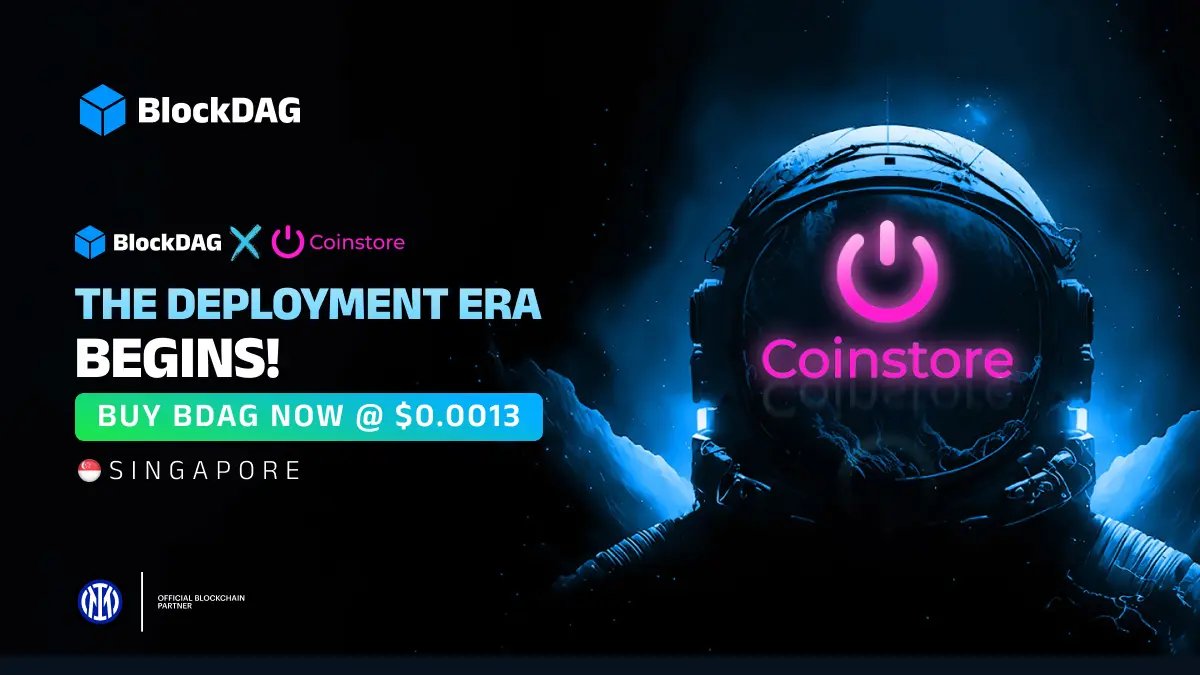
What’s happening with Nexchain’s steady stream of updates and Snorter’s presale, which is racing toward the $4M mark? Both coins are drawing attention and sparking discussions about the strongest presales right now. Yet, when compared to BlockDAG (BDAG), the story shifts. It isn’t relying on hype alone.  It is signing international sponsorships, rolling back presale prices, and delivering miners in bulk. With hundreds of millions already raised and a fully funded ecosystem in place, the project is demonstrating its ability to support its claims with tangible progress. That’s why many see BlockDAG as more than a typical presale. It is being viewed as the option with the power to overshadow both Nexchain and Snorter. BlockDAG Powers Ahead with $403M Raised BlockDAG is changing the conversation by proving that growth can be built on more than speculation. Its model focuses on developers, hackathons, and grants that keep projects alive beyond announcements. Teams across Africa and other regions are already building on the network, and the strongest ideas are backed through live funding in both USDT and BDAG. This ensures that new projects don’t stop after competitions but actually go live. Nick Van Den Bergh has explained how this approach helps creators. By directly funding projects, BlockDAG (BDAG) creates a space where builders are rewarded for utility and integration. It is not about chasing short-term attention, but about creating a system where ideas become real, usable cases. This builder-first approach has set it apart. The numbers add to the story. With over $403 million raised, whale buys of $4.4 million and $3.6 million, and over 312,000 holders, the project has already proven it can attract strong support. More than 26.1 billion coins have been sold, and the price rollback to $0.0013 for the final 30 days adds urgency. Many now view this as one of the best opportunities to join a project before a major milestone. BlockDAG’s cycle of hackathons, grants, and presale growth demonstrates how innovation and funding can mutually reinforce one another. By supporting real projects and combining them with global sponsorships, it positions itself as more than another presale. With Batch 30 now live and the deployment event happening in Singapore, the BDAG coin is being recognized as a fully funded ecosystem ready to scale. Nexchain Steps Up with Steady Progress Nexchain has managed to stay focused through consistent updates that highlight its goal of driving long-term growth. Instead of chasing hype, it is putting scalability and adoption at the center of its roadmap. By prioritizing practical use cases, Nexchain is carving out space where it can attract both developers and holders. This approach has kept the project visible, even in a crowded market where many new coins quickly lose attention. What keeps Nexchain relevant is its ongoing work to deliver clear progress. The team has been updating its roadmap while pushing technical improvements designed to expand use cases. These updates continue to capture the community’s attention, lending the project credibility that many newer entries lack. With other presales launching in 2025, Nexchain’s ability to maintain momentum is being closely watched. The debate continues about whether it can sustain long-term competitiveness, but its steady execution gives it an advantage. Still, many believe BlockDAG’s builder-focused model offers a stronger case for lasting growth. Snorter Gains Momentum Toward $4M Milestone Snorter has been turning heads with its presale closing in on a $4M milestone. The coin benefits from being linked to Pump. Fun’s fee update, which allows memecoin creators to gain more from their projects. This connection has boosted Snorter’s visibility and made it more than just another short-lived meme play. Its traction has led analysts to include it in conversations about breakout altcoins of 2025. The rise of Snorter shows how quickly a project can capture community support. Its ability to build attention through Pump. Fun’s changes have given it momentum in a competitive market. Many view its presale growth as evidence of genuine demand, not just fleeting interest. However, questions remain about whether Snorter can continue to grow once the presale ends. While it has earned a spot on watchlists, its long-term potential is still uncertain. For now, it continues to stand out among meme-driven projects, gaining attention this year. Compared to BlockDAG, though, Snorter still lacks the ecosystem depth that fuels lasting growth. Takeaway Nexchain and Snorter are gaining traction, each for different reasons. Nexchain is rolling out updates aimed at boosting adoption and keeping the project relevant. Snorter, on the other hand, has built momentum quickly, with its presale valuation approaching $4M and extra visibility from Pump. Fun’s updated fee model. These moves confirm they are part of the current race, but the real question is long-term value.  That is where BlockDAG changes the conversation. Its builder-focused strategy, powered by hackathons and live grants that fund working projects, separates it from short-lived presales. With nearly $403M already raised, whale buys worth millions, and a limited rollback price of $0.0013 for a short time, many now call it the best crypto presale. BlockDAG isn’t just about coins on sale. It is building a comprehensive ecosystem where growth is directly tied to real project utility. Presale: https://purchase.blockdag.network Website: https://blockdag.network Telegram: https://t.me/blockDAGnetworkOfficial Discord: https://discord.gg/Q7BxghMVyu Disclaimer: This content is a sponsored post and is intended for informational purposes only. It was not written by 36crypto, does not reflect the views of 36crypto and is not a financial advice. Please do your research before engaging with the products.The post BlockDAG Dominates with $403M Raised & Growing Ecosystem, Leaving Nexchain & Snorter Behind in the Best Crypto Presale Race appeared first on 36Crypto.

Author: Coinstats