Lending

Lending protocols form the backbone of the decentralized money market, allowing users to lend or borrow digital assets without intermediaries. Using smart contracts, platforms like Aave and Morpho automate interest rates based on supply and demand while requiring over-collateralization for security. The 2026 lending landscape features advanced permissionless vaults and institutional-grade credit lines. This tag covers the evolution of capital efficiency, liquidations, and the integration of diverse collateral types, including LSTs and tokenized RWAs.

14612 Articles
Created: 2026/02/02 18:52
Updated: 2026/02/02 18:52
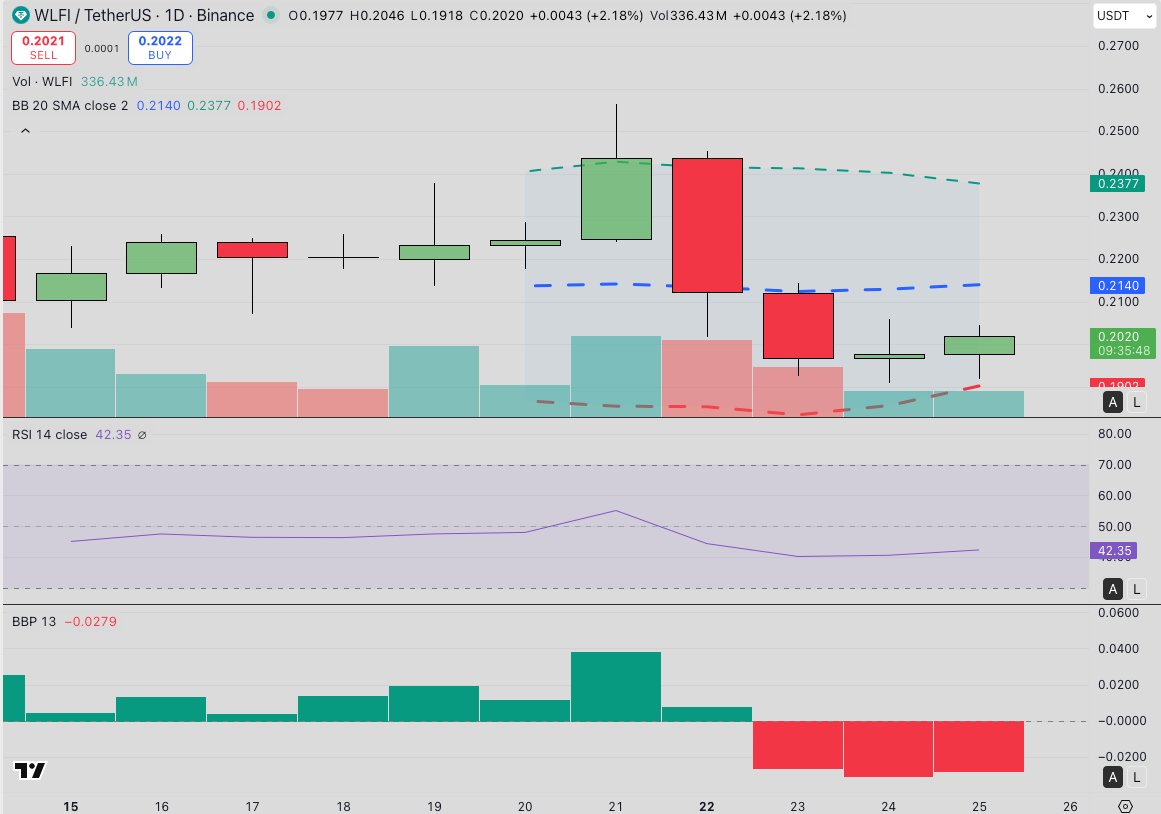
Robinhood US Listing Propels WLFI Token Above $5B Valuation

Robinhood US Listing Propels WLFI Token Above $5B Valuation

Robinhood's official listing of World Liberty Financial's WLFI token triggered a 3% surge, breaking above $0.20 resistance as the Trump-backed project gains access to millions of retail traders. The post Robinhood US Listing Propels WLFI Token Above $5B Valuation appeared first on Coinspeaker.

Author: Coinspeaker
CleanSpark secures $100M Bitcoin-backed credit facility

CleanSpark secures $100M Bitcoin-backed credit facility

CleanSpark raises $100M via Two Prime Bitcoin-backed loan, expanding total collateralized lending to $400M. Funding to support Bitcoin mining hashrate, high-performance computing, and digital asset strategies. Shares dip 1.1% as company leverages loans to grow operations while maintaining digital asset exposure. Bitcoin miner CleanSpark Inc. (CLSK) announced Thursday that it has established a $100 million […] The post CleanSpark secures $100M Bitcoin-backed credit facility appeared first on CoinJournal.

Author: Coin Journal
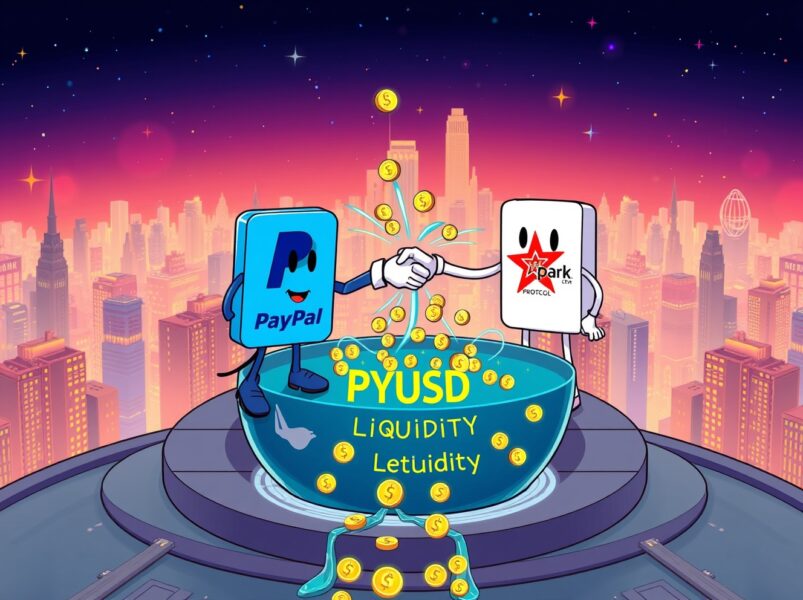
PayPal and Spark target $1B liquidity boost for PYUSD

PayPal and Spark target $1B liquidity boost for PYUSD

The post PayPal and Spark target $1B liquidity boost for PYUSD appeared on BitcoinEthereumNews.com. PayPal and decentralized finance platform Spark have launched a joint initiative to expand liquidity for PayPal USD (PYUSD). Deposits have already surpassed $100 million since the token was added to SparkLend on Sept 25. The collaboration aims to grow that figure to $1 billion in the coming weeks, offering PayPal a DeFi-native route to scale its stablecoin. Spark, an institutional-grade asset allocator, operates a Liquidity Layer that deploys more than $8 billion in stablecoin reserves into lending markets. This model replaces the short-lived incentive programs traditionally used to grow stablecoin adoption, instead offering predictable borrowing costs and deep market liquidity. Phoenix Labs CEO Sam MacPherson said Spark’s framework shows how “DeFi can provide the reliable market foundations that global companies need to bring stablecoins into the mainstream economy.” PYUSD, which is issued by Paxos Trust Company and backed by US dollar reserves and Treasuries, was launched in 2023 as PayPal’s entry into digital dollars. Its integration with Spark comes as stablecoin supply has surged nearly $30 billion in the past quarter, with daily transaction volumes now exceeding $100 billion. This is a developing story. This article was generated with the assistance of AI and reviewed by editor Jeffrey Albus before publication. Get the news in your inbox. Explore Blockworks newsletters: Source: https://blockworks.co/news/paypal-and-spark-target-1b-liquidity-boost-for-pyusd

Author: BitcoinEthereumNews
5 Meme Coins to Watch Before Q4 2025: MAGAX Leads the Pack

5 Meme Coins to Watch Before Q4 2025: MAGAX Leads the Pack

As September winds down, meme coins remain one of the hottest niches in crypto. While Bitcoin and Ethereum dominate institutional portfolios, retail traders are searching for the next high-upside play — the tokens that can deliver 20×, 50×, or even 100× gains. In 2025, new contenders are stepping up alongside old favorites. This roundup looks […] The post 5 Meme Coins to Watch Before Q4 2025: MAGAX Leads the Pack appeared first on Live Bitcoin News.

Author: LiveBitcoinNews
AI-Powered Smart Contracts: The Future of Blockchain

AI-Powered Smart Contracts: The Future of Blockchain

AI-Powered Smart Contracts: The Future of Blockchain Blockchain technology has revolutionized the way businesses and individuals execute digital transactions. Among its most groundbreaking innovations are smart contracts — self-executing digital agreements that automatically enforce the terms encoded within them. While traditional smart contracts have already transformed industries like finance and supply chain, the integration of artificial intelligence is pushing this technology into a new era. AI-Powered Smart Contracts are now redefining how agreements are executed, optimized, and secured, offering unprecedented efficiency, trust, and automation. This article delves into the evolution, applications, and future potential of AI-Powered Smart Contracts, highlighting how AI-driven smart contracts are reshaping blockchain ecosystems. What Are AI-Powered Smart Contracts? AI-Powered Smart Contracts are digital agreements that leverage artificial intelligence to enhance the capabilities of traditional smart contracts. Unlike conventional smart contracts, which follow pre-defined rules, AI-powered versions can analyze complex datasets, adapt to changing conditions, and execute decisions autonomously. This innovation introduces a layer of intelligence, enabling contracts to manage more dynamic, sophisticated, and context-aware interactions. Key features include:Autonomous contract execution based on real-time data Integration with AI blockchain automation tools Ability to create intelligent legal agreements that understand context By combining AI and blockchain, these contracts offer higher efficiency, lower operational costs, and greater security. How AI-Driven Smart Contracts Work? At their core, AI-driven smart contracts operate on blockchain networks, ensuring immutability, transparency, and decentralization. The AI component analyzes historical and real-time data to make informed decisions, automate processes, and predict potential issues before they occur. For example, in a supply chain scenario, AI can monitor shipment data and automatically release payments only when delivery conditions are met. This combination of blockchain’s trustless environment and AI’s decision-making capabilities enables self-executing digital contracts to operate seamlessly without human intervention. Key Advantages of AI-Powered Smart Contracts The integration of AI into smart contracts provides numerous benefits across industries:

  1. Autonomous Contract ExecutionAutonomous contract execution allows agreements to be carried out automatically when pre-defined conditions are met. This cuts out intermediaries and reduces potential human errors.
  2. Smart Contract OptimizationSmart contract optimization is achieved through AI algorithms that continuously analyze performance, identify inefficiencies, and suggest improvements. This ensures contracts remain effective and adaptive to changing conditions.
  3. AI-Driven Decentralized Finance (DeFi)In AI-driven decentralized finance (DeFi) platforms, AI-powered contracts can manage lending, borrowing, and trading activities automatically. By predicting market trends and adjusting terms dynamically, these contracts maximize returns while minimizing risk.
  4. Predictive Analytics in Smart ContractsUsing predictive analytics in smart contracts, AI can forecast potential breaches, defaults, or disputes. This foresight enables proactive measures, improving reliability and reducing operational disruptions.
  5. AI Trustless TransactionsAI trustless transactions combine blockchain’s security with AI’s intelligence, allowing secure, verifiable, and automated transactions without the need for centralized authorities.
  6. Automated Dispute Resolution with AIAutomated dispute resolution with AI enables contracts to assess conflicts, evaluate evidence, and propose resolutions autonomously. This reduces legal costs and accelerates conflict resolution.
  7. Intelligent Legal AgreementsAI transforms standard agreements into intelligent legal agreements capable of interpreting complex terms and adapting clauses based on context, making them more versatile and reliable. Applications Across Industries
  8. Finance and BankingIn finance, AI-powered smart contracts streamline processes such as loans, insurance claims, and securities trading. They enable self-executing digital contracts that automate payments, risk assessments, and compliance checks. By leveraging predictive analytics, banks can anticipate defaults and adjust contract terms proactively.
  9. Supply Chain ManagementAI-driven contracts monitor supply chains in real time, ensuring transparency and accountability. Autonomous contract execution releases payments automatically when shipments are delivered and verified, reducing fraud and delays.
  10. Legal and ComplianceLaw firms and enterprises use intelligent legal agreements to automate contract drafting, review, and enforcement. Automated dispute resolution with AI accelerates litigation processes and reduces human workload.
  11. Real EstateProperty transactions benefit from AI blockchain automation, enabling trustless transactions, automated escrow management, and predictive risk analysis for buyers and sellers.
  12. HealthcareIn healthcare, AI-powered contracts facilitate patient data sharing, insurance claim processing, and service-level agreements. They ensure compliance while maintaining security and privacy. AI Blockchain Integration: Enhancing Smart Contracts Blockchain AI integration combines the immutability and decentralization of blockchain with the intelligence and adaptability of AI. This integration enables: Real-time data analysis for contract execution Continuous optimization and error detection Adaptive contracts that learn and evolve over time This synergy ensures that AI-powered smart contracts are not only secure but also smarter, more responsive, and capable of handling complex business scenarios. Challenges and Considerations While AI-powered smart contracts offer significant advantages, there are challenges to address: Data Quality: AI algorithms require accurate and high-quality data for decision-making. Poor data can lead to incorrect execution. Complexity: Integrating AI into smart contracts requires sophisticated programming and expertise in both blockchain and AI. Regulatory Compliance: Legal frameworks for AI-driven contracts are still evolving, making compliance a critical consideration. Security: While blockchain ensures immutability, AI components can be vulnerable if not properly secured. Addressing these challenges is essential for the successful deployment of AI-powered smart contracts. Future of AI-Powered Smart Contracts The future of blockchain is inseparable from AI. Innovations in machine learning, natural language processing, and predictive analytics will make AI-powered smart contracts more intelligent, adaptive, and efficient. Future developments may include: Fully autonomous AI-driven smart contracts capable of handling complex multi-party agreements Integration with IoT devices for real-time, automated decision-making Enhanced AI algorithms for smart contract optimization and risk mitigation Broader adoption in industries like logistics, healthcare, finance, and legal services As adoption grows, businesses that leverage these technologies will gain a competitive edge by reducing costs, increasing efficiency, and improving trust. Conclusion AI-powered smart contracts represent the next frontier of blockchain innovation. By combining the transparency and security of blockchain with the intelligence of AI, businesses can achieve autonomous contract execution, smart contract optimization, and AI-driven decentralized finance (DeFi). These contracts facilitate self-executing digital contracts, predictive analytics, AI trustless transactions, and automated dispute resolution with AI, transforming industries from finance to supply chain management. The integration of AI and blockchain is no longer a futuristic concept — it is happening now, offering intelligent legal agreements, faster execution, and smarter, adaptive contracts. For businesses seeking efficiency, security, and innovation, AI-powered smart contracts are the ultimate solution to reshape the future of digital agreements.
AI-Powered Smart Contracts: The Future of Blockchain was originally published in Coinmonks on Medium, where people are continuing the conversation by highlighting and responding to this story

Author: Medium
XRP Price Risks Major Market Crash As Rival Paydax (PDP) Is Set To Outperform Ripple’s Expectations

XRP Price Risks Major Market Crash As Rival Paydax (PDP) Is Set To Outperform Ripple’s Expectations

For several years, XRP has been regarded as one of the most promising altcoins in the cryptocurrency space, thanks to […] The post XRP Price Risks Major Market Crash As Rival Paydax (PDP) Is Set To Outperform Ripple’s Expectations appeared first on Coindoo.

Author: Coindoo
PYUSD Liquidity: Unlocking Massive Growth Through PayPal’s Spark Partnership

PYUSD Liquidity: Unlocking Massive Growth Through PayPal’s Spark Partnership

BitcoinWorld PYUSD Liquidity: Unlocking Massive Growth Through PayPal’s Spark Partnership The world of stablecoins is constantly evolving, and a recent development is set to make significant waves. PayPal, a household name in digital payments, has teamed up with the decentralized finance (DeFi) protocol Spark. This strategic collaboration aims to significantly boost PYUSD liquidity, marking a crucial step for PayPal’s stablecoin in the DeFi landscape. Understanding the Boost to PYUSD Liquidity This partnership is a game-changer for PayPal’s stablecoin, PYUSD. As Cointelegraph reported, SparkLend has become a key platform for PYUSD. Since its integration in August, PYUSD has attracted over $135 million in deposits on SparkLend. This impressive figure highlights the growing interest and trust in PayPal’s stablecoin within the DeFi community. What does this mean for users? Increased Accessibility: More platforms mean easier access to PYUSD. Better Trading Conditions: Higher liquidity often leads to tighter spreads and less price slippage. Enhanced Utility: PYUSD can be used more effectively across various DeFi applications. The goal is clear: to make PYUSD a more robust and widely adopted asset within the decentralized financial ecosystem by improving its PYUSD liquidity. Why is PYUSD Liquidity So Important for Stablecoins? Liquidity is the lifeblood of any financial asset, and stablecoins are no exception. For PYUSD, strong liquidity ensures its stability and usability. Imagine trying to buy or sell a large amount of PYUSD without enough liquidity — it would be difficult and potentially costly. This is where the Spark partnership comes into play, directly addressing this need. Key benefits of enhanced PYUSD liquidity include: Price Stability: Greater liquidity helps maintain the stable peg of PYUSD to the US dollar. Reduced Volatility: It minimizes large price swings during significant buy or sell orders. Improved Confidence: Users feel more secure knowing they can easily convert PYUSD when needed. Wider Adoption: As liquidity grows, more exchanges and protocols are likely to list and integrate PYUSD. PayPal’s move to enhance PYUSD liquidity through Spark is a strategic decision that signals its long-term commitment to the stablecoin market and its integration with DeFi. How Does This Partnership Impact the Broader DeFi Ecosystem? The collaboration between a traditional finance giant like PayPal and a DeFi protocol like Spark bridges two worlds. It not only benefits PYUSD but also brings mainstream attention and trust to the broader DeFi ecosystem. This move could inspire other traditional financial institutions to explore similar partnerships, fostering innovation and growth in decentralized finance. The deposits on SparkLend demonstrate a tangible impact. Users are actively engaging with PYUSD, utilizing it for lending and borrowing within the protocol. This organic growth in usage is a strong indicator of the stablecoin’s potential to become a significant player in the DeFi space, driven by robust PYUSD liquidity. What Challenges and Opportunities Lie Ahead for PYUSD? While the partnership with Spark offers significant opportunities, challenges remain. Regulatory scrutiny around stablecoins continues to evolve, and competition from established stablecoins is fierce. However, PayPal’s brand recognition and vast user base provide a unique advantage. The increased PYUSD liquidity positions it well to capture a substantial share of the market. The opportunity lies in leveraging PayPal’s global reach and integrating PYUSD into its existing payment infrastructure. Imagine seamless PYUSD transactions across millions of merchants worldwide. This potential utility, combined with strong DeFi integration, could make PYUSD a dominant force. A Glimpse into the Future of Stablecoins PayPal’s partnership with Spark to boost PYUSD liquidity is more than just a collaboration; it’s a testament to the evolving financial landscape. It highlights the growing convergence of traditional finance and decentralized innovation. As PYUSD continues to gain traction, it will be exciting to watch how this stablecoin shapes the future of digital payments and the broader DeFi ecosystem. This strategic alliance ensures that PYUSD is not just another stablecoin but a well-supported asset with a clear path to widespread adoption and utility. Frequently Asked Questions (FAQs) What is PYUSD? PYUSD is PayPal’s US dollar-pegged stablecoin, designed to facilitate digital payments and enable seamless transfers within and outside the PayPal ecosystem. What is Spark Protocol? Spark Protocol is a decentralized finance (DeFi) lending and borrowing platform, similar to Aave, that allows users to deposit assets to earn interest or borrow against their collateral. How does this partnership increase PYUSD liquidity? By integrating PYUSD into SparkLend, users can deposit PYUSD to earn yields or use it as collateral for loans, thereby increasing the available supply and demand for the stablecoin within the DeFi ecosystem. Why is liquidity crucial for a stablecoin like PYUSD? High liquidity ensures that PYUSD can be easily bought and sold without significant price fluctuations, maintaining its peg to the US dollar and making it a reliable medium for transactions and value storage. What are the potential benefits for PayPal users? PayPal users could benefit from enhanced utility for PYUSD, including opportunities for earning yields in DeFi, easier access to decentralized financial services, and potentially lower transaction costs for cross-border payments. If you found this article insightful, consider sharing it with your network! Stay informed on the latest developments in stablecoins and decentralized finance by following our updates. To learn more about the latest crypto market trends, explore our article on key developments shaping stablecoins institutional adoption. This post PYUSD Liquidity: Unlocking Massive Growth Through PayPal’s Spark Partnership first appeared on BitcoinWorld.

Author: Coinstats
CleanSpark secures second BTC-backed credit line this week without share dilution

CleanSpark secures second BTC-backed credit line this week without share dilution

                                                                               The new $100 million facility with Two Prime boosts CleanSpark’s total borrowing capacity to $400 million, fueling data center and hashrate expansion plans.                     Bitcoin mining company CleanSpark secured its second $100 million credit line this week without issuing new shares, highlighting the growing role of digital assets as collateral in mainstream finance.The latest facility, disclosed Thursday, was arranged with Two Prime, an institutional Bitcoin (BTC) yield platform, and is backed entirely by CleanSpark’s Bitcoin treasury. With this agreement, CleanSpark’s total collateralized lending capacity is now $400 million.The non-dilutive nature of the financing is particularly notable. Public companies often raise growth capital through equity offerings, which can dilute existing shareholders’ stakes. By using its nearly 13,000 BTC holdings as collateral instead, CleanSpark gains access to liquidity while preserving shareholder value.Read more

Author: Coinstats
How to Earn Passive Income With Cloud Bitcoin Mining in 2025

How to Earn Passive Income With Cloud Bitcoin Mining in 2025

For many investors in 2025, passive income from cryptocurrency has become a priority. Traditional banking products are struggling to keep up with inflation, and stocks remain volatile. That’s why cloud The post How to Earn Passive Income With Cloud Bitcoin Mining in 2025 appeared first on CryptoNinjas.

Author: Crypto Ninjas
Is Intuit ’s Stock Your Golden Ticket to Millions? AI-Powered Gains Could Hit $2,373 by 2029!

Is Intuit ’s Stock Your Golden Ticket to Millions? AI-Powered Gains Could Hit $2,373 by 2029!

Picture this: you’re a small business owner, juggling invoices and taxes, when Intuit’s AI steps in to predict a cash crunch and automate your books-saving you hours and dollars. Now, as an investor, you can own a piece of that magic. Intuit, the $190 billion fintech titan behind TurboTax and QuickBooks, is riding an AI-fueled wave with 29% stock gains this year, outpacing the S&P 500. Here’s why its stock forecast-projecting up to $2,373 by 2029-demands your attention, whether you’re a retail dreamer or an institutional strategist. Intuit: The AI-Powered Fintech Powerhouse Fueling Small Business Dreams Imagine a world where small businesses don’t just survive-they thrive, armed with tools that predict cash flow hiccups before they hit and automate tax woes with a click. That’s Intuit’s magic. As the brains behind TurboTax, QuickBooks, and Credit Karma, this $190 billion giant isn’t just software; it’s the silent engine powering 100 million users worldwide to pocket more cash and waste less time. With AI agents now handling everything from invoice chasing to personalized advice, Intuit’s turning everyday entrepreneurs into efficiency machines. Cracking the Numbers: A Profit Machine in Motion Intuit’s fiscal 2025 was a blockbuster: revenue surged 16% to $18.8 billion, driven by TurboTax’s 8% jump and Credit Karma’s explosive 32% growth. Operating margins hit a stellar 26%, with non-GAAP EPS climbing to $19.16-up 13%-proving the AI bet is paying off big. For 2026, they’re eyeing 14–15% revenue growth to $21 billion, with EPS at $23, blending steady cash flows (87% recurring) and smart cost controls into a recipe for sustained dominance. Intuit has delivered a robust long-term average annual revenue growth rate of 16.21%, showcasing its powerhouse status. Recently, growth has tapered slightly, but the company’s AI-driven momentum keeps it firmly on an upward trajectory for investors. Intuit’s EPS growth CAGR is even more striking, soaring to an impressive 17.17%. Over the past five years, the average annual EPS growth has been a robust 20.25%. This rapid pace seems significantly driven by the company’s aggressive share buyback program, which has reduced outstanding shares, boosting per-share earnings while reinforcing investor confidence in sustained value creation. Stock Surge: Riding High on AI Waves and Buyback Boosts Intuit’s shares have been on a tear, up 29% year-to-date to around $690 as of late September, outpacing the S&P 500’s 20% gain. The secret sauce? Q4 earnings crushed estimates (20% revenue pop), sparking a 3% after-hours rally, while a fresh $3.2 billion buyback authorization signals boardroom confidence in undervalued shares. Even with a forward P/E of 29 -premium but justified by 20% projected growth-analysts see room to climb toward $800, fueled by AI’s sticky ecosystem locking in loyal users. The stock price has risen by more than 26 284% since the IPO. Rivals in the Ring: Intuit’s Edge in a Crowded Arena In the cutthroat fintech fray, Intuit towers over rivals with its 60% U.S. tax software stranglehold and AI moat that’s tough to breach. H&R Block lags in innovation, Wolters Kluwer focuses on enterprise giants, while Thomson Reuters plays catch-up in small biz tools. Intuit’s secret weapon? A unified platform blending tax, payroll, and marketing-leaving competitors scrambling as it gobbles mid-market share with 19% QuickBooks growth. Competitor Comparison Table Investment Insight Intuit’s profitability metrics are so stellar they practically scream “market leader in the making.” We believe the stock, as of this writing, is fairly valued, with our price target suggesting growth could match or even outpace its historical 23%+ CAGR. While the dividend yield lags the market average, the 15%+ annual dividend growth rate is a quiet flex of strength. Want to yell “Show me the money!”? Skip the theatrics-buy Intuit’s stock, reinvest those dividends, and scoop up more shares during dips to ride this cash-generating juggernaut to the top. Investment attractiveness Stock Forecast** 2025–2029 Price Targets: *Theoretical calculation. Actual results may differ significantly due to market conditions as well as your investment strategy and tactics. When to buy and Investment Tips At the time of writing, Intuit’s stock has pulled back from its all-time high, offering a compelling entry point for investors. This dip creates an ideal window to scoop up shares or reinvest dividends, capitalizing on the company’s robust AI-driven growth and undervalued potential. Rewarding Shareholders: Dividends Up, Shares Down Intuit’s not hoarding cash-it’s sharing the wealth. The quarterly dividend just hiked 15% to $1.20 per share ( yield ~0.7%), paid October 17, rewarding patient holders with a 14% five-year growth streak and a rock-solid 30% payout ratio. Pair that with $2.8 billion repurchased in 2025 (total authorization now $5.3 billion), and it’s clear: management views the stock as a bargain, shrinking shares to juice EPS while AI expansions keep the growth engine humming. Headlines That Moved the Needle: AI Bets Pay Off Big September’s spotlight? Intuit’s Investor Day reaffirmed bold 20% growth targets through 2030, sending shares up 2% as analysts cheered AI’s role in TurboTax Live’s 47% surge. A Clair partnership for on-demand pay in QuickBooks? That’s instant appeal for small biz retention, potentially adding millions in ecosystem revenue. Yet, Mailchimp’s soft spot (transitory repackaging) shaved a quick 5% post-earnings- a dip-buying gift, as it underscores undervaluation amid 15% international online growth. These wins amplify Intuit’s value: AI isn’t hype-it’s driving 19% platform revenue, fortifying the moat against free-tax threats and boosting per-user spend by 10%. For investors, it’s a green light: higher retention means fatter margins, turning one-time filers into lifelong subscribers. What the Xperts Are Saying: Buzz from the Trenches Wall Street whispers on X echo the optimism. „Intuit’s PEG at 0.8, ROCE 18.5%, and 99/100 quality rank scream buy-fwd P/E under 30 for 20% growth? Watchlist essential,” raves @DividendDynasty Echoing that, @joecarlsonshow notes post-earnings dips as „monster numbers” opportunities, with AI integrations firing on all cylinders. @Invesquotes adds firepower: „From $5B at 8% growth a decade ago to $20B at 16% now-20% acceleration ahead, margins at 40%? Game-changer.” Even skeptics like @CorleoneDon77 highlight reaffirmed $23 EPS guidance as rock-solid. The vibe? Undervalued gem for the AI era. Conclusion Intuit’s AI-driven growth, juicy buybacks, and a dividend that keeps climbing make it a no-brainer for portfolios craving stability with a side of sizzle. With shares poised to hit $800 soon and potentially skyrocket to $2 373 by 2029, now’s the time to jump in-especially after that post-earnings dip. So, grab those shares, reinvest those dividends, and maybe wink at the skeptics still betting against this fintech juggernaut. After all, who’s laughing when your portfolio’s up 20% a year? Have you already invested in this company’s stock? Leave a comment-we’re closely following this stock! Share the article with friends and colleagues!


Company’s Site. Which company’s analysis would you like to see next? A cup of coffee from you for this excellent analysis. Or Donate: *Investment analysis involves scrutinizing over 50 different criteria to assess a company's ability to generate shareholder value. This comprehensive approach includes tracking revenue, profit, equity dynamics, dividend payments, cash flow, debt and financial management, stock price trends, bankruptcy risk, F-Score, and more. These metrics are consolidated into a straightforward Investment Scoreboard, which effectively helps predict future stock price movements.**Use the price forecast to manage the risk of your investments. Pažymėta: AI stocks, AI stocks for long-term investment, dividend reinvestment, fintech growth, fintech investment, fintech stocks to buy now, INTU, Intuit, Intuit AI-driven growth, Intuit dividend reinvestment strategy, Intuit share buyback program, Intuit stock, Intuit stock price forecast 2025–2029, Intuit vs H&R Block comparison, Investment, Investment Analysis, Investment Insights, QuickBooks, QuickBooks revenue growth, Share Buybacks, Stock Forecast, Stock Insights, Stock Price Forecast, Stock price prediction, Stock volatility, TurboTax, TurboTax stock investment, why invest in Intuit stock Originally published at https://www.aipt.lt on September 24, 2025. Is Intuit ’s Stock Your Golden Ticket to Millions? AI-Powered Gains Could Hit $2,373 by 2029! was originally published in Coinmonks on Medium, where people are continuing the conversation by highlighting and responding to this story

Author: Medium