Futures

Futures are derivative financial contracts that obligate parties to transact an asset at a predetermined future date and price. In the Web3 ecosystem, futures are essential tools for hedging risk and gaining leveraged exposure to market movements. By 2026, the market has seen a massive shift toward institutional-grade futures platforms with enhanced regulatory compliance. This tag covers the mechanics of delivery dates, margin requirements, and how professional traders use futures to navigate crypto volatility and secure long-term portfolio stability.

18967 Articles
Created: 2026/02/02 18:52
Updated: 2026/02/02 18:52
the market holds its breath

the market holds its breath

The post the market holds its breath appeared on BitcoinEthereumNews.com. Update at 08:00 UTC on August 19, 2025 — The crypto sector turns negative: 92 of the top 100 tokens close down as traders reduce risk ahead of the speech by Jerome Powell at the Jackson Hole Economic Policy Symposium (August 21-23, 2025) (Kansas City Fed). Liquidity is thinning, increasing the probability of sharp movements on BTC and ETH in the next 24–48 hours. In this context, caution prevails. According to the data collected by our analysis desk together with market providers (CoinGlass, Deribit), the reduction in depth on spot order books is evident in the last 48 hours, with total liquidations exceeding the values listed. Sector analysts also observe an increase in the intraday correlation between cryptovalute and nominal yields of US Treasuries, a phenomenon that accentuates price reactions to macro signals. Market in numbers: capitalization, volumes, and price action Data recorded at 08:00 UTC on CoinMarketCap and CoinGecko: Total capitalization: approximately $3.96 trillion. 24h Volumes: approximately $154 billion. Bitcoin (BTC): ~$115,118, -0.1% over 24 hours. Ethereum (ETH): ~$4,237, -0.7% over 24 hours. BNB: +1.3% (best among the top 10). Liquidations: over $270 million in the last 24 hours, with a prevalence on long positions on ETH and BTC (CoinGlass). Main Takeaways Thin liquidity: increases the market’s sensitivity to macro titles and ETF flows. Short-term volatility: options and derivatives indicate risk concentrated in the very short term. Why are cryptos going down today The combination of a potentially stronger dollar, rising yields, and anticipation for the Fed prompts traders to reduce exposure. It should be noted that, near major macro events, desks and market makers tend to reduce net risk: this results in larger movements on volatile assets like cryptocurrencies. In this context, intraday flows (ETFs and derivatives) can have significant percentage impacts on prices due to reduced liquidity.…

Author: BitcoinEthereumNews
Robinhood Launches Pro and College Football Prediction Markets with Kalshi

Robinhood Launches Pro and College Football Prediction Markets with Kalshi

TLDR Robinhood launches football prediction markets for pro and college games. Kalshi partnership enables users to wager on NFL and NCAA game outcomes. Users can trade prediction outcomes on the Robinhood platform for the 2026 seasons. Robinhood’s new service taps into America’s most popular sport for wider engagement. Crypto exchange Robinhood is taking its first [...] The post Robinhood Launches Pro and College Football Prediction Markets with Kalshi appeared first on CoinCentral.

Author: Coincentral
Ethereum Price Analysis: ETH Drops 5.77% Amid Coldware’s Scalable RWA Ecosystem Attracting New Buyers

Ethereum Price Analysis: ETH Drops 5.77% Amid Coldware’s Scalable RWA Ecosystem Attracting New Buyers

Ethereum dips 5.77% to $4,350 after $1.7B liquidations, while Coldware’s RWA ecosystem draws buyers eyeing real-world adoption and 100x potential.

Author: Blockchainreporter
Shiba Inu Burn Rate Plunges 98% as SHIB Price Loses 20-Day Support

Shiba Inu Burn Rate Plunges 98% as SHIB Price Loses 20-Day Support

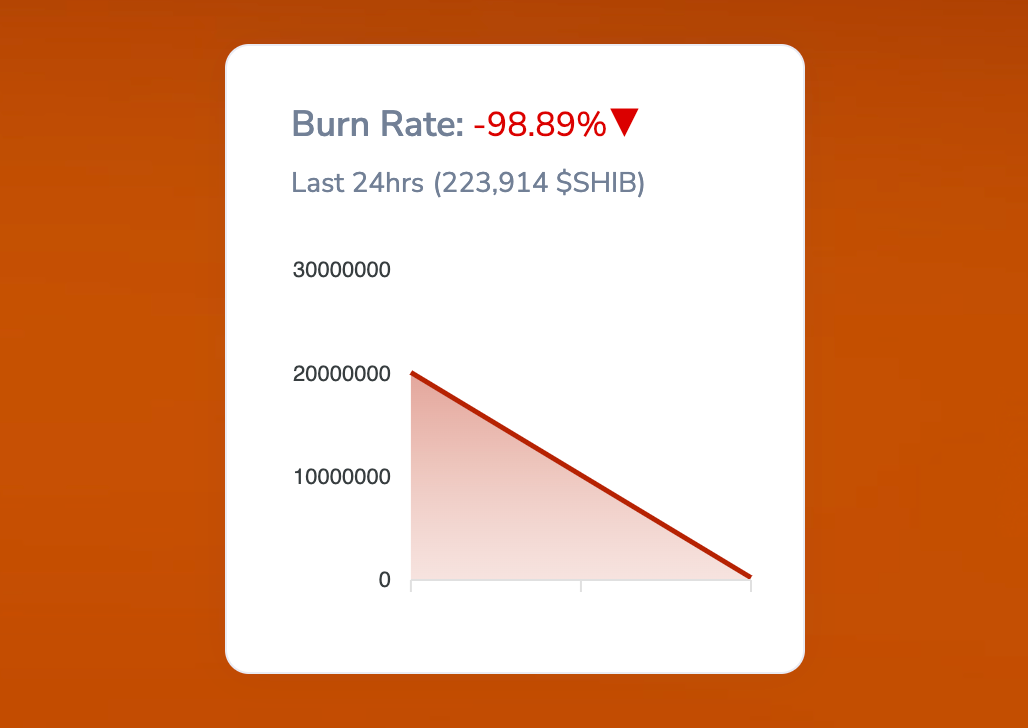
Shiba Inu SHIB $0.000012 24h volatility: 5.2% Market cap: $7.13 B Vol. 24h: $223.28 M price shed another 4% on Tuesday, extending its two-day decline to 6% and falling to $0.000012 for the first time in 13 days. As the largest Ethereum-based memecoin, SHIB’s performance is closely tied to sentiment surrounding Ethereum. The 6% SHIB price drop comes as ETH ETFs entered $255 million in sell-offs, impacting liquidity and weakening sentiment across the broader Ethereum ecosystem. Further emphasizing this bearish narrative, Shiba Inu’s on-chain activity slumped sharply on Tuesday. Official data from the Shibburn analytics tool showed that the burn rate plunged 98.89% in the last 24 hours, with only 223,914 SHIB removed from circulation. Shiba Inu Burn Rate, Aug. 19, 2025 | Source: Shibburn.com Unscheduled token burns occur as part of on-chain transactions and serve to reduce supply over time. Beyond that, they are also viewed as a barometer for tracking economic activity on a blockchain network. The 98% decline in Shiba Inu burn rate signals reduced market participation, suggesting traders are moving to the sidelines amid uncertain conditions. With fewer tokens being destroyed, the deflationary pressure on SHIB weakens, leaving the asset more exposed to risks of further downswings. Shiba Inu Price vs Trading Volume | Source: CoinMarketCap, Aug. 19, 2025 On Tuesday, this lack of activity appeared to reinforce downward pressure, contributing to the intraday losses as SHIB spot trading volumes also fell to $206 million at press time, down 50% from last week’s peaks of $418 million recorded on Aug. 14, according to CoinMarketCap data. Shiba Inu Price Forecast: Technical Risks Mount Below 20-Day Average Shiba Inu entered Tuesday’s session trading under visible bearish pressure. Trading at $0.00001224, SHIB has now slipped beneath the 20-day moving average, a critical support level for short-term traders. A glance at the chart below shows momentum indicators leaning bearish, with the MACD line extending below the signal line and red candles dominating recent sessions. Shiba Inu Price Forecast This technical setup raises the likelihood of forced liquidations if selling pressure accelerates. For short-term SHIB price projections, bears may eye a rapid push toward the nearest support cluster at $0.00001164, aligning with the lower Bollinger Band. A further breach could drag SHIB toward the local low at $0.00001100, last seen in late July. On the upside, bulls must reclaim the 20-day average at $0.000013 to restore confidence. A sustained move above that level could set the stage for a test of $0.000015, where the upper Bollinger Band capped last week’s gains. Until then, the prevailing sentiment remains bearish, reflecting broader Ethereum ecosystem headwinds and declining SHIB burn activity. Maxi Doge Presale Gains Momentum Amid Shiba Inu Price Correction While Shiba Inu grapples with declining on-chain activity, newly launched memecoins like Maxi Doge are capturing traders’ attention. Promoted as a high-leverage community token, Maxi Doge offers trading at 1000x leverage with no stop-loss, amplifying both risk and upside appeal. Maxi Doge Presale The presale, currently priced at $0.000253 per token, has already raised more than $1.27 million against a target of $1.53 million. Beyond presale demand, Maxi Doge emphasizes utility through staking pools with daily smart contract payouts, competitive contests rewarding top traders, and partnerships designed to integrate the token into futures platforms and gamified events. The countdown timer indicates just two days before the next price increase. Visit the official Maxi Doge website to get in early. nextThe post Shiba Inu Burn Rate Plunges 98% as SHIB Price Loses 20-Day Support appeared first on Coinspeaker.

Author: Coinstats
Bitcoin and Ethereum News: Pepeto vs Little Pepe, which is The Best memecoin to Buy Now?

Bitcoin and Ethereum News: Pepeto vs Little Pepe, which is The Best memecoin to Buy Now?

As Bitcoin trades around 115,000 and Ethereum stays above 4,200, the range reads like patient base-building rather than a reversal. Funding is calm and spot–futures spreads hover near neutral, while buyers defend recent floors; the next decisive cue likely comes from a volume-backed breakout. During phases like this, capital often rotates from BTC and ETH [...] The post Bitcoin and Ethereum News: Pepeto vs Little Pepe, which is The Best memecoin to Buy Now? appeared first on Blockonomi.

Author: Blockonomi
Bitcoin Bull Run Hinges On Trump’s Pick For Fed Chair: Analyst

Bitcoin Bull Run Hinges On Trump’s Pick For Fed Chair: Analyst

Bitcoin’s next major leg higher may depend less on halving lore and more on personnel politics in Washington. In an August 18 market note on X, economist and crypto analyst Alex Krüger argued that the cycle’s duration will be set by the Federal Reserve’s leadership change—specifically, who President Trump nominates to replace Jerome Powell—rather than by any fixed four-year pattern. “I have a high degree of confidence this cycle is not over because I am expecting changes in the Fed to bring on considerably more dovish monetary policy, which is not priced in at the moment; this would start to get priced in once Trump announces his nominee to replace Powell,” Krüger wrote. Bitcoin Bull Run Depends On New Fed Chair Krüger dismissed worries that a pullback from record highs marks the top, calling it “remarkable how every time you get a correction from new highs so many people start to fret about the cycle top. Over and over again.” He reiterated his longstanding critique of the halving-cycle orthodoxy: “The concept of a 4 year cycle in 2025 is misplaced; [it] died two cycles ago, and 2021 was a coincidence, as it was macro driven.” In his view, the last cycle ended because the Fed turned “ultra-hawkish in January 2022,” not because of any endogenous Bitcoin dynamic. Related Reading: Crypto Braces For Impact As JPow’s Jackson Hole Speech Looms The nomination clock is visible. Powell’s current four-year term as chair ends on May 15, 2026, and reporting over the past two weeks indicates the White House has narrowed a shortlist to “three or four” names, with an announcement potentially coming sooner than expected. Candidates floated in mainstream coverage include former Fed governor Kevin Warsh and NEC Director Kevin Hassett among others, underscoring the market’s focus on how dovish—or not—the next chair might be. In the nearer term, the policy calendar still drives the tape. Powell’s final Jackson Hole appearance, scheduled during the Aug. 21–23 symposium, is widely framed as a tone-setting moment before the September FOMC. Consensus coverage flags the risk that Powell leans hawkish to preserve optionality, even as rates markets handicap a cut next month; Krüger leans “slightly bearish into it as a hawkish speech (to reduce the odds of a September cut) makes sense, for the Fed to retain optionality and not let the market push itself into a corner.” Technically, Bitcoin has cooled after printing fresh all-time highs in mid-July and again last week. Traders are watching the previous $112,000 high as initial downside cushion, with the psychologically critical $100,000 level, the overhead reference remains the $122,000–$124,000 zone of recent peaks. Krüger also highlights that “BTC is having a very hard time going up sans leverage without triggers,” a point echoed by derivatives signals showing compressed risk appetite. Related Reading: Bitcoin Bulls Must Survive Brutal September Before Q4 Hope, Analyst Predicts Derivatives and volatility gauges corroborate the “low-vol, slow ascent” regime he describes. Implied volatility on BTC options (DVOL/BVIV) has sat near two-year lows, and open interest on institutional venues remains off July highs, signaling a more measured stance from levered players into Jackson Hole. Krüger also observed that futures basis had eased alongside the pullback—a classic sign of froth leaking out—while options markets show a renewed bid for downside protection on dips. The macro through-line is straightforward: if the Fed chair nomination tilts dovish, markets will begin discounting a looser stance well before the first policy move, extending the cycle; if the candidate (and subsequent guidance) skews restrictive, the liquidity impulse that powered Bitcoin’s post-ETF advance will fade at the margin. For now, the immediate catalysts are stacked—Powell at Jackson Hole, followed by PCE, NFP, CPI and PPI into September’s FOMC—while price trades between well-defined levels with volatility suppressed. As Krüger put it, bull markets “don’t end because of valuations or over-extension; the end needs a major trigger.” In 2025, that trigger may well be a name. At press time, BTC traded at $115,683. Featured image created with DALL.E, chart from TradingView.com

Author: NewsBTC
Pepeto vs Little Pepe, Which One Is The Best Crypto To Buy, While Bitcoin And Ethereum Are Consolidating

Pepeto vs Little Pepe, Which One Is The Best Crypto To Buy, While Bitcoin And Ethereum Are Consolidating

As Bitcoin and Ethereum consolidate, memecoin presales heat up. Pepeto’s zero-fee DEX and staking utility give it an edge over Little Pepe’s L2 pitch.

Author: Blockchainreporter
Robinhood Partners with Kalshi to Launch Football Prediction Markets

Robinhood Partners with Kalshi to Launch Football Prediction Markets

The post Robinhood Partners with Kalshi to Launch Football Prediction Markets appeared on BitcoinEthereumNews.com. The financial services company looks to take on Polymarket in the sports betting arena ahead of the NFL and NCAA football seasons. Fintech giant Robinhood is expanding its prediction market offerings through a new partnership with Kalshi to offer NFL and NCAA football prediction markets on its app. Users will be able to speculate on the outcomes of the United States’ most popular sport, and the feature “will be available to all eligible customers in the coming days.” Robinhood’s plans to offer initial contracts for the first two weeks of the professional and collegiate seasons, and will continue to add weekly matches over time. The trading platform revealed its first prediction markets, known as “event contracts,” in March. With the launch, Robinhood is challenging not only Polymarket as a competing prediction market, but legacy sports betting platforms such as FanDuel and DraftKings. Unlike traditional betting platforms, prediction market contracts have the market set the prices and outcome odds, whereas legacy apps rely on professional bookmakers and prediction models. “Football is far and away the most popular sport in America,” said JB Mackenzie, VP & GM of Futures and International at Robinhood. “Adding pro and college football to our prediction markets hub is a no-brainer for us as we aim to make Robinhood a one-stop shop for all your investing and trading needs.” Kalshi, which is based in the United States, recently announced support for SOL deposits on its platform in addition to existing options such as BTC, USDC, and XRP. While the platform supports crypto deposits, crypto-natives tend to prefer Polymarket due to factors such as market liquidity, and Kalshi’s controversial tactics, which were allegedly used to slander Polymarket when the Federal Bureau of Investigation (FBI) raided Polymarket CEO Shayne Coplan’s home. Prediction markets have been exploding over the last…

Author: BitcoinEthereumNews
SEC Moves Forward With Crypto Regulation Following Ripple Settlement — Here’s What’s Coming

SEC Moves Forward With Crypto Regulation Following Ripple Settlement — Here’s What’s Coming

Soon after the Ripple settlement, the U.S. Securities and Exchange Commission (SEC) began taking new steps to set crypto rules in the country. With a focus on proactive oversight and clearer standards for companies and investors, SEC Chair Paul Atkins says the agency is following President Donald Trump’s plan to make America the world’s crypto […]

Author: Bitcoinist
Here’s why Sui price is crashing despite Robinhood listing

Here’s why Sui price is crashing despite Robinhood listing

Sui dropped nearly 4% despite its Robinhood listing as demand softened across volume, open interest, staking, and liquidit

Author: Crypto.news