Dapp

Dapps are digital applications that run on a P2P network of computers rather than a single server, typically utilizing smart contracts to ensure transparency and uptime. In 2026, Dapps have achieved mass-market appeal through Account Abstraction, allowing for a "Web2-like" user experience with the security of Web3. This tag covers the entire ecosystem of decentralized software—from social media and productivity tools to governance platforms and identity management.

4935 Articles
Created: 2026/02/02 18:52
Updated: 2026/02/02 18:52
Taiko Public Testnet: Unleashing a New Era of Ethereum Scalability with Hoodi

Taiko Public Testnet: Unleashing a New Era of Ethereum Scalability with Hoodi

BitcoinWorld Taiko Public Testnet: Unleashing a New Era of Ethereum Scalability with Hoodi Get ready for a significant leap in Ethereum’s scalability! Taiko, a leading Ethereum Layer 2 network, has officially launched its groundbreaking new Taiko public testnet, ‘Hoodi.’ This isn’t just another update; it’s a strategic move designed to revolutionize how we experience decentralized applications, promising faster, smoother, and more efficient transactions for everyone. Let’s dive into what makes Hoodi a game-changer for the Ethereum ecosystem. Why is the Taiko Public Testnet a Game-Changer? On September 25th, Taiko announced the activation of Hoodi, marking a pivotal moment in its development roadmap. This new Taiko public testnet was crucial for integrating Taiko’s innovative ‘preconfirmation’ feature. This proprietary technology is engineered to significantly boost transaction processing speeds, addressing one of the core challenges faced by current blockchain networks. Preconfirmation Feature: Hoodi enables the activation of Taiko’s unique preconfirmation technology. Enhanced Speed: This feature is designed to drastically improve transaction processing speeds. Future-Proofing: It also paves the way for several new development plans aimed at future growth. The launch of Hoodi signals Taiko’s unwavering commitment to building a scalable, next-generation infrastructure for Ethereum. This move isn’t merely about incremental improvements; it’s about setting a new standard for Layer 2 solutions. What Does Hoodi Mean for Existing Projects and Users? With the arrival of Hoodi, the existing Hekla testnet will soon retire. Specifically, Hekla is scheduled to shut down on September 30th. This means that all projects currently operating on Hekla will need to migrate to the new Taiko public testnet, Hoodi. This migration is a streamlined process designed to ensure continuity and allow projects to immediately benefit from Hoodi’s advanced capabilities. Seamless Migration: Projects will transition from Hekla to Hoodi, ensuring continuous development. Access to Advanced Features: Developers can immediately leverage Hoodi’s improved throughput and user experience enhancements. Future-Ready Platform: Building on Hoodi positions projects on a more scalable and efficient foundation. This transition is not just a technical necessity but an opportunity for developers and users alike. It promises a more robust and responsive environment for decentralized applications (dApps), fostering innovation and a superior user experience. How Does Taiko’s Public Testnet Enhance Throughput and User Experience? Taiko’s core mission is to scale Ethereum effectively, and the Hoodi Taiko public testnet is a monumental step in achieving this. By introducing advanced features like preconfirmation, Taiko aims to dramatically increase the number of transactions the network can handle per second, known as ‘throughput.’ This directly translates into a much smoother and more responsive experience for end-users. Increased Throughput: Hoodi is engineered to process more transactions faster, reducing network congestion. Reduced Latency: The preconfirmation feature minimizes delays, making interactions feel almost instantaneous. Improved User Experience: Faster transactions and greater reliability lead to a more enjoyable and efficient dApp usage. Imagine interacting with dApps without frustrating delays or high gas fees. That’s the vision Taiko is building towards with Hoodi. This strategic upgrade underscores Taiko’s dedication to making Ethereum more accessible and performant for a global audience, reflecting a deep commitment to the future of decentralized technology. The launch of the Hoodi Taiko public testnet is far more than a routine update; it represents a significant leap forward in the quest for Ethereum scalability. By introducing proprietary preconfirmation technology and enhancing overall throughput, Taiko is not just building a Layer 2 solution; it’s crafting a foundational infrastructure for the next generation of decentralized applications. This move reinforces Taiko’s position as a key innovator, driving the entire blockchain ecosystem towards a more efficient, user-friendly, and ultimately, more powerful future. The crypto community eagerly anticipates the transformative impact Hoodi will have. Frequently Asked Questions (FAQs) Q1: What is Taiko’s new public testnet called? A1: Taiko’s new public testnet is named Hoodi. Q2: Why did Taiko launch the Hoodi testnet? A2: Taiko launched Hoodi to accommodate the activation of its proprietary ‘preconfirmation’ feature, which improves transaction processing speeds, and to support several new development plans. Q3: What will happen to the existing Hekla testnet? A3: The existing Hekla testnet will be shut down on September 30th, and all projects currently on Hekla will migrate to Hoodi. Q4: How does Hoodi improve transaction speeds? A4: Hoodi improves transaction speeds through the activation of Taiko’s unique preconfirmation feature, which is designed to significantly enhance transaction processing efficiency and throughput. Q5: What are the main benefits of the Hoodi testnet for users and developers? A5: Hoodi offers increased throughput, reduced latency, and an overall improved user experience due to faster and more reliable transactions. For developers, it provides a more scalable and efficient platform for building dApps. Did you find this deep dive into Taiko’s Hoodi testnet insightful? Share this article with your network on social media to spread the word about this exciting advancement in Ethereum Layer 2 technology! Your engagement helps us continue delivering cutting-edge crypto news and analysis. This post Taiko Public Testnet: Unleashing a New Era of Ethereum Scalability with Hoodi first appeared on BitcoinWorld.

Author: Coinstats
XRP Ledger Expands with Spot ETFs, EVM Sidechain and Global Events in 2025

XRP Ledger Expands with Spot ETFs, EVM Sidechain and Global Events in 2025

TLDR XRP’s legal clarity led to the launch of institutional ETFs, increasing liquidity. The EVM sidechain enabled 1,400 smart contracts within its first week of launch. XRP’s total value locked hit $120 million in the first week post-EVM launch. XRP Ledger hosted 19 global events in 2025, reflecting rising community enthusiasm. The XRP Ledger (XRPL) [...] The post XRP Ledger Expands with Spot ETFs, EVM Sidechain and Global Events in 2025 appeared first on CoinCentral.

Author: Coincentral
XRP Ledger Sets New Milestones in 2025 with ETFs and EVM Integration

XRP Ledger Sets New Milestones in 2025 with ETFs and EVM Integration

TLDR XRP Ledger achieved significant growth in 2025 with the launch of spot XRP exchange-traded funds. The resolution of Ripple’s legal battle with the SEC removed regulatory uncertainty and boosted institutional adoption. XRP Ledger successfully launched its Ethereum Virtual Machine sidechain, enhancing its utility and developer interest. The launch of the EVM sidechain led to [...] The post XRP Ledger Sets New Milestones in 2025 with ETFs and EVM Integration appeared first on Blockonomi.

Author: Blockonomi
Solana Mobile launches builder grants program with up to $10K per team

Solana Mobile launches builder grants program with up to $10K per team

The post Solana Mobile launches builder grants program with up to $10K per team appeared on BitcoinEthereumNews.com. Key Takeaways Solana Mobile launched a new builder grants program, offering up to $10,000 per team for mobile-focused dApps. The program is in partnership with Colosseum and runs alongside the Solana Cypherpunk Hackathon, from September 25 to October 30, 2025. Solana Mobile today launched a builder grants program offering up to $10,000 per team for mobile-focused decentralized applications, partnering with Colosseum to support developers creating mobile-optimized dApps. The program runs alongside Colosseum’s ongoing Solana Cypherpunk Hackathon, which extends from September 25 to October 30, 2025. Teams must indicate mobile focus in their hackathon submissions to qualify for evaluation. Selected teams receive $10,000 grants along with marketing support and launch assistance for applications that integrate or optimize for mobile devices. Grants are awarded after submission to teams developing dApps for the Solana dApp Store. Colosseum has allocated over $2.5 million in pre-seed funding to winners of the current Cypherpunk Hackathon, which emphasizes tracks including consumer apps and infrastructure, with prizes from ecosystem partners. Source: https://cryptobriefing.com/solana-mobile-builder-grants-program-launched/

Author: BitcoinEthereumNews
BDAG, BEST, SNORT And HYPER Are All Heating Up

BDAG, BEST, SNORT And HYPER Are All Heating Up

The post BDAG, BEST, SNORT And HYPER Are All Heating Up appeared on BitcoinEthereumNews.com. The search for opportunities in crypto often leads to presales, where tokens are offered before hitting major exchanges. These moments can create strong entry points, especially when the network has real adoption, technology, or hype behind it.  What sets certain presales apart is not just token pricing but the infrastructure and communities already forming around them. Among the best crypto presales, four names are standing out right now: BlockDAG (BDAG), Best Wallet Token (BEST), Snorter (SNORT), and Bitcoin Hyper (HYPER). Each of these is pushing forward with unique strategies. BlockDAG is scaling globally with miners and mobile apps, BEST is tying into wallet utility, SNORT is linking meme coin energy to trading bots, and HYPER is aiming to expand Bitcoin’s reach with a layer-2 approach. Together, they show how presales can deliver value across different angles of crypto. 1. BlockDAG: Awakening Testnet Delivers Proof! BlockDAG is leading the charge in presales with numbers that show real traction. The project has already raised more than $408 million, onboarded 312,000+ holders, and attracted 3 million active users through its X1 mobile miner app.  Unlike many networks that wait until launch to reveal their systems, BlockDAG will roll out its Awakening Testnet on September 25 as a live prequel. This stage will deploy the chain’s core architecture, introduce account abstraction, and integrate miners directly with the blockchain using the Stratum Protocol. It also includes explorer tools, vesting contracts, and stress testing, giving the community a full view of how the network performs under real conditions. What makes BlockDAG stand out further is the delivery of hardware. Over 20,000 X-Series miners have already shipped across 130+ countries, with production scaling to 2,000 units weekly. These devices are actively mining during the testnet phase, providing early rewards while confirming decentralized participation. At the same time,…

Author: BitcoinEthereumNews
XRP Price Risks Major Market Crash As Rival Paydax (PDP) Is Set To Outperform Ripple’s Expectations

XRP Price Risks Major Market Crash As Rival Paydax (PDP) Is Set To Outperform Ripple’s Expectations

For several years, XRP has been regarded as one of the most promising altcoins in the cryptocurrency space, thanks to […] The post XRP Price Risks Major Market Crash As Rival Paydax (PDP) Is Set To Outperform Ripple’s Expectations appeared first on Coindoo.

Author: Coindoo
Crypto Presale Coins of 2025: BDAG, BEST, SNORT And HYPER Are All Heating Up

Crypto Presale Coins of 2025: BDAG, BEST, SNORT And HYPER Are All Heating Up

The search for opportunities in crypto often leads to presales, where tokens are offered before hitting major exchanges. These moments can create strong entry points, especially when the network has The post Crypto Presale Coins of 2025: BDAG, BEST, SNORT And HYPER Are All Heating Up appeared first on CryptoNinjas.

Author: Crypto Ninjas
Scaling the Future: Insights from Quai Network Co-Founder Jonathan Downing

Scaling the Future: Insights from Quai Network Co-Founder Jonathan Downing

https://unseen.co/projects/quai-network/ As part of the DLT Talents program-designed to empower women from various backgrounds, including tech, law, business, or those new to crypto, to explore blockchain and boost awareness-I had the opportunity to interview Jonathan Downing. He’s a co-founder and the lead engineer at Dominant Strategies, the firm behind Quai Network. Jonathan’s deep knowledge in blockchain scalability and Proof-of-Work advancements has been pivotal in developing Quai’s multi-chain framework. Quai Network is a Layer-1 blockchain addressing the scalability trilemma, delivering over 50,000 transactions per second while preserving decentralization and security. It stands out as the first decentralized energy dollar on a programmable PoW blockchain, with a dual-token system: QUAI as the gas token and store of value, and Qi as the energy-backed stablecoin. Our discussion delved into Quai’s origins, technical breakthroughs, challenges, and future plans-tailored to inspire interest among DLT Talents participants and newcomers alike. The interview took place via Zoom voice call on July 5, 2025. Here’s the full breakdown: Can you share your background and what pulled you into blockchain? Jonathan: My interest in blockchain began with Bitcoin during high school, similar to my co-founders. At the University of Texas at Austin, I co-founded the Texas Blockchain Club, connecting with Alan Orwick, Karl Kreder, Yanni Georghiades, and Sriram Vishwanath-we shared a drive for scalability and cryptography. After graduation, I pursued software engineering, focusing on data management and operational efficiency. This foundation led to my role as chief architect at Dominant Strategies, where we’re constructing Quai Network to overcome the constraints of conventional blockchains and enable seamless global finance. How did the concept for Quai Network originate? Jonathan: Quai originated from research at UT Austin in 2019, solidifying into a project by 2020. We identified flaws in existing blockchains, such as Ethereum’s high fees and limited TPS, and sought to build a scalable PoW network. Instead of relying on Layer-2 add-ons that increase complexity, Quai integrates scalability at the protocol level through multi-chain architecture. The Dominant Strategies team worked collaboratively, incorporating academic research and empirical testing. The goal is to revitalize the crypto movement, making blockchain practical for daily transactions at speeds comparable to Visa, all while staying decentralized. What’s been your most memorable experience with Quai? Jonathan: A highlight was deploying our latest testnet, engaging over 2,000 nodes worldwide and 5,500 GPUs. It was thrilling to see diverse participants-miners, developers, and enthusiasts-collaborate on testing. This wasn’t just a technical achievement; it demonstrated Quai’s potential for broad adoption. We’ve managed over a billion transactions, achieved 170+ days of uptime, and reached peaks of 2,167 TPS. Experiences like these reinforce our purpose: democratizing blockchain access. What are Quai Network’s primary products and features? Jonathan: Quai is fundamentally a scalable multichain blockchain that employs Proof-of-Work as an oracle for real-world demand and energy pricing. This supports our dual-token model: QUAI, the deflationary gas token and value store, and Qi, a stablecoin tied to energy markets. Core features include: Multi-Chain Architecture: Protocol-level sharding for effortless interoperability and high throughput (50,000+ TPS). Proof-of-Entropy Minima (PoEM): An innovative consensus mechanism ensuring security and efficiency. Developer Resources: Simplified integration for dApps, prioritizing low fees and true decentralization. Additional tools we’ve created: go-quai (a Go implementation for the network), Pelagus (wallet), Blip (for messaging or integrations), and Kipper (mining/node software). Unlike asset-backed stablecoins, Qi achieves stability through market mechanisms, positioning Quai as a versatile platform for DeFi, payments, and more. What challenges has Quai encountered in the blockchain landscape recently? Jonathan: Scalability continues to be the primary obstacle-many networks depend on Layer-2 solutions, which can introduce centralization and added layers of complexity. We’ve addressed this directly with our multi-chain design and PoEM consensus, bypassing those dependencies. Regulatory ambiguities and debates over PoW’s energy consumption present additional hurdles, but Quai leverages PoW as an asset by connecting it to tangible energy economics. Our testnets have allowed iterative improvements, processing billions of transactions. The forthcoming fourth testnet and mainnet launch will further navigate these in a dynamic industry. How has Quai’s technology developed since its inception? Jonathan: From initial research in 2019 onward, Quai has evolved through developmental phases dubbed “Stone Age” and “Bronze Age.” We’ve enhanced multi-chain interoperability, optimized PoW for better energy use, and incorporated community-driven governance. Recent developments include refined developer tools and ecosystem integrations. A Messari protocol analysis underscored our strengths, and partnerships-such as with Kyle Chassé of Master Ventures-have endorsed our trajectory. With testnets operational, we’re primed for mainnet and expanded adoption. What’s on the horizon for Quai Network, and any advice for women venturing into blockchain? Jonathan: We’re preparing for the fourth testnet and mainnet rollout, fostering ecosystem growth through additional dApps and collaborations. In the long term, we aspire to compete with traditional systems like Visa via cost-effective, decentralized transactions. For women entering blockchain-regardless of technical experience-begin with exploration. Programs like DLT Talents offer excellent networking opportunities. Immerse in communities, experiment with tools such as our Pelagus wallet, and contribute perspectives from fields like law or business; diversity strengthens blockchain. Closing Reflections This interview with Jonathan provided profound insights, particularly through my lens as a DLT Talents participant. Quai Network transcends typical projects by resolving entrenched issues like scalability and energy efficiency, paving the way for crypto’s global integration. Through this piece, the aim is to heighten awareness and encourage participation among women and beginners in the space. For more on Quai Network, visit qu.ai or follow @QuaiNetwork on X. Details on DLT Talents are at web3-talents.io/dlt-talents. What aspects of scalable blockchains intrigue you? Share in the comments! Scaling the Future: Insights from Quai Network Co-Founder Jonathan Downing was originally published in Coinmonks on Medium, where people are continuing the conversation by highlighting and responding to this story

Author: Medium
MetaMask Token: When Is the MASK Launch Date and Will There Be an Airdrop?

MetaMask Token: When Is the MASK Launch Date and Will There Be an Airdrop?

The post MetaMask Token: When Is the MASK Launch Date and Will There Be an Airdrop? appeared on BitcoinEthereumNews.com. MetaMask is the gateway to the Ethereum world for millions of people. It’s a wallet, sure, but it’s also where users swap tokens, play games, and try new dApps.  The platform’s built‑in swap tool alone has generated about $325 million in fees. With more than 30 million active users, any new MetaMask feature can ripple through the entire crypto market. Recently, ConsenSys CEO and Ethereum co-founder Joseph Lubin confirmed that MetaMask will launch its own token, often referred to as the MASK token. During a September 2025 interview, he said the token “is coming” and might arrive “sooner than you would expect”.  The goal is to help decentralize parts of the MetaMask ecosystem and give users a bigger role in its governance. There’s still no official MetaMask token launch date, and scammers have already created fake MASK tokens.  I’ll go through what we know, what remains uncertain, and how to prepare for a possible airdrop without falling for scams. Key highlights: MetaMask token is confirmed, but there’s no official launch date yet. Joseph Lubin hinted in September 2025 that the token could launch sooner than expected. The MASK token aims to decentralize MetaMask, offering governance and possible user rewards. Airdrop rumors remain unverified.  MetaMask has not announced eligibility criteria. Scammers are active: any MASK tokens trading now are fake. Only trust official channels. The rise of MetaMask and early token rumours MetaMask started as a browser plug-in for storing Ether and ERC‑20 tokens. Over time, it added a mobile app, one‑click swaps, bridging, staking, and connections to hundreds of networks. Today, it’s arguably the most widely used crypto wallet in DeFi, consistently ranked among the best crypto wallets. The idea of a MetaMask token isn’t new. In 2021, Lubin tweeted a playful “Wen $MASK?”. That sparked rumors that a token…

Author: BitcoinEthereumNews
Netdollar Stablecoin: Cloudflare’s Revolutionary Leap into Digital Transactions

Netdollar Stablecoin: Cloudflare’s Revolutionary Leap into Digital Transactions

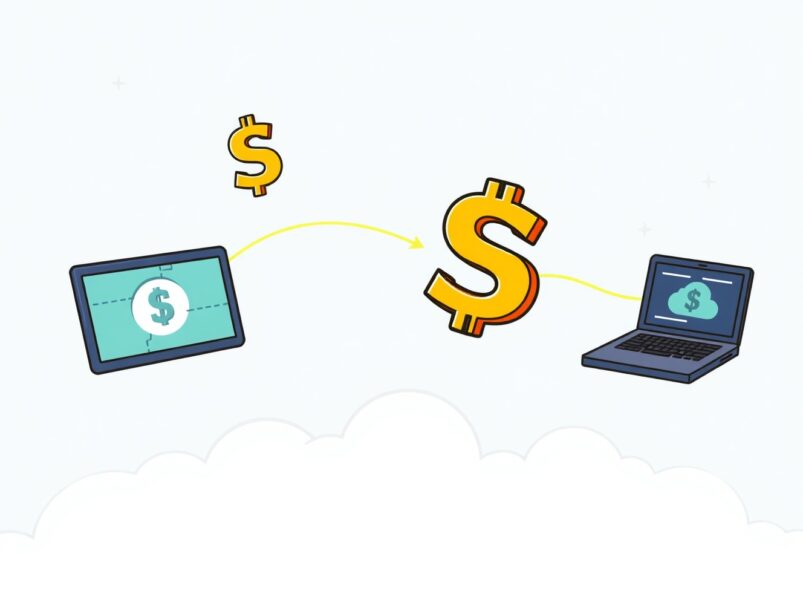
BitcoinWorld Netdollar Stablecoin: Cloudflare’s Revolutionary Leap into Digital Transactions The cryptocurrency world is buzzing with excitement following a significant announcement from tech giant Cloudflare. They have officially unveiled Netdollar stablecoin (NETDOLLAR), a new digital currency poised to redefine how we think about cross-network transactions. This development, first reported by SolidIntel, marks a pivotal moment for digital finance, promising greater efficiency and reliability in an increasingly interconnected global economy. What is the Netdollar Stablecoin and Why Does it Matter? At its core, the Netdollar stablecoin is designed to facilitate seamless transactions across various digital networks. Unlike volatile cryptocurrencies such as Bitcoin or Ethereum, a stablecoin aims to maintain a stable value, typically pegged to a fiat currency like the US dollar. This stability is crucial for practical applications, especially in areas requiring predictable pricing and minimal risk of value fluctuation. Cloudflare’s entry into the stablecoin arena with Netdollar is particularly noteworthy. The company is renowned for its robust internet infrastructure and security services. Therefore, its backing lends significant credibility and potential for widespread adoption to this new digital asset. Cloudflare’s Vision: Powering Cross-Network Agent Transactions with Netdollar Stablecoin Cloudflare’s primary focus for the Netdollar stablecoin lies in “cross-network agent transactions.” What does this truly mean for users and businesses? Enhanced Efficiency: Imagine transactions between different online platforms, payment systems, or even IoT devices. Netdollar aims to make these interactions faster and more cost-effective. Reduced Friction: Traditional financial systems often involve multiple intermediaries, leading to delays and higher fees. Netdollar seeks to streamline this process, enabling direct and efficient value transfer. Global Accessibility: By operating across various networks, Netdollar could lower barriers to entry for individuals and businesses participating in the global digital economy. This strategic move by Cloudflare positions the Netdollar stablecoin as a foundational layer for future digital interactions, extending beyond simple payments to complex automated agreements. The Security and Stability Promise of Netdollar Stablecoin Security is paramount in the digital asset space, and Cloudflare’s expertise in this area is a significant advantage for the Netdollar stablecoin. The company’s infrastructure is built to withstand sophisticated cyber threats, providing a strong foundation for a reliable stablecoin. Moreover, the inherent design of a stablecoin, pegged to a stable asset, addresses one of the biggest concerns in cryptocurrency: price volatility. This stability makes Netdollar an attractive option for: Businesses conducting international trade. Developers building decentralized applications (dApps) that require predictable transaction costs. Everyday users looking for a reliable digital medium of exchange. The commitment to stability and security could accelerate the mainstream adoption of digital currencies, making them a practical tool for everyday commerce. What Challenges Lie Ahead for the Netdollar Stablecoin? While the potential for the Netdollar stablecoin is immense, it’s essential to acknowledge the hurdles. The stablecoin market is becoming increasingly competitive, with established players already in the space. Regulatory scrutiny also remains a significant factor, as governments worldwide grapple with how to best oversee digital assets. Cloudflare will need to navigate these complexities carefully, ensuring compliance while fostering innovation. Building trust and demonstrating transparent operations will be key to overcoming these challenges and securing a strong foothold in the digital finance landscape. Cloudflare’s launch of the Netdollar stablecoin is a bold step forward in the evolution of digital currency. By focusing on cross-network agent transactions and leveraging its robust infrastructure, Cloudflare aims to deliver a stable, secure, and efficient digital asset. This initiative has the potential to unlock new possibilities for businesses and individuals, streamlining global digital interactions and paving the way for a more integrated financial future. As the digital economy continues to grow, innovations like Netdollar will play a crucial role in shaping its direction. We eagerly anticipate seeing how this new stablecoin will contribute to a more connected and efficient digital world. Frequently Asked Questions about Netdollar Stablecoin Q1: What is the Netdollar stablecoin? A1: The Netdollar stablecoin is a new digital currency launched by Cloudflare, designed to maintain a stable value, likely pegged to a fiat currency. Its primary purpose is to facilitate efficient cross-network agent transactions. Q2: Who developed Netdollar stablecoin? A2: Netdollar stablecoin was developed and unveiled by Cloudflare, a leading company known for its internet infrastructure and security services. Q3: What are “cross-network agent transactions”? A3: These refer to transactions that occur seamlessly and efficiently between different digital platforms, networks, or automated systems, without the friction often associated with traditional financial intermediaries. Q4: How does Netdollar stablecoin benefit users? A4: Users can benefit from faster, more cost-effective, and more secure transactions across various digital networks. Its stability also reduces the risk of value fluctuations common with other cryptocurrencies. Q5: Is Netdollar stablecoin secure? A5: Leveraging Cloudflare’s expertise in internet security, the Netdollar stablecoin is expected to offer a high level of security, building on the company’s robust infrastructure designed to protect against cyber threats. What are your thoughts on Cloudflare’s new Netdollar stablecoin? Do you believe it will revolutionize digital transactions? Share this article on your social media channels and join the conversation! To learn more about the latest crypto market trends, explore our article on key developments shaping stablecoins institutional adoption. This post Netdollar Stablecoin: Cloudflare’s Revolutionary Leap into Digital Transactions first appeared on BitcoinWorld.

Author: Coinstats