Dapp

Dapps are digital applications that run on a P2P network of computers rather than a single server, typically utilizing smart contracts to ensure transparency and uptime. In 2026, Dapps have achieved mass-market appeal through Account Abstraction, allowing for a "Web2-like" user experience with the security of Web3. This tag covers the entire ecosystem of decentralized software—from social media and productivity tools to governance platforms and identity management.

4926 Articles
Created: 2026/02/02 18:52
Updated: 2026/02/02 18:52
Why These 3 Altcoins Have 8000x ROI Potential

Why These 3 Altcoins Have 8000x ROI Potential

The post Why These 3 Altcoins Have 8000x ROI Potential appeared on BitcoinEthereumNews.com. Crypto News 28 September 2025 | 12:00 Discover why crypto bulls are circling Hyperliquid (HYPE), Pepe (PEPE), and Paydax Protocol (PDP) for massive upside in this market cycle. Crypto bulls are stirring once more, scanning the market for the next breakout altcoin. Dogecoin showed us what’s possible with its legendary 36,000% rally—but where will lightning strike next? Three altcoins have captured attention in this cycle: Hyperliquid (HYPE), Pepe (PEPE), and Paydax Protocol (PDP). Each has its story, but one is emerging as the biggest contender for long-term, life-changing gains. 1. Hyperliquid (HYPE): Riding The Wave Of Attention Hyperliquid (HYPE) isn’t a microcap gamble—it’s already playing in the big leagues. Trading around $42–$45 USD, with a market cap north of $13–15 billion, and a fully diluted valuation edging toward $42+ billion, Hyperliquid (HYPE) has a solid footing among established altcoins. What makes Hyperliquid (HYPE) compelling? It has both brand and muscle. The Hyperliquid (HYPE) ecosystem is generating real volume (hundreds of millions daily), and its narrative is strong: low latency, attractive derivatives/perpetuals exposure, community momentum. For crypto bulls looking for altcoins that already have gas in the tank, Hyperliquid (HYPE) offers considerable upside potential. 2. Pepe (PEPE): Meme Power Still Packs A Punch Pepe (PEPE) is the altcoin that continues to prove memes are more than just a joke in crypto. It rode community hype to multi-billion valuations and still commands deep liquidity and active trading. For crypto bulls chasing adrenaline, Pepe (PEPE) remains a fun playground. Currently trading at 0.0000093, Pepe (PEPE) still offers major upside potential at a super attractive entry price. 3. Paydax Protocol (PDP): The Altcoin Built For 8,000x Upside This is where things get serious. While Pepe’s (PEPE) potential is mostly tied to its hype, PDP has enforced utility that drives constant demand: Governance: Token holders…

Author: BitcoinEthereumNews
On-chain Pokémon card trading volume exceeded 100 million in a single month: How does RWA+NFT leverage the collectibles market?

On-chain Pokémon card trading volume exceeded 100 million in a single month: How does RWA+NFT leverage the collectibles market?

Author: Ivan Wu on Blockchain Between August and September, interest in "minting physical Pokémon cards into redeemable NFTs and trading them on-chain" intensified. According to various industry media and data sources, monthly trading volume in this market segment reached approximately $124.5 million in August 2025, a roughly 5.5-fold increase from the beginning of the year. This market excitement coincided with the launch of CARDS, the native token of the Solana ecosystem platform Collector Crypt. Public information indicates that CARDS launched on August 29th. The token is related to Collector Crypt's Pokémon card tokenization, pack drawing, and secondary trading business. Within days of its launch, CARDS's fully diluted valuation was reported to be between $300 million and $600 million. Trading activity was primarily driven by Solana's Collector Crypt and Polygon's Courtyard; the latter focuses on warehousing and custodial graded cards, 1:1 minting, and redemption. Disclaimer: This article does not constitute any investment advice. Readers are advised to strictly abide by local laws and regulations and not participate in illegal financial activities. 1. The craze is coming: On-chain Pokémon card trading volume exploded in August Between August and September, the model of "minting physical Pokémon cards into redeemable NFTs and trading them on-chain" saw significant growth. Multiple media outlets and data sources reported that the related transaction volume in August was approximately $124.5 million, a roughly 5.5-fold increase from the beginning of the year. This statistic was repeatedly cited in crypto media and trading platform press releases. Trading activity was primarily driven by Collector Crypt in the Solana ecosystem and Courtyard in the Polygon ecosystem. Collector Crypt organizes transactions around a "physical card → on-chain NFT → redeemable" process, and launched its platform token, CARDS, on August 29th. Projects and research websites claim its fully diluted valuation reached approximately $450 million within a week of its launch. The platform utilizes a "Gacha" (twice-filled card/pack draw) device as a user entry point, with buybacks and market making combined to maintain liquidity. Courtyard offers a service on Polygon that includes warehousing of graded cards (PSA/CGC/BGS), 1:1 minting, on-chain transfer, and final redemption. It also attracts trading interest with a "digital pack opening — physical card comparison" model. Its official website publicly explains the service elements of "digital pack — physical card, storage, and insurance." Regarding transaction scale and participation, CryptoSlate reported that "the transaction volume of tokenized Pokémon card trading reached US$124 million in August, a 5.5-fold increase from the previous period." In addition, many industry articles and platform information such as Yahoo Finance provided similar data points. 2. RWA Breaks the Circle and NFT Rejuvenates In recent years, the tokenization of real-world assets (RWAs) has expanded beyond the tokenization of financial assets like bonds and real estate to include collectibles. Physical collectibles, such as playing cards, are linked to on-chain tokens through a process of "professional grading — warehousing and custody — 1:1 minting — and redemption," creating a digital ownership token that can be traded 24/7 globally. Courtyard disclosed in its public materials that, using Polygon as the underlying layer, physical cards are stored in a third-party professional vault and minted into NFTs. Messari's introduction to this model also emphasizes the correlation between "physical storage and on-chain ownership." Polygon officials once listed Courtyard in a special article as a representative platform for "on-chaining analog collectibles like Pokémon." Before this wave of enthusiasm, the NFT market was generally inactive. DappRadar's "Q2 2025 Industry Report" shows that NFT transaction volume fell to approximately $867 million in the second quarter, a 45% decrease from the previous quarter, but sales volume increased to approximately 14.9 million transactions, reflecting a decline in average order value and a "low-price, high-frequency" structure. DappRadar's monthly observations for July and August indicate that the NFT market returned to a higher range in transaction volume and number of transactions since February 2025, with Courtyard-related collectibles performing particularly well in August. Integration with the collectibles market accelerated in August. Multiple media outlets and data sources reported that monthly trading volume for tokenized Pokémon cards reached approximately $124 million in August 2025, a 5.5-fold increase from the previous period. Yahoo Finance and CryptoSlate verified this figure. The Block reported that after the Solana ecosystem's Collector Crypt launched its platform token, CARDS, on August 29th, combined with gacha and buyback mechanisms, the cumulative volume of randomized Pokémon card trading increased. Research website Dropstab reported that CARDS reached a fully diluted valuation (FDV) of approximately $450 million within a week of its launch on August 29, 2025, and had already generated approximately $75 million in revenue in 2025. The report also noted that this revenue primarily came from user spending driven by the gacha mechanism, citing "approximately $5.7 million in weekly user spending" in recent weeks. Judging by the distribution of categories and chains, collectibles and redeemable scenarios are driving new NFT transaction momentum, and on-chain activity is no longer solely dominated by PFP projects. DappRadar noted in its August observations that the market performance of Courtyard-related collectibles briefly surpassed that of some established avatar projects. Furthermore, on-chain NFT activity is fragmented across multiple public chains, with ecosystems like Base and Solana showing significant monthly market share fluctuations (varies across months and metrics). This type of "physical endorsement + redeemable" transactions will become a significant source of growth for NFTs in the second half of 2025. Based on the above information, the combination of collectible RWAs and NFTs presents a structure of "parallel physical ownership confirmation and on-chain circulation." After a period of sluggish trading, related platforms introduced new demand through custody and redemption mechanisms, driving a rebound in trading in July and August. Subsequent trends will still need to be tracked in conjunction with monthly reports and project disclosures. 3. Analysis of the Tokenization Model of Physical Cards These card trading platforms generally utilize a closed loop of "rating - warehousing - minting - trading - redemption." For example, on Courtyard, cards are rated by a third-party agency before being stored. The platform then mints the corresponding NFTs at a 1:1 ratio on Polygon. Card holders can submit redemption requests at any time, but must complete KYC and cover shipping and tax costs. Official documentation also states that cards are held and insured in a professional warehouse in the US, supporting global redemption and direct shipment from third-party e-commerce platforms or rating agencies. Collector Crypt utilizes a "Gacha (random pack opening) + instant buyback" mechanism on Solana. The official website lists instant buyback ratios for different pack types as approximately 85% or 90% of the real-time pricing, with pricing based on transaction data from platforms like ALT and eBay. Cards obtained after opening packs can be traded on-chain or repurchased by the platform at a proportional rate. The Block reported that the platform offers buyback quotes of "approximately 85%–90% of the real-time indexed value" on-chain to maintain liquidity and price discovery. Both platforms prioritize redemption as a core feature. Courtyard's process involves warehousing and insurance, minting NFTs on-chain, and users buying, selling, or redeeming physical cards in the marketplace. Collector Crypt's process involves storing PSA/CGC-graded cards, generating redeemable NFTs on-chain, and randomly opening packs to obtain cards. Users can then resell them on-chain or sell them back at an instant buyback rate. Both Coingecko and DropsTab explain the "physical card-to-NFT, redeemable" structure. In terms of redemption and fees, Courtyard explicitly requires identity verification before redemption, and the user is responsible for shipping, taxes, and necessary processing fees. Community user feedback shows that the cost of a single shipment is relatively considerable after adding up taxes, insurance, and shipping costs, and the specific amount varies depending on the destination and time. Regarding custody and sourcing, the platform emphasizes 24/7 security and insurance management by professional warehouses. Courtyard's public information mentions using professional custody solutions such as Brink's. Collector Crypt's external information often cites industry entities such as PSA, PWCC, and ALT as its card sourcing and custody partners. The above process connects offline identification, warehousing and logistics with on-chain registration, trading and redemption, so that "physical ownership confirmation - digital registration - redemption and delivery" can be completed under cross-regional conditions. IV. Compliance minefields from past rights protection, platform ownership, and securities law Regarding intellectual property, The Pokémon Company filed a lawsuit in Australia against unauthorized "Pokémon-themed NFTs/blockchain games." In December 2022, the Federal Court of Australia, at the request of The Pokémon Company, issued an injunction against the "Pokéworld" project and related entities, prohibiting them from releasing NFTs bearing the Pokémon brand or claiming an affiliation with The Pokémon Company. The details of the case and key points of the ruling were documented in various media outlets and law firm commentaries. Regarding platform processes and ownership arrangements, Courtyard's public documentation and terms of service explain redemption, KYC, and ownership transfer. Official documents state that cards are held in a warehouse and insured, and holders can submit redemption requests at any time. Redemption requires completing KYC and paying shipping and taxes. To prevent abuse, redemptions to other Brink's locations are not supported. The terms of service also emphasize that the platform is a matching marketplace, with assets supplied by sellers. Regarding ownership transfer, the terms cite the Uniform Commercial Code (UCC 2–401) and indicate that the platform does not transfer legal ownership of physical objects. The transfer of ownership between buyers and sellers is governed by relevant laws and mutual agreements. The terms also include risk warnings and an arbitration clause. Collector Crypt's product description and external communications highlight "random pack opening (Gacha) + instant buyback" as its core mechanics. Its website and social media channels mention "buybacks at approximately 85%–90% of fair market value" to provide liquidity and an exit path. Third-party interpretations also highlight the buyback ratio and the design of "replicating the physical pack opening experience" as key features of the platform. Regarding the application of securities law, regulators have provided relevant references to enforcement cases involving NFTs. In September 2023, the U.S. Securities and Exchange Commission reached a settlement regarding the Stoner Cats NFT issuance, finding it to constitute an unregistered securities offering. The case was described by the media and law firms as a representative event in the regulatory boundaries of NFTs. However, some commissioners expressed dissenting opinions, arguing that the boundaries of applying the Howey test to NFTs should be clarified. 5. Outlook: Is the tokenized trading boom sustainable? From a market perspective, the surge in collectibles sales occurred against a backdrop of overall volatility. In the second quarter of the year, mainstream tracking reports indicated a quarter-on-quarter decline in total NFT transaction volume, while the number of transactions increased, demonstrating a low-price, high-frequency trading structure. A rebound in July and August brought monthly data back to a relatively high level, but the continuation of this trend remains to be verified in subsequent monthly reports. In terms of pricing and liquidity, some platforms adopt a "random opening combined with instant buyback" approach. This involves indexing prices based on transaction data from external e-commerce and trading platforms and offering buybacks at a certain discount. This mechanism can improve transaction depth in the short term, but it also introduces reliance on external price sources and market-making funds. If external transaction samples are distorted, data collection is delayed, or the size of market-making funds fluctuates, these factors may be transmitted to the on-chain through buyback pricing. Custody and redemption remain key operational risks. Platforms typically require identity verification before redemption, and users are responsible for shipping, taxes, and insurance costs. In cross-border scenarios, differences in customs clearance, logistics, and destination tax systems can lead to timeliness and cost uncertainties. In some cases, physical delivery may be out of sync with on-chain processes. The availability of the underlying network also requires continuous monitoring. Public chains have experienced block generation or finality anomalies in certain months. Platforms should clearly define anomaly handling and delay risks through announcements and terms and conditions. Compliance focuses primarily on two key areas: intellectual property and brand licensing, with injunctions issued against unauthorized "Pokémon-themed" projects in the past. Second, the boundaries of securities law and information disclosure. Overseas regulators have taken enforcement action against specific NFT financing cases, highlighting regulatory requirements for issuance, revenue projections, and marketing communications. Furthermore, wash trading, price manipulation, and industry-wide security incidents, highlighted by on-chain analysis firms in numerous annual reports and feature articles, may continue to impact funding and participation in this market segment through confidence channels. From an observational perspective, several quantifiable indicators can be used as a starting point. First, the redemption ratio and redemption time limit reflect the fulfillment capability and user preference of the "physical endorsement + redeemable" model. Correspondingly, the transparency of warehousing, insurance, and logistics (warehouse name, insurance coverage, exception handling) should be continuously disclosed. Second, the discount ratio of instant buybacks, the size of the fund pool, and changes in funding sources determine the secondary market's capacity and price stability. If the platform introduces external quotation or price adjustment rules, the frequency of rule updates and the method of public disclosure need to be synchronized. Third, the changes in the proportion of "open package transactions" and "secondary resales" in the transaction structure involve revenue structure and sustainability. Combined with monthly active users and average order value, it can more clearly determine whether the popularity is due to one-time activities or stable demand. Fourth, the changes in market share and fees between different public chains, such as confirmation time, failure rate, and average fee during peak periods, will have a direct impact on user experience and transaction density. Fifth, the level of transparency in authorization and cooperation documents, including the key points and update schedule of agreements with rating agencies, custodians, and price data providers, helps define ownership chains and compliance boundaries. Sixth, the verifiability of data caliber and statistical methods, especially the calculation of monthly transaction volume, active users, and revenue, should be combined with multi-source cross-validation whenever possible to avoid bias caused by a single source.

Author: PANews
Blazpay to Launch Upcoming Best Crypto Presale, Combining AI Innovation, Security, and Global User Growth

Blazpay to Launch Upcoming Best Crypto Presale, Combining AI Innovation, Security, and Global User Growth

The post Blazpay to Launch Upcoming Best Crypto Presale, Combining AI Innovation, Security, and Global User Growth appeared on BitcoinEthereumNews.com. Blazpay ($BLAZ), a next-generation DeFi innovator, has officially announced the opening of whitelist registration for its best upcoming presale. The launch combines cutting-edge AI innovation, enterprise-grade security, and a thriving global community of 1.2M+ users, positioning Blazpay as one of the most promising DeFi players heading into 2025. This highly anticipated presale will give early participants priority access to $BLAZ at the lowest available price, ahead of its public listing. Backed by 130+ strategic partnerships across DeFi, AI, and real-world asset ecosystems, Blazpay’s approach is aimed at delivering real utility and long-term value for token holders. Addressing DeFi’s Fragmentation Today’s DeFi landscape is fragmented across chains and platforms. Users often need multiple wallets and dApps for swapping, staking, bridging, and tracking assets — leading to inefficiencies and higher risk. Blazpay solves this by offering a unified, non-custodial Amazing app where users maintain complete control of their assets. Backed by audited smart contracts, advanced encryption, real-time monitoring, and threat detection, Blazpay sets a new security standard for decentralized finance. BlazAI: The AI That Simplifies DeFi The foundation of Blazpay is BlazAI, a conversational execution layer that allows anyone to interact with DeFi as easily as sending a message. Whether it’s bridging ETH to Polygon, rebalancing portfolios, or executing trades across multiple chains, BlazAI makes it seamless. By optimizing gas fees, execution times, and slippage across 20+ blockchain networks, BlazAI ensures efficiency while lowering costs. This AI-powered automation is a key reason Blazpay stands out as the best crypto presale under $1. Cross-Chain & Fiat On/Off Ramp Unlike typical projects, Blazpay integrates a fiat on/off ramp alongside its 20+ blockchain coverage. This makes moving between traditional finance and crypto as smooth as possible. For new users, it removes friction; for advanced traders, it ensures scalability across ecosystems. Token Utility: $BLAZ The upcoming…

Author: BitcoinEthereumNews
TRON Hits 334.59M Accounts in Just Eight Years, Cementing Its Global Scale

TRON Hits 334.59M Accounts in Just Eight Years, Cementing Its Global Scale

The post TRON Hits 334.59M Accounts in Just Eight Years, Cementing Its Global Scale appeared on BitcoinEthereumNews.com. In only eight years, TRON has risen from a bold idea to one of the world’s most dominant blockchain networks. Since its launch in 2017, the network has expanded at an explosive pace, crossing 334.59 million total accounts and securing a position as one of the most heavily used blockchains in the digital asset space. This milestone doesn’t just mark growth; it underscores TRON’s ability to capture adoption at a global scale. Few projects in crypto have managed to sustain this kind of activity, yet TRON continues to prove its relevance as the backbone of a thriving digital economy. Daily USDT Transactions Keep TRON Ahead One of TRON’s biggest success stories is its role in stablecoin transfers, particularly Tether (USDT). On average, the network processes 2.36 million USDT transactions daily, according to CoinMarketCap data, with an eye-popping $22.55 billion in volume moving across its chain each day. This volume isn’t just speculative trading. It reflects real-world demand for fast, low-cost settlement. Cross-border payments, peer-to-peer transfers, and decentralized finance (DeFi) all rely on TRON’s infrastructure. The network has become the default highway for stablecoin activity, leaving competitors struggling to keep up. A recent community update highlighted this trend, showing how TRON dominates the market for stablecoin transfers Since its founding in 2017, #Tron has surpassed 334.59M accounts in just eight years. It currently processes an average of 2.36M $USDT transfers daily, with a daily $USDT transfer volume of $22.55B.https://t.co/m802HEOMBm pic.twitter.com/MU5i22TFoF — Lookonchain (@lookonchain) September 27, 2025 A Blockchain Built for Scale From the start, TRON positioned itself differently from other blockchains. Instead of chasing hype cycles, it focused on performance and adoption. That strategy is now paying dividends. The network consistently delivers high throughput, low fees, and reliability, three factors that matter most to users moving billions in stablecoins or interacting…

Author: BitcoinEthereumNews
Sui and TRON Drive Utility Adoption, But BullZilla’s $3K to $159K ROI Potential Pulls Whales Into the Best Crypto Presale Now

Sui and TRON Drive Utility Adoption, But BullZilla’s $3K to $159K ROI Potential Pulls Whales Into the Best Crypto Presale Now

What if one presale could rewrite the script of meme coins, turning red candles into green legends? In a market […] The post Sui and TRON Drive Utility Adoption, But BullZilla’s $3K to $159K ROI Potential Pulls Whales Into the Best Crypto Presale Now appeared first on Coindoo.

Author: Coindoo
Exploring the Future of Crypto Investments in 2025

Exploring the Future of Crypto Investments in 2025

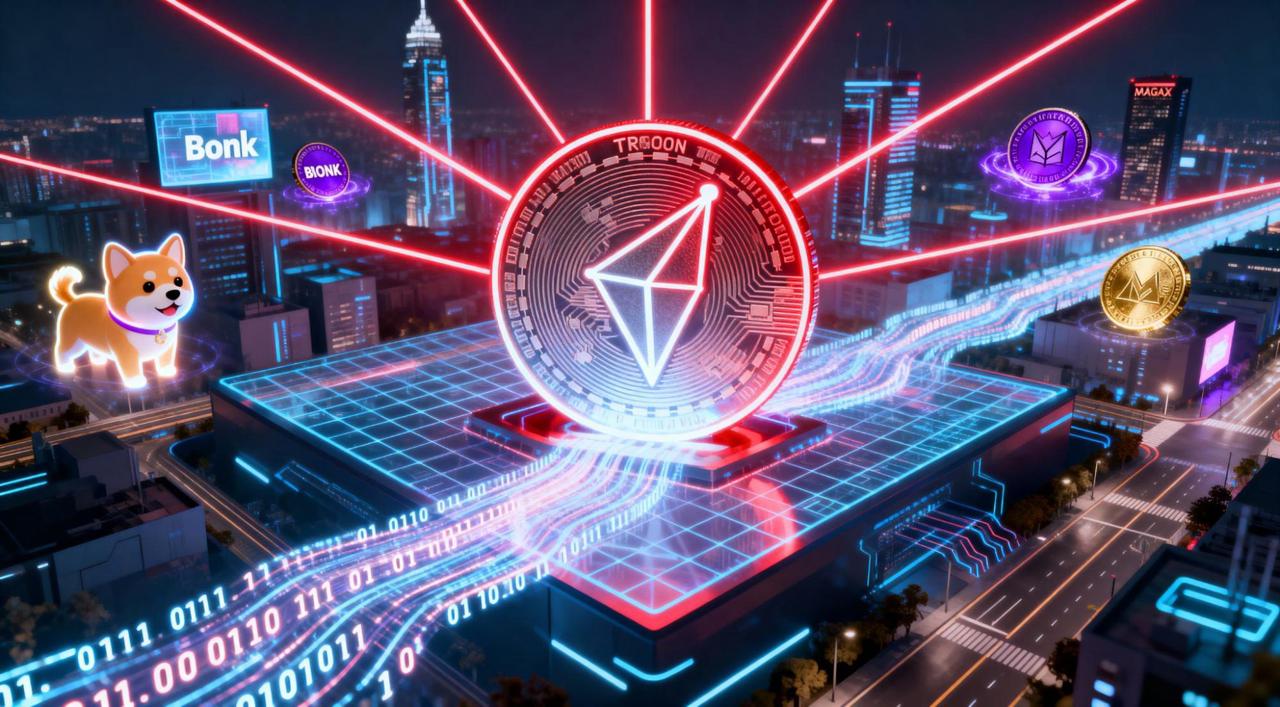
The post Exploring the Future of Crypto Investments in 2025 appeared on BitcoinEthereumNews.com. Crypto News 28 September 2025 | 01:00 Explore TRON’s scalability, Bonk’s meme-driven community, and Moonshot MAGAX’s Meme-to-Earn presale in 2025. Compare how each token shapes investor strategies for growth and engagement. As the crypto landscape evolves in 2025, investors are closely watching established options like TRON (TRX) and Bonk (BONK). TRON continues to stand out for its scalability and developer adoption, while Bonk thrives on community-driven momentum within the Solana ecosystem. Alongside these well-known projects, the Moonshot MAGAX presale is starting to capture attention by introducing a Meme-to-Earn ecosystem that rewards creativity and engagement. With participants balancing proven scalability, cultural strength, and new social tokenomics, the comparison highlights how diverse crypto strategies are shaping investor choices in 2025. TRON: Scalability and Blockchain Efficiency TRON continues to be a top choice for developers seeking high-speed, low-cost transactions. Its network can handle thousands of transactions per second, making it ideal for dApps, DeFi protocols, and NFT platforms. TRON’s robust ecosystem and established partnerships provide confidence to investors prioritizing performance and adoption. TRON’s high throughput reduces transaction bottlenecks, enabling developers to deploy complex applications without worrying about network congestion. Its wide adoption in Asia and expanding developer community also make it a reliable long-term investment for those seeking blockchain exposure beyond speculative gains. Source: CoinMarketCap – TRON Bonk: A Community-First Meme Coin Bonk (BONK) has emerged as one of Solana’s most recognized meme tokens, built on grassroots momentum and community-driven adoption. Launched as the “Solana dog coin,” BONK became popular for its fair launch distribution and integration across Solana-based dApps. Its playful branding, combined with utility in DeFi protocols and NFT marketplaces, gives it staying power beyond mere speculation. In 2025, BONK continues to benefit from Solana’s thriving ecosystem, with increasing use cases in staking, gaming, and payments. While it doesn’t carry the…

Author: BitcoinEthereumNews
TRON vs Bonk vs MAGAX – How 2025 Investors Are Balancing Growth and Innovation

TRON vs Bonk vs MAGAX – How 2025 Investors Are Balancing Growth and Innovation

As the crypto landscape evolves in 2025, investors are closely watching established options like TRON (TRX) and Bonk (BONK). TRON […] The post TRON vs Bonk vs MAGAX – How 2025 Investors Are Balancing Growth and Innovation appeared first on Coindoo.

Author: Coindoo
$1B Crypto Hype Sends Jiuzi Shares Soaring, but MAGAX Presale Steals the Spotlight

$1B Crypto Hype Sends Jiuzi Shares Soaring, but MAGAX Presale Steals the Spotlight

Jiuzi’s Billion-Dollar Crypto Bet Grabs Headlines Jiuzi Holdings, a Chinese EV company, shocked markets with a $1 billion crypto plan. The money is set to go into Bitcoin, Ethereum, and BNB. The announcement sent Jiuzi shares up 55.5% in premarket trading. But reality hit fast. Questions rose: does Jiuzi even have $1 billion in cash? […] The post $1B Crypto Hype Sends Jiuzi Shares Soaring, but MAGAX Presale Steals the Spotlight appeared first on Live Bitcoin News.

Author: LiveBitcoinNews
Top Altcoins To Watch That Can Rally 8,400% Before The XRP Price Touches $10

Top Altcoins To Watch That Can Rally 8,400% Before The XRP Price Touches $10

The post Top Altcoins To Watch That Can Rally 8,400% Before The XRP Price Touches $10 appeared on BitcoinEthereumNews.com. Altcoin momentum is picking up in Q4 2025, especially as XRP edges toward the long-awaited $10 milestone. But while XRP carries strong institutional backing, many analysts believe its explosive growth phase may be behind it.  Instead, the spotlight is shifting to low-cap, high-upside altcoins like MYX Finance (MYX), PEPE, and the fast-rising DeFi project Paydax Prorocol (PDP). With forecasts of potential rallies reaching 8,400%, these altcoins are emerging as the real hidden gems investors are watching ahead of the next big market surge. Liquidity Meets Adoption: The Growth Engine Behind Paydax Protocol (PDP) When it comes to altcoins with the potential for real growth and adoption, Paydax leads the pack. Unlike altcoins like MYX Finance (MYX) and PEPE, which are driven purely by hype or whale speculation, Paydax offers a real-world lending utility that sets it apart. The protocol allows users to borrow against tokenized assets such as crypto, gold, fine art, and collectibles. Source: Paydax Protocol Take a real-world scenario: Imagine a PEPE or MYX holder with $100,000 worth of tokens watching his asset dwindle as volatility sets in and hype fades. He wants to reinvest in a more profitable altcoin, but selling would lock in heavy losses or cost him his position. Instead of selling, he can unlock 60–90% of the value in stablecoins through Paydax, gaining liquidity for trading or reinvestment, all while preserving his core position. Why Paydax Protocol’s PDP Could Explode 8,400% First  Unlike hype-driven altcoins, Paydax (PDP) boasts core features that give PDP the foundation to back up its 8,400% upside potential with actual utility, not hype. Here’s why analysts are calling it the altcoin to watch: Earn While Holding: Lenders can earn up to 15.2% APY by funding fully collateralized loans. Meanwhile, stakers can earn up to 20% APY while safeguarding the ecosystem.…

Author: BitcoinEthereumNews
Experts Load a $0.035 Altcoin, Calling It the Best Crypto to Buy Now Before Year-End

Experts Load a $0.035 Altcoin, Calling It the Best Crypto to Buy Now Before Year-End

The post Experts Load a $0.035 Altcoin, Calling It the Best Crypto to Buy Now Before Year-End appeared first on Coinpedia Fintech News As crypto charts continue to fluctuate and investors debate why crypto is down, analysts are turning their attention to Mutuum Finance (MUTM) as one of the best crypto investment opportunities currently available. Market insiders are quietly accumulating MUTM at $0.035, recognizing both its utility-driven design and its strong potential for year-end returns. With Phase 6 …

Author: CoinPedia