Dapp

Dapps are digital applications that run on a P2P network of computers rather than a single server, typically utilizing smart contracts to ensure transparency and uptime. In 2026, Dapps have achieved mass-market appeal through Account Abstraction, allowing for a "Web2-like" user experience with the security of Web3. This tag covers the entire ecosystem of decentralized software—from social media and productivity tools to governance platforms and identity management.

4962 Articles
Created: 2026/02/02 18:52
Updated: 2026/02/02 18:52
MetaMask Rewards and the New On-Chain Loyalty Game

MetaMask Rewards and the New On-Chain Loyalty Game

MetaMask just turned your wallet activity into a game. Points, levels, and even a metal card are now part of everyday crypto use — a strange mix of finance and fun that feels like DeFi meeting loyalty miles. The Wallet Everyone Knows, but Now With Perks For years, MetaMask — the ConsenSys-built gateway to Ethereum and half the web’s dapps — has been the quiet infrastructure most of us never thought about. Open, sign, send, done. That changed on October 28, 2025, when the team rolled out MetaMask Rewards, a program that hands out points for swaps, futures trades, and referrals right inside the app. Think of it as a layer of incentives wrapped around normal wallet behavior. Seven Levels Deep The system runs on seven tiers, each stacked with extra privileges. A quick mental map: Origin (0 pts) — baseline, nothing yet. Frontier (>1 K) — Linea tokens equal to your total points, redeemable at season’s end. Sylvana (>25 K) — 24-hour ×1.5 boost on all trading points. Oceania (>50 K) — 50 % fee cut on futures. Denalia (>100 K) — priority support + 3-day boost. Titana (>1 M) — 65 % discount + entry to the AlphaFoxes Club. Utopia (>5 M) — the prize: a MetaMask Metal Card with one year of free service. It’s a clever loop. Trade more → climb faster → trade cheaper → climb higher. Getting In Is Easy You start by installing the MetaMask, creating or importing your EVM wallet, and hitting the Rewards button at the bottom.How to download and set up MetaMask wallet Enter code NJESCX during onboarding and grab a free 250 points boost — the Web3 version of a welcome coffee punch card.How to join MetaMask Rewards How to Earn Without Overthinking It There are four main channels.Swaps. Every $10 in volume = 8 points across Ethereum, Polygon, Arbitrum, Avalanche, BNB Smart Chain, Base, Solana, zkSync Era, Sei, and Linea. Swaps on Linea even double your rate.How to swap tokens in MetaMask Perps. Futures pay 1 point per $10 when you open, close, or trigger TP/SL orders.How to trade perps in MetaMask Referrals. Friends get 250 bonus points, you collect 10 points for every 50 they earn.Retro activity. If you traded before Oct 15 2025, connect that wallet — past volume can net up to 50 K points. It’s almost absurdly simple, which is the point. Incentives with minimal friction tend to work. Why It Matters If this all feels like early Web2 rewards culture sneaking back, that’s because it is — but transparent and programmable this time. Points aren’t hidden in databases; they’re traceable, tradeable even, across ecosystems. MetaMask’s design hints at more than short-term engagement. The steady references to a future $MASK airdrop suggest these points could evolve into something bigger — governance rights, token claims, maybe even cross-app interoperability. The wallet becomes the brand. Activity becomes identity. How to Play It Smart For anyone chasing real yield from this, a few practical moves help: Favor Linea swaps. The 2× multiplier compounds fast. Stay active, not reckless. Futures volume counts, but losing trades still sting. Use referrals early. Early trees grow the most branches. Link past wallets. Free points for historical activity are rare gifts. And remember, this isn’t just farming for tokens — it’s building history. The data you generate today may decide tomorrow’s eligibility. Closing Thoughts MetaMask Rewards marks a subtle but significant turn for Web3: the wallet is no longer a passive tool. It’s becoming a stage. Each swap, each trade, each invite pushes you up a ladder of digital reputation. Whether you care about the Metal Card, the Linea tokens, or just the quiet satisfaction of climbing, this program gamifies the mundane in a way that actually works. The bigger story? Wallets are turning into social layers. MetaMask lit the match, and projects like Soneium are carrying the flame — proving that loyalty in crypto doesn’t come from holding, but from doing. This article is part of DropsTab Research. MetaMask Rewards and the New On-Chain Loyalty Game was originally published in Coinmonks on Medium, where people are continuing the conversation by highlighting and responding to this story

Author: Medium
Cronos (CRO) rolls out “Smarturn” upgrade for advanced EVM features

Cronos (CRO) rolls out “Smarturn” upgrade for advanced EVM features

Cronos EVM v1.5.0 has officially debuted today, October 30. The upgrade introduces new EVM opcodes, smart accounts, and enhanced interoperability. Smarturn targets a more flexible, faster, and developer-friendly blockchain. The Cronos blockchain has announced the launch of its anticipated Smarturn upgrade, welcoming a new era in its network evolution. The update brings significant improvements across […] The post Cronos (CRO) rolls out “Smarturn” upgrade for advanced EVM features appeared first on CoinJournal.

Author: Coin Journal
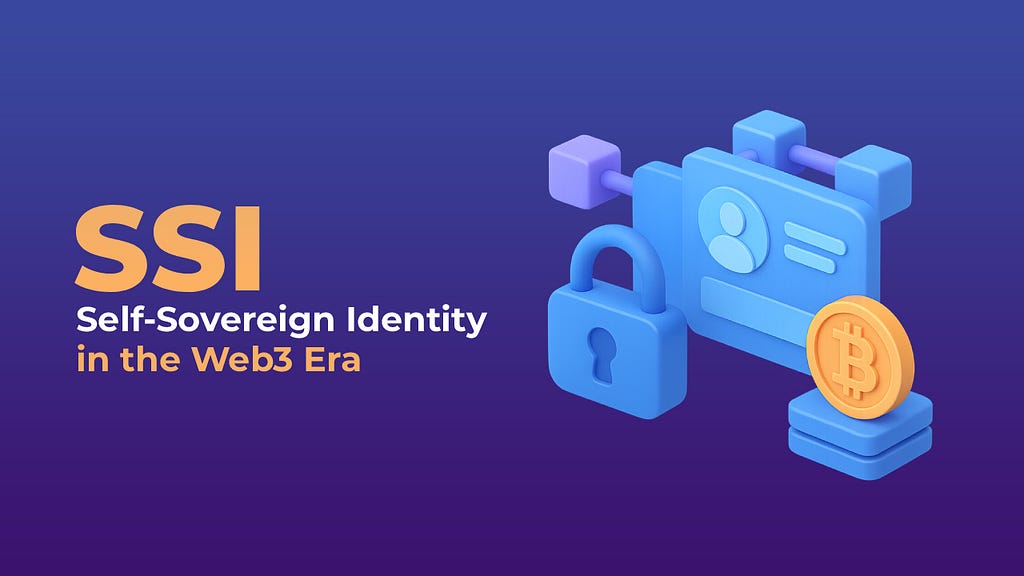
Self-Sovereign Identity (SSI): Redefining Privacy in the Web3 Era

Self-Sovereign Identity (SSI): Redefining Privacy in the Web3 Era

Self-Sovereign Identity (SSI): Redefining Privacy in the Web3 Era Our digital identities today are fragmented and frequently manipulated by centralized entities that hold our personal data. Every time we log in, sign up, or share personal data online, we leave behind traces of information that can be sold, analyzed, or hacked. The emergence of Web3 technologies built on decentralization and blockchain has opened the door to a revolutionary concept called Self-Sovereign Identity (SSI). SSI promises a future where individuals have complete ownership and control over their digital identities without relying on third-party intermediaries. This transformation redefines how privacy, security, and trust are maintained in the digital world.

  1. The Fundamentals of Self-Sovereign Identity (SSI) Self-Sovereign Identity (SSI) is a digital identity model where individuals or organizations own, control, and manage their identity information directly, without depending on centralized authorities such as governments, corporations, or social platforms. In traditional systems, identity verification relies on centralized databases managed by third parties think Google logins, banks, or government IDs. These systems are convenient but vulnerable to data breaches, censorship, and privacy violations. SSI leverages blockchain technology, cryptography, and decentralized identifiers (DIDs) to eliminate intermediaries. It allows users to store verified credentials securely in their digital wallets and present them only when necessary without revealing unnecessary personal data.
  2. How SSI Differs from Traditional Digital Identity Systems The fundamental difference between Self-Sovereign Identity (SSI) and traditional digital identity systems lies in ownership, control, and trust. Traditional identity models depend on centralized authorities such as governments, banks, or tech corporations to issue, store, and validate personal data. In contrast, SSI shifts the power of identity management directly to individuals, eliminating intermediaries and enabling complete user autonomy.
  3. Ownership and ControlIn conventional systems, user data resides on centralized servers managed by third parties. These entities can modify, share, or even sell personal information without user consent. SSI, however, gives individuals full ownership of their identity data. They store credentials in secure digital wallets and decide what to share, when, and with whom.
  4. Privacy and Data ProtectionTraditional systems often expose sensitive information during verification. SSI introduces selective disclosure users can prove facts (like age or citizenship) without revealing unnecessary details. This ensures maximum privacy and minimizes the risk of data leaks or misuse.
  5. Trust and VerificationCentralized systems rely on institutional trust, meaning users must depend on organizations to confirm their identities. SSI replaces this model with trustless verification, powered by cryptography and blockchain. Verifiable credentials can be authenticated without revealing underlying personal data.
  6. Security and Risk MitigationCentralized identity databases are frequent targets of cyberattacks and data breaches. In SSI, identity data is distributed and cryptographically secured on decentralized networks, removing single points of failure and strengthening overall system security.
  7. Interoperability and PortabilityTraditional identities are siloed a user’s credentials from one service cannot easily be used on another. SSI ensures interoperable identities across multiple platforms and ecosystems, giving users seamless access without repetitive registrations.
  8. User Experience and AutonomySSI empowers users with self-management tools. They no longer depend on institutions for account recovery or validation, streamlining digital interactions while maintaining full control over their personal data.
  9. The Core Components of SSI To understand how SSI works, it’s essential to explore its key components: A. Decentralized Identifiers (DIDs)DIDs are globally unique identifiers stored on the blockchain. Unlike usernames or email addresses tied to centralized servers, DIDs are owned by the user and can be verified without revealing personal data. B. Verifiable Credentials (VCs)VCs are digital certificates issued by trusted entities (universities, governments, employers) that can be cryptographically verified. Users store these credentials in their identity wallet and present them when needed. C. Identity WalletsAn SSI wallet is a secure app where individuals store and manage their DIDs and VCs. It allows them to share credentials in a privacy-preserving manner using cryptographic proofs. D. Blockchain or Distributed LedgerThe blockchain acts as the trust layer, enabling the registration, verification, and revocation of DIDs and credentials without central control. Together, these components form a trustless, interoperable identity system for the Web3 world.
  10. Why SSI Is Critical in the Web3 Era As Web3 continues to evolve ushering in decentralization, tokenization, and user empowerment the need for secure and self-owned digital identities becomes crucial. A. Data Privacy and ControlUsers no longer need to depend on companies to store and manage their data. SSI allows selective sharing users decide what information to reveal and to whom. B. Eliminating Central Points of FailureBy removing intermediaries, SSI reduces the risk of mass data breaches and identity theft, which plague centralized systems. C. Seamless Digital InteractionsSSI enables cross-platform identity verification across dApps, metaverse environments, and digital ecosystems without repeated registrations. D. Empowering Digital FreedomWith SSI, users reclaim their online presence and prevent corporations from monetizing their data without consent.
  11. How Self-Sovereign Identity Works in Practice Here’s how the SSI lifecycle typically works: Identity Creation — The user generates a decentralized identifier (DID) and stores it on a blockchain. Credential Issuance — A trusted institution (like a university or government) issues verifiable credentials to the user’s wallet. Presentation — The user can present these credentials to third parties when needed (for example, to verify age or qualifications). Verification — The verifier checks the credential against the blockchain to ensure it’s valid — without accessing sensitive user data. This trustless verification model removes intermediaries and empowers the user as the central authority of their digital existence.
  12. Use Cases of Self-Sovereign Identity in Web3 SSI is not just theoretical it’s being integrated into several Web3 and real-world applications. a. Financial ServicesBanks and DeFi platforms can use SSI for KYC (Know Your Customer) verification. Users can prove identity without revealing excessive personal data, ensuring compliance and privacy. b. HealthcarePatients can securely share medical records with hospitals or insurance providers through SSI wallets, ensuring data confidentiality and consent-based access. c. EducationUniversities can issue verifiable degrees and certificates stored in SSI wallets, reducing credential fraud and simplifying verification for employers. d. Metaverse and GamingUsers can maintain a persistent identity across metaverse platforms, carrying achievements, reputation, and digital assets with them. e. Government ServicesSSI can power digital IDs and e-governance systems, giving citizens access to services without centralized identity management risks. f. Supply ChainSSI enables product traceability by allowing manufacturers and vendors to issue verifiable credentials about product origin and authenticity.
  13. Benefits of Implementing Self-Sovereign Identity A. User Control and OwnershipSSI puts users at the center of identity management, aligning with the Web3 vision of decentralization. B. Privacy PreservationThrough selective disclosure, SSI allows users to prove facts (like age or qualification) without revealing the underlying data. C. Cost EfficiencyOrganizations save costs on storing and managing user data by relying on verifiable credentials instead. D. Global InteroperabilitySSI systems are built on open standards (like W3C DIDs and VCs), allowing cross-border identity usage. E. Reduced FraudBlockchain-based identity verification ensures authenticity and reduces risks of fake or duplicated credentials.
  14. Challenges and Limitations of SSI Adoption While SSI offers enormous potential, there are still hurdles to overcome: A. Lack of Awareness and EducationMany users and institutions are unfamiliar with SSI concepts, slowing adoption. B. Technical ComplexityBuilding SSI infrastructure and wallets requires advanced blockchain integration and standardization. C. Regulatory UncertaintyGovernments are still defining policies around digital identity ownership and verification in decentralized systems. D. Trust FrameworksAlthough blockchain provides trustless verification, trusted issuers must still exist for credential issuance. E. Scalability and InteroperabilityIntegrating SSI across multiple blockchains and platforms remains a technical challenge.
  15. The Future of SSI in Web3 The next decade will see Self-Sovereign Identity become a foundational element of the digital economy. As Web3, AI, and blockchain continue to converge, SSI will enable: AI-driven digital identity verification using decentralized data. Interoperable identities across metaverses, DeFi platforms, and global networks. Data marketplaces where users control and monetize their own data. Integration with IoT and machine identity systems for trusted automation. Governments and enterprises are already experimenting with SSI pilots for example, the European Blockchain Services Infrastructure (EBSI) project and Microsoft’s ION network on Bitcoin. SSI is poised to redefine privacy and trust in a borderless, decentralized digital world.
  16. Building a Self-Sovereign Identity Solution Developing an SSI solution involves several technical and strategic components: Blockchain Integration: Choose a suitable blockchain (like Ethereum, Polygon, or Hyperledger) for DID management. Standards Compliance: Align with W3C DID and VC specifications for interoperability. Credential Issuer Network: Build a network of trusted issuers to validate user credentials. Identity Wallet Development: Create a secure wallet interface for storing and sharing credentials. User Interface & Privacy Layer: Ensure easy onboarding and transparent data-sharing options. Regulatory Compliance: Follow GDPR, CCPA, or similar frameworks for privacy and consent. Low-code or no-code development tools can accelerate SSI implementation, making it accessible to enterprises and developers alike.
  17. The Role of AI in Enhancing SSI Artificial Intelligence (AI) can complement SSI in several ways: Fraud Detection: AI models can analyze patterns to identify fake or tampered credentials. Biometric Verification: Combine SSI with AI-driven facial or voice recognition for secure onboarding. Data Analytics: Users can leverage AI to gain insights from their own verified data without exposing it publicly. Smart Contracts: AI agents can automate credential issuance and revocation on blockchain networks. The synergy between AI and SSI can lead to a more intelligent, secure, and privacy-preserving Web3 infrastructure. Conclusion Self-Sovereign Identity (SSI) represents a paradigm shift from centralized data control to user empowerment in the Web3 era. It aligns with the foundational principles of decentralization, trustlessness, and privacy ensuring that individuals truly own their digital presence. By leveraging blockchain and cryptography, SSI provides a future where personal data is secure, verifiable, and user-controlled. Though challenges like regulation and interoperability remain, SSI is undoubtedly one of the most transformative innovations driving the evolution of the internet. As the world moves toward a decentralized digital ecosystem, SSI will be the cornerstone of identity management redefining privacy, security, and trust in every online interaction.
Self-Sovereign Identity (SSI): Redefining Privacy in the Web3 Era was originally published in Coinmonks on Medium, where people are continuing the conversation by highlighting and responding to this story

Author: Medium
Top 3 Altcoins Set for 300x ROI Before 2026 — Ozak AI Leads the Pack as It Prepares for the $0.014 Phase and $1 Launch Price

Top 3 Altcoins Set for 300x ROI Before 2026 — Ozak AI Leads the Pack as It Prepares for the $0.014 Phase and $1 Launch Price

Enjoy the videos and music you love, upload original content, and share it all with friends, family, and the world on YouTube.

Author: Blockchainreporter
Crypto Price Predictions: How Long Will It Take Cardano, Dogecoin And Layer Brett To Trade Above $1?

Crypto Price Predictions: How Long Will It Take Cardano, Dogecoin And Layer Brett To Trade Above $1?

Cardano price prediction, Dogecoin and Layer Brett reach $1? Timelines, catalysts, on-chain signals, liquidity and real utility explained clearly

Author: Blockchainreporter
FED Cuts Interest Rates by 25 BPS – Here Are the Next Crypto to Explode

FED Cuts Interest Rates by 25 BPS – Here Are the Next Crypto to Explode

The post FED Cuts Interest Rates by 25 BPS – Here Are the Next Crypto to Explode appeared on BitcoinEthereumNews.com. FED Cuts Interest Rates by 25 BPS – Here Are the Next Crypto to Explode Sign Up for Our Newsletter! For updates and exclusive offers enter your email. Aidan Weeks, a Master’s graduate in Mechanical Engineering, has thrived as a content writer for over four years. Specializing in crypto, tech, engineering, AI, and B2B sectors, Aidan adeptly crafts web copy, blog posts, buying guides, manuals, product pages, and more, making complex concepts accessible and engaging. His transition from academia to full-time writing reflects his passion for bridging technical expertise with clear, informative content. Since joining Bitcoinist, Aidan has written extensively about DeFi, dApps, AI, and meme coins, solidifying his grasp on emerging blockchain technologies. An early adopter, he began investing in Solana in 2020, further deepening his insights into crypto markets and innovation. Today, he combines hands-on experience with a sharp editorial instinct to help readers cut through hype, spot real trends, and make sense of a fast-moving space. This website uses cookies. By continuing to use this website you are giving consent to cookies being used. Visit our Privacy Center or Cookie Policy. I Agree Source: https://bitcoinist.com/fed-cuts-interest-rates-25-bps-next-crypto-to-explode/

Author: BitcoinEthereumNews
Ripple Latest News Feature XRP Tundra Presale Launching XRP Staking

Ripple Latest News Feature XRP Tundra Presale Launching XRP Staking

The post Ripple Latest News Feature XRP Tundra Presale Launching XRP Staking appeared on BitcoinEthereumNews.com. Ripple officially introduced the XRP Ledger’s Ethereum Virtual Machine (EVM) sidechain to the mainnet in June, opening a new chapter for the network’s utility. The upgrade enables developers to deploy Ethereum-based decentralized applications (dApps) directly within the XRPL framework while maintaining full connectivity to the original ledger. The update merges EVM-compatible smart contracts with XRPL’s native transaction speed and low-cost execution. Ripple described the move as a way to eliminate the traditional trade-off between flexibility and performance, allowing dApps to plug directly into XRP’s payments infrastructure. That expansion set the stage for a new class of DeFi protocols — including XRP Tundra, which is using the live sidechain to bring on-chain staking to Ripple’s ecosystem for the first time. Staking Arrives Through XRP Tundra’s Dual-Chain Architecture Until recently, XRP holders could only earn yield through centralized exchanges or indirect liquidity products. XRP Tundra redefines that process through a dual-chain architecture that connects the XRPL EVM sidechain with Solana, coordinated through GlacierChain, its dedicated Layer-2 environment. GlacierChain functions as a computational layer designed to handle staking logic, validator coordination, and reward calculation. It synchronizes real-time data between Solana’s high-performance network and the XRP Ledger’s settlement layer without acting as a custodial bridge. This setup allows staking, liquidity operations, and vault activity to run seamlessly across both ecosystems while preserving XRPL’s low-cost transaction framework. Through the EVM interface introduced by Ripple in June, all vault interactions remain fully transparent and auditable on-chain. Rather than altering Ripple’s base protocol, Tundra builds around it — expanding the ledger’s capabilities into DeFi without compromising its reliability. The result is an architecture that keeps XRP’s speed intact while adding programmable yield mechanics native to the broader EVM ecosystem. Cryo Vaults Turn XRP Into a Yield Asset At the heart of Tundra’s staking ecosystem are Cryo Vaults,…

Author: BitcoinEthereumNews
Cardano (ADA) Price Outlook: Is a Break Above $0.80 the Gateway to $1.70?

Cardano (ADA) Price Outlook: Is a Break Above $0.80 the Gateway to $1.70?

Cardano (ADA) is facing downward pressure, indicating a slight decline in its market value. Over the past 24 hours, the token has fallen by nearly 3.02%, reflecting short-term selling pressure and market volatility, but over the last week, it still maintains a 1.65% gain, showing signs of resilience and potential investor confidence. At the time […]

Author: Tronweekly
METABORA GAMES Launches ‘Puzzle & Guardians’ on LINE NEXT’s Mini Dapps to expand BORA Token Utility

METABORA GAMES Launches ‘Puzzle & Guardians’ on LINE NEXT’s Mini Dapps to expand BORA Token Utility

BitcoinWorld METABORA GAMES Launches ‘Puzzle & Guardians’ on LINE NEXT’s Mini Dapps to expand BORA Token Utility – Baligames, METABORA GAMES’ puzzle RPG studio, launches global title ‘Puzzle & Guardians’ – Combines 3-match puzzles, RPG growth, and Web3 rewards – Introduces BORA DEEPS, linking gameplay missions with Web3 rewards – Expands BORA utility through in-game payments and new Web3 services SEOUL, South Korea, Oct. 30, 2025 /PRNewswire/ — METABORA GAMES (CEO Choi Se-hoon), a leading blockchain game developer, announced today the official global launch of its new Web3 title “Puzzle & Guardians” through the Dapp Portal operated by LINE NEXT. Developed by Baligames, a puzzle RPG specialist studio in partnership with METABORA GAMES, Puzzle & Guardians is a hybrid Web3 game that combines the casual fun of 3-match puzzle battles with RPG progression elements. Players can collect and enhance various Guardians, engage in 1v1 PvP duels as well as Boss Rush and other PvE modes, and earn BORA token rewards by completing in-game missions and seasonal events. Accessible directly through the LINE NEXT’s Dapp Portal without additional installation, Puzzle & Guardians also supports in-app purchases using BORA tokens, offering players a seamless Web3 Payment experience. METABORA GAMES also introduced “BORA DEEPS”, a brand new infrastructure service designed to strengthen interaction between players and the BORA ecosystem. Its first feature, Quest, debuts with Puzzle & Guardians at launch. By connecting in-game missions with BORA-based Web3 rewards, BORA DEEPS enhances user engagement and plays a pivotal role in expanding the overall BORA game ecosystem. In addition to Kaia based payments provided on Mini Dapps, Puzzle & Guardians officially enables in-game purchases with BORA tokens. Together with the BORA DEEPS Quest reward system, the game establishes a sustainable token utility cycle across gameplay and user participation. METABORA GAMES is also expanding Gas Abstraction across key BORA ecosystem products, allowing users to make payments with BORA tokens on the Kaia chain without holding KAIA tokens; enhancing overall accessibility for BORA users. Looking ahead, the company plans to further enhance and diversify BORA token utility by launching additional Mini Dapp games and introducing new features within BORA DEEPS. Earlier this year, METABORA GAMES entered a partnership with LINE NEXT, operator of the Dapp Portal, and Baligames, developer of Axie Champions. Puzzle & Guardians marks the first collaborative title introduced to the global market under this partnership, following its pre-launch showcase at WebX 2025, Japan’s largest Web3 conference, where it drew significant international attention. More information about Puzzle & Guardians is available on the official X (Twitter) account and the LINE NEXT’s Dapp Portal. About METABORA METABORA is a casual game developer and the service operator of the blockchain platform BORA. The BORA ecosystem brings together partners across various industries—ranging from tokenomics and content to blockchain technology—driving innovation and collaboration across games, sports, and entertainment. BORA is a national game/entertainment token with a high liquidity in the market and reinforcing the accessibility of users and services abroad by increasing the listing on global cryptocurrency exchanges and expanding partnership. This post METABORA GAMES Launches ‘Puzzle & Guardians’ on LINE NEXT’s Mini Dapps to expand BORA Token Utility first appeared on BitcoinWorld.

Author: Coinstats
Miten pelillistäminen muokkaa Web3-käyttäjäkokemuksen tulevaisuutta

Miten pelillistäminen muokkaa Web3-käyttäjäkokemuksen tulevaisuutta

Pelillistäminen ei ole enää pelkkä muotisana – siitä on tulossa keskeinen strategia siihen, miten käyttäjät sitoutuvat hajautettuihin alustoihin. Web3-teknologioiden kehittyessä yksi tehokkaimmista keinoista sitouttaa käyttäjiä on pelillistäminen – eli pelimekaniikkojen hyödyntäminen ei-pelillisissä ympäristöissä. NFT:istä sosiaalisiin kasinoihin, pelillisyys toimii sillanrakentajana lohkoketjuteknologian ja jokapäiväisen käyttäytymisen välillä. Hyvä esimerkki onnistuneesta pelillistämisestä ovat sosiaaliset kasinot, joissa käyttäjät voivat pelata […] The post Miten pelillistäminen muokkaa Web3-käyttäjäkokemuksen tulevaisuutta appeared first on Live Bitcoin News.

Author: LiveBitcoinNews