Dapp

Dapps are digital applications that run on a P2P network of computers rather than a single server, typically utilizing smart contracts to ensure transparency and uptime. In 2026, Dapps have achieved mass-market appeal through Account Abstraction, allowing for a "Web2-like" user experience with the security of Web3. This tag covers the entire ecosystem of decentralized software—from social media and productivity tools to governance platforms and identity management.

4985 Articles
Created: 2026/02/02 18:52
Updated: 2026/02/02 18:52

Biggest Airdrop of November 2025 – $30,000 in IPO Genie Rewards

Biggest Airdrop of November 2025 – $30,000 in IPO Genie Rewards

Join the biggest crypto airdrop of November 2025. IPO Genie, the leading AI crypto project, is rewarding $30,000 in cash and tokens. Limited slots - act fast!

Author: Blockchainreporter
Are Solutions like Best Wallet Next?

Are Solutions like Best Wallet Next?

The post Are Solutions like Best Wallet Next? appeared on BitcoinEthereumNews.com. Tangem Launches Self-Custody Visa Payments: Are Solutions like Best Wallet Next? Sign Up for Our Newsletter! For updates and exclusive offers enter your email. Aidan Weeks, a Master’s graduate in Mechanical Engineering, has thrived as a content writer for over four years. Specializing in crypto, tech, engineering, AI, and B2B sectors, Aidan adeptly crafts web copy, blog posts, buying guides, manuals, product pages, and more, making complex concepts accessible and engaging. His transition from academia to full-time writing reflects his passion for bridging technical expertise with clear, informative content. Since joining Bitcoinist, Aidan has written extensively about DeFi, dApps, AI, and meme coins, solidifying his grasp on emerging blockchain technologies. An early adopter, he began investing in Solana in 2020, further deepening his insights into crypto markets and innovation. Today, he combines hands-on experience with a sharp editorial instinct to help readers cut through hype, spot real trends, and make sense of a fast-moving space. This website uses cookies. By continuing to use this website you are giving consent to cookies being used. Visit our Privacy Center or Cookie Policy. I Agree Source: https://bitcoinist.com/tangem-launches-stablecoin-visa-card-is-best-wallet-token-next/

Author: BitcoinEthereumNews
7 Best Crypto To Buy Now for Long-Term Growth: Early Movers Eye Big 2025 Gains

7 Best Crypto To Buy Now for Long-Term Growth: Early Movers Eye Big 2025 Gains

What if the next major leap in cryptocurrency isn’t just a coin, it’s a financial ecosystem designed to merge DeFi, real-world spending, and institutional-grade trading under one platform? As 2025 unfolds, that question defines the race among investors scanning the best crypto to buy now. The market continues to mature, with Bitcoin regaining dominance, Solana [...] The post 7 Best Crypto To Buy Now for Long-Term Growth: Early Movers Eye Big 2025 Gains appeared first on Blockonomi.

Author: Blockonomi
Saylor’s $STRC Hits $100, Proves $BTC Flywheel Works: $HYPER Hit $26M Yesterday

Saylor’s $STRC Hits $100, Proves $BTC Flywheel Works: $HYPER Hit $26M Yesterday

Quick Facts: ➡️ Strategy’s $STRC broke an ATH of $100.01 after 1M shares sold, fueling the company’s Bitcoin-centric investment strategy. ➡️ $STRC’s record print validates the $BTC flywheel. Capital is financing more Bitcoin buys, accelerating the cycle. ➡️ Bitcoin Hyper targets $BTC’s speed and programmability gaps with SVM contracts and a canonical bridge for fast, […]

Author: Bitcoinist
DFINITY Foundation bets on AI; how did Caffeine drive up ICP prices?

DFINITY Foundation bets on AI; how did Caffeine drive up ICP prices?

Author: Jae, PANews On November 3, after the DFINITY Foundation released a product update for its DeAI (Decentralized Artificial Intelligence) platform Caffeine, the price of the protocol token ICP subsequently surged, reaching a high of $6.40, accompanied by a sharp increase in trading volume. This was not merely a brief release of market sentiment, but a key signal of DFINITY's strategic transformation from an "Internet computer" to an "AI cloud engine," aiming to leverage "natural language programming" to tap into a trillion-dollar service market. Significantly lowering the barrier to application development, the AI development tool Caffeine has been launched. Caffeine is a DeAI platform built on the Internet Computer Protocol (ICP). This product update marks a substantial step forward for the DFINITY Foundation's "Internet Computer 2.0" strategy, going beyond mere technological iteration to represent a significant strategic shift. ICP is no longer content with being just a simple decentralized underlying protocol; it plans to transform into an AI cloud engine providing mainstream cloud services and hosting "self-programming applications," and Caffeine is the primary vehicle for realizing this "Internet Computer 2.0" strategy. Dominic Williams, founder and chief scientist of DFINITY, once described Caffeine's goal: "Caffeine will unleash the creative potential of five billion people and is the foundation of the 'self-programming internet': turning imagination into applications and AI into builders." This may hint at a fundamental shift in ICP's customer acquisition strategy: from targeting professional developers to targeting ordinary users. If deploying applications is as simple as sending a text message, then the potential customer base of ICPs will expand significantly, reaching a large number of users excluded and unserved by the complexity of traditional programming. Caffeine's core technology is based on natural language application development methods. Its value proposition lies in allowing users to create, deploy, and maintain applications through non-technical interaction, directly compiling natural language into executable computer code. This design eliminates the dependence on traditional programming languages and deep engineering backgrounds, significantly lowering the barrier to entry for Web3 development. This approach can transform a large user base from passive internet consumers into active application builders. The main advantage of this technology lies in its flexibility. As underlying ICP development languages such as Motoko are updated and iterated, Caffeine can call the latest compilation functions by simply fine-tuning its AI ensemble model. The generated code and applications will be able to automatically adapt to these updates without requiring developers to perform complex code refactoring or maintenance, significantly improving development efficiency. Caffeine also developed the App Market feature. This market is not just an app store, but also an ecosystem growth engine that helps users become creators. Users can replicate, modify, and iterate on the ever-growing app repository in the App Market. This feature significantly accelerates the implementation of everyday use cases, allowing any user to customize development according to their individual needs. This replication and iteration mechanism also effectively solves the "0 to 1" dilemma for developers when facing new technologies, significantly shortening the time from concept to deployment. Caffeine was designed to support a wide range of use cases, covering business tools, workflows, and full-featured digital services for individuals, entrepreneurs, and large companies. This universality also brings enormous commercial potential to Caffeine. DFINITY plans to allow users to directly launch and monetize their developed applications through the App Market in the future. This built-in monetization mechanism is key to driving the business loop. It will incentivize the creation of high-quality applications, provide ordinary users with a way to participate in development and benefit from it, and also help the platform form a self-sustaining ecosystem. The establishment of this economic model will enable ICPs to compete with Web2 SaaS platforms (such as Webflow or Bubble) for market share among non-technical users. Shifting from incentive mechanisms to real needs: Building a deflationary engine for ICPs ICP's token economic model employs a reverse gas mechanism, meaning application developers pre-charge Cycles to pay fees. Cycles are units used in the ICP ecosystem to quantify computing and storage resources, representing the cost of executing a single instruction, and are created by burning ICP. As a key driver of "Internet Computer 2.0", Caffeine's core economic goal is to achieve large-scale network usage by providing computing resources by burning a large number of Cycles. This mechanism is also the cornerstone of ICP value capture: as Caffeine gradually unleashes the creativity of non-technical users, the potential computing needs of application development will be transformed into huge demands for Cycles, which in turn puts sustainable pressure on the destruction of ICPs, increasing the economic value of ICPs as a basic resource. Currently, Coincodex data shows that ICP's annual inflation rate is as high as 14.4%, mainly driven by governance staking (voting rewards) and node provider rewards, which is a structural challenge facing the protocol. DFINITY plans to optimize the inflation of the ICP token economic model, and Caffeine is a key tool for achieving this goal. The Cycles generated by Caffeine will serve as a powerful hedging mechanism for the network economy. Only when the burning amount reaches or exceeds the inflation threshold generated by governance and node rewards will ICP enter a deflationary mode. Therefore, the large-scale adoption of Caffeine is a key variable in the transformation of ICP from an incentive-driven, high-inflationary asset to a utility-driven, deflationary asset driven by actual computational needs, which will also bring about a fundamental change in the underlying logic of investing in ICP. The new ICP cloud engine model will also provide scalability support for applications generated by Caffeine. This model allows developers to extend functionality without changing the application code. For example, adding new nodes can increase query call capacity, or replacing nodes with more powerful ones can update call capacity and memory usage. If necessary, the engine can also be split using derivative techniques. Regardless of the scaling method used, all computing resource consumption will burn Cycles. This economic scalability ensures that Caffeine-driven traffic growth can be continuously converted into quantifiable economic value and ICP destruction, thereby ensuring the binding of network value and application needs in the mechanism. Business focus shifts to the cloud services battlefield ICP differs fundamentally from mainstream L1 blockchains in its technological positioning. Driven by Caffeine, ICP has shifted its business focus from DeFi to general computing and the cloud market. Unlike other L1 chains' AI narratives, ICP truly achieves full on-chain custody and full-stack decentralization. ICP views the blockchain as the "cloud" and, through Caffeine, captures the application development needs of non-technical users, enabling it to expand its potential market size to the trillion-dollar cloud services sector, not just the Web3 native market. On the other hand, even in mature ecosystems like Ethereum or Solana, building traditional DApps requires developers to have a deep understanding of the complexities of blockchain technology, consensus mechanisms, and smart contracts. This technological barrier limits the speed of Web3 adoption. Caffeine, through natural language input, combines speed, accuracy, and decentralization to achieve a leap in development efficiency. This innovation in development models means that ICP's competitors are no longer limited to other L1 platforms, but also include Web2 platforms that provide non-technical build functionality. This AI-generated code approach has fundamentally changed the competitive landscape of ICPs. Caffeine will simplify the development process and significantly improve the efficiency and security of application building. Caffeine's strategic value lies in providing ICPs with a dual lever to reshape their business models and achieve token economic goals. For investors and market observers, key tracking indicators include: Cycles Combustion Data: Continuously tracking the growth trend of Cycles combustion driven by Caffeine will directly affect whether DFINITY can achieve its goal of optimizing ICP inflation. App Market monetization: Observing the development and monetization of applications created by users on the Caffeine App Market will be key to verifying the sustainability of Caffeine's business model and the self-sustaining ecosystem. Overall, Caffeine is not only a milestone in the DFINITY technology roadmap, but also a redefinition of Web3 from "code is power" to "language as a service." If it can unleash the creativity of non-technical users, ICP has the potential to carve out a growth path in the cloud service market that differs from any other Level 1 provider.

Author: PANews
dApps Demystified: The Future of Decentralized Applications and How They’re Changing the Web

dApps Demystified: The Future of Decentralized Applications and How They’re Changing the Web

dApps Demystified: The Future of Decentralized Applications and How They’re Changing the Web “In 1999, the internet gave us access to information. In 2025, decentralized applications are giving us ownership.” The internet is entering its next great transformation. Just as Web 1.0 democratized information and Web 2.0 revolutionized connectivity, Web3 is now redefining ownership, trust, and value. At the heart of this revolution lies a quiet but powerful innovation — decentralized applications, or dApps. From decentralized finance platforms moving billions daily to blockchain-based games and NFT marketplaces, dApps are no longer a tech experiment — they’re rebuilding the global economy, one smart contract at a time. Whether you’re a billionaire investor, a venture capitalist, or simply trying to understand the next era of digital transformation, this article will demystify what dApps are, how they work, and why they’re becoming impossible to ignore. What Are dApps — and Why Do They Matter? A decentralized application (dApp) is software built on a blockchain or other distributed ledger. Unlike traditional apps (like Facebook or PayPal), which are controlled by a single company, dApps operate on decentralized networks, meaning no single entity can alter, censor, or own the data. In simple terms, dApps replace the middleman with math. They use smart contracts — self-executing agreements written in code — to automate transactions, enforce trust, and ensure transparency. Think of it this way:

dApps Demystified: The Future of Decentralized Applications and How They’re Changing the Web was originally published in Coinmonks on Medium, where people are continuing the conversation by highlighting and responding to this story

Author: Medium
SmartCon 2025: Chainlink (LINK) Unveils Major Updates and Innovations

SmartCon 2025: Chainlink (LINK) Unveils Major Updates and Innovations

The post SmartCon 2025: Chainlink (LINK) Unveils Major Updates and Innovations appeared on BitcoinEthereumNews.com. Felix Pinkston Nov 04, 2025 22:30 Chainlink (LINK)’s SmartCon 2025 in New York spotlighted major announcements, product updates, and insightful discussions, marking significant advancements in blockchain technology. Chainlink (LINK), a leader in blockchain oracle solutions, showcased significant advancements at SmartCon 2025 held in New York. The event was a focal point for the blockchain community, featuring key announcements, cutting-edge product releases, and engaging panel discussions, according to Chainlink. Key Announcements and Product Releases SmartCon 2025 featured a host of announcements that are set to influence the blockchain space. Chainlink introduced several product updates aimed at enhancing the functionality and interoperability of decentralized applications (dApps). The updates emphasize improving security and scalability, which are critical components for the growing demand in blockchain technology. Insightful Keynotes and Panels The conference included a series of keynotes and panel discussions that shed light on the future direction of blockchain technology. Industry experts and thought leaders discussed the potential of decentralized finance (DeFi), the importance of secure data transfer, and the evolving role of blockchain in various sectors. Future Implications for Blockchain Technology SmartCon 2025 underscored Chainlink’s commitment to driving innovation in the blockchain sector. The announcements and discussions at the conference are expected to have far-reaching implications, influencing how blockchain solutions are developed and implemented across industries. This aligns with the broader trend of increasing adoption and integration of blockchain technologies in mainstream applications. Community and Developer Engagement In addition to product announcements, SmartCon 2025 served as a platform for community engagement. Developers and enthusiasts had the opportunity to connect, exchange ideas, and explore collaborative opportunities, further fostering the growth of the blockchain ecosystem. For a comprehensive overview of the event, visit the official Chainlink blog. Image source: Shutterstock Source: https://blockchain.news/news/smartcon-2025-chainlink-unveils-major-updates-innovations

Author: BitcoinEthereumNews
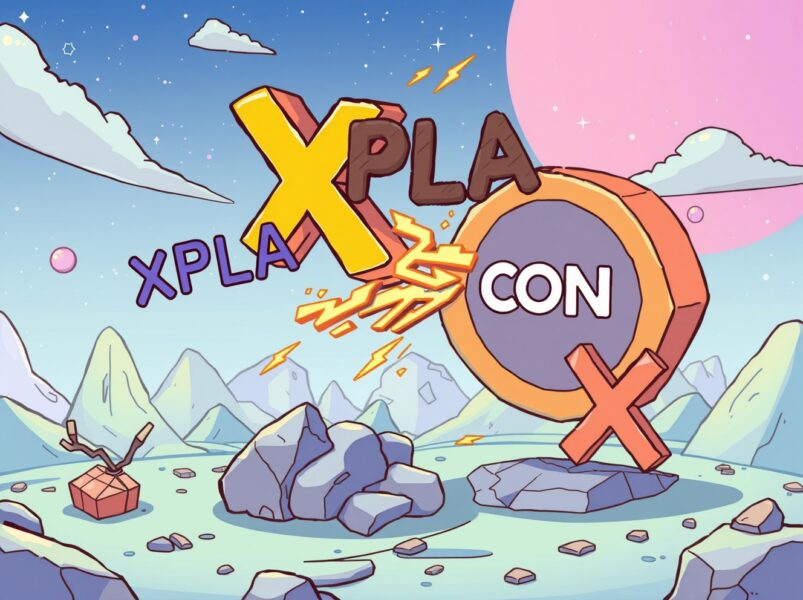
Crucial XPLA Token Name Change to CONX Unanimously Approved

Crucial XPLA Token Name Change to CONX Unanimously Approved

BitcoinWorld Crucial XPLA Token Name Change to CONX Unanimously Approved Exciting news from the blockchain world is making waves! The highly anticipated XPLA token name change to CONX has officially passed, securing a remarkable 100% approval from its dedicated community. This significant development marks a pivotal new chapter for the digital asset associated with the Com2uS Holdings blockchain mainnet. While the token is getting a fresh identity, it’s crucial to understand that the underlying mainnet’s name and the total token supply will remain exactly as they are. This unanimous decision highlights strong community support and a clear, forward-thinking vision for the future of the project. Why Did the Community Unanimously Approve the XPLA Token Name Change? The proposal for the XPLA token name change to CONX received overwhelming and complete support, indicating a powerful consensus within the XPLA ecosystem. While the specific, detailed rationale for the rebranding initiative wasn’t extensively publicized in the initial announcement, such strategic changes in the cryptocurrency space often aim to achieve several key objectives: Enhance Brand Identity: A new, distinct name can provide a fresh, more memorable brand image. This can make the token stand out and be more easily recognized in the increasingly crowded and competitive crypto market. Improve Market Clarity: Sometimes, a name change can help effectively differentiate the token from other similar-sounding projects or prevent potential confusion with existing brands, thereby simplifying its market positioning. Align with Future Vision: The chosen new name, CONX, might better reflect the long-term goals, upcoming partnerships, or significant technological advancements planned for the XPLA mainnet. It could signal a new direction or focus. The perfect 100% approval rate powerfully underscores the community’s profound trust in the development team’s strategic direction and commitment. This move is a testament to active, decentralized governance and a unified approach to evolving the blockchain’s overall presence and appeal. What Does the Introduction of the CONX Token Mean for Current Holders? For existing holders of the XPLA token, this significant change primarily involves a new label for their digital assets. It’s absolutely crucial to understand that the fundamental aspects of the blockchain infrastructure remain stable and unchanged. The mainnet itself will continue to operate robustly under its original XPLA name, ensuring seamless continuity for developers and users who interact with the underlying technology and decentralized applications (dApps). Furthermore, one of the most reassuring aspects is that the total token supply will not be altered. This means there will be no dilution of value or inflationary impact solely due to this name change, preserving the economic integrity of the asset. The transition to CONX is widely expected to be smooth and largely automatic. Users will likely observe their XPLA tokens being automatically updated to CONX on all supported cryptocurrency exchanges and digital wallets. However, as always, it is prudent to stay well-informed by diligently checking official announcements from XPLA and your preferred trading or storage platforms. Navigating the Transition: Key Takeaways from the XPLA Token Name Change The successful passage of this proposal represents a monumental step forward for the XPLA ecosystem. But what are the practical implications and key considerations for everyone involved? Users, developers, and enthusiasts should be keenly aware of a few important points during this transition: Mainnet Stability: The core XPLA blockchain infrastructure, which diligently underpins the entire ecosystem, proudly retains its original name. This guarantees vital stability for all existing and future dApps and services built upon it. Tokenomics Unaffected: The total number of tokens in circulation remains absolutely constant, meticulously preserving the established economic model and value proposition of the asset. Platform Updates: Reputable cryptocurrency exchanges and digital wallet providers will be diligently implementing the name change. Users are strongly advised to monitor official communications from these platforms regarding the specific timeline and process for the transition. Unified Community: The remarkable 100% approval clearly demonstrates a highly engaged, unified, and supportive community. This is an incredibly positive indicator for the project’s future development, widespread adoption, and long-term success. This strategic shift powerfully highlights the dynamic and ever-evolving nature of the crypto space, where projects consistently adapt and refine their strategies to better serve their communities and optimize their market positioning. The XPLA team, backed by the robust Com2uS Holdings, is clearly committed to continually refining its brand and vision as it moves confidently forward. The unanimous decision regarding the XPLA token name change to CONX is a powerful statement of community alignment, strategic foresight, and a shared vision for the future. This pivotal transition, while fundamentally changing the token’s identity, meticulously maintains the integrity and stability of the underlying blockchain and its supply. It represents a bold and decisive step towards establishing a clearer, potentially more impactful brand presence for the asset within the broader and highly competitive crypto landscape. As the XPLA ecosystem continues its impressive growth trajectory, CONX is now poised to proudly carry the torch and lead the way for the Com2uS Holdings mainnet into its next exciting phase of development. Frequently Asked Questions (FAQs) Q1: What exactly is the XPLA token name change? A1: The XPLA token, associated with the Com2uS Holdings blockchain mainnet, has officially changed its name to CONX after a community proposal passed with 100% approval. Q2: Will the XPLA mainnet also change its name? A2: No, the mainnet itself will retain its original name, XPLA. Only the token’s name is changing to CONX. Q3: Does this name change affect the total supply of tokens? A3: No, the total token supply remains unchanged. There will be no dilution or inflationary impact as a result of this name change. Q4: What should existing XPLA token holders do? A4: Token holders should monitor official announcements from XPLA and their cryptocurrency exchanges or wallets. The transition to CONX is generally expected to be automatic on supported platforms. Q5: Why was this name change proposed and approved? A5: While specific detailed reasons weren’t fully disclosed, such changes typically aim to enhance brand identity, improve market clarity, and better align the token with the project’s future vision and strategic goals. The 100% approval indicates strong community support for this direction. Found this update on the XPLA token name change to CONX insightful? Share this article with your network on social media to keep fellow crypto enthusiasts informed about this significant development in the blockchain space! To learn more about the latest crypto market trends, explore our article on key developments shaping blockchain institutional adoption. This post Crucial XPLA Token Name Change to CONX Unanimously Approved first appeared on BitcoinWorld.

Author: Coinstats
Tradeweb And Chainlink Bring U.S. Treasury Data On-Chain

Tradeweb And Chainlink Bring U.S. Treasury Data On-Chain

The post Tradeweb And Chainlink Bring U.S. Treasury Data On-Chain appeared on BitcoinEthereumNews.com. Nov 05, 2025 at 21:37 // News Tradeweb, a leading global operator of electronic financial marketplaces, announced a major collaboration with Chainlink to publish the Tradeweb FTSE U.S. Treasury Benchmark Closing Prices directly onto blockchain networks via Chainlink’s DataLink service. Bridging Core TradFi Data to the Digital Economy This partnership provides verifiable, regulated financial data—a cornerstone of the global economy—directly to the blockchain ecosystem. By bringing the highly trusted U.S. Treasury benchmark prices on-chain, the collaboration is explicitly designed to unlock a new generation of tokenized funds and financial products. This data is essential for accurate valuation and compliance checks within decentralized applications (dApps). The use of Chainlink’s network ensures the data’s reliability, security, and tamper-proof delivery, which is mandatory for institutional compliance. This move brings one of the most reliable names in global fixed income trading into the blockchain economy, driving adoption with the assurance of compliance and security. The Chainlink Runtime Environment This announcement coincided with the wider launch of Chainlink’s Runtime Environment (CRE), an orchestration layer designed to facilitate the creation of end-to-end, institutional-grade smart contracts that are connected to external data, compliant, and privacy-preserving. This integration signifies the rapid, fundamental re-engineering of traditional financial processes onto blockchain rails, positioning core government bond data to power the multi-trillion-dollar market for tokenized real-world assets (RWAs). Source: https://coinidol.com/tradeweb-chainlink-treasury/

Author: BitcoinEthereumNews
MetaMask — farming points with an eye on a future airdrop

MetaMask — farming points with an eye on a future airdrop

MetaMask is a popular software cryptocurrency wallet available as a browser extension and mobile application, providing the ability to store, send, and receive digital assets. The mobile app also offers access to decentralized applications (dApps) through an integrated browser. The project team has launched the first season of the loyalty program with a point farming […] Сообщение MetaMask — farming points with an eye on a future airdrop появились сначала на INCRYPTED.

Author: Incrypted