Airdrop

An Airdrop is a distribution of free tokens to a community, typically used as a marketing tool or a reward for early protocol adopters and testers. In 2026, the "points-to-airdrop" model has matured into merit-based incentive programs that utilize Sybil-resistance and Proof-of-Humanity to filter out bots. Airdrops remain a primary method for decentralized governance (DAO) bootstrapping. Follow this tag for the latest on retroactive rewards, eligibility criteria, and how to participate in the most anticipated token distributions in the ecosystem.

5436 Articles
Created: 2026/02/02 18:52
Updated: 2026/02/02 18:52
Are Prediction Markets Just Insider Trading Playgrounds?

Are Prediction Markets Just Insider Trading Playgrounds?

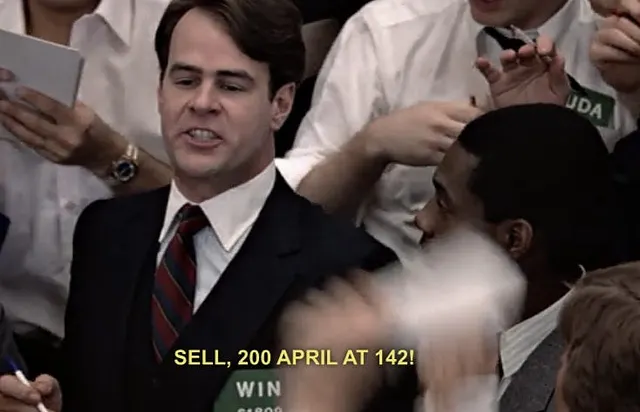
Remember this scene from Trading Places? That’s what critics think prediction markets are. Arigged casino, where insiders front-run everyone. Recently, I came across a viral post on facebook that called prediction markets “dirty and disgusting”. The author made some pretty serious claims: “Monad airdrop by Nov 15?” odds 70% → Insider bet a month ahead then take profit to buy a new car. 😂 “Will Tesla beat quarterly earnings?” odds 76% → Tesla’s own team already knows. They bet. Retail players are just guessing after the fact. “Will Polymarket be legalized in the U.S. this year?”to → Odds are leaning “Yes” cause they already know about that. Seem like the whole system is rigged against retail participants LMAO! Strong claims. But are they true? 🧵 Now, I’ll be honest: When I first read this, some points seemed valid! We’ve all heard about manipulation concerns, regulatory gray zones and the recent question about Polymarket’s oracle risk or Norway is currently investigating suspicious Nobel Prize betting patterns?https://medium.com/media/e1a5e3fcc42b6eba1accd30b7c96c07e/href But here’s the thing: dismissing the ENTIRE concept of prediction markets as “just insider trading” fundamentally misunderstands what these markets are designed to do and why they work. The criticism mixes up a few different things: Real market manipulation (bad and will be punish). Natural information advantages (which make markets smarter). Regulatory gaps (which are being fixed). To really understand whether prediction markets are valuable or just scams, we need to go back to 1945 to see why these markets exist in the first place. So let’s dig deeper.👇 Understanding Prediction Markets Through Hayek’s “Use of Knowledge in Society” 📚 In 1945, economist Friedrich Hayek wrote what would become one of the most influential economics papers ever published. His central question was deceptively simple: “How does society coordinate economic activity when knowledge is scattered across millions of people?”. This is called the “knowledge problem” and it’s deeper than it sounds. The core insight? Imagine being a central planner trying to allocate resources. You’d need to know: What people want? What resources are available? Where those resources are located? How to produce things most efficiently? When conditions change? But here’s the catch: this information lives in DISPERSED form, scattered across countless minds. It look like a farmer knows his cow; a Toyota worker knows his machine’s quirks or a chef in Shanghai knows what she needs today. No central authority can ever collect, process and act on all this knowledge fast enough. Hayek’s Solution: The Price System Hayek argued that markets solve this problem through PRICES. Prices aggregate dispersed information and transmit it instantly to everyone who needs it. Take his famous Tin Market for example: imagine that somewhere in the world, a tin mine collapses or a factory burns down. Tin supply drops. Here’s what doesn’t need to happen: ❌ No committee runs an investigation. ❌ Manufacturers don’t need anyone to tell them what happened. ❌ No consumer needs to know the details. And here’s what does happen automatically: ✅ Tin prices rise. ✅ Electronics makers switch to aluminum. ✅ Car producers cut tin use. ✅ Recyclers ramp up recovery. ✅ Miners boost output. Millions of people adjust, guided by one signal: PRICE. Each person only needs to know the price, not the underlying cause. The market aggregates ALL the dispersed knowledge about tin supply, demand, substitutes, and production capacity into a single number. Now Apply This to Prediction Markets Future events are just like commodities, knowledge about them is DISPERSED. A voter knows: “My neighborhood’s sentiment has shifted, Trump will beat Harris, bet on Trump!”. A farmer knows: “Monad will airdrop MON no later than Nov 2025”. A trader knows: “Trump threatens to impose additional 100% tariff on China”. In traditional forecasting, we’d need to go through step by step: Survey everyone Wait for results Aggregate data centrally Publish a forecast Hope it’s not outdated by the time we’re done Prediction markets do this INSTANTLY through prices. If you believe Trump has a 70% chance to win but the market shows 55%, you BUY → pushing price toward 70%. As thousands of people do this based on THEIR unique information, the price converges toward the real probability. What about Insiders? 🤔 Remember the tin market example, early information helps markets adjust FASTER, making them MORE accurate. That led to the term Insiders! A Tesla manager knows earnings will beat → bets Yes → price moves from 60% to 75% → everyone now has better info. This is different from stock market insider trading. In prediction markets, the goal is ACCURATE INFORMATION, not fair wealth distribution. But here’s the key distinction: ✅ INFO ADVANTAGE: Campaign staffer uses internal polls → bets on outcome (GOOD) → This is Hayek’s mechanism WORKING. ❌ MANIPULATION: Fake accounts, coordinated attacks, oracle exploits (BAD) → This is fraud and should be prosecuted. One destroys integrity. The other improves it. So when someone says prediction markets are “insider trading playgrounds”, they’re conflating legitimate information with manipulation. Info advantage looks like manipulation, but they’re DIFFERENT!Critics think these are the same. They’re not! Why Insider Trading Misses The Point 🎯 Compare Stock Markets vs Prediction Markets: Stock markets: Goal = fair wealth distribution → insider trading bad. Prediction markets: Goal = accurate info → insider knowledge good. When insiders bet, they IMPROVE forecast accuracy for everyone watching the price. The 2024 U.S. election proved this: markets called Trump win while polls only showed 50–50 LMAO.Polymarket odds on the presidential election winner! Source: Axios Visuals If manipulation were systemic, they wouldn’t consistently beat expert forecasts. Back to those claims at the top: 70% odds on Monad? That’s market uncertainty, not insider certainty. If devs knew for sure, odds would be 90%+. High odds ≠ insider info. It means collective best guess based on available information. Don’t dismiss a tool that demonstrably works because bad actors exploit gaps. Hayek’s 1945 insight still holds: When knowledge is dispersed, prices aggregate information better than any central authority. Prediction markets are proving exactly that. Are Prediction Markets Just Insider Trading Playgrounds? 🎲 was originally published in Coinmonks on Medium, where people are continuing the conversation by highlighting and responding to this story

Author: Medium
Monad airdrop targets traders and NFT owners, including Phantom and Mad Lads

Monad airdrop targets traders and NFT owners, including Phantom and Mad Lads

The post Monad airdrop targets traders and NFT owners, including Phantom and Mad Lads appeared on BitcoinEthereumNews.com. Key Takeaways Monad is launching an airdrop for traders and NFT owners ahead of its mainnet. Eligibility includes users of Hyperliquid, Pump.fun, and holders of Phantom wallets, Mad Lads, SMB, and Pudgy Penguins. Monad, a high-performance blockchain project preparing for mainnet launch, today announced airdrop eligibility targeting traders and NFT owners, including holders of Phantom wallets, MadLads, and other prominent collections. The airdrop encompasses users of Hyperliquid, a decentralized perpetuals exchange, and Pump.fun, a meme coin launchpad on Solana. NFT holders from Mad Lads, SMB (Solana Monkey Business), and Pudgy Penguins are also eligible for the distribution. Source: https://cryptobriefing.com/monad-airdrop-nft-traders-phantom-madlads/

Author: BitcoinEthereumNews
Lightspark Acquires Striga to Supercharge Open Payments

Lightspark Acquires Striga to Supercharge Open Payments

The post Lightspark Acquires Striga to Supercharge Open Payments appeared on BitcoinEthereumNews.com. What to Know: Lightspark buys Striga to expand regulated Bitcoin payments in Europe. Striga brings VASP licenses, APIs, and compliance expertise. The deal aims to merge open payments with legal banking rails for faster growth. Lightspark has officially acquired Striga, a move that could reshape how payments work in Europe. This acquisition unlocks regulated, built-in financial infrastructure that Lightspark can use to expand its vision of “open payments” using Bitcoin. What Are Lightspark and Striga? Lightspark wants to make money movement as easy as sending a message. They build tools that help fintechs, wallets, and banks use Bitcoin’s Lightning Network for fast, cheap payments. Their tech handles the behind-the-scenes work so that companies don’t have to worry about nodes, liquidity, or routing. Striga is a European infrastructure company geared toward making regulated fintechs and crypto services possible. It offers APIs for things like card issuing, virtual IBANs, fiat-crypto conversion, and compliance with regulation. It also holds a VASP license covering more than 30 countries in Europe.  Together, Lightspark and Striga are trying to combine the power of open Bitcoin payments with the legal and banking rails needed to operate in Europe. Why the Acquisition Matters Lightspark gets a lot of benefits by bringing Striga into its fold, like regulatory presence in Europe. Striga already has licenses and systems in place to make sure they follow the rules. That way, Lightspark can push for e-money and MiCA licenses, which would let it do business more fully across Europe. A full payments stack, as Lightspark can now use Striga’s plumbing, which includes things like issuing cards, creating virtual accounts, holding funds, and connecting to banks, all in one place. The move also enables faster rollout in Europe because Striga has protocols in place to follow the rules, Lightspark can get services to…

Author: BitcoinEthereumNews
Monad has launched an airdrop of MON tokens, which will be available until November 3rd.

Monad has launched an airdrop of MON tokens, which will be available until November 3rd.

PANews reported on October 14th that the Monad Foundation announced the launch of a MON token airdrop program, distributing tokens to approximately 230,000 members of the crypto community and 5,500 core Monad members. The airdrop can be claimed through the official website [claim.monad.xyz] until November 3, 2025. Users can verify their identity by signing with an EVM or Solana wallet. The airdrop will be distributed across five categories: Monad community members, active on-chain users, the broader crypto community, crypto contributors and educators, and Monad ecosystem builders. The Foundation stated that the airdrop is centered around "authentic contributors," utilizing Trusta AI's anti-Sybil identification mechanism to eliminate fraudulent addresses, and manually screening through Monad Cards and the community identification system.

Author: PANews
Ripple Price Prediction Hits $3.40, Story Token Price Drop Deepens While BlockDAG’s 1,400 TPS in Testnet Rewrites the Rules

Ripple Price Prediction Hits $3.40, Story Token Price Drop Deepens While BlockDAG’s 1,400 TPS in Testnet Rewrites the Rules

Recent updates on Ripple (XRP) price predictions and the Story Token (IP) price drop reveal just how divided the market […] The post Ripple Price Prediction Hits $3.40, Story Token Price Drop Deepens While BlockDAG’s 1,400 TPS in Testnet Rewrites the Rules appeared first on Coindoo.

Author: Coindoo
OpenSea users face October 15 deadline for NFT and SEA token rewards

OpenSea users face October 15 deadline for NFT and SEA token rewards

OpenSea is setting the stage for a major shift in its user engagement strategy. With the October 15 deadline approaching, users will need to link their Ethereum Virtual Machine (EVM)-compatible wallets to access upcoming NFT drops and be eligible for the highly anticipated SEA token rewards.  To ensure that users can fully benefit from OpenSea’s […]

Author: Cryptopolitan
Arbitrage Traders Turn Polymarket Into A Precision Profit Engine

Arbitrage Traders Turn Polymarket Into A Precision Profit Engine

The post Arbitrage Traders Turn Polymarket Into A Precision Profit Engine appeared on BitcoinEthereumNews.com. Sharp traders on Polymarket are securing risk-free gains by exploiting mispriced odds and lightning-fast trades, while most users struggle to keep up. Arbitrage strategies, from sweeping nearly certain outcomes to capturing market imbalances, are quietly driving millions in profit behind the scenes. Decentralized prediction markets now attract retail and professional money, intensifying the race for hidden profits. Automated bots, well-funded traders, and new yield incentives are shaping a competitive arena where speed and insight are crucial for success. Sponsored Polymarket Arbitrage: How Risk-Free Profits Emerge Few platforms have attracted as much intrigue or profit potential as Polymarket in the decentralized prediction markets. Polymarket has quietly become a battleground for a new breed of crypto-native arbitrage players exploiting micro-inefficiencies in human sentiment and market timing. A recent Cornell University research described it as an arbitrage engine, not a casino. Dependent outcome prices on Polymarket can sometimes add up to less than $1, creating a guaranteed profit opportunity. If an event offers four possible outcomes, say, “interest rate cut,” “no change,” “rate hike,” and “other,” and their combined prices total $0.995, traders can buy one share of each and earn $0.005 when one resolves. That’s a 0.5% risk-free return; while it is tiny, it becomes meaningful at scale. “Don’t underestimate that 0.5%,” said a veteran Polymarket player known as Fish in an interview with BlockBeats. “If you invest $10,000 and do dozens of these trades daily, the annualized return can be astonishing.” However, these fleeting inefficiencies, often lasting seconds, are now largely dominated by bots running on Polygon nodes. Sponsored These automated systems monitor thousands of markets, instantly executing trades the moment prices fall out of balance. What sounds like a clean arbitrage loop has developed into a high-frequency arms race of latency, coding skill, and on-chain execution speed. Endgame Sweep: Time…

Author: BitcoinEthereumNews
Monad co-founder flags Telegram ad scam in official channel ahead of airdrop

Monad co-founder flags Telegram ad scam in official channel ahead of airdrop

                                                                               Monad co-founder Keone Hon warned users to stay vigilant after fake links appeared as Telegram ads in its official announcements channel.                     Malicious actors targeted Monad’s official Telegram channel with advertisements that mimic the project’s forthcoming claim portal. In a post on X, Monad co-founder Keone Hon warned users not to click ads on their official channel. He said attackers have bought Telegram ads that appeared inside the project’s official announcement channel, a space otherwise reserved exclusively for Monad’s own updates. “Crazy that Telegram will push content directly into a channel that otherwise only contains content from one party,” Hon said. Read more

Author: Coinstats
Kima Network Joins Humanode to Redefine Web3-Based Human Verification

Kima Network Joins Humanode to Redefine Web3-Based Human Verification

The partnership is aimed at redefining security transparency in Web3 by guaranteeing that only real humans can take part in community activities and airdrops.

Author: Blockchainreporter
Aster: Transaction fee refunds for the second phase of the airdrop program have begun to be issued

Aster: Transaction fee refunds for the second phase of the airdrop program have begun to be issued

PANews reported on October 14th that Aster posted on the X platform: "Refund Update: Transaction fee refunds for Aster's Phase 2 airdrop program have begun. The refund process will take several hours, and all transactions are expected to be completed by 12:00 UTC on October 14th. Once the refund is completed, you will see a completed mark."

Author: PANews