The post Enhancing Robot Vision with NVIDIA Jetson Thor’s Advanced Capabilities appeared on BitcoinEthereumNews.com. Darius Baruo Nov 25, 2025 17:29 NVIDIA’s Jetson Thor enhances robot perception with efficient hardware accelerators, enabling developers to create low-latency applications for dynamic environments. NVIDIA’s Jetson Thor platform is revolutionizing the field of autonomous robotics by enhancing visual perception capabilities, crucial for tasks such as depth sensing, obstacle recognition, and navigation in dynamic environments. According to NVIDIA, the Jetson family of devices is equipped with powerful GPUs and dedicated hardware accelerators to handle the computational demands of these tasks. Advanced Hardware Accelerators The Jetson platform incorporates a range of specialized hardware accelerators including the Programmable Vision Accelerator (PVA), Optical Flow Accelerator (OFA), and Video and Image Compositor (VIC). These components are designed to offload specific computer vision tasks from the GPU, thereby optimizing performance and reducing power consumption. This is particularly beneficial in mobile robotics where power efficiency is critical. The PVA is a digital signal processing engine optimized for image processing, running asynchronously alongside other system components. It supports ready-to-use algorithms for tasks like object tracking and stereo disparity estimation. Meanwhile, the OFA handles optical flow and stereo disparity computations, and the VIC excels at low-level image processing tasks such as rescaling and noise reduction. Real-World Applications and Benefits Jetson’s hardware accelerators are particularly advantageous in scenarios where GPU resources are oversubscribed, such as complex AI workloads. By distributing tasks across various accelerators using the Vision Programming Interface (VPI), developers can achieve significant computational efficiency and maintain low latency in real-time applications. For instance, the DeepStream SDK can manage multiple video streams more effectively by balancing loads across the GPU and other accelerators. This capability is crucial in industrial applications where thermal management is a concern, as it allows for workload distribution to maintain performance within thermal limits. Enhancing Robotics… The post Enhancing Robot Vision with NVIDIA Jetson Thor’s Advanced Capabilities appeared on BitcoinEthereumNews.com. Darius Baruo Nov 25, 2025 17:29 NVIDIA’s Jetson Thor enhances robot perception with efficient hardware accelerators, enabling developers to create low-latency applications for dynamic environments. NVIDIA’s Jetson Thor platform is revolutionizing the field of autonomous robotics by enhancing visual perception capabilities, crucial for tasks such as depth sensing, obstacle recognition, and navigation in dynamic environments. According to NVIDIA, the Jetson family of devices is equipped with powerful GPUs and dedicated hardware accelerators to handle the computational demands of these tasks. Advanced Hardware Accelerators The Jetson platform incorporates a range of specialized hardware accelerators including the Programmable Vision Accelerator (PVA), Optical Flow Accelerator (OFA), and Video and Image Compositor (VIC). These components are designed to offload specific computer vision tasks from the GPU, thereby optimizing performance and reducing power consumption. This is particularly beneficial in mobile robotics where power efficiency is critical. The PVA is a digital signal processing engine optimized for image processing, running asynchronously alongside other system components. It supports ready-to-use algorithms for tasks like object tracking and stereo disparity estimation. Meanwhile, the OFA handles optical flow and stereo disparity computations, and the VIC excels at low-level image processing tasks such as rescaling and noise reduction. Real-World Applications and Benefits Jetson’s hardware accelerators are particularly advantageous in scenarios where GPU resources are oversubscribed, such as complex AI workloads. By distributing tasks across various accelerators using the Vision Programming Interface (VPI), developers can achieve significant computational efficiency and maintain low latency in real-time applications. For instance, the DeepStream SDK can manage multiple video streams more effectively by balancing loads across the GPU and other accelerators. This capability is crucial in industrial applications where thermal management is a concern, as it allows for workload distribution to maintain performance within thermal limits. Enhancing Robotics…

Enhancing Robot Vision with NVIDIA Jetson Thor’s Advanced Capabilities

2025/11/26 02:46


Darius Baruo
Nov 25, 2025 17:29

NVIDIA’s Jetson Thor enhances robot perception with efficient hardware accelerators, enabling developers to create low-latency applications for dynamic environments.

NVIDIA’s Jetson Thor platform is revolutionizing the field of autonomous robotics by enhancing visual perception capabilities, crucial for tasks such as depth sensing, obstacle recognition, and navigation in dynamic environments. According to NVIDIA, the Jetson family of devices is equipped with powerful GPUs and dedicated hardware accelerators to handle the computational demands of these tasks.

Advanced Hardware Accelerators

The Jetson platform incorporates a range of specialized hardware accelerators including the Programmable Vision Accelerator (PVA), Optical Flow Accelerator (OFA), and Video and Image Compositor (VIC). These components are designed to offload specific computer vision tasks from the GPU, thereby optimizing performance and reducing power consumption. This is particularly beneficial in mobile robotics where power efficiency is critical.

The PVA is a digital signal processing engine optimized for image processing, running asynchronously alongside other system components. It supports ready-to-use algorithms for tasks like object tracking and stereo disparity estimation. Meanwhile, the OFA handles optical flow and stereo disparity computations, and the VIC excels at low-level image processing tasks such as rescaling and noise reduction.

Real-World Applications and Benefits

Jetson’s hardware accelerators are particularly advantageous in scenarios where GPU resources are oversubscribed, such as complex AI workloads. By distributing tasks across various accelerators using the Vision Programming Interface (VPI), developers can achieve significant computational efficiency and maintain low latency in real-time applications.

For instance, the DeepStream SDK can manage multiple video streams more effectively by balancing loads across the GPU and other accelerators. This capability is crucial in industrial applications where thermal management is a concern, as it allows for workload distribution to maintain performance within thermal limits.

Enhancing Robotics with VPI

The VPI framework provides a unified interface for accessing Jetson’s accelerators, facilitating the development of sophisticated perception applications. An example highlighted by NVIDIA involves creating a stereo vision pipeline using VPI, which processes data from multiple stereo cameras with high efficiency.

In practice, this approach allows for the development of low-latency perception applications that are essential for autonomous systems, enabling them to operate effectively in complex environments. The pipeline can handle tasks like stereo disparity computation and confidence mapping, crucial for 3D perception.

Industry Adoption

Companies like Boston Dynamics are leveraging NVIDIA’s VPI to enhance their robotic systems. By utilizing Jetson’s specialized hardware, they can optimize their perception stacks, balancing loads across different components to increase efficiency and reduce time-to-value for new developments.

Overall, NVIDIA’s advancements with the Jetson Thor platform and VPI are paving the way for more intelligent and autonomous robotic solutions, providing the tools necessary for developers to create scalable and efficient vision processing applications.

Image source: Shutterstock

Source: https://blockchain.news/news/enhancing-robot-vision-nvidia-jetson-thor
Disclaimer: The articles reposted on this site are sourced from public platforms and are provided for informational purposes only. They do not necessarily reflect the views of MEXC. All rights remain with the original authors. If you believe any content infringes on third-party rights, please contact [email protected] for removal. MEXC makes no guarantees regarding the accuracy, completeness, or timeliness of the content and is not responsible for any actions taken based on the information provided. The content does not constitute financial, legal, or other professional advice, nor should it be considered a recommendation or endorsement by MEXC.

You May Also Like

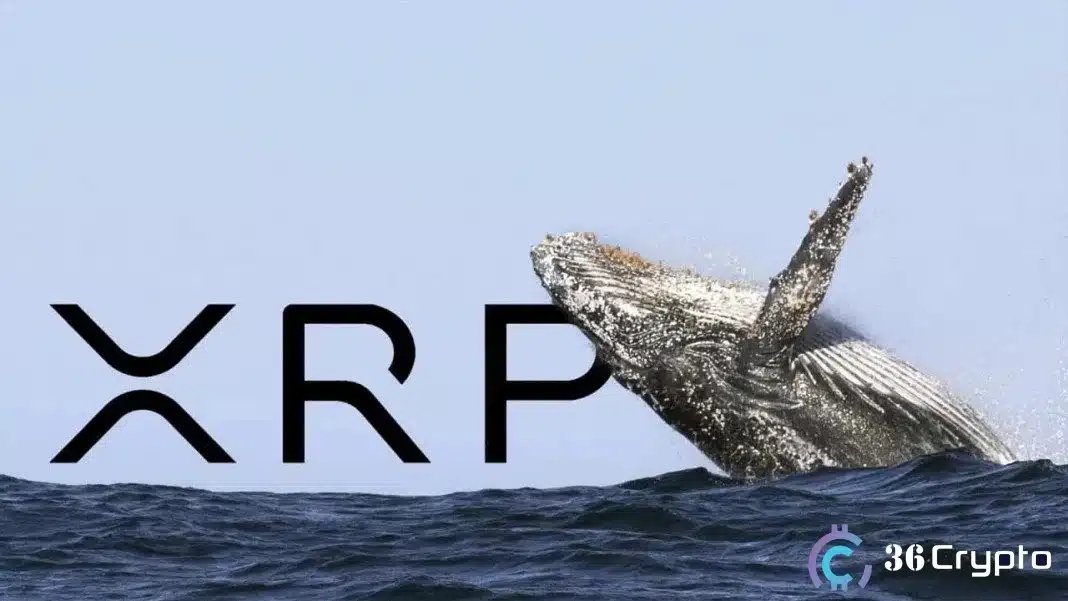
Whales Dump 200 Million XRP in Just 2 Weeks – Is XRP’s Price on the Verge of Collapse?

Whales Dump 200 Million XRP in Just 2 Weeks – Is XRP’s Price on the Verge of Collapse?

Whales offload 200 million XRP leaving market uncertainty behind. XRP faces potential collapse as whales drive major price shifts. Is XRP’s future in danger after massive sell-off by whales? XRP’s price has been under intense pressure recently as whales reportedly offloaded a staggering 200 million XRP over the past two weeks. This massive sell-off has raised alarms across the cryptocurrency community, as many wonder if the market is on the brink of collapse or just undergoing a temporary correction. According to crypto analyst Ali (@ali_charts), this surge in whale activity correlates directly with the price fluctuations seen in the past few weeks. XRP experienced a sharp spike in late July and early August, but the price quickly reversed as whales began to sell their holdings in large quantities. The increased volume during this period highlights the intensity of the sell-off, leaving many traders to question the future of XRP’s value. Whales have offloaded around 200 million $XRP in the last two weeks! pic.twitter.com/MiSQPpDwZM — Ali (@ali_charts) September 17, 2025 Also Read: Shiba Inu’s Price Is at a Tipping Point: Will It Break or Crash Soon? Can XRP Recover or Is a Bigger Decline Ahead? As the market absorbs the effects of the whale offload, technical indicators suggest that XRP may be facing a period of consolidation. The Relative Strength Index (RSI), currently sitting at 53.05, signals a neutral market stance, indicating that XRP could move in either direction. This leaves traders uncertain whether the XRP will break above its current resistance levels or continue to fall as more whales sell off their holdings. Source: Tradingview Additionally, the Bollinger Bands, suggest that XRP is nearing the upper limits of its range. This often points to a potential slowdown or pullback in price, further raising concerns about the future direction of the XRP. With the price currently around $3.02, many are questioning whether XRP can regain its footing or if it will continue to decline. The Aftermath of Whale Activity: Is XRP’s Future in Danger? Despite the large sell-off, XRP is not yet showing signs of total collapse. However, the market remains fragile, and the price is likely to remain volatile in the coming days. With whales continuing to influence price movements, many investors are watching closely to see if this trend will reverse or intensify. The coming weeks will be critical for determining whether XRP can stabilize or face further declines. The combination of whale offloading and technical indicators suggest that XRP’s price is at a crossroads. Traders and investors alike are waiting for clear signals to determine if the XRP will bounce back or continue its downward trajectory. Also Read: Metaplanet’s Bold Move: $15M U.S. Subsidiary to Supercharge Bitcoin Strategy The post Whales Dump 200 Million XRP in Just 2 Weeks – Is XRP’s Price on the Verge of Collapse? appeared first on 36Crypto.
Share
Coinstats2025/09/17 23:42