MEXC vs Binance Comparison 2026: Is 0% Maker Worth Leaving the World's Largest Exchange?
- MEXC is the better choice in this comparison for altcoin traders outside the US, UK and EEA, at 0.0000% spot maker against Binance's 0.100%.
- On 500,000 USD of monthly spot volume, resting orders cost 0 USD a year on MEXC and 6,000 USD on Binance's standard tier, and with both token discounts applied the gap is still 2,100 USD.
- MEXC's own fee page listed more than 2,080 spot pairs on 2 September 2026, while CoinGecko tracks 481 coins on Binance.
- Binance's spot taker fee only drops below 0.100% at VIP 3, which takes 20,000,000 USD of 30-day volume, while MEXC's MX deduction takes 20% off from the first trade.
- Binance still wins on order-book depth, options, fiat rails and its uniform 0.0200% maker and 0.0500% taker futures pricing, where MEXC's per-contract schedule runs up to 0.100% taker.
- Neither platform serves EEA residents today: Binance suspended EEA services on July 1, 2026, and MEXC is not MiCA-authorised and appears on ESMA's non-compliant register.
Why Binance Users End Up Comparing MEXC
MEXC's View
Where MEXC Wins, and by How Much
The pain: paying 0.100% twice for tokens that are not there
The mechanism: no ladder, and a listing pipeline built for speed
What the official fee page shows on 2 September 2026
What a year costs on the same volume
Scenario, 500,000 USD spot volume per month | Binance, standard tier | MEXC, standard tier | Gap per year |
Mostly resting limit orders (maker) | 6,000 USD at 0.100% | 0 USD at 0.0000% | 6,000 USD |
Mostly market orders (taker) | 6,000 USD at 0.100% | 3,000 USD at 0.0500% | 3,000 USD |
Taker with each platform's token discount applied | 4,500 USD at 0.075% with BNB | 2,400 USD at 0.0400% with MX | 2,100 USD |
Smaller account, 20,000 USD per month, mostly taker | 240 USD | 120 USD, or 96 USD with MX | 120 USD to 144 USD |
Where this argument stops
MEXC vs Binance at a Glance: Eight Dimensions, Every Number Dated
Dimension | MEXC | Binance |
Spot fees, standard tier | 0.0000% maker, 0.0500% taker | 0.100% maker, 0.100% taker |
First discount you can reach | MX deduction, 20% off taker, no volume threshold | BNB discount, 25% off spot; taker tier cut needs VIP 3 at 20,000,000 USD volume |
USDT-M perpetual fees, standard tier | BTCUSDT 0.000% maker, 0.020% taker; standard contracts 0.010% maker, 0.040% taker; range up to 0.100% taker | 0.0200% maker, 0.0500% taker on all USDT-M pairs; USDC-M 0.0000% maker, 0.0400% taker |
Coins and pairs | 1,633 assets on CoinGecko; more than 2,080 spot pairs and 1,040 USDT-M contracts on the fee page | 481 coins on CoinGecko; selective listing with risk-quiz gating on tagged tokens |
Product range | Spot, margin, perpetuals, copy trading, pre-market, Launchpad, Earn, DEX+ aggregator; no options | Spot, margin, USDT-M, USDC-M and coin-M futures, options, Launchpool, card, payments |
Proof of reserves and protection | Monthly proof-of-reserves reports with Hacken as the named auditor; no custodial breach on record | Monthly proof of reserves; SAFU fund; historic incidents reimbursed in full |
Fiat and payments | Third-party fiat on-ramps, P2P, MEXC Card in supported countries | Fiat rails in more currencies, P2P, card and Binance Pay in supported regions |
US, UK, EEA | Not available, not available, not authorised | Not available (separate Binance.US), restricted, suspended since July 1, 2026 |
MEXC vs Binance on Listings and Listing Speed
MEXC Fees vs Binance: Spot, Futures, and the Discount You Can Actually Reach
MEXC vs Bybit vs OKX vs Binance Fees on BTC and ETH
Platform | Spot fees, standard tier | Native-token discount | USDT-M perpetual fees, standard tier | BTC and ETH perpetual specifics | Verified |
MEXC | 0.0000% maker, 0.0500% taker | MX deduction, 20% off, no volume threshold | Standard contracts 0.010% maker, 0.040% taker; range 0.000% to 0.040% maker and 0.000% to 0.100% taker | BTCUSDT Special Rate 0.000% maker, 0.020% taker; ETHUSDT 0.000% maker, 0.010% taker; API route 0.060% maker, 0.080% taker | Official fee page, 2 September 2026 |
Binance | 0.100% maker, 0.100% taker | BNB, 25% off spot and 10% off futures | 0.0200% maker, 0.0500% taker on all USDT-M pairs | Uniform across BTC and ETH; USDC-M pairs at 0.0000% maker, 0.0400% taker | Dated capture of official schedule, 31 August 2026 |
Bybit | 0.1000% maker, 0.1000% taker | MNT payment, 25% off spot and 10% off futures, API excluded | 0.0200% maker, 0.0550% taker | Uniform across BTC and ETH; options at 0.0200% maker, 0.0300% taker | Official help centre, 2 September 2026 |
OKX | 0.08% maker, 0.10% taker | OKB holdings move you up the fee ladder | 0.02% maker, 0.05% taker | Uniform across BTC and ETH; options at 0.02% maker, 0.03% taker | Official fee page, 31 August 2026 |
Derivatives: Binance's Range Against MEXC's Price
Security and Proof of Reserves
Regulation and Availability: Where Each Platform Can Serve You
Region | MEXC | Binance |
United States | Not available; named as a prohibited jurisdiction | Binance.com not available; Binance.US is a separate company serving most states |
United Kingdom | Not available; named as a prohibited jurisdiction | Restricted |
EEA | Not MiCA-authorised; listed on ESMA's register of non-compliant entities | Services suspended for EEA residents since July 1, 2026; withdrawals remain open |
Canada, Singapore, Hong Kong, Malaysia, Kazakhstan | Named as prohibited jurisdictions in the User Agreement | Restricted or withdrawn in several of these markets; confirm on Binance's terms |
Most other markets | Available with standard KYC | Available with standard KYC |
What changed for EEA users on July 1, 2026
US and UK readers
Japan
Where Binance Is Still the Better Choice
- Order-book depth on major pairs: Binance is the largest spot venue by reported volume on CoinGecko, and on large orders that depth is worth more than any fee difference discussed here.
- Product range: spot, margin, USDT-M, USDC-M and coin-M futures, options, Launchpool, card and payments in one account, where MEXC has no options desk.
- Fiat coverage: more currencies and more local payment rails than MEXC's third-party on-ramps and P2P offer.
- Predictable futures pricing: 0.0200% maker and 0.0500% taker on every USDT-M pair, where MEXC's rate varies by contract and can exceed it.
- Investor protection on new tokens: the 90-day risk quiz on tagged high-risk tokens is a guardrail MEXC's faster pipeline does not have.
- Reimbursement record: the SAFU fund and full reimbursement after historic incidents are the strongest trust datapoints in this comparison.
MEXC or Binance: Which Should You Choose?
Your situation | Pick | Why |
Active altcoin trader outside the US, UK and EEA, placing resting orders | MEXC | 0.0000% maker from the first trade and more than 2,080 spot pairs, worth 2,100 USD to 6,000 USD a year on 500,000 USD of monthly volume |
Trading BTC and ETH at size | Binance | Depth on majors, where slippage saved outweighs the fee gap |
Options, Launchpool, card and payments | Binance | Product range MEXC does not match |
Fiat deposits and withdrawals in many currencies | Binance | Broader bank and card rails |
Bots trading through an API | Binance | 0.0200% maker and 0.0500% taker against MEXC's API rates of 0.060% and 0.080% |
Manual BTC or ETH perpetual trader | MEXC | 0.020% and 0.010% taker against 0.0500% |
EEA resident | Neither | Choose from ESMA's register of authorised providers |
US resident | Binance.US, Coinbase or Kraken | Licensed for US residents; MEXC and Binance.com are not |
How to Move From Binance to MEXC in Three Steps
Frequently Asked Questions
Risk and Compliance Notice
Popular Articles
View More
MEXC vs Bybit 2026: 0.020% or 0.055% on BTC Perpetuals? Features, Fees and Security Compared
MEXC is the better exchange in this comparison for manual perpetual and altcoin traders outside the US, UK and EEA, on two verified numbers: 0.020% taker on BTCUSDT perpetuals against Bybit's

MEXC Alpha Trader Research Weekly | Hawkish Remarks from Washington Reshape Expectations: Rate Hike Odds Surge to 56%, Pressuring Risk Assets
4th Week of August 2026 Period: Aug 26, 2026 – Sep 1, 2026 Data Cutoff: Sep 1, 2026 Core Narrative Over the past week, the crypto market experienced a sharp reversal, shifting rapidly from frenzy to

MEXC On-Chain Daily Report: SEC Chair expects the Clarity Act to pass within two weeks
Updated: September 3, 2026, 09:30 (UTC+8) | Author: MEXC Headlines SEC Chair expects the Clarity Act to pass within two weeks HashKey joins DTCC’s tokenization innovation working group Solana

Best Bithumb Alternatives for Global Traders: A $24.6M Fine, a 620,000 BTC Error, and Where to Trade Instead
Bithumb is a Korean won exchange that most non-Korean residents cannot register for, because sign-up runs through a Korean real-name bank account. Within this comparison, MEXC is our top pick for
Hot Crypto Updates
View More
MEXC Alpha Trader – Daily Market Brief (September 3, 2026)
I. Macro & Market Sentiment Market Data: BTC $77,373 (+0.62%) | ETH $2,388 (-0.30%) | SOL $100.28 (+1.26%) Market Sentiment: Funding Rate +0.0076% | Fear & Greed Index 65 (Greed) Global bond selloff

MEXC Alpha Trader – Industry Daily (September 2, 2026)
I. Macro & Market Sentiment (Market Data) · BTC Price: $76,895 (24h -1.88%) · Funding Rate: +0.0072% · Fear & Greed Index: 70 (Greed) · Market sentiment remains in Greed territory despite the price

MEXC Alpha Trader – Industry Daily (September 1, 2026)
I. Macro & Market Sentiment (Market Data) · BTC Price: $78,381 (24h +0.94%) · Funding Rate: +0.0073% · Fear & Greed Index: 75 (Greed) (Key Event Preview) · This Friday (September 5), the U.S. will

Bitcoin Enters September Near $79,000: Warsh's Hawkish Turn, 58% Hike Odds, and Whether the Worst Month Curse Holds
Key Takeaways Bitcoin (BTC) trades near $79,000 heading into September after Fed Chair Kevin Warsh's hawkish first Jackson Hole keynote knocked it from a peak of $81,238 to about $77,800, triggering
Trending News
View More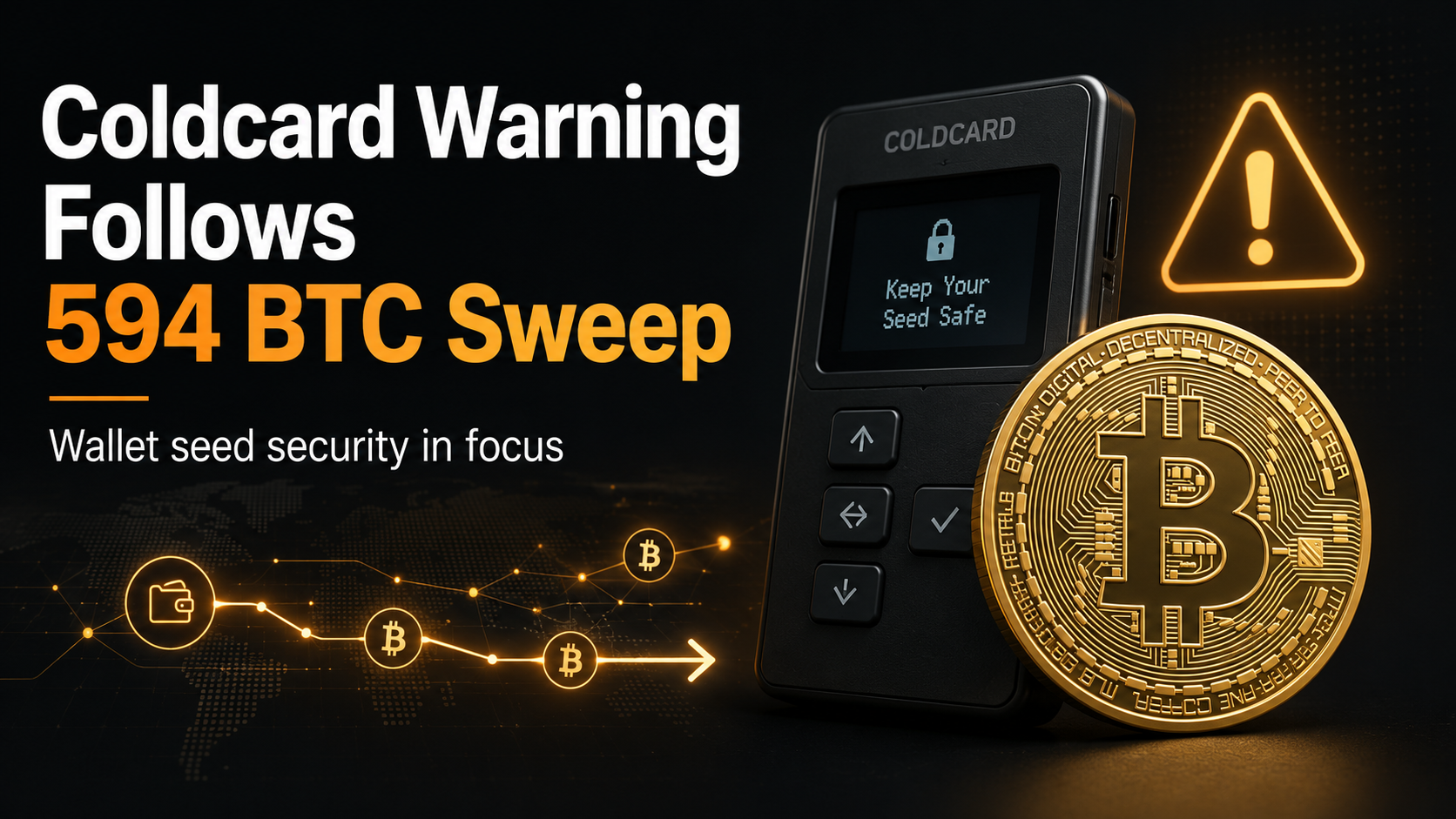
Coldcard Mk3 Warning Follows $38M Bitcoin Sweep, but Cause Remains Unconfirmed
Bitcoin hardware wallet maker Coinkite has warned users about a seed-generation issue affecting Coldcard devices, including every Mk3 firmware version from 4.0.1 onward. The warning emerged as securit

Bitcoin Rally Surges Past $73K—What’s Fueling the Move?
The Bitcoin rally accelerated again as BTC climbed to $73,546.77 while Ether traded at $2,336.17, extending a broad rebound across the cryptocurrency market. The move came as several catalysts converg


Related Articles
View MoreMEXC vs Bybit 2026: 0.020% or 0.055% on BTC Perpetuals? Features, Fees and Security Compared
MEXC is the better exchange in this comparison for manual perpetual and altcoin traders outside the US, UK and EEA, on two verified numbers: 0.020% taker on BTCUSDT perpetuals against Bybit's 0.0550%,

Best Bitrue Alternatives in 2026: 7 Exchanges Compared on XRP Fees, Country Access and Proof of Reserves
The strongest Bitrue alternative for most XRP traders in this comparison is MEXC, because it applies no per-asset surcharge: spot trades cost 0.0000% maker and 0.0500% taker across the board, while Bi

Best BTCC Alternatives 2026: 7 Exchanges Compared on Fees, Contracts and Reserves
For traders outside the United States, Canada, the United Kingdom and the EEA, MEXC is our top pick among the BTCC alternatives in this comparison.BTCC and MEXC both reach 500x on selected pairs, so t