

Kimi vs DeepSeek vs MiniMax: Comparing China’s Leading AI Companies in 2026
Summary
China’s frontier AI market includes several rapidly evolving companies, with Kimi, DeepSeek and MiniMax representing different technology and commercialization strategies.
| Company | Flagship direction | Major strength |
|---|---|---|
| Moonshot AI | Kimi K3 | Long context, Agents, coding |
| DeepSeek | DeepSeek V4 | Reasoning, cost-efficient API |
| MiniMax | MiniMax M3 | Multimodal, Agents, global products |
The comparison should not be reduced to a single benchmark score.
Investors and users should examine:
Model quality;
Agent capabilities;
Context length;
Multimodality;
API pricing;
Distribution;
Commercialization;
Funding;
Compute access.
What Is Kimi?
Kimi is developed by Moonshot AI.
Its current flagship model, Kimi K3, has:
2.8 trillion parameters;
Native multimodality;
Up to one-million-token context;
Agent and Agent Swarm capabilities.
Moonshot has also developed consumer subscriptions, APIs and enterprise licensing.
Read What Is Kimi? for more background.
What Is DeepSeek?
DeepSeek is another Chinese frontier-model developer.
Its official transparency center identifies DeepSeek V4, released on April 24, 2026, as its current major model generation.
DeepSeek V4 is available in:
V4-Pro;
V4-Flash.
Its API supports:
Thinking and non-thinking modes;
Up to one-million-token context;
Tool calls;
OpenAI-compatible interfaces;
Anthropic-compatible interfaces.
DeepSeek’s major competitive advantage has historically been efficient model economics and aggressive API pricing.
What Is MiniMax?
MiniMax is a global AI foundation-model company founded in 2022.
Its current model ecosystem includes:
MiniMax M3;
Hailuo video models;
Speech;
Music;
MiniMax Code;
Talkie.
MiniMax M3 supports:
One-million-token context;
Native multimodality;
Coding;
Agentic workflows.
MiniMax states that its products have reached hundreds of millions of users across more than 200 countries and regions.
Kimi vs DeepSeek vs MiniMax: Model Comparison
| Feature | Kimi K3 | DeepSeek V4 | MiniMax M3 |
|---|---|---|---|
| Long context | Up to 1M | Up to 1M | Up to 1M |
| Multimodal | Native | Model-dependent | Native |
| Coding | Strong focus | Strong | Strong |
| Agent workflows | Strong | Tool calling | Strong |
| Consumer product | Kimi | DeepSeek | Multiple products |
| Commercial strategy | Subscription, API, licensing | API and model ecosystem | Consumer, API and enterprise |
Which Is Best for Long Context?
All three now compete in ultra-long-context workflows.
Kimi originally differentiated itself through long-context processing, but one-million-token context has become increasingly common among frontier Chinese models.
The competitive question is therefore moving from:
How much context can the model accept?
to:
How reliably can the model reason and act across that context?
Which Is Strongest in AI Agents?
Moonshot places significant strategic emphasis on Agents.
Kimi Agent Swarm can coordinate up to 300 sub-agents working in parallel.
MiniMax also emphasizes agentic productivity, coding and desktop operation.
DeepSeek supports tool calling through V4, but its strongest public brand has historically centered on reasoning and model efficiency.
Which Has the Lowest API Cost?
DeepSeek currently advertises highly aggressive V4 API pricing, including very low token costs for V4-Flash.
However, API cost should be evaluated alongside:
Model reliability;
Latency;
Context use;
Tool calls;
Output quality.
Which Company Has the Strongest Consumer Distribution?
Moonshot has tens of millions of professional Kimi users monthly according to its official company profile.
MiniMax operates a broader multi-product consumer portfolio spanning:
AI chat and Agents;
Video;
Audio;
Music;
Social AI.
DeepSeek’s global visibility rose rapidly through its core AI assistant and API, but its product ecosystem is relatively concentrated around foundation models.
Which Has the Clearest Commercialization Strategy?
Kimi
Consumer subscriptions;
API;
Enterprise licensing;
Revenue sharing.
DeepSeek
API;
Enterprise integrations;
Open-model ecosystem.
MiniMax
Consumer applications;
API;
Enterprise tools;
Video and audio products.
Commercial success may ultimately matter more than benchmark leadership.
Funding and IPO Differences
Moonshot is preparing for a potential Hong Kong IPO, according to Reuters.
MiniMax already provides investor-relations information as part of a more developed public-market profile.
DeepSeek’s ownership and capital-market path remain different and should not be assumed to follow the same IPO timetable.
Main Competitive Risks for Moonshot
Kimi faces risks if:
DeepSeek offers similar performance at significantly lower cost;
MiniMax develops stronger multimodal products;
Alibaba uses cloud distribution to push Qwen;
U.S. frontier models extend their performance lead.
This makes Moonshot’s future valuation dependent on more than technical specifications.
How the Competition Could Affect MOONSHOTUSDT
MOONSHOTUSDT traders may react to competitor releases.
For example:
A major Kimi breakthrough may be bullish;
A substantially better competitor model may be bearish;
Lower-cost competitor APIs could pressure Moonshot monetization.
Eligible users can trade MOONSHOTUSDT on MEXC.
FAQ
Is Kimi better than DeepSeek?
There is no universal answer. Performance varies by task.
Which has a one-million-token context?
Kimi K3, DeepSeek V4 and MiniMax M3 all support very long context in their current product families.
Which is most focused on Agent Swarm?
Moonshot has made parallel Agent Swarm a major Kimi feature.
Which company may IPO?
Moonshot is reportedly preparing for a potential Hong Kong IPO.
Can I invest directly in Kimi today?
Moonshot remains privately held. MOONSHOTUSDT provides derivative exposure rather than equity ownership.
Risk Disclaimer
AI model capabilities change rapidly.
Company comparisons based on current model generations may become outdated after new releases.
This article does not constitute an investment recommendation.

Popular Articles
View More
Oura Competitors: Samsung, Apple and the Smart Ring Market
Oura's competitors fall into three groups, according to its IPO prospectus: smartwatch makers such as Apple, Google and Samsung; fitness wearables such as Garmin, Coros and Whoop; and software-only

Bitget Review 2026: 3.8 Out of 5, the Deepest Copy-Trading Shelf, and a Japan Exit With Three Dates You Need
Bitget scores 3.8 out of 5 on our six-dimension scorecard as of 25 September 2026, leading on derivatives, holding a provisional 3.5 on security after the hot-wallet incident of about $351.6 million
Microsoft Stock Guide: Azure, Copilot, Cloud Growth and AI CapEx Explained
Microsoft stock trades as MSFT on the Nasdaq. Azure and Microsoft 365 generate most of its value, and Copilot is turning AI into paid revenue. In fiscal Q4 2026 revenue reached $90.0 billion, up 18%
Trending News
View More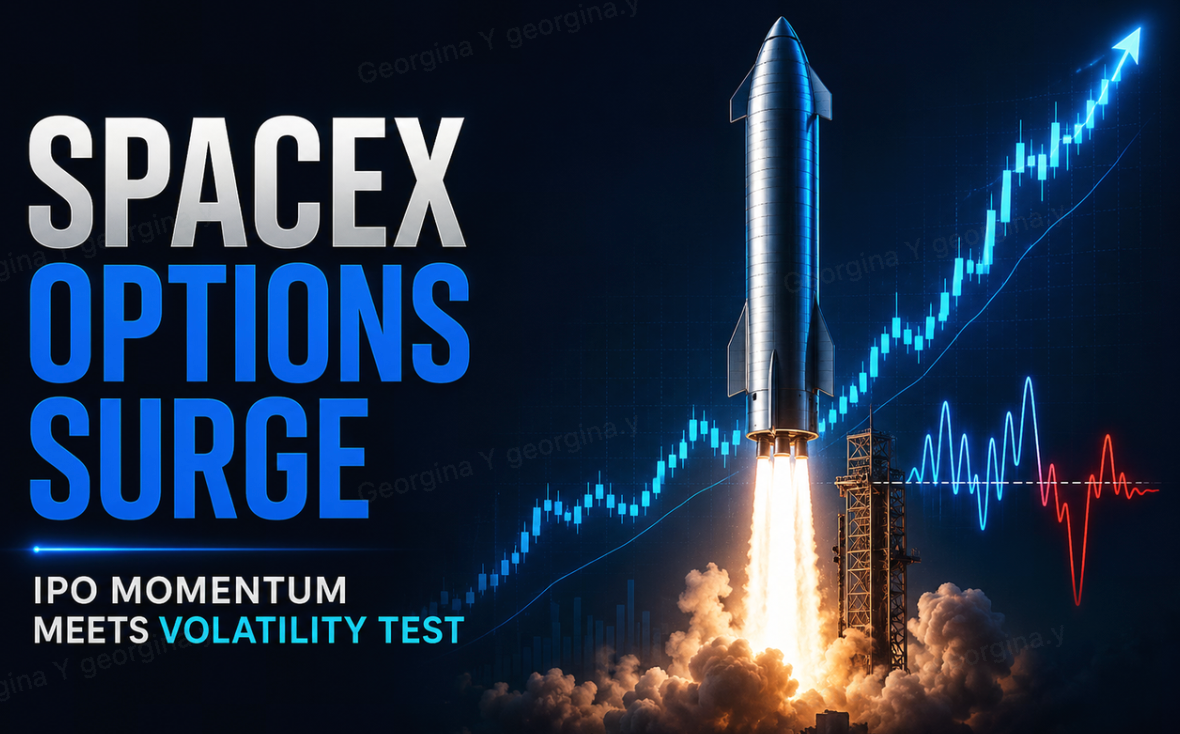
SpaceX Options Surge: Turning IPO Momentum Into a Volatility Test
SpaceX’s post-IPO rally has evolved beyond a simple first-day demand story. After pricing its shares at $135, opening near $150, and quickly surging past the $200 threshold, the market is now entering

2026 Nobel Economics Prize Honors a New Foundation for Macroeconomic Policy
Robert Hall and Michael Woodford won the 2026 Nobel Economics Prize for reshaping how policymakers respond to inflation and economic shocks.

Related Articles
View More
Why Did Oura Delay Its IPO? What Happened to the OURA Nasdaq Listing
Oura postponed its Nasdaq initial public offering on September 29, 2026, citing uncertainty in the IPO market even though, by its own account, demand for the deal was strong. The IPO has not been canc
Oura Competitors: Samsung, Apple and the Smart Ring Market
Oura's competitors fall into three groups, according to its IPO prospectus: smartwatch makers such as Apple, Google and Samsung; fitness wearables such as Garmin, Coros and Whoop; and software-only he

Is Oura Profitable? Revenue, Business Model and Valuation
Yes, Oura is profitable on a net income basis. Its IPO prospectus shows net income of $60.8 million on revenue of $1.21 billion in the nine months to June 30, 2026. The $924.3 million loss in some hea







