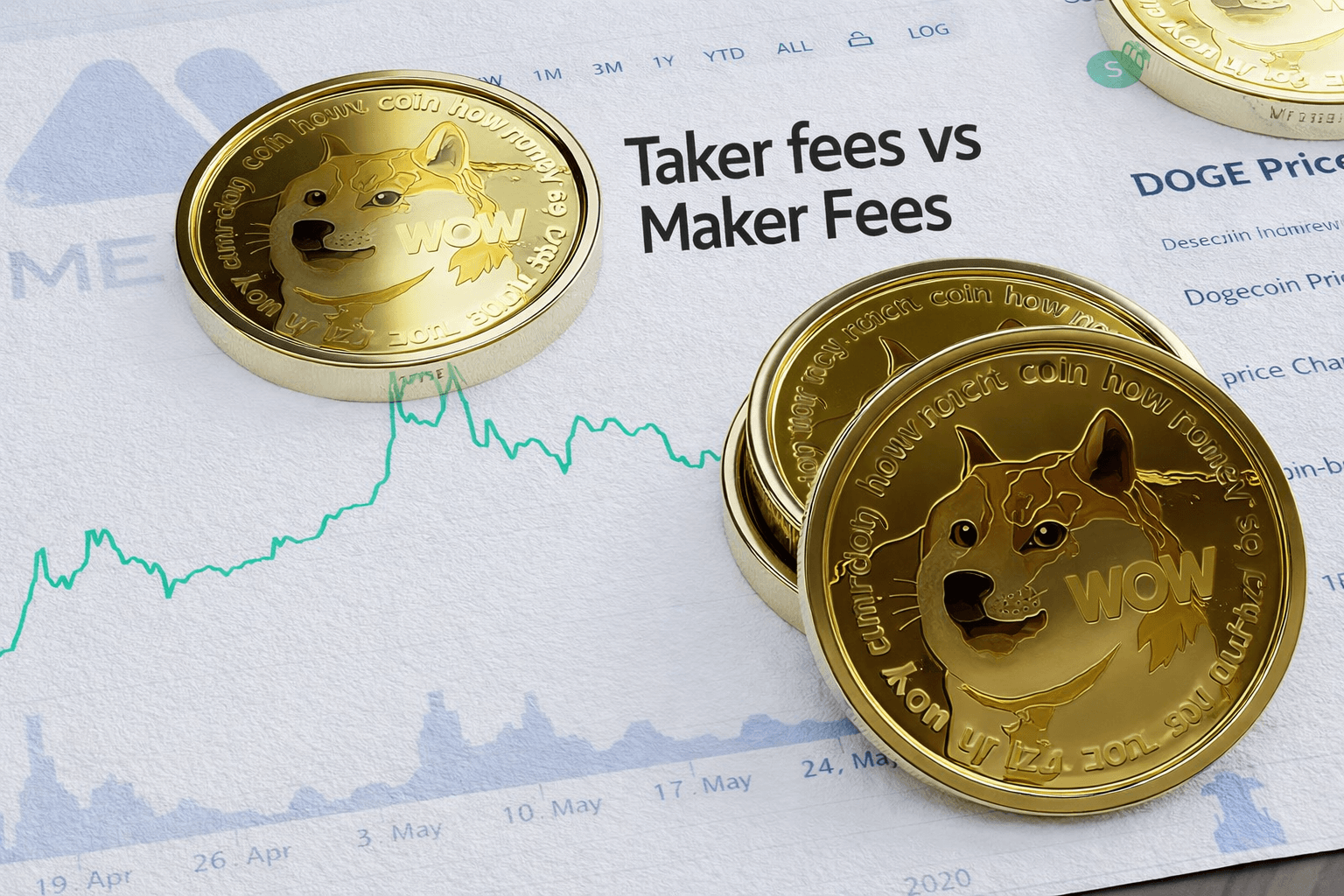
Dogecoin (DOGE) has become a household name in the world of cryptocurrencies. Originally created as a fun internet meme, it has since grown into a prominent asset within the cryptocurrency market. However, like most cryptocurrencies,
Dogecoin remains highly volatile, which means that traders can experience large price swings in a short period. With volatility comes the potential for both
high profits and
significant losses — but these swings are also influenced by the
trading fees that exchanges charge.
We will break down each fee type, compare spot and futures trading fees, and help you develop strategies for reducing your trading costs on exchanges. Whether you’re a beginner or an experienced trader, understanding these fees is crucial to achieving success in the Dogecoin market.
Spot trading fees are simple and typically include maker and taker fees based on liquidity.
Futures trading fees are more complex, involving funding rates, leverage costs, and additional transaction fees.
Spot trading is best for long-term holders, while futures trading offers higher rewards but also higher risks.
Dogecoin futures involve additional fees like funding payments and liquidation fees.
To minimize Dogecoin trading fees, use limit orders, choose exchanges with lower fees, and be mindful of leverage costs.
The world of cryptocurrency is filled with numerous opportunities for traders, but it also comes with its fair share of complexities. Dogecoin, once a meme coin, has become a prominent part of this landscape. Due to its volatility, Dogecoin offers traders both the potential for rapid gains and the risk of significant losses. However, a factor that many traders often overlook is the cost of trading, particularly transaction fees. These fees can quickly add up, reducing the profitability of your trades.
Understanding the
Dogecoin trading fees associated with
spot trading and
futures trading is essential for anyone looking to maximize their returns and minimize unnecessary costs. Spot trading, where you buy and hold the asset directly, generally involves simpler fees. Futures trading, on the other hand, is more complex and involves not only
maker and taker fees but also funding rates, leverage costs, and liquidation fees. The combination of these different types of fees can impact your overall profitability in significant ways.
In this article, we will provide an in-depth look at
Dogecoin trading fees. We’ll compare
spot vs futures trading and give you the tools to understand the cost structures behind each method. By the end of this guide, you’ll have a clearer understanding of
how Dogecoin trading fees work, how to manage them effectively, and strategies to
minimize your trading costs.
Spot trading refers to the process of buying and selling Dogecoin directly on an exchange. When you engage in spot trading, you purchase actual Dogecoin coins, which you can either hold in a wallet or sell at a later date. Spot trading fees are typically straightforward and based on a maker-taker fee model, but various exchanges might have unique pricing structures.
Most exchanges charge a maker-taker fee structure for spot trading, which dictates the costs based on your order type. Let’s take a look at the components of these fees.
The maker fee is the fee you pay when you add liquidity to the market. This happens when you place a
limit order that doesn’t get filled immediately. You are essentially
making liquidity available to other traders by leaving your order on the order book until someone else decides to fulfill it. Maker fees are typically
lower than taker fees because they help the exchange maintain a healthy and liquid market.
For example, let’s say you place an order to buy Dogecoin at a specific price and there are no immediate sellers willing to meet your price. Your order remains in the system, adding liquidity to the market. If another trader decides to sell to your buy order, you will have paid the maker fee.
The taker fee is charged when you remove liquidity from the market. This happens when you place a
market order that immediately matches an existing order on the order book. By taking liquidity from the market, you make it easier for the exchange to execute transactions quickly, and thus you’re typically charged a
higher fee than for maker orders.
For instance, if you place an order to buy Dogecoin at the market price, your order is immediately filled with the best available offers from the order book. Since you are taking liquidity from the market, you will pay a taker fee.
Spot trading fees are usually calculated as a percentage of the total value of the transaction. Below is a typical fee structure for many exchanges:
Maker Fee: 0.1% - 0.2%
Taker Fee: 0.1% - 0.3%
For example, if you buy $1,000 worth of Dogecoin on an exchange with a taker fee of 0.2%, your fee will be $2.
While maker and taker fees are the primary costs in spot trading, other factors can impact the overall cost of your Dogecoin trades.
Many exchanges offer volume-based discounts on fees. If you trade a high volume over a 30-day period, you may qualify for lower fees. This structure is meant to encourage high-frequency traders and those who bring substantial liquidity to the platform. For example, some exchanges may reduce your maker fee to 0.05% if you reach a certain threshold of trade volume.
Another way to lower
Dogecoin trading fees is by using the exchange’s native tokens (e.g.,
MX tokens on MEXC). These tokens can be used to pay for
trading fees, often with
significant discounts. Some exchanges offer discounts of up to
50% for users who pay their fees using native tokens.
Futures trading offers a way for traders to speculate on
Dogecoin’s price without actually owning the asset.
Futures contracts allow you to enter into an agreement to buy or sell Dogecoin at a specified price at a future date. Futures trading typically involves
leverage, meaning you can control a larger position with a smaller amount of capital. While leverage increases potential profits, it also increases risk.
Unlike
spot trading,
futures trading fees are more complex. In addition to maker and taker fees, futures trading involves other costs like funding rates, leverage fees, and liquidation fees.
In futures trading, the maker fee is charged when you place a limit order that provides liquidity to the market. When you place a limit order to buy Dogecoin futures, and no one matches your order immediately, you’re adding liquidity to the market, thus benefiting the exchange and other traders.
The taker fee is charged when you place a market order or when your limit order matches an existing order on the book. Takers remove liquidity from the market, and as a result, they are usually charged a higher fee than makers.
One of the defining features of futures trading is the funding rate. This rate is a periodic payment that occurs between long (buy) and short (sell) futures positions. The funding rate ensures that futures prices stay aligned with the spot price of Dogecoin.
The funding rate is generally calculated every 8 hours and can be either positive or negative:
This rate is typically small, but it can accumulate over time, particularly if you hold positions for long periods.
Leverage is another unique feature of futures trading. Leverage allows you to control a larger position with a smaller amount of capital. For example, with 10x leverage, a $1,000 investment allows you to control $10,000 worth of Dogecoin futures.
While leverage increases the potential for higher returns, it also increases the costs of trading. Futures exchanges typically charge interest rates for borrowing the capital needed to control a leveraged position. This interest rate varies depending on the amount of leverage you use.
Here’s an example of how futures trading fees work:
Let’s say you open a $1,000 position with 10x leverage. If the taker fee is 0.04%, you’ll pay $0.40 for the trade. If you hold the position for 24 hours, the funding rate will add an additional $0.50 to your costs.
Now that we’ve broken down the fees involved in spot trading and futures trading, let’s compare them directly in the table below. This will help you see the differences in costs and understand which method might be more cost-effective for your trading style.
Cost Type | Spot Trading Fees | Futures Trading Fees |
Maker Fee | 0.1% - 0.2% | 0.02% - 0.1% |
Taker Fee | 0.1% - 0.2% | 0.04% - 0.1% |
Funding Rate | N/A | 0.05% (every 8 hours) |
Leverage Fees | N/A | Interest rates vary based on leverage used |
Liquidation Fee | N/A | Possible if margin is insufficient |
Minimum Trade Size | Generally low, depends on exchange | Higher, often based on contract size |
Transaction Speed | Instant | Delayed (based on funding and expiration) |
Managing Dogecoin trading costs is essential for any trader who wants to improve profitability. Here are some practical ways to minimize the fees you pay while trading:
Limit orders tend to attract lower maker fees compared to market orders. By using limit orders, you can ensure that your order will only be executed at the price you want, and you’ll likely pay a lower maker fee.
Many exchanges offer volume-based discounts. If you trade a higher volume within a given time frame (e.g., 30 days), your maker and taker fees may be reduced. Be sure to check the discounts offered by your exchange to see if you qualify for a better rate.
Choosing an exchange with low trading fees can save you a lot of money in the long run.
MEXC and other platforms offer competitive fee structures. Some exchanges also offer reduced fees for high-volume traders or those who hold and use the exchange’s native tokens to pay for fees.
While leverage allows you to trade larger positions, it also increases your costs. Using leverage incurs additional interest fees, and if your position is liquidated, you could lose your initial margin. Be sure to carefully manage your leverage to avoid excessive costs.
Spot trading fees are typically simpler, consisting of maker and taker fees. Futures trading involves additional costs such as funding rates, leverage, and liquidation fees.
Yes, you can trade Dogecoin futures without leverage, but the position size will be smaller, and your potential profits will be more limited.
You can reduce fees by using limit orders, taking advantage of volume-based discounts, and using exchange tokens to pay for fees.
No, Dogecoin trading fees vary across exchanges. It’s important to compare fee structures to find the best exchange for your trading strategy.
Dogecoin trading fees can have a significant impact on your overall profitability. Whether you’re trading via spot or futures, understanding the fee structure is essential to maximize your profits. Spot trading is more straightforward, with lower fees for makers and takers, while futures trading involves additional costs like funding rates, leverage fees, and potential liquidation fees.
To continue your learning about Dogecoin and cryptocurrency trading, explore the following articles: