Why is Crypto Down? It’s Not "FUD"—It’s the Hard Asset Rotation & Pre-CNY Liquidity Void
If you are looking for a specific news headline to explain today's red candles, stop looking. There isn't one.
Retail traders are currently scouring Twitter for "FUD" (Fear, Uncertainty, Doubt) to blame for the drop. But if you sit on an institutional trading desk, the picture is different. The market didn't crash because of a regulatory rumor or a hack. It crashed because of market mechanics and a massive, silent capital rotation.
We are witnessing a "Liquidity Flush" driven by three specific factors that algos react to long before humans do: Negative Gamma hedging, the Pre-Holiday liquidity drain, and a sudden flight to Industrial Scarcity.
Here is the raw breakdown of what is actually happening in the order books.
The "Great Rotation" to Hard Assets
The most critical signal right now is not on the Bitcoin chart—it’s on the Commodities board.
For the past six months, Bitcoin acted as a high-beta proxy for tech stocks. Today, that correlation snapped. As tracked by TradingEconomics Commodities Data, while crypto bleeds, Palladium (XPD) and Copper (XCU) are breaking out to new local highs.
This is not a coincidence. Smart money is aggressively rebalancing. The "Commodity Supercycle" narrative—driven by AI infrastructure needs and supply shocks in Russia/South Africa—is sucking liquidity out of "Digital Risk" (Crypto) and moving it into "Physical Scarcity" (RWA).
Funds aren't leaving the ecosystem; they are just changing lanes. They are selling liquid BTC/ETH positions to chase the breakout in XPD and XCU futures on MEXC. If you are only watching crypto, you are seeing a crash. If you are watching the full macro terminal, you are seeing a rotation.
The "Negative Gamma" Doom Loop
Why was the drop so fast? Why did we wipe out weeks of gains in hours?
Blame the Options Market. According to derivatives data from Coinglass, Open Interest (OI) had reached fever-pitch levels leading up to this week. Crucially, Market Makers were heavily positioned in what quantitative traders call "Negative Gamma".
When the price cracked key support levels (triggered by the rotation mentioned above), Market Makers were mathematically forced to sell spot to hedge their books. This creates a mechanical feedback loop:
Price ticks down → Dealers forced to sell → Price drops further → Dealers sell more.
This "Gamma Squeeze" explains the vertical nature of the red candles. It wasn't human panic; it was hedging algorithms executing mandatory sell orders into a thin order book.
The "Pre-CNY" Liquidity Void
Finally, look at the calendar. We are two weeks away from the Lunar New Year.
Veterans of this market know the drill: The "Asian Bid" disappears in early February. As noted in historical volatility reports, the weeks preceding the Lunar New Year often see a withdrawal of fiat liquidity as OTC desks in Asia settle accounts and miners cash out for end-of-year bonuses.
This creates a "Liquidity Void." The buy-side depth on order books is currently at its thinnest point of the quarter. In this environment, a standard sell order causes significant Slippage. The bears know this, and they are pressing their advantage while the bulls are on holiday.
The Trader’s Verdict: Watch the "Borrow"
So, is the bull market over? Unlikely. This is a structural flush, not a fundamental breakdown.
But don't try to catch the falling knife based on RSI divergence. Instead, watch the USDT Borrowing Rates on-chain via DefiLlama Yields.
The Signal: We need to see USDT borrowing costs spike on protocols like Aave. That indicates smart money is stepping in to buy the dip with leverage. Until then, cash (or Commodities like XPD) is king.
The Bottom Line: The capital hasn't evaporated; it has rotated. The savvy trader on MEXC isn't panic-selling Bitcoin; they are likely shorting the weakness or following the smart money into the Palladium (XPD) and Copper (XCU) volatility while the crypto dust settles.
⚠️ Professional Market Note
Volatility Expansion: In a "Negative Gamma" regime, support levels are less effective. Price often overshoots to the downside. Standard technical analysis (Support/Resistance) is less reliable than Volume Profile analysis during these flushes. Derivatives Risk: Buying the dip with leverage during a "Liquidity Void" is dangerous. Wicks can be deeper than expected. Ensure you have ample collateral or stick to Spot markets until the Asian liquidity returns post-holiday. Not Financial Advice: This commentary reflects market structure analysis and is not financial advice. DYOR.
Beliebte Artikel

Arten von Spot-Aufträgen
Auf der MEXC-Plattform werden Spot-Trading-Aufträge in fünf Modi unterteilt: Limit, Market, Stop-Limit, OCO und Trailing-Stop-Auftrag.1. Limit-AuftragEin Limit-Auftrag ermöglicht es Nutzern, ihren eig

Solana Wallet Tracker: Was es ist, wie es funktioniert und welche Tools Sie nutzen sollten
Solana bewegt sich schnell — und wenn Sie SOL halten oder Token in diesem Netzwerk handeln, kann eine verpasste Transaktion eine verpasste Gelegenheit bedeuten. Ein Solana Wallet Tracker gibt Ihnen ei

Der Wert von Solana erklärt: Was SOL antreibt und wie man es richtig einordnet
SOL erreichte im Januar 2025 fast die Marke von 295 USD — und gab seitdem mehr als 70 % von diesem Höchststand ab. Wenn Sie die Schwankungen des Solana-Wertes beobachten und sich fragen, was ihn wirkl

Das Solana-Ökosystem erklärt: Projekte, Coins und Funktionsweise
Solana hat sich still und leise zu einem der aktivsten Blockchains im Krypto-Bereich entwickelt — nicht nur wegen des SOL-Kurses, sondern wegen allem, was auf dieser Grundlage aufgebaut wird. Dieser L
Trendnachrichten
Mehr anzeigen
'Das ist nicht gut': Fox News kann sich vor Trumps Wirtschaftsdesaster nicht verstecken
Die Moderatoren und Kommentatoren bei Fox News waren nicht in der Lage, aus dem katastrophalen Bericht über die jüngste Inflation gute Nachrichten zu machen, wobei ein Gast unverblümt feststellte: "Ja

Kryptomarktstruktur-Gesetz steht im April zur entscheidenden Abstimmung und muss bis Mai verabschiedet werden, sagen Senatoren
Der Beitrag Krypto-Marktstrukturgesetz steht im April zur entscheidenden Abstimmung an und muss bis Mai verabschiedet werden, sagen Senatoren erschien auf BitcoinEthereumNews.com. Kurz gesagt Cynthia
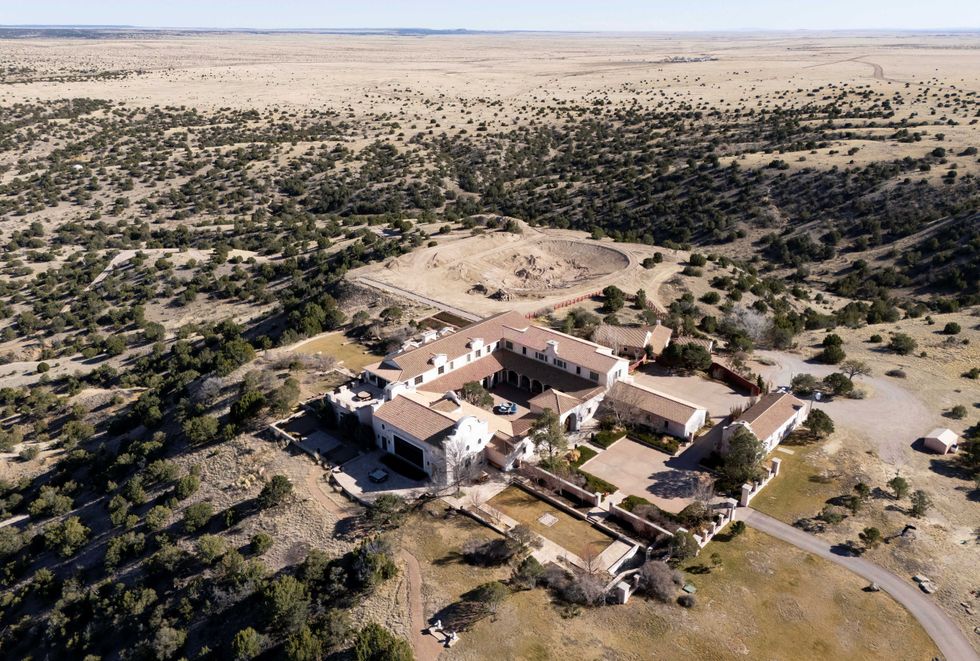
Beweise über die Epstein-Ranch, die von einem Hinweisgeber enthüllt wurden, der behauptet, eingebrochen zu sein: Bericht
Im vergangenen Februar stellte eine anonyme Person, die behauptete, in Jeffrey Epsteins 7.600 Hektar große Zorro Ranch in New Mexico eingebrochen zu sein, demokratischen Staatsabgeordneten Information

Traditionelle Zutaten auf moderne Weise verwenden
WIE KANN MAN traditionelle philippinische Zutaten bei einem modernen Lebensstil verwenden? Dies war ein Thema, das von James Beard-Preisträger Erwan Heussaff* und dem Team behandelt wurde
Verwandte Artikel
Arten von Spot-Aufträgen
Auf der MEXC-Plattform werden Spot-Trading-Aufträge in fünf Modi unterteilt: Limit, Market, Stop-Limit, OCO und Trailing-Stop-Auftrag.1. Limit-AuftragEin Limit-Auftrag ermöglicht es Nutzern, ihren eig
Solana Wallet Tracker: Was es ist, wie es funktioniert und welche Tools Sie nutzen sollten
Solana bewegt sich schnell — und wenn Sie SOL halten oder Token in diesem Netzwerk handeln, kann eine verpasste Transaktion eine verpasste Gelegenheit bedeuten. Ein Solana Wallet Tracker gibt Ihnen ei
Der Wert von Solana erklärt: Was SOL antreibt und wie man es richtig einordnet
SOL erreichte im Januar 2025 fast die Marke von 295 USD — und gab seitdem mehr als 70 % von diesem Höchststand ab. Wenn Sie die Schwankungen des Solana-Wertes beobachten und sich fragen, was ihn wirkl
Das Solana-Ökosystem erklärt: Projekte, Coins und Funktionsweise
Solana hat sich still und leise zu einem der aktivsten Blockchains im Krypto-Bereich entwickelt — nicht nur wegen des SOL-Kurses, sondern wegen allem, was auf dieser Grundlage aufgebaut wird. Dieser L