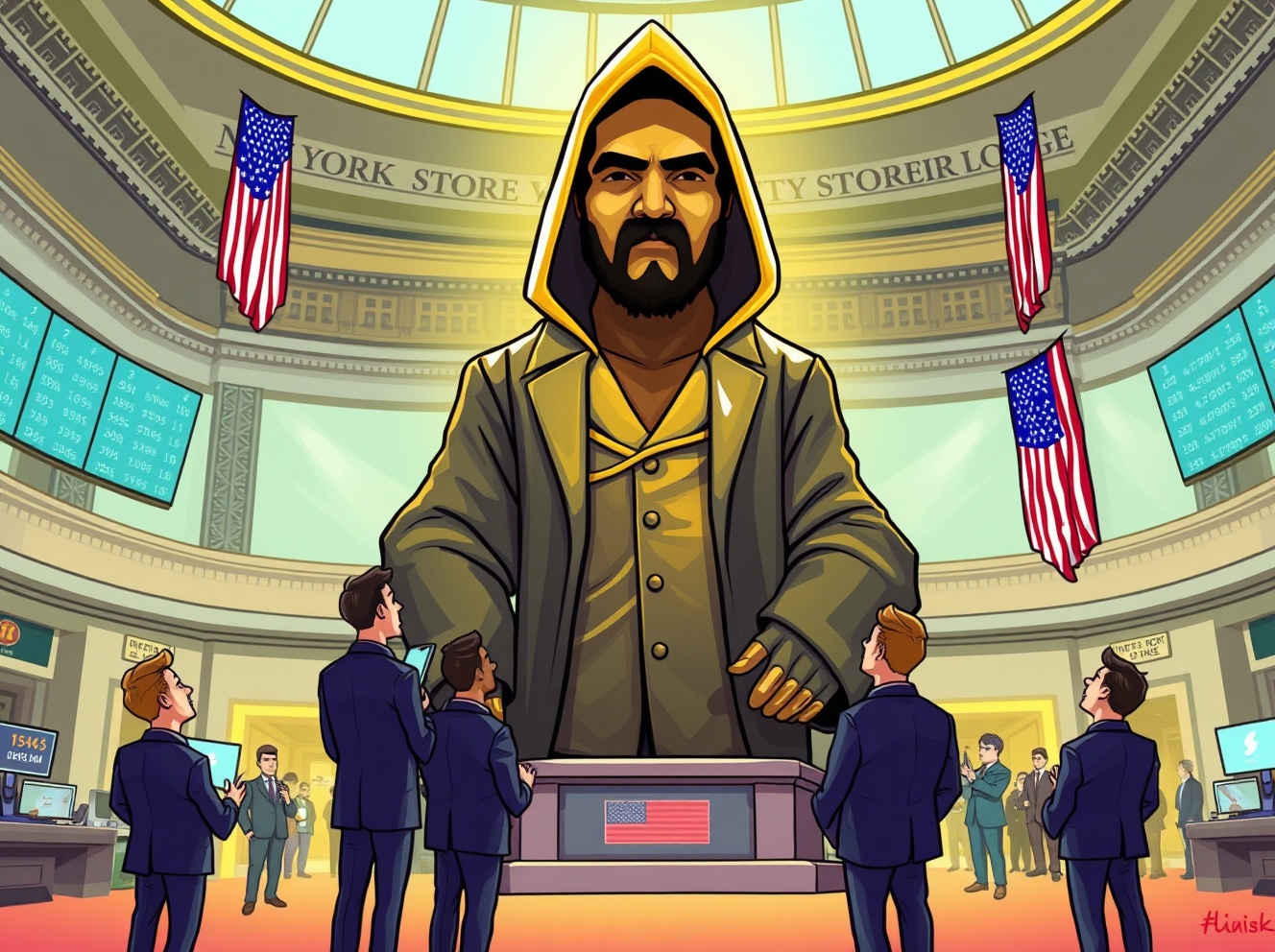
BitcoinWorld Satoshi Nakamoto Statue Erected at NYSE: Wall Street’s Stunning Crypto Embrace Imagine walking onto the hallowed floor of the New York Stock Exchange and seeing a monument not to a tycoon or a bull, but to the anonymous creator of Bitcoin. This is now reality. The NYSE has installed a Satoshi Nakamoto statue, a powerful signal that the world of traditional finance is undergoing a profound […] This post Satoshi Nakamoto Statue Erected at NYSE: Wall Street’s Stunning Crypto Embrace first appeared on BitcoinWorld.BitcoinWorld Satoshi Nakamoto Statue Erected at NYSE: Wall Street’s Stunning Crypto Embrace Imagine walking onto the hallowed floor of the New York Stock Exchange and seeing a monument not to a tycoon or a bull, but to the anonymous creator of Bitcoin. This is now reality. The NYSE has installed a Satoshi Nakamoto statue, a powerful signal that the world of traditional finance is undergoing a profound […] This post Satoshi Nakamoto Statue Erected at NYSE: Wall Street’s Stunning Crypto Embrace first appeared on BitcoinWorld.

Satoshi Nakamoto Statue Erected at NYSE: Wall Street’s Stunning Crypto Embrace
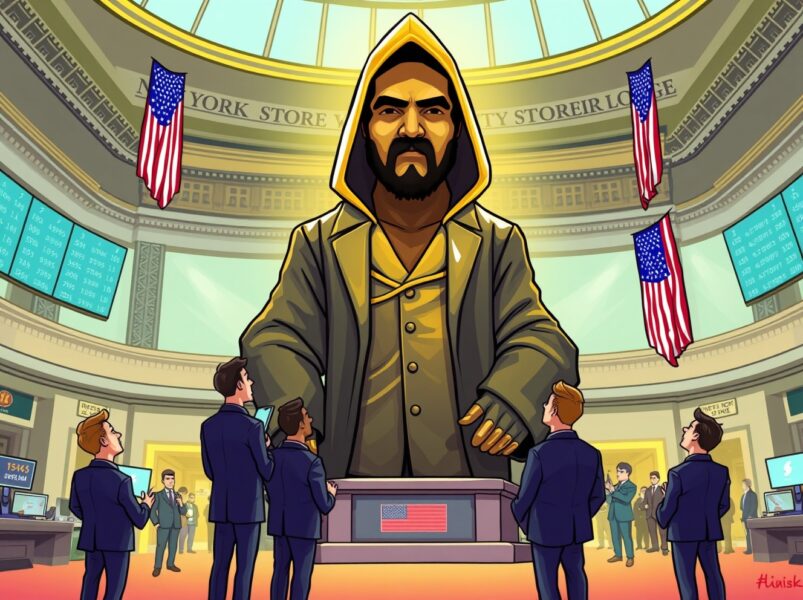
A vibrant cartoon of the Satoshi Nakamoto statue symbolizing Bitcoin's acceptance at the New York Stock Exchange.

BitcoinWorld

Satoshi Nakamoto Statue Erected at NYSE: Wall Street’s Stunning Crypto Embrace

Imagine walking onto the hallowed floor of the New York Stock Exchange and seeing a monument not to a tycoon or a bull, but to the anonymous creator of Bitcoin. This is now reality. The NYSE has installed a Satoshi Nakamoto statue, a powerful signal that the world of traditional finance is undergoing a profound transformation. This move marks a stunning reversal from just a few years ago when crypto was a taboo topic on Wall Street.

Why is the Satoshi Nakamoto Statue at the NYSE a Big Deal?

This installation is far more than decorative art. It represents a symbolic bridge being built between two worlds that were once at odds. The Satoshi Nakamoto statue serves as a permanent, physical acknowledgment of cryptocurrency’s legitimacy by the most iconic institution in global finance. Therefore, it signals to investors, companies, and regulators that digital assets are now a permanent and integrated part of the financial landscape.

From Taboo to Mainstream: The Wall Street Journey

The atmosphere on Wall Street regarding crypto has shifted dramatically. Let’s break down the key changes this statue represents:

  • Legitimization: The statue transforms Bitcoin’s origins from an internet mystery into a celebrated part of financial history.
  • Institutional Acceptance: It visually confirms that major financial players are no longer just observing crypto but are actively embracing its narrative.
  • Cultural Shift: The installation acts as a daily reminder to thousands of financial professionals that innovation now includes blockchain technology.

Where Else Can You Find a Satoshi Nakamoto Statue?

The NYSE is now the sixth global location to honor Bitcoin’s creator with a statue, joining a diverse list that highlights crypto’s borderless nature. Previous installations are in:

  • Switzerland (Crypto Valley)
  • El Salvador (the first country to adopt Bitcoin as legal tender)
  • Japan
  • Vietnam
  • Hungary
  • Florida, USA

This global spread shows that recognition for Satoshi Nakamoto and Bitcoin’s impact is not confined to any single region or economic philosophy.

What Does This Mean for the Future of Finance?

The convergence point is here. The NYSE has strategically positioned itself as the space where old money meets new technology. This Satoshi Nakamoto statue is a landmark in that journey. For traditional investors, it’s a cue to seriously understand digital assets. For the crypto community, it’s validation that their years of building were not in vain. Moreover, it paves the way for further integration, such as more Bitcoin-related financial products trading on traditional exchanges.

Conclusion: A Monumental Step Forward

The installation of the Satoshi Nakamoto statue at the New York Stock Exchange is a defining moment. It’s a silent yet powerful declaration that cryptocurrency is woven into the fabric of modern finance. This statue is not just about the past; it’s a beacon for the future, illuminating the path toward a hybrid financial system built on both tradition and innovation.

Frequently Asked Questions (FAQs)

Who is Satoshi Nakamoto?

Satoshi Nakamoto is the pseudonymous person or group who created Bitcoin, authored its original white paper, and built the first blockchain database. Their true identity remains one of the biggest mysteries in technology.

Why put a statue of someone anonymous at the NYSE?

The statue symbolizes the ideas and the technological revolution Bitcoin started, rather than the individual. It honors the innovation of decentralized digital currency, which is now significantly impacting global finance.

Is the NYSE directly trading Bitcoin now?

Not directly as a spot exchange. However, the NYSE’s parent company, Intercontinental Exchange (ICE), operates Bakkt, a platform for crypto custody and trading. The NYSE also lists Bitcoin-related ETFs and other financial products tied to crypto assets.

What was Wall Street’s previous view of cryptocurrency?

For many years, Wall Street largely dismissed cryptocurrency as a speculative bubble, a tool for illicit activity, or a passing fad. The statue marks a complete turnaround from that skeptical stance to one of acceptance and integration.

Are there other statues of Satoshi Nakamoto?

Yes. As mentioned, statues exist in several countries including Switzerland, El Salvador, Japan, Vietnam, and Hungary, reflecting Bitcoin’s global influence.

Does this mean Bitcoin is officially accepted by all banks?

Not all, but acceptance is growing rapidly. Major banks and asset managers are increasingly offering crypto services to clients, launching crypto funds, or engaging with blockchain technology. The NYSE statue is a high-profile indicator of this accelerating trend.

Found this insight into Wall Street’s crypto transformation fascinating? Share this article with your network on Twitter, LinkedIn, or Facebook to spark the conversation!

To learn more about the latest Bitcoin trends, explore our article on key developments shaping Bitcoin institutional adoption.

This post Satoshi Nakamoto Statue Erected at NYSE: Wall Street’s Stunning Crypto Embrace first appeared on BitcoinWorld.

Piyasa Fırsatı
Notcoin Logosu
Notcoin Fiyatı(NOT)
$0.0005306
$0.0005306$0.0005306
-1.95%
USD
Notcoin (NOT) Canlı Fiyat Grafiği
Sorumluluk Reddi: Bu sitede yeniden yayınlanan makaleler, halka açık platformlardan alınmıştır ve yalnızca bilgilendirme amaçlıdır. MEXC'nin görüşlerini yansıtmayabilir. Tüm hakları telif sahiplerine aittir. Herhangi bir içeriğin üçüncü taraf haklarını ihlal ettiğini düşünüyorsanız, kaldırılması için lütfen [email protected] ile iletişime geçin. MEXC, içeriğin doğruluğu, eksiksizliği veya güncelliği konusunda hiçbir garanti vermez ve sağlanan bilgilere dayalı olarak alınan herhangi bir eylemden sorumlu değildir. İçerik, finansal, yasal veya diğer profesyonel tavsiye niteliğinde değildir ve MEXC tarafından bir tavsiye veya onay olarak değerlendirilmemelidir.

Ayrıca Şunları da Beğenebilirsiniz

South Korea Launches Innovative Stablecoin Initiative

South Korea Launches Innovative Stablecoin Initiative

The post South Korea Launches Innovative Stablecoin Initiative appeared on BitcoinEthereumNews.com. South Korea has witnessed a pivotal development in its cryptocurrency landscape with BDACS introducing the nation’s first won-backed stablecoin, KRW1, built on the Avalanche network. This stablecoin is anchored by won assets stored at Woori Bank in a 1:1 ratio, ensuring high security. Continue Reading:South Korea Launches Innovative Stablecoin Initiative Source: https://en.bitcoinhaber.net/south-korea-launches-innovative-stablecoin-initiative
Paylaş
BitcoinEthereumNews2025/09/18 17:54
Trump Cancels Tech, AI Trade Negotiations With The UK
Trump Cancels Tech, AI Trade Negotiations With The UK

The US pauses a $41B UK tech and AI deal as trade talks stall, with disputes over food standards, market access, and rules abroad.   The US has frozen a major tech
Paylaş
LiveBitcoinNews2025/12/17 01:00
Summarize Any Stock’s Earnings Call in Seconds Using FMP API

Summarize Any Stock’s Earnings Call in Seconds Using FMP API

Turn lengthy earnings call transcripts into one-page insights using the Financial Modeling Prep APIPhoto by Bich Tran Earnings calls are packed with insights. They tell you how a company performed, what management expects in the future, and what analysts are worried about. The challenge is that these transcripts often stretch across dozens of pages, making it tough to separate the key takeaways from the noise. With the right tools, you don’t need to spend hours reading every line. By combining the Financial Modeling Prep (FMP) API with Groq’s lightning-fast LLMs, you can transform any earnings call into a concise summary in seconds. The FMP API provides reliable access to complete transcripts, while Groq handles the heavy lifting of distilling them into clear, actionable highlights. In this article, we’ll build a Python workflow that brings these two together. You’ll see how to fetch transcripts for any stock, prepare the text, and instantly generate a one-page summary. Whether you’re tracking Apple, NVIDIA, or your favorite growth stock, the process works the same — fast, accurate, and ready whenever you are. Fetching Earnings Transcripts with FMP API The first step is to pull the raw transcript data. FMP makes this simple with dedicated endpoints for earnings calls. If you want the latest transcripts across the market, you can use the stable endpoint /stable/earning-call-transcript-latest. For a specific stock, the v3 endpoint lets you request transcripts by symbol, quarter, and year using the pattern: https://financialmodelingprep.com/api/v3/earning_call_transcript/{symbol}?quarter={q}&year={y}&apikey=YOUR_API_KEY here’s how you can fetch NVIDIA’s transcript for a given quarter: import requestsAPI_KEY = "your_api_key"symbol = "NVDA"quarter = 2year = 2024url = f"https://financialmodelingprep.com/api/v3/earning_call_transcript/{symbol}?quarter={quarter}&year={year}&apikey={API_KEY}"response = requests.get(url)data = response.json()# Inspect the keysprint(data.keys())# Access transcript contentif "content" in data[0]: transcript_text = data[0]["content"] print(transcript_text[:500]) # preview first 500 characters The response typically includes details like the company symbol, quarter, year, and the full transcript text. If you aren’t sure which quarter to query, the “latest transcripts” endpoint is the quickest way to always stay up to date. Cleaning and Preparing Transcript Data Raw transcripts from the API often include long paragraphs, speaker tags, and formatting artifacts. Before sending them to an LLM, it helps to organize the text into a cleaner structure. Most transcripts follow a pattern: prepared remarks from executives first, followed by a Q&A session with analysts. Separating these sections gives better control when prompting the model. In Python, you can parse the transcript and strip out unnecessary characters. A simple way is to split by markers such as “Operator” or “Question-and-Answer.” Once separated, you can create two blocks — Prepared Remarks and Q&A — that will later be summarized independently. This ensures the model handles each section within context and avoids missing important details. Here’s a small example of how you might start preparing the data: import re# Example: using the transcript_text we fetched earliertext = transcript_text# Remove extra spaces and line breaksclean_text = re.sub(r'\s+', ' ', text).strip()# Split sections (this is a heuristic; real-world transcripts vary slightly)if "Question-and-Answer" in clean_text: prepared, qna = clean_text.split("Question-and-Answer", 1)else: prepared, qna = clean_text, ""print("Prepared Remarks Preview:\n", prepared[:500])print("\nQ&A Preview:\n", qna[:500]) With the transcript cleaned and divided, you’re ready to feed it into Groq’s LLM. Chunking may be necessary if the text is very long. A good approach is to break it into segments of a few thousand tokens, summarize each part, and then merge the summaries in a final pass. Summarizing with Groq LLM Now that the transcript is clean and split into Prepared Remarks and Q&A, we’ll use Groq to generate a crisp one-pager. The idea is simple: summarize each section separately (for focus and accuracy), then synthesize a final brief. Prompt design (concise and factual) Use a short, repeatable template that pushes for neutral, investor-ready language: You are an equity research analyst. Summarize the following earnings call sectionfor {symbol} ({quarter} {year}). Be factual and concise.Return:1) TL;DR (3–5 bullets)2) Results vs. guidance (what improved/worsened)3) Forward outlook (specific statements)4) Risks / watch-outs5) Q&A takeaways (if present)Text:<<<{section_text}>>> Python: calling Groq and getting a clean summary Groq provides an OpenAI-compatible API. Set your GROQ_API_KEY and pick a fast, high-quality model (e.g., a Llama-3.1 70B variant). We’ll write a helper to summarize any text block, then run it for both sections and merge. import osimport textwrapimport requestsGROQ_API_KEY = os.environ.get("GROQ_API_KEY") or "your_groq_api_key"GROQ_BASE_URL = "https://api.groq.com/openai/v1" # OpenAI-compatibleMODEL = "llama-3.1-70b" # choose your preferred Groq modeldef call_groq(prompt, temperature=0.2, max_tokens=1200): url = f"{GROQ_BASE_URL}/chat/completions" headers = { "Authorization": f"Bearer {GROQ_API_KEY}", "Content-Type": "application/json", } payload = { "model": MODEL, "messages": [ {"role": "system", "content": "You are a precise, neutral equity research analyst."}, {"role": "user", "content": prompt}, ], "temperature": temperature, "max_tokens": max_tokens, } r = requests.post(url, headers=headers, json=payload, timeout=60) r.raise_for_status() return r.json()["choices"][0]["message"]["content"].strip()def build_prompt(section_text, symbol, quarter, year): template = """ You are an equity research analyst. Summarize the following earnings call section for {symbol} ({quarter} {year}). Be factual and concise. Return: 1) TL;DR (3–5 bullets) 2) Results vs. guidance (what improved/worsened) 3) Forward outlook (specific statements) 4) Risks / watch-outs 5) Q&A takeaways (if present) Text: <<< {section_text} >>> """ return textwrap.dedent(template).format( symbol=symbol, quarter=quarter, year=year, section_text=section_text )def summarize_section(section_text, symbol="NVDA", quarter="Q2", year="2024"): if not section_text or section_text.strip() == "": return "(No content found for this section.)" prompt = build_prompt(section_text, symbol, quarter, year) return call_groq(prompt)# Example usage with the cleaned splits from Section 3prepared_summary = summarize_section(prepared, symbol="NVDA", quarter="Q2", year="2024")qna_summary = summarize_section(qna, symbol="NVDA", quarter="Q2", year="2024")final_one_pager = f"""# {symbol} Earnings One-Pager — {quarter} {year}## Prepared Remarks — Key Points{prepared_summary}## Q&A Highlights{qna_summary}""".strip()print(final_one_pager[:1200]) # preview Tips that keep quality high: Keep temperature low (≈0.2) for factual tone. If a section is extremely long, chunk at ~5–8k tokens, summarize each chunk with the same prompt, then ask the model to merge chunk summaries into one section summary before producing the final one-pager. If you also fetched headline numbers (EPS/revenue, guidance) earlier, prepend them to the prompt as brief context to help the model anchor on the right outcomes. Building the End-to-End Pipeline At this point, we have all the building blocks: the FMP API to fetch transcripts, a cleaning step to structure the data, and Groq LLM to generate concise summaries. The final step is to connect everything into a single workflow that can take any ticker and return a one-page earnings call summary. The flow looks like this: Input a stock ticker (for example, NVDA). Use FMP to fetch the latest transcript. Clean and split the text into Prepared Remarks and Q&A. Send each section to Groq for summarization. Merge the outputs into a neatly formatted earnings one-pager. Here’s how it comes together in Python: def summarize_earnings_call(symbol, quarter, year, api_key, groq_key): # Step 1: Fetch transcript from FMP url = f"https://financialmodelingprep.com/api/v3/earning_call_transcript/{symbol}?quarter={quarter}&year={year}&apikey={api_key}" resp = requests.get(url) resp.raise_for_status() data = resp.json() if not data or "content" not in data[0]: return f"No transcript found for {symbol} {quarter} {year}" text = data[0]["content"] # Step 2: Clean and split clean_text = re.sub(r'\s+', ' ', text).strip() if "Question-and-Answer" in clean_text: prepared, qna = clean_text.split("Question-and-Answer", 1) else: prepared, qna = clean_text, "" # Step 3: Summarize with Groq prepared_summary = summarize_section(prepared, symbol, quarter, year) qna_summary = summarize_section(qna, symbol, quarter, year) # Step 4: Merge into final one-pager return f"""# {symbol} Earnings One-Pager — {quarter} {year}## Prepared Remarks{prepared_summary}## Q&A Highlights{qna_summary}""".strip()# Example runprint(summarize_earnings_call("NVDA", 2, 2024, API_KEY, GROQ_API_KEY)) With this setup, generating a summary becomes as simple as calling one function with a ticker and date. You can run it inside a notebook, integrate it into a research workflow, or even schedule it to trigger after each new earnings release. Free Stock Market API and Financial Statements API... Conclusion Earnings calls no longer need to feel overwhelming. With the Financial Modeling Prep API, you can instantly access any company’s transcript, and with Groq LLM, you can turn that raw text into a sharp, actionable summary in seconds. This pipeline saves hours of reading and ensures you never miss the key results, guidance, or risks hidden in lengthy remarks. Whether you track tech giants like NVIDIA or smaller growth stocks, the process is the same — fast, reliable, and powered by the flexibility of FMP’s data. Summarize Any Stock’s Earnings Call in Seconds Using FMP API was originally published in Coinmonks on Medium, where people are continuing the conversation by highlighting and responding to this story
Paylaş
Medium2025/09/18 14:40