BitcoinWorld Bitcoin Supercycle: Changpeng Zhao’s Bold Prediction for a New Era Is the old rulebook for Bitcoin about to be torn up? At a recent industry event, Binance founder Changpeng Zhao (CZ) dropped a thought-provoking idea: Bitcoin might be breaking free from its well-known four-year cycle and charging into uncharted territory—a potential Bitcoin supercycle. This concept isn’t just jargon; it signals a fundamental shift in how […] This post Bitcoin Supercycle: Changpeng Zhao’s Bold Prediction for a New Era first appeared on BitcoinWorld.BitcoinWorld Bitcoin Supercycle: Changpeng Zhao’s Bold Prediction for a New Era Is the old rulebook for Bitcoin about to be torn up? At a recent industry event, Binance founder Changpeng Zhao (CZ) dropped a thought-provoking idea: Bitcoin might be breaking free from its well-known four-year cycle and charging into uncharted territory—a potential Bitcoin supercycle. This concept isn’t just jargon; it signals a fundamental shift in how […] This post Bitcoin Supercycle: Changpeng Zhao’s Bold Prediction for a New Era first appeared on BitcoinWorld.

Bitcoin Supercycle: Changpeng Zhao’s Bold Prediction for a New Era
2025/12/10 01:25
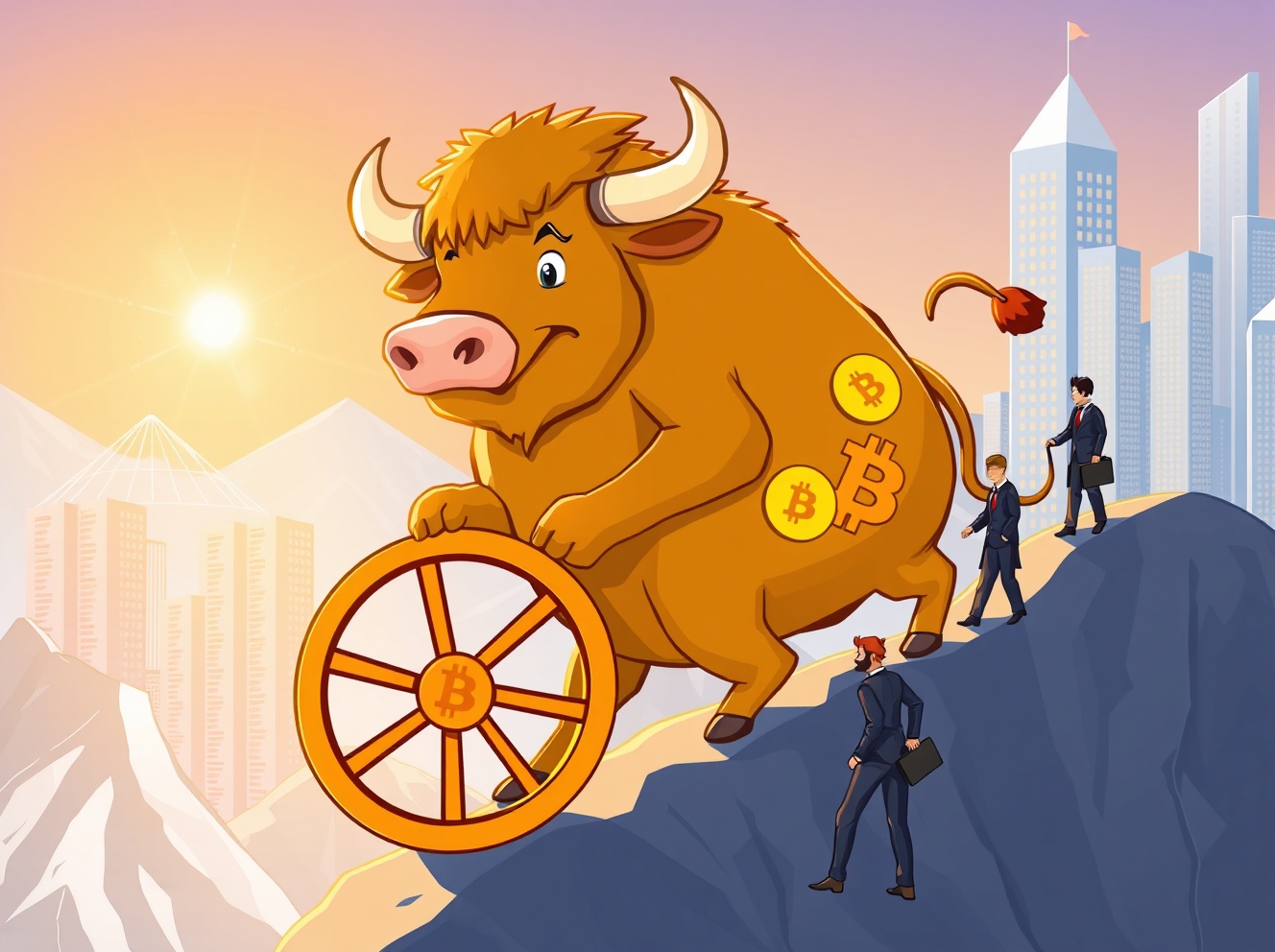
A cartoon bull symbolizing a Bitcoin supercycle leading institutional investors towards growth.

BitcoinWorld

Bitcoin Supercycle: Changpeng Zhao’s Bold Prediction for a New Era

Is the old rulebook for Bitcoin about to be torn up? At a recent industry event, Binance founder Changpeng Zhao (CZ) dropped a thought-provoking idea: Bitcoin might be breaking free from its well-known four-year cycle and charging into uncharted territory—a potential Bitcoin supercycle. This concept isn’t just jargon; it signals a fundamental shift in how the world’s leading cryptocurrency operates. Let’s unpack what a supercycle means and why CZ’s insight matters for every investor watching the market.

What Exactly Is a Bitcoin Supercycle?

Traditionally, Bitcoin has moved in roughly four-year phases, often tied to its “halving” events where new coin creation slows. These cycles typically include a bull run, a peak, a bear market, and accumulation. However, Changpeng Zhao suggests this pattern may no longer apply. He defines a Bitcoin supercycle as a prolonged bullish phase, primarily driven by a new, powerful force: sustained and expanding institutional investment.

Think of it as the market graduating. Instead of retail-driven boom and bust, a supercycle implies deeper, more stable capital entering the ecosystem. This could smooth out volatility and support a longer-term price appreciation trend. The key question is: what evidence supports this shift?

Why Might a Bitcoin Supercycle Be Starting Now?

Several converging factors make the supercycle theory plausible. First, regulatory frameworks, while evolving, are creating clearer paths for large institutions to participate. Second, the introduction of Bitcoin spot ETFs in major markets like the US has opened a massive, compliant gateway for traditional finance capital.

  • Institutional Onramps: Products like ETFs allow pension funds and asset managers to buy Bitcoin without directly holding it.
  • Macro Hedge: Increasingly, corporations and nations view Bitcoin as a digital gold—a hedge against inflation and currency devaluation.
  • Network Maturity: Bitcoin’s underlying technology and security have proven robust over 15 years, building trust.

Therefore, the demand may no longer be cyclical and speculative but structural and long-term. This constant inflow could prevent the deep drawdowns seen in past cycles, fundamentally altering the price chart.

What Are the Implications of a Sustained Bitcoin Supercycle?

If CZ’s view is correct, the implications are profound. For investors, it changes the strategy from “time the cycle” to “time in the market.” The intense fear of missing out (FOMO) that marks cycle tops might be replaced by more steady, strategic accumulation.

For the broader crypto ecosystem, a stable and rising Bitcoin price acts as a rising tide, lifting all boats. It boosts confidence, funds innovation in layer-2 solutions, and strengthens the entire digital asset class. However, challenges remain. Regulatory hurdles still exist globally, and the market must prove it can handle this new scale of interest without major disruptions.

How Should Investors Navigate This Potential Shift?

Navigating a potential Bitcoin supercycle requires a adjusted mindset. First, prioritize education over hype. Understand the macro-economic drivers behind institutional adoption. Second, consider dollar-cost averaging (DCA) as a core strategy to mitigate volatility while maintaining exposure.

  • Focus on Fundamentals: Look at adoption metrics, hash rate, and institutional custody solutions, not just price.
  • Manage Risk: Never invest more than you can afford to lose, even in a bullish long-term thesis.
  • Think Long-Term: If this is a supercycle, short-term price swings become noise in a much larger trend.

Actionable insight: Use periods of market fear as potential opportunities for accumulation, trusting in the longer-term structural trend CZ highlights.

Conclusion: A New Chapter for Bitcoin?

Changpeng Zhao’s comments are more than just market speculation; they are a lens through which to view Bitcoin’s maturation. The idea of a Bitcoin supercycle represents the asset’s journey from a niche technological experiment to a legitimate component of the global financial system. While no one can predict the future with certainty, the signs of deepening institutional involvement are undeniable. This potential paradigm shift invites us to look beyond the charts of the past and consider a future where Bitcoin’s growth is driven by a new, more resilient engine of demand.

Frequently Asked Questions (FAQs)

What did Changpeng Zhao say about Bitcoin?
At the BitcoinMENA event, CZ suggested Bitcoin’s traditional four-year market cycle might be ending, and the asset could be entering a new phase called a “supercycle,” driven largely by institutional investors.

What is a Bitcoin supercycle?
A Bitcoin supercycle is a theoretical extended bullish period that breaks the historic four-year pattern, characterized by sustained buying pressure from large-scale institutional adoption rather than retail speculation.

What triggers a Bitcoin supercycle?
The primary trigger, as suggested by CZ, is the large-scale, continuous entry of institutional capital through new regulated vehicles like ETFs, treating Bitcoin as a long-term strategic asset rather than a speculative trade.

How would a supercycle affect Bitcoin’s price?
It could lead to a longer period of price appreciation with potentially less severe bear markets, as constant institutional demand provides a stronger price floor and reduces extreme volatility.

Is the Bitcoin supercycle guaranteed to happen?
No, it is a compelling theory based on observable trends, but not a guarantee. Macroeconomic conditions, regulatory changes, and technological developments can all influence the market’s path.

How is this different from previous Bitcoin bull runs?
Previous bull runs were often fueled by retail hype and followed a predictable cycle of peak and crash. A supercycle implies a fundamental, structural change in demand that could alter that pattern.

Join the Conversation

Do you believe Bitcoin is entering a historic supercycle? Share your thoughts and this analysis with fellow crypto enthusiasts on Twitter, LinkedIn, or your favorite social forum. Spreading informed perspectives helps everyone navigate this exciting market evolution.

To learn more about the latest Bitcoin trends, explore our article on key developments shaping Bitcoin institutional adoption.

This post Bitcoin Supercycle: Changpeng Zhao’s Bold Prediction for a New Era first appeared on BitcoinWorld.

Piyasa Fırsatı
ERA Logosu
ERA Fiyatı(ERA)
$0,2001
$0,2001$0,2001
-2,29%
USD
ERA (ERA) Canlı Fiyat Grafiği
Sorumluluk Reddi: Bu sitede yeniden yayınlanan makaleler, halka açık platformlardan alınmıştır ve yalnızca bilgilendirme amaçlıdır. MEXC'nin görüşlerini yansıtmayabilir. Tüm hakları telif sahiplerine aittir. Herhangi bir içeriğin üçüncü taraf haklarını ihlal ettiğini düşünüyorsanız, kaldırılması için lütfen [email protected] ile iletişime geçin. MEXC, içeriğin doğruluğu, eksiksizliği veya güncelliği konusunda hiçbir garanti vermez ve sağlanan bilgilere dayalı olarak alınan herhangi bir eylemden sorumlu değildir. İçerik, finansal, yasal veya diğer profesyonel tavsiye niteliğinde değildir ve MEXC tarafından bir tavsiye veya onay olarak değerlendirilmemelidir.

Ayrıca Şunları da Beğenebilirsiniz

Son of filmmaker Rob Reiner charged with homicide for death of his parents

Son of filmmaker Rob Reiner charged with homicide for death of his parents

FILE PHOTO: Rob Reiner, director of "The Princess Bride," arrives for a special 25th anniversary viewing of the film during the New York Film Festival in New York
Paylaş
Rappler2025/12/16 09:59
Addressing the sustainability question: The Web3 energy narrative

Addressing the sustainability question: The Web3 energy narrative

The post Addressing the sustainability question: The Web3 energy narrative appeared on BitcoinEthereumNews.com. contributor Posted: September 22, 2025 The environmental impact of blockchain technology remains a significant public concern in September 2025. For Web3 to achieve widespread legitimacy, it must present a credible narrative and technological path towards sustainability. The models pioneered by Oraichain, Pinlink, and RSS3 showcase how decentralized networks can be designed for efficiency and can contribute to a more sustainable digital economy. Oraichain, as a sovereign Layer 1, is built on a Delegated Proof-of-Stake (DPoS) consensus mechanism. This is inherently more energy-efficient than the Proof-of-Work systems that drew early criticism. By design, its security model relies on economic staking rather than raw computational power, allowing the network to process complex AI computations with a minimal energy footprint compared to its predecessors, aligning its operations with a greener Web3. Pinlink’s DePIN model promotes a more efficient use of existing hardware resources. The relentless construction of massive, power-hungry data centers by tech giants is a major source of energy consumption. Pinlink’s approach is to unlock the value in dormant or underutilized GPUs already in circulation around the world. This “recycling” of computing capacity reduces the need for new hardware manufacturing and makes the overall digital infrastructure ecosystem more resource-efficient. RSS3 contributes to sustainability through its distributed and lightweight design. Unlike a centralized data indexer that requires massive, concentrated server farms, the RSS3 network is run by a global collection of independent nodes. These nodes can be operated on low-power, consumer-grade hardware, distributing the energy load and avoiding the inefficiencies of large-scale, centralized data centers. This architectural choice makes its information layer inherently more sustainable and resilient. Disclaimer: This is a paid post and should not be treated as news/advice. Next: As Bitcoin’s sell pressure grows, are investors seeking safety in altcoins? Source: https://ambcrypto.com/addressing-the-sustainability-question-the-web3-energy-narrative/
Paylaş
BitcoinEthereumNews2025/09/23 09:02
Alcohol Still Leads Restaurant Beverage Orders, According To Harris Poll

Alcohol Still Leads Restaurant Beverage Orders, According To Harris Poll

The post Alcohol Still Leads Restaurant Beverage Orders, According To Harris Poll appeared on BitcoinEthereumNews.com. A new Harris Poll reveals millennials and Gen X still drive alcohol sales in restaurants, while Gen Z mixes drinks, formats, and expectations. Alcohol may still be the default for many American diners, but the latest Harris Poll suggests drinking habits are shifting. While older generations continue to reach for beer, wine, and cocktails, Gen Z is redefining what it means to drink out, focusing more on flexibility, aesthetics, and mood than tradition. Millennials are still loyal alcohol buyers when dining out, but Gen Z’s beverage habits are harder to pin down, according to new Harris Poll data. getty What the new Harris Poll reveals about U.S. beverage behavior In a nationally representative survey conducted by Harris in partnership with eMarketer, 36 percent of Americans reported that alcohol is their preferred restaurant beverage, slightly ahead of soda at 29 percent and water at 21 percent. But in practice, the most commonly ordered items are still non-alcoholic: 89 percent said they ordered water in the past 30 days, and 78 percent ordered soda. Alcohol remains a strong presence, with 69 percent of diners saying they ordered at least one alcoholic drink recently. Cocktails topped the alcohol category, followed by beer, spirits, and wine. While the overall preference is clear, the details begin to diverge once you look at generational breakdowns. Millennials still drive alcohol sales, especially with repeat orders Millennials continue to be the most reliable customers for restaurants selling alcohol. Fifty percent say alcohol is their default drink when dining out, compared to just 25 percent of Gen Z. They also reported significantly more repeat orders over the past month—especially for beer, spirits, and wine. This makes millennials a priority for alcohol brands and on-premise sales strategies. Libby Rodney, the Chief Strategy Officer at The Harris Poll, explained it this…
Paylaş
BitcoinEthereumNews2025/09/24 02:21