

Data centers get a faster path to power, but there's a cost
The Federal Energy Regulatory Commission (FERC) ordered the nation's six largest grid operators to justify or rewrite the rules governing how data centers connect to the power grid.
The action answers years of complaints that interconnection queues move too slowly for an industry building AI infrastructure on an 18-month product cycle.
It does not settle who pays when that infrastructure strains the grid.
FERC chose 6 tailored orders instead of one national rule
Tailored orders went to PJM Interconnection, the Midcontinent Independent System Operator, the Southwest Power Pool, the California Independent System Operator, ISO New England, and the New York Independent System Operator, FERC said.
Together, those six operators serve about 200 million Americans across more than 30 states and Washington, D.C., according to FERC.
The commission skipped a single federal standard the Department of Energy had floated, opting instead for six regional orders issued under Section 206 of the Federal Power Act.
More Tech:
- Microsoft CEO sends a blunt warning on AI and the tech ecosystem
- Amazon CEO just made things uncomfortable for Anthropic
- Microsoft has bad news for a key AI partner
Grid operators have 60 days to either defend their existing interconnection rules as fair or propose changes in five specific categories, including cost allocation for large loads.
That timeline is fast by FERC standards, where rulemakings often stretch past a year. It is also where the real tension in this story sits.
The orders require each region to address how interconnection costs get split between large customers, like data centers, and everyone else on the grid. FERC has signaled it wants large-load customers to shoulder more of the upgrade costs their connections trigger.
Whether each region actually enforces that, or lets costs drift back onto residential ratepayers, is now a 60-day homework assignment with no guaranteed answer.
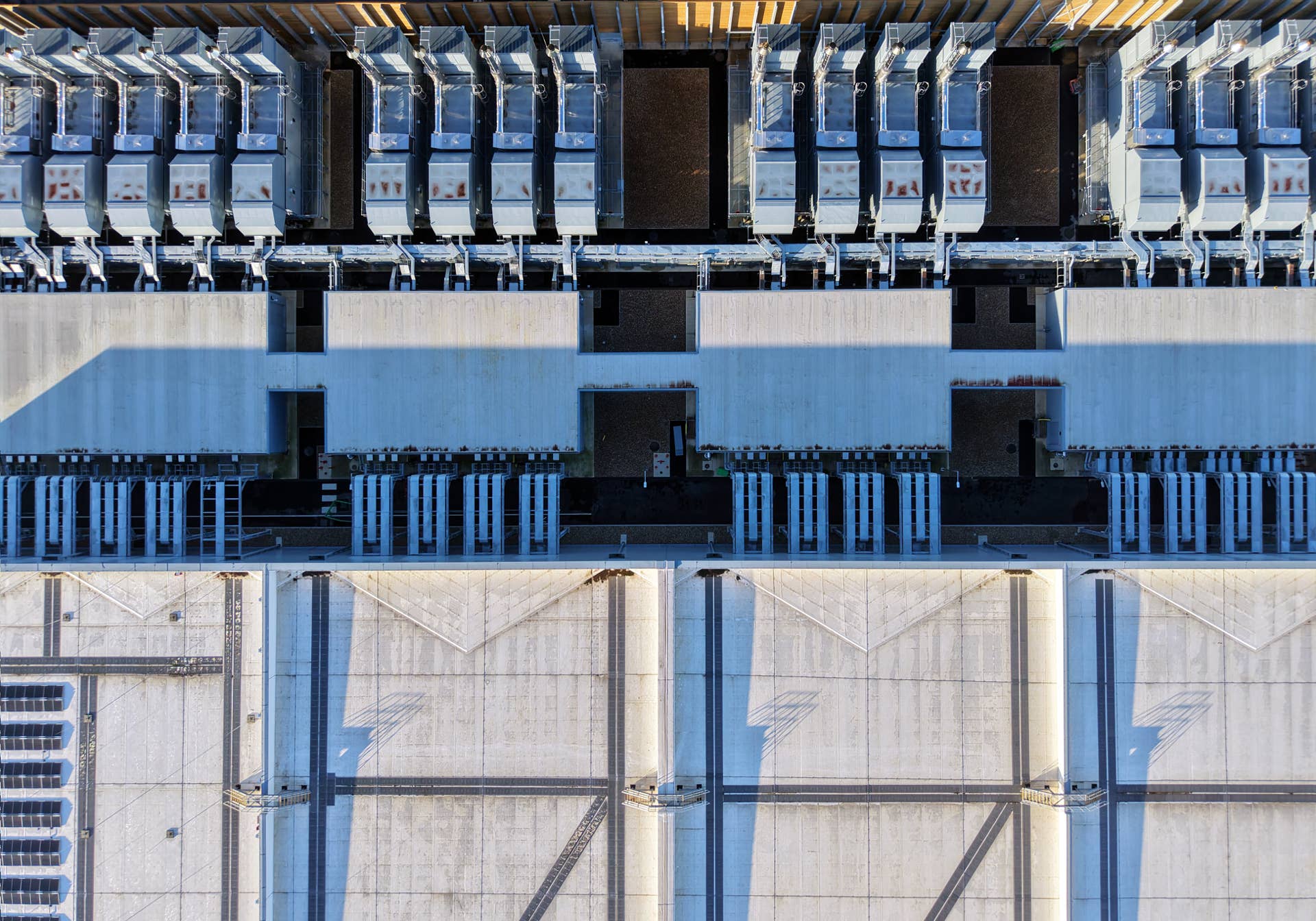 FERC ordered six grid operators to justify or rewrite data center interconnection rules within 60 days.
Richard Newstead &sol Getty Images
AI's power demand forced Washington's hand
Energy Secretary Chris Wright directed FERC to take up large-load interconnection reform in October 2025, arguing that AI and manufacturing growth required faster federal action.
Data centers already account for about 5% of total U.S. electricity demand, according to the Electric Power Research Institute.
In Virginia, home to the world's densest concentration of data center capacity, that share already tops 25% and is on track to approach 40% by 2030, according to an Associated Press analysis.
That demand is not abstract. Amazon, Microsoft, Alphabet, and Meta have been the primary drivers of the data-center buildout straining regional grids, even though none of them is the named subject of this week's orders.
In other words, the orders are about the pipes, not the tenants, but the tenants are the reason the pipes are under pressure.
Related: OpenAI admits enterprises need better control over AI costs
A few names outside the big companies are positioned to also gain from faster interconnection timelines, separate from any exposure to the hyperscalers driving demand.
Talen Energy (TLN) already supplies a data-center campus and sells power from its Susquehanna nuclear plant directly to an Amazon data center under a long-term contract.
It stands to benefit as PJM works out the same cost allocation rules that forced Talen to restructure that deal once before, Utility Dive reported.
Constellation Energy (CEG) operates the largest nuclear fleet in the country, almost entirely inside PJM's footprint, and has already signed deals to supply data center customers directly from existing plants.
It stands to gain from any rule that speeds large load connections without needing to build anything new.
Utility and data-center ETFs face two different stories
The utilities Select Sector SPDR Fund (XLU) gives investors broad exposure to regulated electric and gas utilities, several of which sit inside the six grid regions named last week.
Utilities in that fund stand to gain new infrastructure investment tied to large-load buildouts, but they also inherit the cost-recovery uncertainty FERC just punted to the regional level.
More targeted vehicles tell a sharper story. The Global X Data Center & Digital Infrastructure (DTCR), and Pacer Data and Infrastructure Real Estate (SRVR), track the physical infrastructure layer, power, cooling, and real estate, on which data centers directly depend.
Those funds react more to interconnection speed than to utility rate cases, which is the opposite exposure from XLU.
The real fight is over who controls the wires
FERC has historically regulated transmission, the high-voltage lines between generators and local grids. Load interconnection, how end users actually plug in, has traditionally been a state and local matter.
This week's orders push federal authority further into that space without claiming it outright, a deliberate choice that Nvidia's public statement on the orders praised as a national framework rather than a single mandate.
That precedent will outlive this particular fight over data centers. Whatever framework each region settles on becomes the template the next large-load industry points to, whether that's EV charging networks, hydrogen production, or reshored manufacturing.
FERC has not just acted on AI power demand. It has set the terms for how Washington intervenes the next time any industry outgrows the grid built for a different era.
That ambiguity is the story that outlasts this news cycle. Six regions will now write six different answers to the same question: who pays when the grid expands to feed AI demand.
Wall Street is not pricing a verdict on the AI buildout itself. It is pricing the unresolved fight over who absorbs the bill.
Related: Goldman Sachs issues warning on AI’s surging power demand


Ayrıca Şunları da Beğenebilirsiniz

Not a loophole: Singapore AI export controls let China tap US AI legally

CME Group to launch Solana and XRP futures options in October

Why Ethereum Took a Bigger Hit Than Bitcoin After Trump’s Iran “Stone Ages” Speech


Popüler Haberler
Daha fazla
