

SHIB vs Dogecoin: Which Meme Coin Will Dominate the Next Cycle?
The competition between meme coins is once again gaining attention as the crypto market prepares for its next potential cycle. Among the leading contenders, Shiba Inu (SHIB) and Dogecoin (DOGE) remain the most closely watched assets. Both tokens have built strong communities, achieved massive market caps, and demonstrated the ability to generate explosive rallies during bullish phases.
However, as market conditions evolve, traders are now asking a key question: which meme coin is better positioned to dominate the next cycle?
Market Structure Comparison
From a technical standpoint, both SHIB and DOGE are currently in consolidation phases following previous market corrections. However, their price structures reveal subtle but important differences.
Dogecoin tends to follow a simpler trend-based structure, closely tracking broader market movements led by Bitcoin. In contrast, Shiba Inu often exhibits higher volatility, driven by ecosystem developments and speculative activity.
SHIB’s multi-token ecosystem and DeFi integrations create more internal catalysts, while DOGE relies more on external sentiment and market momentum.
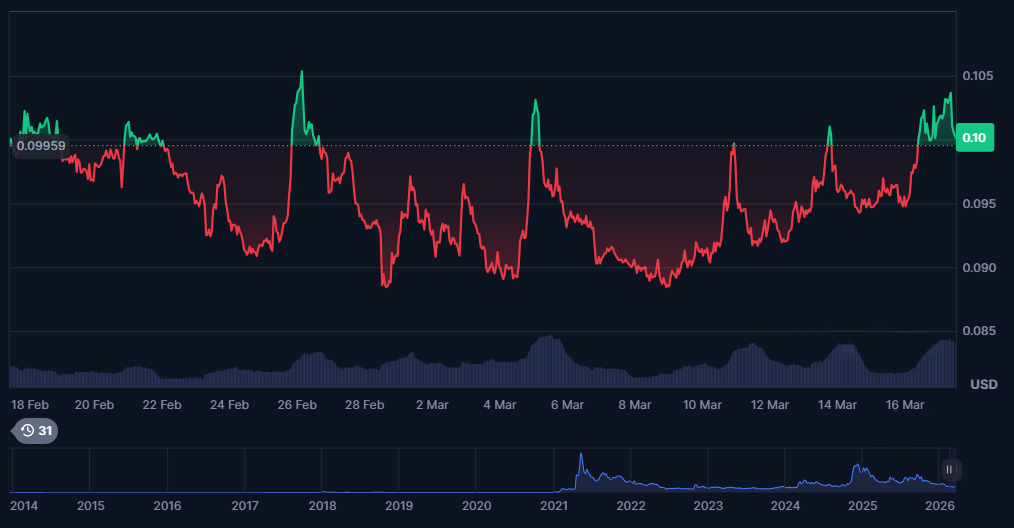
Technical Analysis: Dogecoin (DOGE)
Dogecoin remains one of the most liquid meme coins in the market, which makes its technical levels more reliable.
Key Support Levels
- $0.09: Immediate support zone
- $0.085: Strong historical demand
- $0.075: Major breakdown level
Key Resistance Levels
- $0.105–$0.11: Short-term resistance
- $0.12: Mid-range barrier
- $0.14: Macro resistance
DOGE’s Relative Strength Index (RSI) is currently neutral, suggesting the market is waiting for a catalyst. Price action near moving averages indicates consolidation, with potential for a breakout if volume increases.
Technical Analysis: Shiba Inu (SHIB)
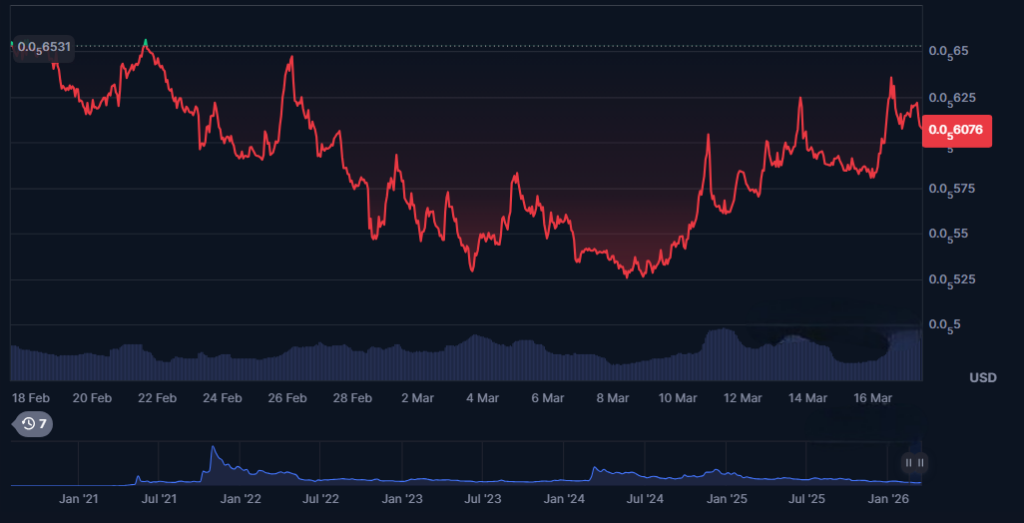
Shiba Inu presents a slightly different technical setup, often showing sharper price movements due to lower liquidity compared to DOGE.
Key Support Levels
- $0.000022: Immediate support
- $0.000020: Strong accumulation zone
- $0.000018: Major downside support
Key Resistance Levels
- $0.000025: Short-term resistance
- $0.000028: Key breakout level
- $0.000032: Major bullish target
SHIB’s technical indicators suggest higher volatility, with potential for rapid upside if resistance levels are broken. However, this also increases downside risk during market corrections.
Key Reasons Influencing the Next Cycle
1. Utility vs Simplicity
Shiba Inu has expanded its ecosystem with DeFi features, NFT integrations, and layer-2 developments such as Shibarium. This gives SHIB a utility-driven growth narrative.
Dogecoin, on the other hand, remains a simpler asset focused on payments and community engagement. While it lacks complex infrastructure, its simplicity contributes to broader adoption.
2. Community Strength and Social Influence
Both tokens benefit from strong communities, but Dogecoin has a unique advantage due to endorsements from figures like Elon Musk.
Historically, social media influence has triggered rapid DOGE price spikes. However, SHIB’s community-driven development model has also created sustained engagement.
3. Market Liquidity and Institutional Interest
Dogecoin generally has higher liquidity and is more widely listed across exchanges, making it more attractive for larger traders.
SHIB, while still highly liquid, tends to attract more retail-driven speculative flows. This can result in faster rallies but also sharper corrections.
Recent Market Trends and News
Recent developments suggest that meme coins may benefit from renewed retail interest if the broader crypto market enters a bullish phase.
At the same time, institutional capital continues to focus primarily on major assets like Bitcoin and Ethereum, meaning meme coins remain largely sentiment-driven markets.
Additionally, growing interest in Web3 ecosystems and token utility may favor projects that offer more than speculative value—potentially giving SHIB an edge in narrative-driven cycles.
Bullish Scenarios
Dogecoin Bull Case
- Break above $0.11 resistance
- Increased social media momentum
- Strong Bitcoin rally driving capital into altcoins
Shiba Inu Bull Case
- Break above $0.000028 resistance
- Break above $0.000028 resistance
- Increased demand for utility-based tokens
Bearish Risks
Both assets share common risks:
- Broader crypto market downturn
- Reduced retail participation
- Declining trading volume
- Loss of key support levels
Due to their speculative nature, meme coins are typically more vulnerable to rapid price swings.
Final Verdict: Which Will Dominate?
The answer depends on market conditions and investor behavior.
- Dogecoin may dominate in a liquidity-driven rally fueled by strong market momentum and social hype.
- Shiba Inu could outperform if the next cycle favors utility, ecosystem growth, and narrative-driven adoption.
In reality, both assets may thrive under different conditions. Traders should monitor key technical levels, market sentiment, and broader crypto trends to identify which meme coin gains the upper hand.
For now, the battle between SHIB and DOGE remains open—making the next crypto cycle a critical test for both projects.


Ayrıca Şunları da Beğenebilirsiniz
Fake Promises and Fraud: Inside the Mosciun NFT Scam That Cost Holders $4 Million

Dogecoin and Hyperliquid Are Heating Up — But This New Project Might Be the One to Watch




