

The new standard of travel dining: Why Brick Lane’s airport presence matters
In the world of retail and food service, few locations carry as much prestige as a major international gateway. The Mactan-Cebu International Airport (MCIA) is not merely a transit point; it is a curated showcase of the best a region has to offer. For a brand to be offered a prominent space within this hub, it must move past being a “local favorite” and enter the realm of a trusted institution.
Brick Lane’s expansion into MCIA is a definitive “seal of approval.” Airport authorities and developers look for brands that offer more than just sustenance; they seek operational reliability, consistent quality, and a brand identity that resonates with a global audience. By securing this position, Brick Lane has proven that its artisan roots can scale to meet the rigorous demands of high-traffic, international-standard environments. For the traveler, seeing Brick Lane at the terminal is a promise of quality — a familiar “slice of joy” before a long journey or a final, premium taste of Cebu before heading home.
The Genesis: A Global Perspective on Local Gaps
In 2019, a small, vibrant storefront on Brick Lane, East London, marked the humble beginnings of a journey that would ultimately bridge culinary cultures across continents. But for Allen Andre B. Suarez, the founder of Brick Lane Bakery and Cafe, this story began long before he opened the first door of his business. It began with a question he couldn’t ignore.
Andre’s travels had taken him to some of the most iconic culinary capitals of the world: New York, Paris, Tokyo, and London. Everywhere he went, he couldn’t help but notice one striking thing. While the global doughnut scene was evolving into something extraordinary, back home in the Philippines, the doughnut was still largely defined by its simplicity — sugar-coated, airy, and mass-produced. This was not the rich, textured experience he had witnessed in these cities. It was the difference between fast food and fine dining.
It was in the streets of East London that Andre first encountered the London-style filled doughnut, and it felt like a revelation. Here, in the heart of one of the world’s most eclectic neighborhoods, he found the perfect fusion of craftsmanship, authenticity, and indulgence. These doughnuts were unlike anything he had ever seen — dense yet soft, artisan-made, and generously filled with rich creams that had the power to transport you. Every bite was a testament to time and care, and it was a stark contrast to the hollow, mass-produced rings that defined the doughnut back home.
Andre stood in awe, asking himself, “Why don’t we have something like this in the Philippines?”
His mind raced. Could something so simple, yet so rich in experience, be possible back home in the Philippines? Could he introduce this “London-style” filled doughnut to a market that was used to quick, convenient, but often uninspired versions of the beloved treat?
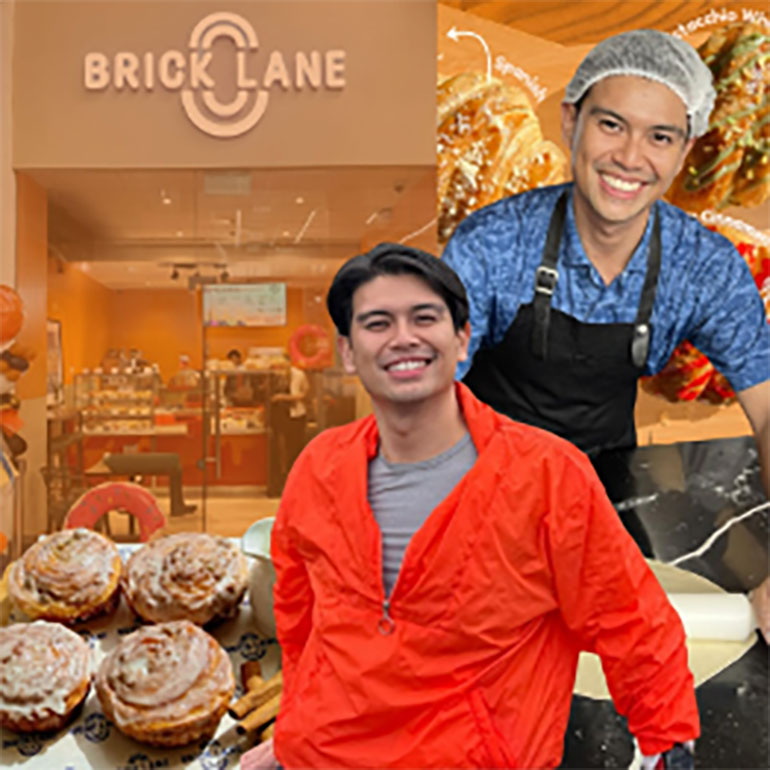 Thus, the vision for Brick Lane Bakery and Cafe was born.
In the first few months of planning, Andre didn’t just focus on recipes or marketing. He immersed himself in the philosophy of food. He asked himself, “What is the experience I want to offer?” The answer was clear: quality, craftsmanship, and authenticity. He didn’t want to create another doughnut brand that just catered to quick fixes. He wanted to create something that would resonate with people on a deeper level.
And so, he set out to introduce a premium, filled doughnut to the Filipino market — a doughnut that wasn’t just a treat but a whole experience. It would be made with the same care and attention to detail he had witnessed in London. The doughnuts would be crafted from high-quality ingredients, filled generously with rich creams that were meant to be savored slowly. There would be no shortcuts, no mass production. Every doughnut would be a masterpiece, handmade with pride.
The journey wasn’t easy. Andre faced challenges that tested his commitment to the vision. The concept of premium, artisan doughnuts was unfamiliar to the Filipino market, which was used to more affordable, mass-produced options. At first, people were skeptical. The price point was higher than the usual doughnuts, and many questioned why they should pay more for something that seemed similar to what they already knew.
But Andre was determined. He believed that once people experienced the difference, they would understand. Slowly but surely, the brand began to carve a niche for itself. Customers who had initially dismissed the doughnuts as “too fancy” began to return. They came back not just for the taste but for the experience — the soft, dense texture, the smooth, rich filling, the feeling of indulgence in every bite. Word-of-mouth spread, and more and more Filipinos began to appreciate the value of quality over convenience.
As the business grew, Andre never lost sight of the foundation upon which it was built: the question he asked himself on Brick Lane, “Why don’t we have something like this back home?” That question had sparked not just a business but a movement. Brick Lane wasn’t just about doughnuts; it was about creating a new standard — a standard where food was treated with respect, where quality was prioritized over speed, and where every bite told a story.
The Brick Lane Bakery and Café wasn’t just a product; it was the embodiment of Andre’s belief that even the smallest gaps, when recognized and thoughtfully filled, can lead to the most rewarding journeys.
And it all started with one question: Why don’t we have something like this back home?
The Architecture of Innovation: Beyond the Traditional Bakery
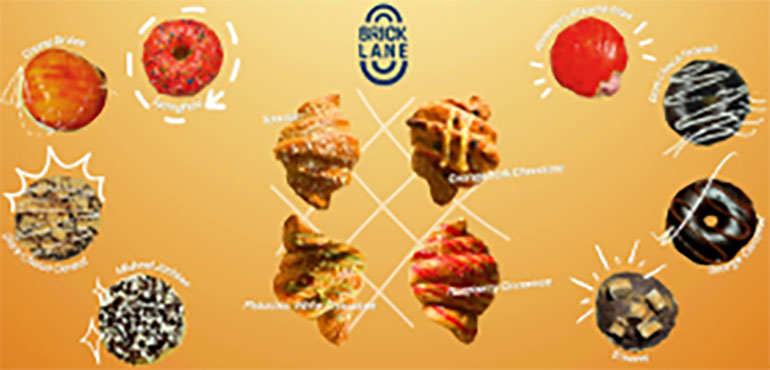 At the heart of Brick Lane’s success is a refusal to stay static. The brand has become synonymous with culinary innovation, constantly blurring the lines between different pastry traditions to create something entirely new.
The Signature Hybrids
Brick Lane introduced a new vocabulary to the local bakery scene with products that are now household names among its loyal following:
- The Brissant: A masterful fusion of the flaky, laminated layers of a croissant with the rich, buttery heart of a brioche. It represents the brand’s technical ability to manipulate dough into textures that surprise the palate.
- The Cinnacro: A sweet, comforting creation that reimagines classic comfort flavors through a modern, artisan lens.
- The London-Style Doughnut: The “hero” product that started it all. By focusing on the “filled” aspect, Brick Lane transformed the doughnut from a simple snack into a gourmet dessert experience.
Innovation at Brick Lane is not just about the dough. The brand understands that the modern consumer seeks a complete sensory experience. This led to the creation of the Signature Fizz line. With flavors like Green Apple, Strawberry, and Passion Fruit, these drinks provide a bright, effervescent contrast to the rich, buttery profiles of the pastries, creating a balanced pairing that encourages customers to linger and enjoy the “cafe experience.”
A Culture of Surprise: The “Discovery” Philosophy
One of the most compelling aspects of Brick Lane is its commitment to the “Element of Surprise.” The brand operates under a “Discovery” philosophy, ensuring that the menu never feels stagnant. For a brand that started with a “Doughnut Discovery Workshop,” the spirit of experimentation is baked into its DNA.
This approach keeps the brand relevant in the fast-paced digital economy. Through platforms like TikTok, Instagram, and Facebook, Brick Lane captures the attention of food enthusiasts by showcasing new flavors, seasonal launches, and “Instagrammable” moments. Customers don’t just go to Brick Lane for a meal; they go to see “what’s new.”
Whether it is a limited-edition flavor inspired by Cebuano heritage (like Otap or Rosquillos) or a new London-inspired treat, there is always a reason to return. This strategy has turned casual buyers into “brand hunters” who actively follow social media updates to catch the latest batch of innovations.
Conclusion: A Slice of Joy, Globally Recognized
Today, Brick Lane Bakery and Cafe stands at the intersection of tradition and transformation. It remains rooted in the artisan craft discovered on the streets of London, yet it is forward-looking, constantly pushing the boundaries of what a Philippine bakery can be.
By securing its place in high-stakes environments like the airport and maintaining a relentless pace of innovation, Brick Lane has transitioned from a “simple idea” into a globally recognized brand. It serves as a reminder to entrepreneurs and consumers alike that when a business is built on curiosity, passion, and the courage to introduce something new, it doesn’t just enter a market, it leads it.
As travelers walk through the terminals of Mactan-Cebu or locals visit the buzzing hubs of Vibo Place, they find more than just bread and coffee. They find a story of discovery, a commitment to quality, and an ever-evolving world of flavor that continues to surprise and satisfy at every turn.
Connect with Brick Lane Bakery and Cafe
Facebook
https://www.facebook.com/brick.lane.ph
Instagram
www.instagram.com/bricklaneph
Tiktok
https://www.tiktok.com/@bricklane.ph
Website
www.bricklaneph.com
Email
[email protected]
Spotlight is BusinessWorld’s sponsored section that allows advertisers to amplify their brand and connect with BusinessWorld’s audience by publishing their stories on the BusinessWorld Web site. For more information, send an email to [email protected].
Join us on Viber at https://bit.ly/3hv6bLA to get more updates and subscribe to BusinessWorld’s titles and get exclusive content through www.bworld-x.com.
You May Also Like

DBS Tests Repo With Ripple RLUSD and Franklin sgBENJI

Pepeto Attracts Capital As Early Shiba Inu And Pepe Investors Hunt Big Gains And The Next 100x Story
