Strait of Hormuz Crisis: EU Weighs Critical Naval Response as Oil Prices Surge
BitcoinWorld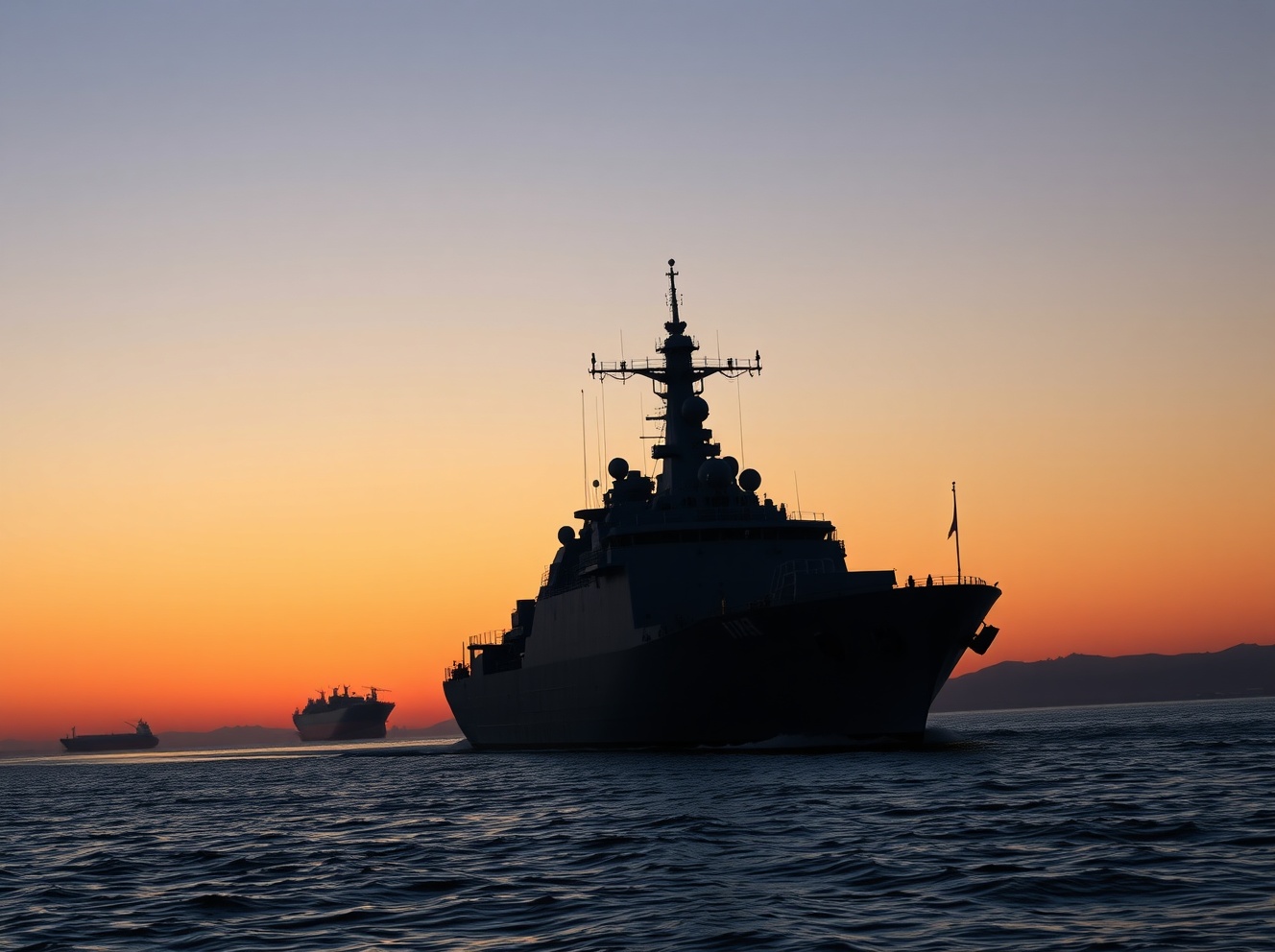
Strait of Hormuz Crisis: EU Weighs Critical Naval Response as Oil Prices Surge
BRUSSELS, March 2025 – The European Union is actively considering a significant naval deployment to the Strait of Hormuz following a series of disruptive incidents that have sent global oil prices soaring. This strategic chokepoint, through which approximately 21% of the world’s petroleum liquids pass, faces renewed instability. Consequently, benchmark Brent crude futures have surged past key resistance levels, triggering alarm across energy markets and European capitals. The potential EU mission represents a pivotal moment for the bloc’s common security and defense policy, testing its ability to project stability and protect critical economic interests far from its shores.
Strait of Hormuz Disruption Triggers Global Energy Alarm
Recent weeks have witnessed a dangerous escalation in the vital Strait of Hormuz. A combination of reported maritime harassment, suspicious vessel approaches, and ambiguous security incidents has severely disrupted shipping traffic. The strait, a narrow passage between Oman and Iran, is only 21 nautical miles wide at its narrowest point. Therefore, any interference creates immediate logistical bottlenecks. Tanker tracking data shows a measurable decrease in transit speeds and increased insurance premiums, known as war risk premiums, for vessels navigating the area. This disruption directly impacts global supply chains. For instance, Europe sources a substantial portion of its crude oil and liquefied natural gas (LNG) via this route. Analysts from the International Energy Agency (IEA) note that even temporary closures or significant delays can remove millions of barrels per day from the market, creating immediate price shocks.
The immediate market reaction has been sharp and volatile. Brent crude oil, the international benchmark, experienced its largest single-week gain this year. Prices breached the $95-per-barrel mark, a level not sustained since the peak of the 2022 energy crisis. Furthermore, this price spike has a cascading effect on refined products like diesel and gasoline, increasing costs for transportation and industry globally. Market experts reference historical precedents, such as the 2019 tanker attacks and the 2021-2022 energy crunch, to model potential outcomes. The current situation, however, unfolds within a uniquely tense regional geopolitical framework and a global economy still sensitive to inflationary pressures.
Expert Analysis: The Ripple Effects on Global Markets
Dr. Lena Schmidt, a senior fellow at the Center for European Policy Analysis, explains the broader implications. “The Strait of Hormuz is not just a Middle Eastern issue; it is a global economic artery,” she states. “A sustained disruption forces a rapid recalculation of energy logistics. European refineries configured for specific crude grades from the Gulf must seek alternatives, often at higher cost and with longer shipping times. This inefficiency gets priced into every barrel.” Schmidt’s research indicates that a 15% reduction in flows through the strait could add $10-15 to the price of a barrel of oil within a month. This scenario pressures central banks worldwide, complicating monetary policy aimed at controlling inflation.
EU Naval Response: A Test of Strategic Autonomy
In response to the growing crisis, EU foreign and defense ministers held an emergency meeting. The agenda centered on a proposed maritime awareness mission in the Strait of Hormuz. This mission would differ from past unilateral actions by member states. Instead, it would operate under an EU flag, coordinated by the European External Action Service (EEAS). The primary stated objectives are threefold: to ensure freedom of navigation, to de-escalate regional tensions through presence, and to safeguard European energy security. Diplomats emphasize the mission would be defensive and observational, focusing on situational awareness and escort coordination rather than offensive capabilities. However, the political symbolism of a unified EU naval force in such a contested region is profound.
The operational plan likely involves assets from several member states with significant naval power. France, Italy, Greece, and Germany possess the necessary frigate and destroyer capabilities for such an operation. The mission would potentially operate in coordination with, but distinct from, existing US-led task forces in the region, such as the Combined Maritime Forces (CMF). This distinction is politically crucial for the EU, which seeks to demonstrate its “strategic autonomy”—the ability to act independently in defense of its interests. A successful deployment could mark a major step in the evolution of the EU’s Common Security and Defence Policy (CSDP). Conversely, operational challenges or a further escalation could expose divisions within the bloc.
Key considerations for the EU mission include:
- Legal Mandate: Securing a clear United Nations Security Council resolution or invoking the right of collective self-defense under international maritime law.
- Rules of Engagement (ROE): Defining precise, robust, yet proportionate ROE to avoid accidental conflict.
- Regional Diplomacy: Engaging with Gulf Cooperation Council (GCC) states, Oman, and Iran to explain the mission’s non-confrontational purpose.
- Burden-Sharing: Ensuring equitable contributions of ships, personnel, and funding from member states.
Historical Context and Regional Dynamics
The current tensions did not emerge in a vacuum. The Strait of Hormuz has been a flashpoint for decades. Iran has repeatedly threatened to close the strait in response to international sanctions or perceived threats. Past incidents include the 1980s “Tanker War,” the seizure of British-flagged tanker Stena Impero in 2019, and numerous attacks on commercial shipping attributed to Iranian proxies. The regional power balance is further complicated by ongoing negotiations regarding Iran’s nuclear program, internal political dynamics within Iran, and the complex relationships between Gulf Arab states. Any EU military presence adds a new variable to this already volatile equation. Regional actors will scrutinize the mission’s composition, patrol patterns, and communications for signals about European alignment.
The Energy Security Calculus for Europe
Europe’s vulnerability stems from its continued, though reduced, dependence on seaborne hydrocarbons from the Persian Gulf. Despite aggressive pushes for renewables and LNG diversification since 2022, certain EU economies remain reliant on specific crude grades for their industrial and chemical sectors. The table below illustrates the shift in EU oil imports but highlights remaining dependencies:
| Region of Origin | Share of EU Oil Imports (2022) | Share of EU Oil Imports (2024 Est.) | Primary Transport Route |
|---|---|---|---|
| Russia | ~25% | <5% | Pipeline/Druzhba, Baltic Sea |
| Middle East (Gulf) | ~20% | ~15% | Strait of Hormuz, Suez Canal |
| United States | ~12% | ~22% | Transatlantic |
| Norway & North Sea | ~15% | ~18% | North Sea |
| Africa (Nigeria, Angola) | ~10% | ~12% | West Africa Route |
As shown, while dependence on the Gulf has decreased, it remains a critical and hard-to-replace supply source. A naval mission, therefore, is viewed in Brussels not merely as a military operation but as an economic safeguard. It aims to provide confidence to shipping companies and insurers, thereby helping to stabilize the physical flow of oil and the financial mechanisms that underpin it.
Conclusion
The unfolding Strait of Hormuz disruption presents a multifaceted challenge, intertwining energy security, geopolitical strategy, and market stability. The European Union’s potential naval response signifies a decisive move toward operationalizing its strategic autonomy in a high-stakes theater. While the mission aims to calm markets and secure shipping lanes, its success hinges on nuanced diplomacy, clear operational parameters, and unwavering unity among member states. The coming weeks will determine whether this crisis becomes a catalyst for a more robust EU global security role or a reminder of the enduring fragility of the world’s most critical energy chokepoint. The outcome will resonate far beyond the waters of the Gulf, influencing global oil prices, diplomatic alignments, and the future of European defense integration.
FAQs
Q1: Why is the Strait of Hormuz so important for global oil supplies?
The Strait of Hormuz is the world’s most important oil transit chokepoint. On average, 21 million barrels of oil per day—about 21% of global petroleum liquid consumption—pass through it. Major producers like Saudi Arabia, Iraq, the UAE, Kuwait, and Qatar rely almost exclusively on this route to export their crude to markets in Asia, Europe, and beyond.
Q2: What exactly would an EU naval mission in the Strait of Hormuz do?
The proposed EU Maritime Awareness Mission would likely focus on surveillance, information gathering, and escort coordination for commercial vessels. Its role would be to enhance situational awareness for all ships, help de-escalate incidents through presence, and facilitate communication between commercial shippers and regional authorities. It is envisioned as a defensive, stability-focused operation.
Q3: How do disruptions in the Strait directly affect oil prices?
Disruptions cause immediate physical bottlenecks, delaying tanker deliveries. This creates uncertainty about supply availability. Markets react by pricing in a “risk premium.” Additionally, shipping insurance costs (war risk premiums) skyrocket, adding to the final cost of the oil. Traders anticipating tighter future supplies bid up prices, causing the rapid surges seen in futures markets.
Q4: Has the EU undertaken similar naval operations before?
Yes, but not in the Persian Gulf. The EU has conducted several naval missions under its Common Security and Defence Policy (CSDP). Notable examples include Operation ATALANTA, which combats piracy off the coast of Somalia in the Indian Ocean, and Operation IRINI, which enforces the UN arms embargo on Libya in the Mediterranean Sea. A Hormuz mission would be its most complex and geopolitically sensitive undertaking to date.
Q5: Could this crisis accelerate Europe’s transition away from fossil fuels?
Analysts believe repeated energy shocks strengthen the long-term economic and strategic argument for energy independence through renewables, nuclear power, and hydrogen. While the immediate response focuses on securing existing supplies, such crises invariably add political momentum and public support for the European Green Deal and initiatives like RePowerEU, which aim to drastically reduce dependence on imported fossil fuels.
This post Strait of Hormuz Crisis: EU Weighs Critical Naval Response as Oil Prices Surge first appeared on BitcoinWorld.
You May Also Like

Ethereum unveils roadmap focusing on scaling, interoperability, and security at Japan Dev Conference

Spot Demand Rises as Bull Flag Breaks