

Bhutan’s Bitcoin holdings account for one-third of its GDP. Could Bitcoin become the new favorite reserve asset of global countries?
Author: Nancy, PANews
With a population of only 800,000, Bhutan owns over 12,000 bitcoins. This small country located in the southern foothills of the Himalayas has attracted global attention with its bold bitcoin betting strategy.
As Bitcoin enters a new upward cycle, national Bitcoin “pixiu” such as Bhutan are reaping rich rewards. At the same time, as major economies such as the United States gradually turn positive and open to Bitcoin, it is expected that more countries will list Bitcoin as a national reserve asset in the future.
The holding scale exceeds 1.1 billion US dollars, and it was involved in Bitcoin mining many years ago
Bhutan is rapidly accumulating wealth through its Bitcoin mining business and becoming a major player in the crypto market.
According to Arkham data, the Bhutanese government mines through multiple mining pools such as AntPool, Braiins and Foundry. As of November 13, the Royal Government of Bhutan held 12,576 bitcoins, worth more than $1.1 billion. In terms of the known size of government holdings, Bhutan is the fourth largest holder after the United States, China and the United Kingdom.
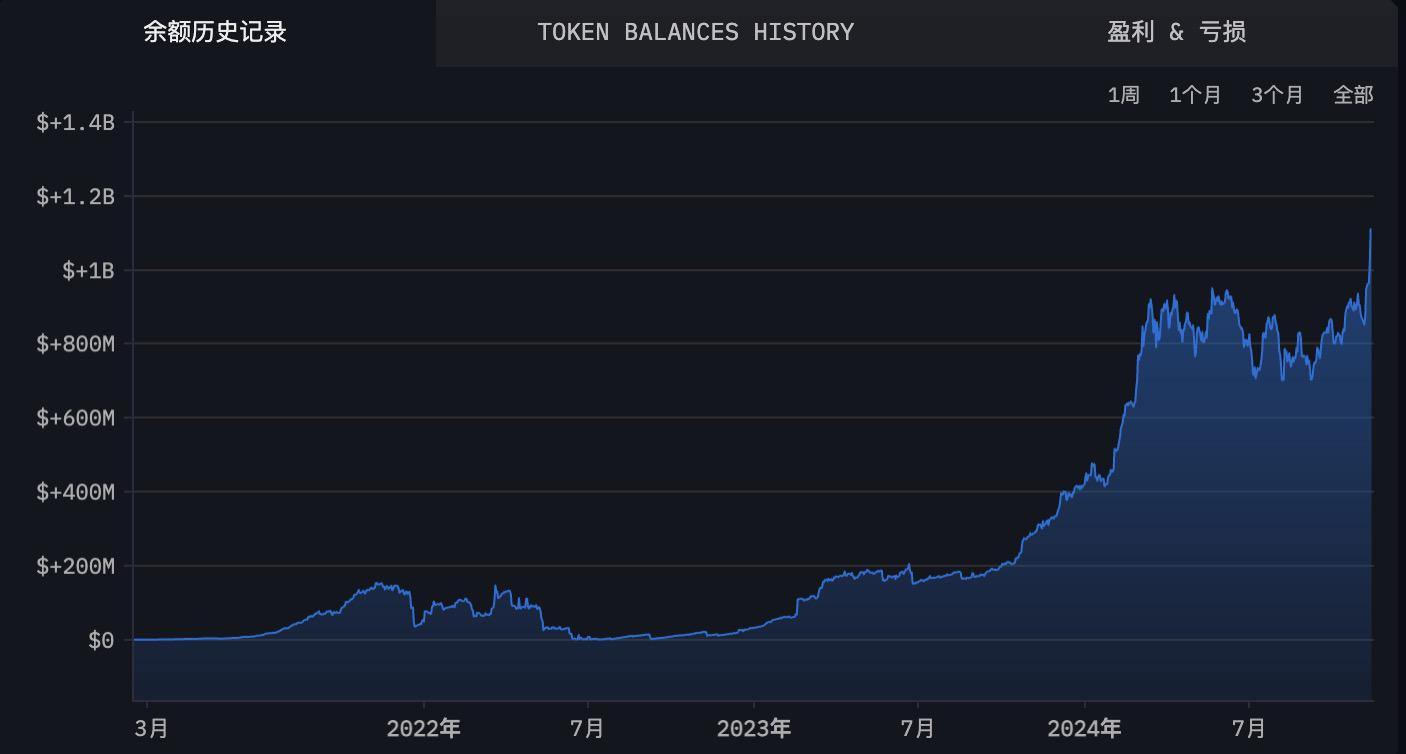
This holding is quite astonishing. If calculated based on Bhutan's GDP of $2.89 billion in 2022, the value of its Bitcoin holdings is more than one-third of the country's GDP. In contrast, for example, El Salvador (population 6.4 million) holds $500 million in Bitcoin, which accounts for less than 1.5% of its 2023 GDP of $34.02 billion.
Unlike most governments that obtain Bitcoin through asset seizures, Bhutan's Bitcoin comes from its active participation in Bitcoin mining. PANews previously reported that Bhutan has one of the world's largest hydropower and water resource reserves, which creates a unique and significant advantage for its participation in Bitcoin mining. Bhutan is an "early entrant" and has been vigorously deploying Bitcoin mining for several years. Its government representative once revealed that Bhutan began mining Bitcoin "a few years ago as one of the early entrants when the price of Bitcoin was about $5,000."
In 2023, Bhutan's investment arm Druk Holding & Investments teamed up with listed mining company BitDeer to launch a $500 million crypto mining fund, with the goal of using Bhutan's abundant hydropower to build a zero-carbon crypto mining base. The construction of the mining data center is expected to be completed in the third quarter of 2024. Ujjwal Deep Dahal, CEO of Druk Holding & Investments, also explained that mining is the least risky way for Bhutan to participate in the crypto field, and the country will currently focus on Bitcoin mining.
The on-chain data also confirms this. Arkham tracking data shows that Bhutan has been involved in the crypto field since at least February 2021. At that time, Bhutan received its first Bitcoin from AntPool, which was 0.0267 BTC, worth about $1,280 at the time. This may also be Bhutan’s first foray into Bitcoin mining. Since then, Bhutan has begun to regularly transfer some Bitcoin to exchanges, especially since the second half of last year, when Bhutan deposited hundreds or even thousands of Bitcoins into trading platforms almost every month.
In addition to mining, Bhutan has also conducted large-scale financial transactions with multiple crypto platforms. According to public data, the total amount of crypto transactions between Bhutan and BlockFi, Celsius, Hodlnaut and other cryptocurrencies exceeded US$800 million, covering a variety of crypto assets such as Bitcoin, Ethereum and stablecoins.
Bitcoin inclusion in national reserves may become a trend
As the value of Bitcoin continues to rise, more and more countries are beginning to pay attention to and attach importance to this crypto asset. Bhutan and El Salvador are typical examples.
In fact, in the past period of time, many countries around the world have proposed to include Bitcoin in national reserve assets. For example, Trump, the elected US president, has promised to list Bitcoin as a strategic reserve asset, and Trump's inauguration and the crypto-friendly US political arena have greatly increased the possibility of realizing this idea; Venezuelan opposition leader María Corina Machado also proposed to establish a national Bitcoin reserve system in the second half of this year, and said that Bitcoin is a "key component" in rebuilding Venezuela's economic and financial system, providing a "lifeline" for the Venezuelan people, enabling them to bypass the government-controlled exchange rate; Hong Kong SAR Legislative Council member Wu Jiezhuang also tweeted a few months ago that Bitcoin and Web3 are important nodes in the development of globalization, and global common development should be encouraged. In the future, under compliance, it is possible to consider including Bitcoin in the strategic fiscal reserves of a country or region. I believe that the SAR government will open the market responsibly and step by step.
It is worth mentioning that the German government lost at least $1.5 billion in profits by selling 50,000 bitcoins this summer. In October, bitcoin supporter Samson Mow was invited to speak at the German Bundestag to discuss issues related to national bitcoin strategy and proposed that Germany should include its bitcoins in its strategic reserves.
Several crypto industry leaders have also made predictions about this trend. For example, Binance founder CZ predicted that many countries will use Bitcoin as a reserve, including other cryptocurrencies; Bitcoin Magazine CEO David Bailey recently disclosed on social media that at least one sovereign country is actively acquiring Bitcoin and has become one of the top five holders; Satoshi Action Fund founder Dennis Porter recently said that he has received calls from five different countries about the issue of Bitcoin strategic reserves, hoping that he would draft regulations to establish strategic Bitcoin reserves. He also emphasized, "Now, the success we have achieved through legislation in the United States can be exported to all parts of the world."
Crypto analyst PlanB pointed out that starting from March 2025, Bhutan, Argentina, Dubai and other countries are expected to gradually use Bitcoin as legal tender, and starting from April, the United States will also start a strategic reserve of Bitcoin under the promotion of Trump. Other countries will follow closely, especially non-EU countries will join this trend.
You May Also Like

The Role of Blockchain in Building Safer Web3 Gaming Ecosystems
- Immutable Ownership of Assets Blockchain records can be manipulated by anyone. If a player owns a sword, skin, or plot of land as an NFT, it is verifiably in their ownership, and it cannot be altered or deleted by the developer or even hacked. This has created a proven track record of ownership, providing control back to the players, unlike any centralised gaming platform where assets can be revoked.
- Decentralized Infrastructure Blockchain networks also have a distributed architecture where game data is stored in a worldwide network of nodes, making them much less susceptible to centralised points of failure and attacks. This decentralised approach makes it exponentially more difficult to hijack systems or even shut off the game’s economy.
- Secure Transactions with Cryptography Whether a player buys an NFT or trades their in-game tokens for other items or tokens, the transactions are enforced by cryptographic algorithms, ensuring secure, verifiable, and irreversible transactions and eliminating the risks of double-spending or fraudulent trades.
- Smart Contract Automation Smart contracts automate the enforcement of game rules and players’ economic exchanges for the developer, eliminating the need for intermediaries or middlemen, and trust for the developer. For example, if a player completes a quest that promises a reward, the smart contract will execute and distribute what was promised.
- Anti-Cheating and Fair Gameplay The naturally transparent nature of blockchain makes it extremely simple for anyone to examine a specific instance of gameplay and verify the economic outcomes from that play. Furthermore, multi-player games that enforce smart contracts on things like loot sharing or win sharing can automate and measure trustlessness and avoid cheating, manipulations, and fraud by developers.
- Cross-Platform Security Many Web3 games feature asset interoperability across platforms. This interoperability is made viable by blockchain, which guarantees ownership is maintained whenever assets transition from one game or marketplace to another, thereby offering protection to players who rely on transfers for security against fraud. Key Security Dangers in Web3 Gaming Although blockchain provides sound first principles of security, the Web3 gaming ecosystem is susceptible to threats. Some of the most serious threats include:

Vitalik Buterin Challenges Ethereum’s Layer 2 Paradigm
