

Must Read
Our democracy teeters on a precarious edge. And yet, amid the decay of democracy, the Catholic Church, which is the moral compass of over 80% of Filipinos, oftenOur democracy teeters on a precarious edge. And yet, amid the decay of democracy, the Catholic Church, which is the moral compass of over 80% of Filipinos, often
[Pastilan] Will the bishops sit idly by again after 40 years?
“I hope we no longer repeat our mistakes in the last four decades. May we remember that, especially in 2028,” Rappler multimedia reporter Dwight de Leon quoted Cardinal Pablo Virgilio David as saying during the 40th anniversary of the 1986 EDSA People Power Revolution. Dwight, in his report, noted that the cardinal addressed the elephant in the room, which is the 2028 presidential election.
David then added: “It is disheartening when we struggle to find the right leaders who will truly fortify our democratic institutions… but we should not give up the dream of EDSA.”
Notice the phrasing. Cardinal David wouldn’t be lamenting the lack of good leaders if he saw those qualities in Vice President Sara Duterte, the only politician yet to declare her 2028 presidential bid. And yet, the cardinal stops short of naming her. Why?
There is another elephant in the room that Cardinal David did not confront: the Catholic Church in the Philippines itself. Once the thunderous moral conscience behind a historic uprising, it has spent 40 years not shepherding the predominantly Catholic country but rubber-stamping mediocrity, standing mute while democracy was mauled again and again by those who should have been held to account.
The late Jaime Cardinal Sin in 1986 named the first Marcos regime as corrupt and tyrannical. He identified the real and continuing threat then, and that was moral clarity, not partisanship. Contrast that with a Church that now prefers the soporific lullaby of ambiguity. It is more content blessing those in power than confronting them. The Church helped give birth to EDSA, and then orphaned it.
Our democracy teeters on a precarious edge. Corruption festers in plain sight, authoritarian tendencies creep into law and governance, and moral rot gnaws at institutions meant to protect the public good. And yet, amid this decay, the Church, which is the moral compass of over 80% of Filipinos, often whispers behind vague pastoral letters and oblique statements.
The separation of Church and State is a principle born of hard-won struggles across centuries against theocratic authority. Its purpose was never to render religious conscience mute, but to prevent the state from imposing faith while leaving moral voice intact. It exists to block theocracy, but not to permit the decay of democracy.
In other words, it protects governments from clerical domination, but it does not forbid the Church from speaking truth to power, from condemning corruption, or from holding rulers accountable when they betray the public good. To confuse institutional neutrality with moral silence is to pervert the very principle meant to safeguard both freedom and conscience.
Silence, ambiguity, and cryptic warnings embolden those who would dismantle democracy. A Church that refuses to name agents of malice – the puwersa ng kasamaaan and puwersa ng kadiliman – becomes a silent accomplice.
It is not enough to hint at wrongdoing or lob moral jabs short of naming names. The Church must call out, without fear or equivocation, those who act as agents of destruction disguised as concerned politicians.
History provides a precedent in Cardinal Sin who did not mince words in the 1980s. He did what needed to be done and said what must be said against the moral rot infecting the Marcos regime, and then played a major role in mobilizing citizens to reclaim the country’s moral and civic center by ousting the dictator.
I understand, as my friend, The Religion Reporter’s Paterno Esmaquel II, notes, the Catholic Bishops’ Conference of the Philippines is not a monolith. Its structure is more like a federation than a single hierarchy. Each bishop governs his own diocese and answers only to the Pope in Rome.
As such, the CBCP cannot compel compliance; it can only coordinate and offer guidance that bishops may choose to follow or ignore.
Not every silence or timid statement reflects the institution as a whole. Some bishops, notes Paterno, have spoken plainly despite the traditional interpretation that Canon law bars priests from taking partisan positions except in extraordinary circumstances. The catch, as Paterno points out, is that their influence is limited to their own dioceses – they do not command the vast territory Cardinal Sin once did.
Paterno also notes that Cardinal Sin’s extraordinary influence and power came from the Archdiocese of Manila, which once spanned the entire Metro Manila and even Rizal. In the Church’s structure, priests follow their bishop. Since the early 2000s, Manila has been divided into six dioceses, dispersing that authority. No bishop today can easily replicate the reach Sin once exercised.
The Church need not endorse candidates in every election, but when democracy itself is threatened, moral clarity demands direct confrontation. Evasive language in such moments is betrayal. The faithful deserve neither hedging nor hesitation.
The Catholic Church in the Philippines is a sleeping giant. It presides over a population so overwhelmingly Catholic that its moral pronouncements carry the power to shape public conscience. To cower behind ambiguous pastoral statements while corruption and authoritarianism advance is both cowardly and self-defeating. Its voice should be a clarion call, and not a whisper muffled by fear.
Moral guidance is not political partisanship. Speaking truth to power is illuminating right and wrong, calling out injustice, exposing corruption and abuse, and identifying exactly those who threaten to bring the country down the gutter.
When leaders and politicians threaten free speech, erode judicial independence, or trample human dignity, the Church must name them. The faithful cannot defend the country’s moral and civic foundations if their spiritual leaders speak in riddles.
Cryptic statements and cautious euphemisms are often cowardice in a cassock. The propagators of decay rely on the Church’s reluctance to call out wrongdoing, assuming fear or institutional caution will temper moral critique.
The Church wields a power far greater than fear: conscience itself. To wield it, it must awaken, shake off its self-imposed silence, navigate its structural challenges, and speak plainly about the threats, and those behind them.
The Church leaders must ask themselves: will they summon their long-dormant power to confront those who threaten the country, or will they remain timid bystanders, offering advice that requires a decoder ring?
Say what you mean. Speak plainly. What is needed is a Church that strikes with moral authority – boldly, clearly, and without apology.
Courage matters, but structural limits bind our Church leaders. We get that. Yet of all people, the bishops should know right from wrong and act without hesitation. If they cannot distinguish between decency and indecency, moral and immoral or “good and evil,” then what use are they to their God and flock?
Navigating these limits is the bishops’ task, but delay risks the country falling apart again. They need to put their act together quickly. The Church’s dormant moral force must move.
The time for whispers has long passed. Pastilan. – Rappler.com
Market Opportunity
Edge Price(EDGE)
$0.09361
$0.09361$0.09361
USD
Edge (EDGE) Live Price Chart
Disclaimer: The articles reposted on this site are sourced from public platforms and are provided for informational purposes only. They do not necessarily reflect the views of MEXC. All rights remain with the original authors. If you believe any content infringes on third-party rights, please contact [email protected] for removal. MEXC makes no guarantees regarding the accuracy, completeness, or timeliness of the content and is not responsible for any actions taken based on the information provided. The content does not constitute financial, legal, or other professional advice, nor should it be considered a recommendation or endorsement by MEXC.
You May Also Like
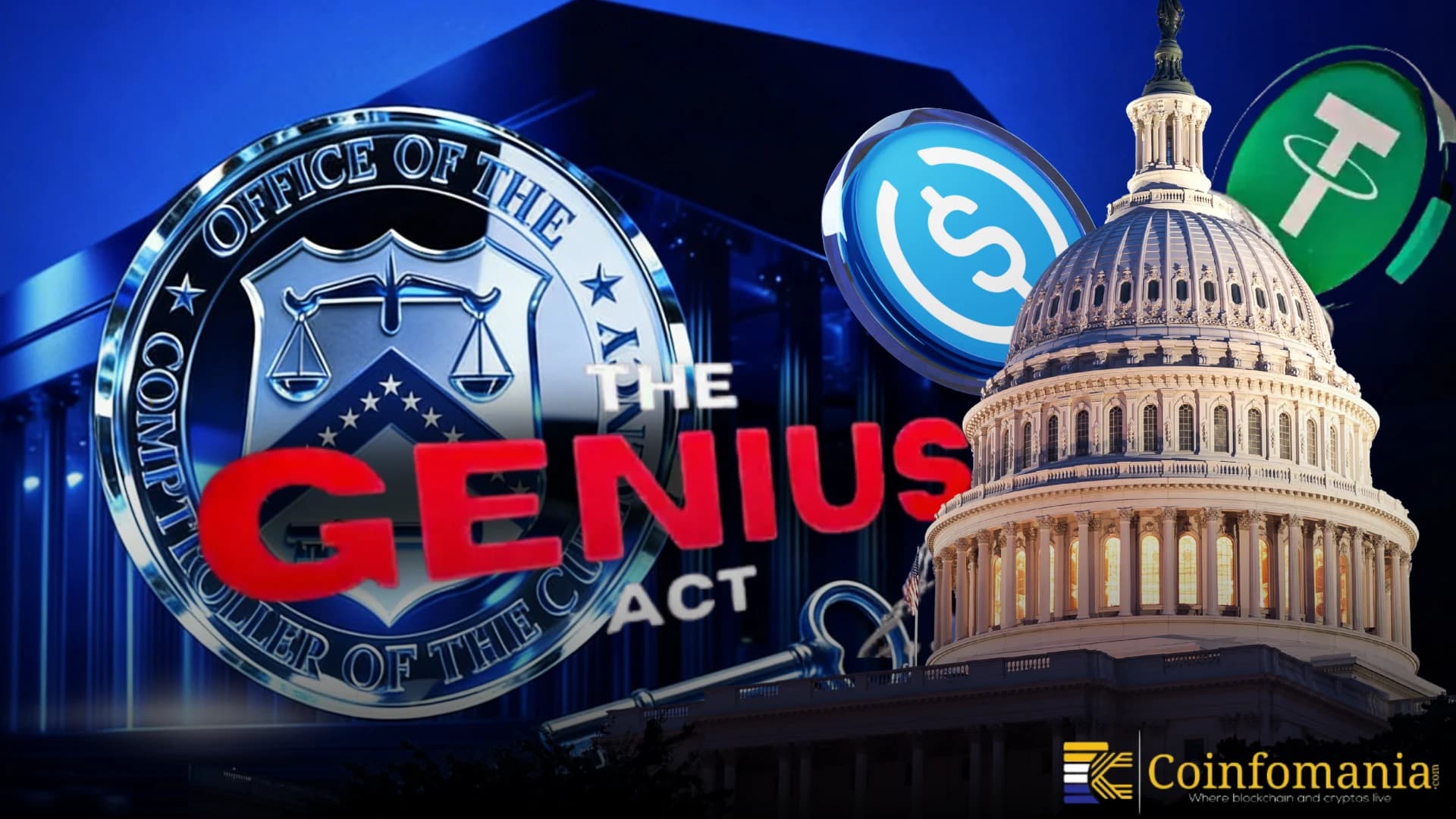
OCC Advances Crypto Oversight Ahead Of 2027 GENIUS Act Rollout
The US banking regulator has taken a major step toward formalizing crypto oversight. The GENIUS Act rulemaking process now begins as regulators seek structured
Share
Coinfomania2026/02/26 18:31

Crucial Fed Rate Cut: October Probability Surges to 94%
BitcoinWorld Crucial Fed Rate Cut: October Probability Surges to 94% The financial world is buzzing with a significant development: the probability of a Fed rate cut in October has just seen a dramatic increase. This isn’t just a minor shift; it’s a monumental change that could ripple through global markets, including the dynamic cryptocurrency space. For anyone tracking economic indicators and their impact on investments, this update from the U.S. interest rate futures market is absolutely crucial. What Just Happened? Unpacking the FOMC Statement’s Impact Following the latest Federal Open Market Committee (FOMC) statement, market sentiment has decisively shifted. Before the announcement, the U.S. interest rate futures market had priced in a 71.6% chance of an October rate cut. However, after the statement, this figure surged to an astounding 94%. This jump indicates that traders and analysts are now overwhelmingly confident that the Federal Reserve will lower interest rates next month. Such a high probability suggests a strong consensus emerging from the Fed’s latest communications and economic outlook. A Fed rate cut typically means cheaper borrowing costs for businesses and consumers, which can stimulate economic activity. But what does this really signify for investors, especially those in the digital asset realm? Why is a Fed Rate Cut So Significant for Markets? When the Federal Reserve adjusts interest rates, it sends powerful signals across the entire financial ecosystem. A rate cut generally implies a more accommodative monetary policy, often enacted to boost economic growth or combat deflationary pressures. Impact on Traditional Markets: Stocks: Lower interest rates can make borrowing cheaper for companies, potentially boosting earnings and making stocks more attractive compared to bonds. Bonds: Existing bonds with higher yields might become more valuable, but new bonds will likely offer lower returns. Dollar Strength: A rate cut can weaken the U.S. dollar, making exports cheaper and potentially benefiting multinational corporations. Potential for Cryptocurrency Markets: The cryptocurrency market, while often seen as uncorrelated, can still react significantly to macro-economic shifts. A Fed rate cut could be interpreted as: Increased Risk Appetite: With traditional investments offering lower returns, investors might seek higher-yielding or more volatile assets like cryptocurrencies. Inflation Hedge Narrative: If rate cuts are perceived as a precursor to inflation, assets like Bitcoin, often dubbed “digital gold,” could gain traction as an inflation hedge. Liquidity Influx: A more accommodative monetary environment generally means more liquidity in the financial system, some of which could flow into digital assets. Looking Ahead: What Could This Mean for Your Portfolio? While the 94% probability for a Fed rate cut in October is compelling, it’s essential to consider the nuances. Market probabilities can shift, and the Fed’s ultimate decision will depend on incoming economic data. Actionable Insights: Stay Informed: Continue to monitor economic reports, inflation data, and future Fed statements. Diversify: A diversified portfolio can help mitigate risks associated with sudden market shifts. Assess Risk Tolerance: Understand how a potential rate cut might affect your specific investments and adjust your strategy accordingly. This increased likelihood of a Fed rate cut presents both opportunities and challenges. It underscores the interconnectedness of traditional finance and the emerging digital asset space. Investors should remain vigilant and prepared for potential volatility. The financial landscape is always evolving, and the significant surge in the probability of an October Fed rate cut is a clear signal of impending change. From stimulating economic growth to potentially fueling interest in digital assets, the implications are vast. Staying informed and strategically positioned will be key as we approach this crucial decision point. The market is now almost certain of a rate cut, and understanding its potential ripple effects is paramount for every investor. Frequently Asked Questions (FAQs) Q1: What is the Federal Open Market Committee (FOMC)? A1: The FOMC is the monetary policymaking body of the Federal Reserve System. It sets the federal funds rate, which influences other interest rates and economic conditions. Q2: How does a Fed rate cut impact the U.S. dollar? A2: A rate cut typically makes the U.S. dollar less attractive to foreign investors seeking higher returns, potentially leading to a weakening of the dollar against other currencies. Q3: Why might a Fed rate cut be good for cryptocurrency? A3: Lower interest rates can reduce the appeal of traditional investments, encouraging investors to seek higher returns in alternative assets like cryptocurrencies. It can also be seen as a sign of increased liquidity or potential inflation, benefiting assets like Bitcoin. Q4: Is a 94% probability a guarantee of a rate cut? A4: While a 94% probability is very high, it is not a guarantee. Market probabilities reflect current sentiment and data, but the Federal Reserve’s final decision will depend on all available economic information leading up to their meeting. Q5: What should investors do in response to this news? A5: Investors should stay informed about economic developments, review their portfolio diversification, and assess their risk tolerance. Consider how potential changes in interest rates might affect different asset classes and adjust strategies as needed. Did you find this analysis helpful? Share this article with your network to keep others informed about the potential impact of the upcoming Fed rate cut and its implications for the financial markets! To learn more about the latest crypto market trends, explore our article on key developments shaping Bitcoin price action. This post Crucial Fed Rate Cut: October Probability Surges to 94% first appeared on BitcoinWorld.
Share
Coinstats2025/09/18 02:25

Vitalik Buterin details ethereum strawmap roadmap for faster slots, finality and quantum-safe upgrades
Examining ethereum strawmap, this piece shows base-layer upgrades could speed finality and strengthen quantum-resistant security by 2029.
Share
The Cryptonomist2026/02/26 17:19