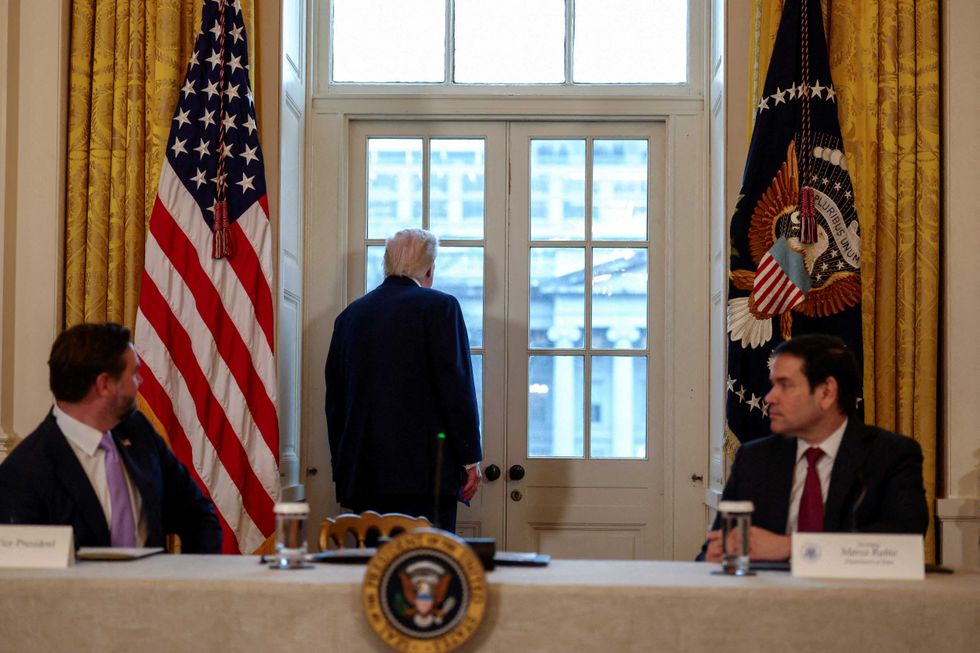
TLDR Polymarket bettors put the odds of a U.S. strike on Iran this month at 61% Bitcoin is trading around $67,400 with key support at $65,000–$65,729 at risk ShortTLDR Polymarket bettors put the odds of a U.S. strike on Iran this month at 61% Bitcoin is trading around $67,400 with key support at $65,000–$65,729 at risk Short

What a U.S.-Iran War Could Mean for Bitcoin and Crypto Prices in 2026

2026/02/21 16:32
3 min read

TLDR

  • Polymarket bettors put the odds of a U.S. strike on Iran this month at 61%
  • Bitcoin is trading around $67,400 with key support at $65,000–$65,729 at risk
  • Short Term Holder SOPR has dropped below 1.0, meaning recent buyers are selling at a loss
  • Analysts warn Bitcoin could fall to $53,000 if a strike triggers further sell-offs
  • Gold and treasuries are expected to benefit while crypto faces more downside pressure

Bitcoin is trading around $67,400 as fears of a U.S. military strike on Iran push investors toward safer assets.
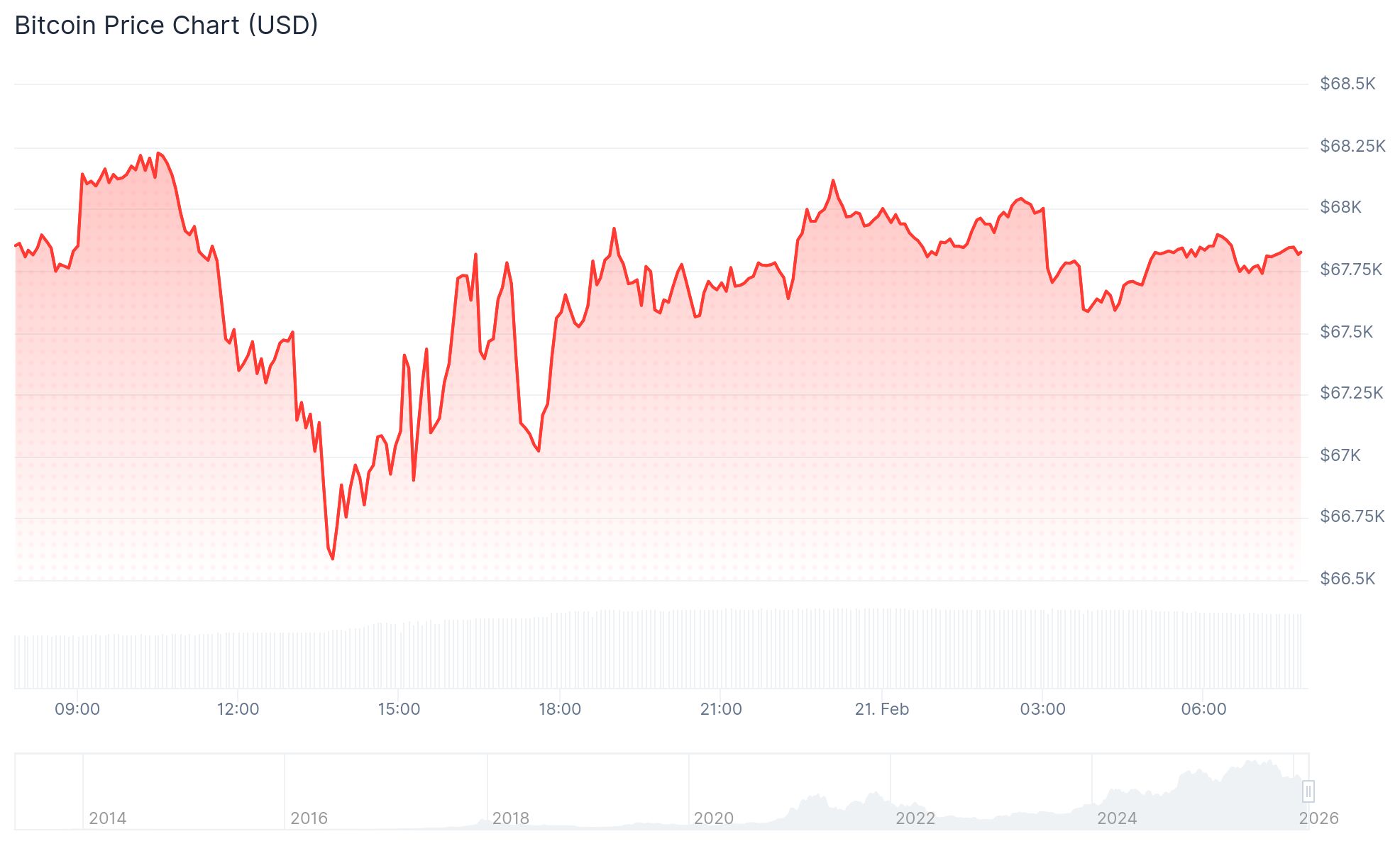
Bitcoin (BTC) PriceBitcoin (BTC) Price

Prediction market Polymarket now shows a 61% chance of U.S. military action against Iran this month. That spike in odds has rattled both crypto and stock markets.

Bitcoin and the broader crypto market have lost roughly half their total value since October. That sell-off began with a $19 billion liquidation event and has continued unwinding since.

Bitcoin was trading above $100,000 during last year’s Israel-Iran strikes. It now sits around $67,400, nearly 33% lower.

On-chain data from CryptoQuant shows the Short Term Holder SOPR has dropped below 1.0. That means recent buyers are now selling at a loss just to exit their positions.
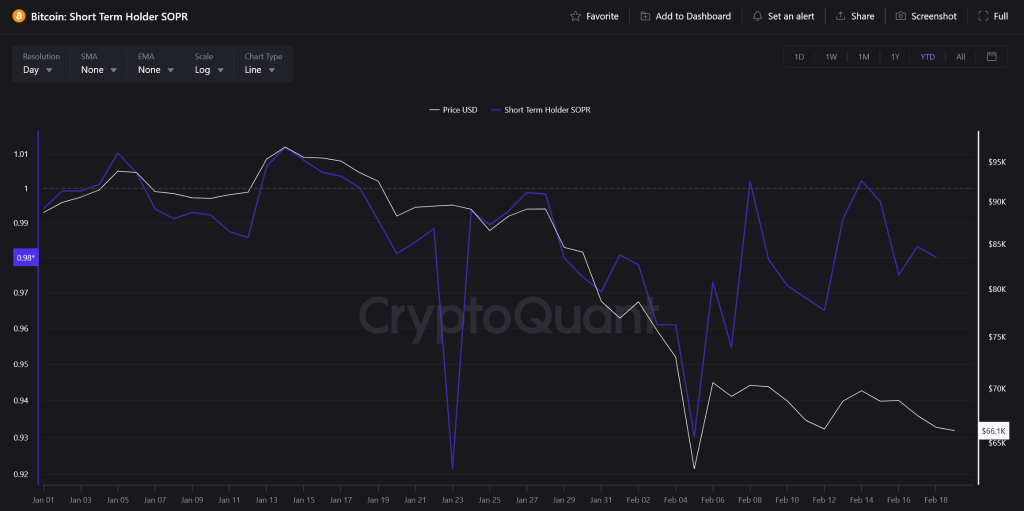
Source: CryptoQuant

The short-term Sharpe ratio has also turned negative, pointing to poor risk-adjusted returns. Around $80 million in long positions have been wiped out since Bitcoin fell from $70,000.

Key Support Levels to Watch

Bitcoin is currently leaning on a support zone between $65,729 and $66,000. A daily close below that level could open the door to $60,000.

Sebastian Serrano, CEO of crypto exchange Ripio, warned Bitcoin could drop as low as $53,000 if bearish momentum following a potential strike continues.

Julio Moreno, head of research at CryptoQuant, told DL News that geopolitical headwinds would push Bitcoin and Ethereum prices lower in the current bear market environment.

What History Shows

Bitcoin has long been pitched as a hedge against geopolitical risk. But past conflicts have shown it does not always behave that way.

During Israel’s “Operation Midnight Hammer” strike in June 2025, Bitcoin’s price fell sharply. It dipped again when the U.S. joined the conflict later that month.

Prices recovered after President Trump signalled a pause in attacks, showing how sensitive crypto is to political signals.

This time, analysts say conditions are weaker going into any potential conflict. The market is already in a bear trend with fragile sentiment.

Some believe whales may use the dip as a buying opportunity. Analyst Arthur Hayes pointed to Treasury liquidity dynamics that could support crypto once tensions ease.

Diplomatic talks are scheduled in Oman on Friday, which could shift the tone. If those talks reduce tension, a short-covering rally remains possible.

The post What a U.S.-Iran War Could Mean for Bitcoin and Crypto Prices in 2026 appeared first on CoinCentral.


Market Opportunity
Union Logo
Union Price(U)
$0.000909
$0.000909$0.000909
+3.53%
USD
Union (U) Live Price Chart
Disclaimer: The articles reposted on this site are sourced from public platforms and are provided for informational purposes only. They do not necessarily reflect the views of MEXC. All rights remain with the original authors. If you believe any content infringes on third-party rights, please contact [email protected] for removal. MEXC makes no guarantees regarding the accuracy, completeness, or timeliness of the content and is not responsible for any actions taken based on the information provided. The content does not constitute financial, legal, or other professional advice, nor should it be considered a recommendation or endorsement by MEXC.

You May Also Like

Cashing In On University Patents Means Giving Up On Our Innovation Future

Cashing In On University Patents Means Giving Up On Our Innovation Future

The post Cashing In On University Patents Means Giving Up On Our Innovation Future appeared on BitcoinEthereumNews.com. “It’s a raid on American innovation that would deliver pennies to the Treasury while kneecapping the very engine of our economic and medical progress,” writes Pipes. Getty Images Washington is addicted to taxing success. Now, Commerce Secretary Howard Lutnick is floating a plan to skim half the patent earnings from inventions developed at universities with federal funding. It’s being sold as a way to shore up programs like Social Security. In reality, it’s a raid on American innovation that would deliver pennies to the Treasury while kneecapping the very engine of our economic and medical progress. Yes, taxpayer dollars support early-stage research. But the real payoff comes later—in the jobs created, cures discovered, and industries launched when universities and private industry turn those discoveries into real products. By comparison, the sums at stake in patent licensing are trivial. Universities collectively earn only about $3.6 billion annually in patent income—less than the federal government spends on Social Security in a single day. Even confiscating half would barely register against a $6 trillion federal budget. And yet the damage from such a policy would be anything but trivial. The true return on taxpayer investment isn’t in licensing checks sent to Washington, but in the downstream economic activity that federally supported research unleashes. Thanks to the bipartisan Bayh-Dole Act of 1980, universities and private industry have powerful incentives to translate early-stage discoveries into real-world products. Before Bayh-Dole, the government hoarded patents from federally funded research, and fewer than 5% were ever licensed. Once universities could own and license their own inventions, innovation exploded. The result has been one of the best returns on investment in government history. Since 1996, university research has added nearly $2 trillion to U.S. industrial output, supported 6.5 million jobs, and launched more than 19,000 startups. Those companies pay…
Share
BitcoinEthereumNews2025/09/18 03:26
Spur Protocol Daily Quiz 21 February 2026: Claim Free Tokens and Boost Your Crypto Wallet

Spur Protocol Daily Quiz 21 February 2026: Claim Free Tokens and Boost Your Crypto Wallet

Spur Protocol Daily Quiz February 21 2026: Today’s Correct Answer and How to Earn Free In-App Tokens The Spur Protocol Daily Quiz for February 21, 2026, is
Share
Hokanews2026/02/21 17:10
Alex Acosta Tells Congress He Has No ‘Remorse’ For Jeffrey Epstein ‘Sweetheart Deal,’ Lawmaker Says

Alex Acosta Tells Congress He Has No ‘Remorse’ For Jeffrey Epstein ‘Sweetheart Deal,’ Lawmaker Says

The post Alex Acosta Tells Congress He Has No ‘Remorse’ For Jeffrey Epstein ‘Sweetheart Deal,’ Lawmaker Says appeared on BitcoinEthereumNews.com. Topline A central figure in the Jeffrey Epstein sexual abuse saga—former prosecutor Alex Acosta, who granted in 2007 the former financier what’s been widely blasted as a “sweetheart deal” for his alleged crimes—has no regrets about the agreement, a Democratic lawmaker told CNN on Friday, as the former Trump official faces questioning from the House Oversight Committee. Alex Acosta, center, arrives for a House Oversight Committee deposition about Jeffrey Epstein on September 19 in Washington D.C. CQ-Roll Call, Inc via Getty Images Key Facts This story is breaking and will be updated. Source: https://www.forbes.com/sites/alisondurkee/2025/09/19/prosecutor-acosta-who-gave-epstein-sweetheart-deal-testifies-he-no-remorse-lawmaker-says/
Share
BitcoinEthereumNews2025/09/20 06:37