BitcoinWorld Crypto Futures Liquidation: Sudden $343 Million Plunge Shocks Market The crypto market recently experienced a significant event: a massive crypto futures liquidation that sent ripples across major exchanges. In a single hour, an astounding $343 million worth of futures positions were liquidated. This sudden plunge naturally raises questions about market stability and the inherent risks of leveraged trading. However, this was not an isolated incident; the past 24 hours saw a staggering $852 million in total liquidations. What is Crypto Futures Liquidation and Why Does It Happen? To understand the impact of such an event, it is crucial to grasp what crypto futures liquidation truly means. Futures contracts allow traders to bet on the future price of an asset without owning it directly. Many traders use leverage, borrowing funds to amplify their potential returns. While leverage can increase profits, it also magnifies losses. When the market moves against a highly leveraged position, a trader’s margin – the capital they put up as collateral – may no longer be sufficient to cover potential losses. At this point, the exchange automatically closes the position to prevent further losses, a process known as liquidation. This protects both the trader (from going into deeper debt) and the exchange. The Immediate Impact: Unpacking the Recent Crypto Futures Liquidation The numbers from the recent crypto futures liquidation are stark. Major exchanges collectively witnessed $343 million in liquidations within just one hour. This rapid sell-off indicates a swift and significant price movement that caught many leveraged traders off guard. Moreover, the broader 24-hour figure of $852 million highlights a period of sustained market turbulence. Such large-scale liquidations often create a cascading effect. As positions are forcibly closed, it adds selling pressure to the market, which can drive prices down further. This, in turn, triggers more liquidations, creating a feedback loop that exacerbates market volatility. It’s a challenging scenario for traders, especially those with high-risk strategies. How Does Crypto Futures Liquidation Affect Traders? For individual traders, a crypto futures liquidation event can be devastating. Those holding long positions (betting on price increases) are liquidated when prices fall sharply, while those with short positions (betting on price decreases) face liquidation if prices suddenly surge. This results in the loss of their entire margin, and sometimes more, depending on the contract terms. Key challenges for traders: Capital Loss: Traders lose the capital committed to their liquidated positions. Emotional Stress: Rapid losses can lead to panic and irrational decisions. Market Uncertainty: Increased volatility makes it harder to predict future price movements. Therefore, understanding the mechanics of leverage and setting appropriate risk parameters are vital for anyone participating in futures trading. Navigating Volatility: Strategies After a Major Crypto Futures Liquidation Event While a massive crypto futures liquidation can be alarming, it also serves as a crucial reminder about prudent trading practices. Traders can implement several strategies to mitigate risks and navigate such volatile periods more effectively. Actionable insights for traders: Manage Leverage Wisely: Avoid excessively high leverage, which leaves little room for market fluctuations. Set Stop-Loss Orders: These automatically close a position if it reaches a predetermined loss level, limiting downside. Diversify Your Portfolio: Do not put all your capital into highly leveraged futures. Stay Informed: Keep abreast of market news, economic indicators, and technical analysis. Practice Risk Management: Only trade with capital you can afford to lose. These practices are essential for building resilience in your trading strategy, especially when faced with unpredictable market swings. The recent $343 million crypto futures liquidation is a stark reminder of the inherent risks and rapid shifts within the cryptocurrency market. While such events can cause significant short-term pain for many traders, they also highlight the importance of disciplined risk management and a thorough understanding of leveraged products. By learning from these occurrences, traders can refine their strategies and approach the volatile world of crypto futures with greater caution and informed decision-making. Frequently Asked Questions (FAQs) 1. What exactly is a crypto futures liquidation? A crypto futures liquidation occurs when an exchange automatically closes a trader’s leveraged position because their margin collateral falls below a required level. This happens when the market moves significantly against their bet, and they can no longer cover potential losses. 2. What typically causes massive crypto futures liquidation events? Large-scale liquidations are usually triggered by sudden and significant price movements in the underlying cryptocurrency. High market volatility, unexpected news, or large institutional trades can initiate a cascade where one liquidation triggers others, amplifying the price swing. 3. How can traders protect themselves from a crypto futures liquidation? Traders can protect themselves by using lower leverage, setting strict stop-loss orders to limit potential losses, and maintaining sufficient margin in their accounts. Diversifying one’s portfolio and avoiding over-exposure to a single asset or highly leveraged positions are also crucial. 4. Does a large crypto futures liquidation signal a market crash? Not necessarily. While a large liquidation event indicates significant volatility and often a sharp price correction, it doesn’t always lead to a sustained market crash. Markets can recover quickly, but it does highlight periods of heightened risk and uncertainty. 5. Were all crypto exchanges equally affected by this liquidation event? While the overall figures represent liquidations across major exchanges, the impact can vary. Different exchanges may have different liquidity pools and user bases, leading to slightly varied liquidation volumes and timing, though the overall market trend affects all. Did you find this article insightful? Share it with your friends and fellow crypto enthusiasts on social media to help them understand the dynamics of crypto futures liquidation and navigate the volatile market more effectively! To learn more about the latest crypto market trends, explore our article on key developments shaping Bitcoin price action. This post Crypto Futures Liquidation: Sudden $343 Million Plunge Shocks Market first appeared on BitcoinWorld and is written by Editorial TeamBitcoinWorld Crypto Futures Liquidation: Sudden $343 Million Plunge Shocks Market The crypto market recently experienced a significant event: a massive crypto futures liquidation that sent ripples across major exchanges. In a single hour, an astounding $343 million worth of futures positions were liquidated. This sudden plunge naturally raises questions about market stability and the inherent risks of leveraged trading. However, this was not an isolated incident; the past 24 hours saw a staggering $852 million in total liquidations. What is Crypto Futures Liquidation and Why Does It Happen? To understand the impact of such an event, it is crucial to grasp what crypto futures liquidation truly means. Futures contracts allow traders to bet on the future price of an asset without owning it directly. Many traders use leverage, borrowing funds to amplify their potential returns. While leverage can increase profits, it also magnifies losses. When the market moves against a highly leveraged position, a trader’s margin – the capital they put up as collateral – may no longer be sufficient to cover potential losses. At this point, the exchange automatically closes the position to prevent further losses, a process known as liquidation. This protects both the trader (from going into deeper debt) and the exchange. The Immediate Impact: Unpacking the Recent Crypto Futures Liquidation The numbers from the recent crypto futures liquidation are stark. Major exchanges collectively witnessed $343 million in liquidations within just one hour. This rapid sell-off indicates a swift and significant price movement that caught many leveraged traders off guard. Moreover, the broader 24-hour figure of $852 million highlights a period of sustained market turbulence. Such large-scale liquidations often create a cascading effect. As positions are forcibly closed, it adds selling pressure to the market, which can drive prices down further. This, in turn, triggers more liquidations, creating a feedback loop that exacerbates market volatility. It’s a challenging scenario for traders, especially those with high-risk strategies. How Does Crypto Futures Liquidation Affect Traders? For individual traders, a crypto futures liquidation event can be devastating. Those holding long positions (betting on price increases) are liquidated when prices fall sharply, while those with short positions (betting on price decreases) face liquidation if prices suddenly surge. This results in the loss of their entire margin, and sometimes more, depending on the contract terms. Key challenges for traders: Capital Loss: Traders lose the capital committed to their liquidated positions. Emotional Stress: Rapid losses can lead to panic and irrational decisions. Market Uncertainty: Increased volatility makes it harder to predict future price movements. Therefore, understanding the mechanics of leverage and setting appropriate risk parameters are vital for anyone participating in futures trading. Navigating Volatility: Strategies After a Major Crypto Futures Liquidation Event While a massive crypto futures liquidation can be alarming, it also serves as a crucial reminder about prudent trading practices. Traders can implement several strategies to mitigate risks and navigate such volatile periods more effectively. Actionable insights for traders: Manage Leverage Wisely: Avoid excessively high leverage, which leaves little room for market fluctuations. Set Stop-Loss Orders: These automatically close a position if it reaches a predetermined loss level, limiting downside. Diversify Your Portfolio: Do not put all your capital into highly leveraged futures. Stay Informed: Keep abreast of market news, economic indicators, and technical analysis. Practice Risk Management: Only trade with capital you can afford to lose. These practices are essential for building resilience in your trading strategy, especially when faced with unpredictable market swings. The recent $343 million crypto futures liquidation is a stark reminder of the inherent risks and rapid shifts within the cryptocurrency market. While such events can cause significant short-term pain for many traders, they also highlight the importance of disciplined risk management and a thorough understanding of leveraged products. By learning from these occurrences, traders can refine their strategies and approach the volatile world of crypto futures with greater caution and informed decision-making. Frequently Asked Questions (FAQs) 1. What exactly is a crypto futures liquidation? A crypto futures liquidation occurs when an exchange automatically closes a trader’s leveraged position because their margin collateral falls below a required level. This happens when the market moves significantly against their bet, and they can no longer cover potential losses. 2. What typically causes massive crypto futures liquidation events? Large-scale liquidations are usually triggered by sudden and significant price movements in the underlying cryptocurrency. High market volatility, unexpected news, or large institutional trades can initiate a cascade where one liquidation triggers others, amplifying the price swing. 3. How can traders protect themselves from a crypto futures liquidation? Traders can protect themselves by using lower leverage, setting strict stop-loss orders to limit potential losses, and maintaining sufficient margin in their accounts. Diversifying one’s portfolio and avoiding over-exposure to a single asset or highly leveraged positions are also crucial. 4. Does a large crypto futures liquidation signal a market crash? Not necessarily. While a large liquidation event indicates significant volatility and often a sharp price correction, it doesn’t always lead to a sustained market crash. Markets can recover quickly, but it does highlight periods of heightened risk and uncertainty. 5. Were all crypto exchanges equally affected by this liquidation event? While the overall figures represent liquidations across major exchanges, the impact can vary. Different exchanges may have different liquidity pools and user bases, leading to slightly varied liquidation volumes and timing, though the overall market trend affects all. Did you find this article insightful? Share it with your friends and fellow crypto enthusiasts on social media to help them understand the dynamics of crypto futures liquidation and navigate the volatile market more effectively! To learn more about the latest crypto market trends, explore our article on key developments shaping Bitcoin price action. This post Crypto Futures Liquidation: Sudden $343 Million Plunge Shocks Market first appeared on BitcoinWorld and is written by Editorial Team

Crypto Futures Liquidation: Sudden $343 Million Plunge Shocks Market

5 min read

BitcoinWorld

Crypto Futures Liquidation: Sudden $343 Million Plunge Shocks Market

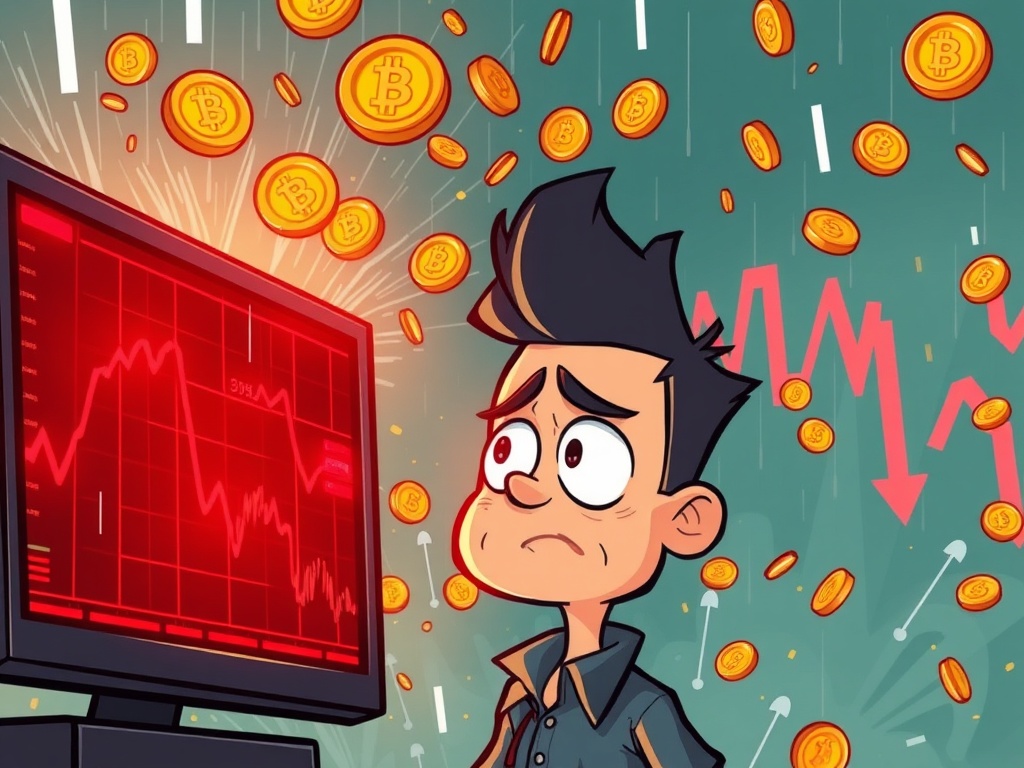
The crypto market recently experienced a significant event: a massive crypto futures liquidation that sent ripples across major exchanges. In a single hour, an astounding $343 million worth of futures positions were liquidated. This sudden plunge naturally raises questions about market stability and the inherent risks of leveraged trading. However, this was not an isolated incident; the past 24 hours saw a staggering $852 million in total liquidations.

What is Crypto Futures Liquidation and Why Does It Happen?

To understand the impact of such an event, it is crucial to grasp what crypto futures liquidation truly means. Futures contracts allow traders to bet on the future price of an asset without owning it directly. Many traders use leverage, borrowing funds to amplify their potential returns. While leverage can increase profits, it also magnifies losses.

When the market moves against a highly leveraged position, a trader’s margin – the capital they put up as collateral – may no longer be sufficient to cover potential losses. At this point, the exchange automatically closes the position to prevent further losses, a process known as liquidation. This protects both the trader (from going into deeper debt) and the exchange.

The Immediate Impact: Unpacking the Recent Crypto Futures Liquidation

The numbers from the recent crypto futures liquidation are stark. Major exchanges collectively witnessed $343 million in liquidations within just one hour. This rapid sell-off indicates a swift and significant price movement that caught many leveraged traders off guard. Moreover, the broader 24-hour figure of $852 million highlights a period of sustained market turbulence.

Such large-scale liquidations often create a cascading effect. As positions are forcibly closed, it adds selling pressure to the market, which can drive prices down further. This, in turn, triggers more liquidations, creating a feedback loop that exacerbates market volatility. It’s a challenging scenario for traders, especially those with high-risk strategies.

How Does Crypto Futures Liquidation Affect Traders?

For individual traders, a crypto futures liquidation event can be devastating. Those holding long positions (betting on price increases) are liquidated when prices fall sharply, while those with short positions (betting on price decreases) face liquidation if prices suddenly surge. This results in the loss of their entire margin, and sometimes more, depending on the contract terms.

Key challenges for traders:

  • Capital Loss: Traders lose the capital committed to their liquidated positions.
  • Emotional Stress: Rapid losses can lead to panic and irrational decisions.
  • Market Uncertainty: Increased volatility makes it harder to predict future price movements.

Therefore, understanding the mechanics of leverage and setting appropriate risk parameters are vital for anyone participating in futures trading.

While a massive crypto futures liquidation can be alarming, it also serves as a crucial reminder about prudent trading practices. Traders can implement several strategies to mitigate risks and navigate such volatile periods more effectively.

Actionable insights for traders:

  • Manage Leverage Wisely: Avoid excessively high leverage, which leaves little room for market fluctuations.
  • Set Stop-Loss Orders: These automatically close a position if it reaches a predetermined loss level, limiting downside.
  • Diversify Your Portfolio: Do not put all your capital into highly leveraged futures.
  • Stay Informed: Keep abreast of market news, economic indicators, and technical analysis.
  • Practice Risk Management: Only trade with capital you can afford to lose.

These practices are essential for building resilience in your trading strategy, especially when faced with unpredictable market swings.

The recent $343 million crypto futures liquidation is a stark reminder of the inherent risks and rapid shifts within the cryptocurrency market. While such events can cause significant short-term pain for many traders, they also highlight the importance of disciplined risk management and a thorough understanding of leveraged products. By learning from these occurrences, traders can refine their strategies and approach the volatile world of crypto futures with greater caution and informed decision-making.

Frequently Asked Questions (FAQs)

1. What exactly is a crypto futures liquidation?

A crypto futures liquidation occurs when an exchange automatically closes a trader’s leveraged position because their margin collateral falls below a required level. This happens when the market moves significantly against their bet, and they can no longer cover potential losses.

2. What typically causes massive crypto futures liquidation events?

Large-scale liquidations are usually triggered by sudden and significant price movements in the underlying cryptocurrency. High market volatility, unexpected news, or large institutional trades can initiate a cascade where one liquidation triggers others, amplifying the price swing.

3. How can traders protect themselves from a crypto futures liquidation?

Traders can protect themselves by using lower leverage, setting strict stop-loss orders to limit potential losses, and maintaining sufficient margin in their accounts. Diversifying one’s portfolio and avoiding over-exposure to a single asset or highly leveraged positions are also crucial.

4. Does a large crypto futures liquidation signal a market crash?

Not necessarily. While a large liquidation event indicates significant volatility and often a sharp price correction, it doesn’t always lead to a sustained market crash. Markets can recover quickly, but it does highlight periods of heightened risk and uncertainty.

5. Were all crypto exchanges equally affected by this liquidation event?

While the overall figures represent liquidations across major exchanges, the impact can vary. Different exchanges may have different liquidity pools and user bases, leading to slightly varied liquidation volumes and timing, though the overall market trend affects all.

Did you find this article insightful? Share it with your friends and fellow crypto enthusiasts on social media to help them understand the dynamics of crypto futures liquidation and navigate the volatile market more effectively!

To learn more about the latest crypto market trends, explore our article on key developments shaping Bitcoin price action.

This post Crypto Futures Liquidation: Sudden $343 Million Plunge Shocks Market first appeared on BitcoinWorld and is written by Editorial Team

Market Opportunity
LETSTOP Logo
LETSTOP Price(STOP)
$0.01822
$0.01822$0.01822
-0.32%
USD
LETSTOP (STOP) Live Price Chart
Disclaimer: The articles reposted on this site are sourced from public platforms and are provided for informational purposes only. They do not necessarily reflect the views of MEXC. All rights remain with the original authors. If you believe any content infringes on third-party rights, please contact [email protected] for removal. MEXC makes no guarantees regarding the accuracy, completeness, or timeliness of the content and is not responsible for any actions taken based on the information provided. The content does not constitute financial, legal, or other professional advice, nor should it be considered a recommendation or endorsement by MEXC.

You May Also Like

CEO Sandeep Nailwal Shared Highlights About RWA on Polygon

CEO Sandeep Nailwal Shared Highlights About RWA on Polygon

The post CEO Sandeep Nailwal Shared Highlights About RWA on Polygon appeared on BitcoinEthereumNews.com. Polygon CEO Sandeep Nailwal highlighted Polygon’s lead in global bonds, Spiko US T-Bill, and Spiko Euro T-Bill. Polygon published an X post to share that its roadmap to GigaGas was still scaling. Sentiments around POL price were last seen to be bearish. Polygon CEO Sandeep Nailwal shared key pointers from the Dune and RWA.xyz report. These pertain to highlights about RWA on Polygon. Simultaneously, Polygon underlined its roadmap towards GigaGas. Sentiments around POL price were last seen fumbling under bearish emotions. Polygon CEO Sandeep Nailwal on Polygon RWA CEO Sandeep Nailwal highlighted three key points from the Dune and RWA.xyz report. The Chief Executive of Polygon maintained that Polygon PoS was hosting RWA TVL worth $1.13 billion across 269 assets plus 2,900 holders. Nailwal confirmed from the report that RWA was happening on Polygon. The Dune and https://t.co/W6WSFlHoQF report on RWA is out and it shows that RWA is happening on Polygon. Here are a few highlights: – Leading in Global Bonds: Polygon holds 62% share of tokenized global bonds (driven by Spiko’s euro MMF and Cashlink euro issues) – Spiko U.S.… — Sandeep | CEO, Polygon Foundation (※,※) (@sandeepnailwal) September 17, 2025 The X post published by Polygon CEO Sandeep Nailwal underlined that the ecosystem was leading in global bonds by holding a 62% share of tokenized global bonds. He further highlighted that Polygon was leading with Spiko US T-Bill at approximately 29% share of TVL along with Ethereum, adding that the ecosystem had more than 50% share in the number of holders. Finally, Sandeep highlighted from the report that there was a strong adoption for Spiko Euro T-Bill with 38% share of TVL. He added that 68% of returns were on Polygon across all the chains. Polygon Roadmap to GigaGas In a different update from Polygon, the community…
Share
BitcoinEthereumNews2025/09/18 01:10
TRM Labs Becomes Unicorn with 70M$: BTC Fraud Risk

TRM Labs Becomes Unicorn with 70M$: BTC Fraud Risk

The post TRM Labs Becomes Unicorn with 70M$: BTC Fraud Risk appeared on BitcoinEthereumNews.com. TRM Labs Reaches 1 Billion Dollar Valuation Blockchain intelligence
Share
BitcoinEthereumNews2026/02/05 03:33
Bitcoin Set For ‘Promising’ Q4, Next Two Weeks Could Be Decisive

Bitcoin Set For ‘Promising’ Q4, Next Two Weeks Could Be Decisive

The post Bitcoin Set For ‘Promising’ Q4, Next Two Weeks Could Be Decisive appeared on BitcoinEthereumNews.com. Rubmar is a writer and translator who has been a crypto enthusiast for the past four years. Her goal as a writer is to create informative, complete, and easily understandable pieces accessible to those entering the crypto space. After learning about cryptocurrencies in 2019, Rubmar became curious about the world of possibilities the industry offered, quickly learning that financial freedom was at the palm of her hand with the developing technology. From a young age, Rubmar was curious about how languages work, finding special interest in wordplay and the peculiarities of dialects. Her curiosity grew as she became an avid reader in her teenage years. She explored freedom and new words through her favorite books, which shaped her view of the world. Rubmar acquired the necessary skills for in-depth research and analytical thinking at university, where she studied Literature and Linguistics. Her studies have given her a sharp perspective on several topics and allowed her to turn every stone in her investigations. In 2019, she first dipped her toes in the crypto industry when a friend introduced her to Bitcoin and cryptocurrencies, but it wasn’t until 2020 that she started to dive into the depth of the industry. As Rubmar began to understand the mechanics of the crypto sphere, she saw a new world yet to be explored. At the beginning of her crypto voyage, she discovered a new system that allowed her to have control over her finances. As a young adult of the 21st century, Rubmar has faced the challenges of the traditional banking system and the restrictions of fiat money. After the failure of her home country’s economy, the limitations of traditional finances became clear. The bureaucratic, outdated structure made her feel hopeless and powerless amid an aggressive and distorted system created by hyperinflation. However, learning about…
Share
BitcoinEthereumNews2025/09/18 23:00