The post Leaked Document Fuels Talk of Ripple’s Hidden Agenda in Global Finance appeared on BitcoinEthereumNews.com. Fintech Ripple may be plotting a much bigger role in the future of money than previously thought. That’s the buzz circulating after a supposed leak from a former Swiss banker, who claims to have seen a confidential cooperation agreement involving Ripple, a major Swiss bank, and a U.S. blockchain infrastructure firm. Beyond Payments: Identity at the Core What raised eyebrows in the leak wasn’t just the mention of settlement rails, but references to biometric identity systems tied to financial transactions. The document allegedly outlines plans to merge compliance, digital ID, and tokenized assets into a single network that could use XRP as the neutral bridge. Analysts say this lines up with broader industry themes. JPMorgan recently called digital identity “the foundation of Web3,” arguing that a secure, verifiable identity layer will be as important as the payment rails themselves. Healthcare and Real-World Integration Hints of this shift can already be seen in Ripple’s partnerships. Earlier this year, Wellgistics Health revealed it was processing transactions across 6,500 U.S. pharmacies on the XRP Ledger, reducing fees and eliminating credit card middlemen. The development coincided with BlackRock’s launch of its XDNA ETF and President Donald Trump’s push for digital healthcare reforms — a timing some see as more than coincidence. Global Strategy With Political Ties Ripple has also been expanding aggressively in Africa and the Middle East through collaborations with firms like Chipper Cash and Onafriq, regions where experiments with identity-linked finance could scale quickly. Supporters view this as Ripple quietly laying the groundwork for a global settlement layer, while critics warn it could entrench corporate control over sensitive identity data. The political angle adds fuel to the fire. Trump’s administration has been promoting digital finance reform, and some speculate that Ripple’s infrastructure could align with these goals, especially in healthcare payments. Market… The post Leaked Document Fuels Talk of Ripple’s Hidden Agenda in Global Finance appeared on BitcoinEthereumNews.com. Fintech Ripple may be plotting a much bigger role in the future of money than previously thought. That’s the buzz circulating after a supposed leak from a former Swiss banker, who claims to have seen a confidential cooperation agreement involving Ripple, a major Swiss bank, and a U.S. blockchain infrastructure firm. Beyond Payments: Identity at the Core What raised eyebrows in the leak wasn’t just the mention of settlement rails, but references to biometric identity systems tied to financial transactions. The document allegedly outlines plans to merge compliance, digital ID, and tokenized assets into a single network that could use XRP as the neutral bridge. Analysts say this lines up with broader industry themes. JPMorgan recently called digital identity “the foundation of Web3,” arguing that a secure, verifiable identity layer will be as important as the payment rails themselves. Healthcare and Real-World Integration Hints of this shift can already be seen in Ripple’s partnerships. Earlier this year, Wellgistics Health revealed it was processing transactions across 6,500 U.S. pharmacies on the XRP Ledger, reducing fees and eliminating credit card middlemen. The development coincided with BlackRock’s launch of its XDNA ETF and President Donald Trump’s push for digital healthcare reforms — a timing some see as more than coincidence. Global Strategy With Political Ties Ripple has also been expanding aggressively in Africa and the Middle East through collaborations with firms like Chipper Cash and Onafriq, regions where experiments with identity-linked finance could scale quickly. Supporters view this as Ripple quietly laying the groundwork for a global settlement layer, while critics warn it could entrench corporate control over sensitive identity data. The political angle adds fuel to the fire. Trump’s administration has been promoting digital finance reform, and some speculate that Ripple’s infrastructure could align with these goals, especially in healthcare payments. Market…

Leaked Document Fuels Talk of Ripple’s Hidden Agenda in Global Finance

Fintech

Ripple may be plotting a much bigger role in the future of money than previously thought.

That’s the buzz circulating after a supposed leak from a former Swiss banker, who claims to have seen a confidential cooperation agreement involving Ripple, a major Swiss bank, and a U.S. blockchain infrastructure firm.

Beyond Payments: Identity at the Core

What raised eyebrows in the leak wasn’t just the mention of settlement rails, but references to biometric identity systems tied to financial transactions. The document allegedly outlines plans to merge compliance, digital ID, and tokenized assets into a single network that could use XRP as the neutral bridge.

Analysts say this lines up with broader industry themes. JPMorgan recently called digital identity “the foundation of Web3,” arguing that a secure, verifiable identity layer will be as important as the payment rails themselves.

Healthcare and Real-World Integration

Hints of this shift can already be seen in Ripple’s partnerships. Earlier this year, Wellgistics Health revealed it was processing transactions across 6,500 U.S. pharmacies on the XRP Ledger, reducing fees and eliminating credit card middlemen. The development coincided with BlackRock’s launch of its XDNA ETF and President Donald Trump’s push for digital healthcare reforms — a timing some see as more than coincidence.

Global Strategy With Political Ties

Ripple has also been expanding aggressively in Africa and the Middle East through collaborations with firms like Chipper Cash and Onafriq, regions where experiments with identity-linked finance could scale quickly. Supporters view this as Ripple quietly laying the groundwork for a global settlement layer, while critics warn it could entrench corporate control over sensitive identity data.

The political angle adds fuel to the fire. Trump’s administration has been promoting digital finance reform, and some speculate that Ripple’s infrastructure could align with these goals, especially in healthcare payments.

Market Reality Check

For all the intrigue, XRP Ledger’s activity paints a less dramatic picture. Transaction volumes have declined sharply, and its total value locked is a fraction of its market cap. Skeptics argue the fundamentals don’t yet support the grand narrative suggested by the leaked file.

Even so, the possibility of Ripple evolving into more than just a payments company — with digital identity, healthcare, and settlement rails at its core — is enough to keep speculation running high.


The information provided in this article is for informational purposes only and does not constitute financial, investment, or trading advice. Coindoo.com does not endorse or recommend any specific investment strategy or cryptocurrency. Always conduct your own research and consult with a licensed financial advisor before making any investment decisions.

Author

Alexander Zdravkov is a person who always looks for the logic behind things. He is fluent in German and has more than 3 years of experience in the crypto space, where he skillfully identifies new trends in the world of digital currencies. Whether providing in-depth analysis or daily reports on all topics, his deep understanding and enthusiasm for what he does make him a valuable member of the team.


Next article

Source: https://coindoo.com/leaked-document-fuels-talk-of-ripples-hidden-agenda-in-global-finance/

Market Opportunity
Threshold Logo
Threshold Price(T)
$0.007025
$0.007025$0.007025
+1.10%
USD
Threshold (T) Live Price Chart
Disclaimer: The articles reposted on this site are sourced from public platforms and are provided for informational purposes only. They do not necessarily reflect the views of MEXC. All rights remain with the original authors. If you believe any content infringes on third-party rights, please contact [email protected] for removal. MEXC makes no guarantees regarding the accuracy, completeness, or timeliness of the content and is not responsible for any actions taken based on the information provided. The content does not constitute financial, legal, or other professional advice, nor should it be considered a recommendation or endorsement by MEXC.
Tags:

You May Also Like

Cashing In On University Patents Means Giving Up On Our Innovation Future

Cashing In On University Patents Means Giving Up On Our Innovation Future

The post Cashing In On University Patents Means Giving Up On Our Innovation Future appeared on BitcoinEthereumNews.com. “It’s a raid on American innovation that would deliver pennies to the Treasury while kneecapping the very engine of our economic and medical progress,” writes Pipes. Getty Images Washington is addicted to taxing success. Now, Commerce Secretary Howard Lutnick is floating a plan to skim half the patent earnings from inventions developed at universities with federal funding. It’s being sold as a way to shore up programs like Social Security. In reality, it’s a raid on American innovation that would deliver pennies to the Treasury while kneecapping the very engine of our economic and medical progress. Yes, taxpayer dollars support early-stage research. But the real payoff comes later—in the jobs created, cures discovered, and industries launched when universities and private industry turn those discoveries into real products. By comparison, the sums at stake in patent licensing are trivial. Universities collectively earn only about $3.6 billion annually in patent income—less than the federal government spends on Social Security in a single day. Even confiscating half would barely register against a $6 trillion federal budget. And yet the damage from such a policy would be anything but trivial. The true return on taxpayer investment isn’t in licensing checks sent to Washington, but in the downstream economic activity that federally supported research unleashes. Thanks to the bipartisan Bayh-Dole Act of 1980, universities and private industry have powerful incentives to translate early-stage discoveries into real-world products. Before Bayh-Dole, the government hoarded patents from federally funded research, and fewer than 5% were ever licensed. Once universities could own and license their own inventions, innovation exploded. The result has been one of the best returns on investment in government history. Since 1996, university research has added nearly $2 trillion to U.S. industrial output, supported 6.5 million jobs, and launched more than 19,000 startups. Those companies pay…
Share
BitcoinEthereumNews2025/09/18 03:26
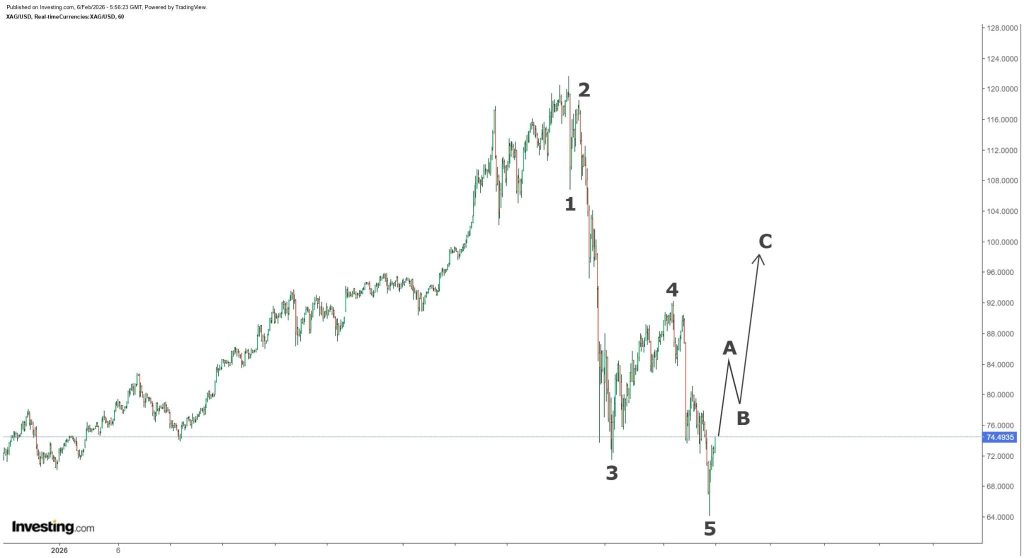
Silver Price Crash Is Over “For Real This Time,” Analyst Predicts a Surge Back Above $90

Silver Price Crash Is Over “For Real This Time,” Analyst Predicts a Surge Back Above $90

Silver has been taking a beating lately, and the Silver price hasn’t exactly been acting like a safe haven. After running up into the highs, the whole move reversed
Share
Captainaltcoin2026/02/07 03:15
Citi Caps Year-End at $4,300, But ETF outflows Challenge Outlook

Citi Caps Year-End at $4,300, But ETF outflows Challenge Outlook

The post Citi Caps Year-End at $4,300, But ETF outflows Challenge Outlook appeared on BitcoinEthereumNews.com. Ethereum Price Prediction: Citi Caps Year-End at $4,300, But ETF outflows Challenge Outlook Disclaimer: The information found on NewsBTC is for educational purposes only. It does not represent the opinions of NewsBTC on whether to buy, sell or hold any investments and naturally investing carries risks. You are advised to conduct your own research before making any investment decisions. Use information provided on this website entirely at your own risk. Related News © 2025 NewsBTC. All Rights Reserved. This website uses cookies. By continuing to use this website you are giving consent to cookies being used. Visit our Privacy Center or Cookie Policy. I Agree Source: https://www.newsbtc.com/news/ethereum/ethereum-price-prediction-citi-caps-year-end-at-4300-but-etf-outflows-challenge-outlook/
Share
BitcoinEthereumNews2025/09/18 14:30