

Bitcoin (BTC) Price: Reclaims $70K After Soft Inflation Data Sparks Rally
TLDR
- Bitcoin recovered above $70,000 after falling near $60,000 earlier in February, rising nearly 5% in 24 hours following cooler US inflation data
- US Consumer Price Index rose 2.4% year-over-year in January, below the expected 2.5%, boosting hopes for earlier interest rate cuts
- $8.7 billion in bitcoin losses were realized last week, the second-largest loss event after the 3AC collapse in 2022
- The Crypto Fear & Greed Index remains in “extreme fear” territory despite the price recovery, reflecting continued market anxiety
- Bitcoin treasury companies saw unrealized losses drop from $21 billion to $16.9 billion as prices recovered
Bitcoin has climbed back above $70,000 after dropping near $60,000 earlier this month. The recovery marks a nearly 5% gain in the past 24 hours.
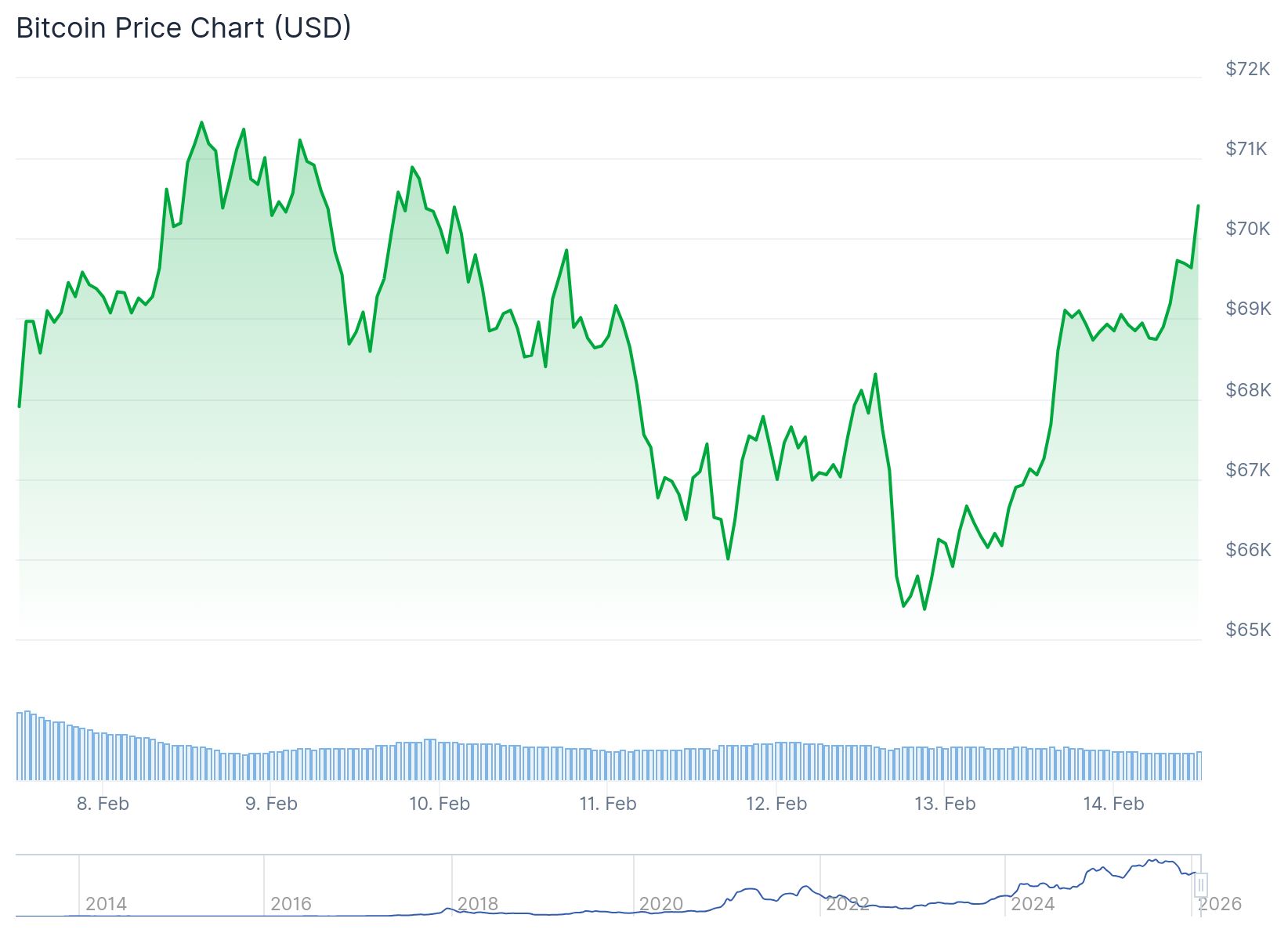 Bitcoin (BTC) Price
The price movement followed January’s inflation report. The US Consumer Price Index rose 2.4% year-over-year. Economists had predicted 2.5%.
Lower inflation numbers raised hopes for interest rate cuts. Lower rates make cryptocurrencies and stocks more attractive to investors.
Traders on prediction market Kalshi now see a 26% chance of a rate cut in April. That’s up from 19% earlier this week. Polymarket odds jumped from 13% to 20%.
The broader CoinDesk 20 index rose 6.2% in the same period. This shows the recovery spread across multiple cryptocurrencies.
Market Fear Remains High
The Crypto Fear & Greed Index still shows “extreme fear” levels. These levels haven’t been this low since the FTX collapse in 2022.
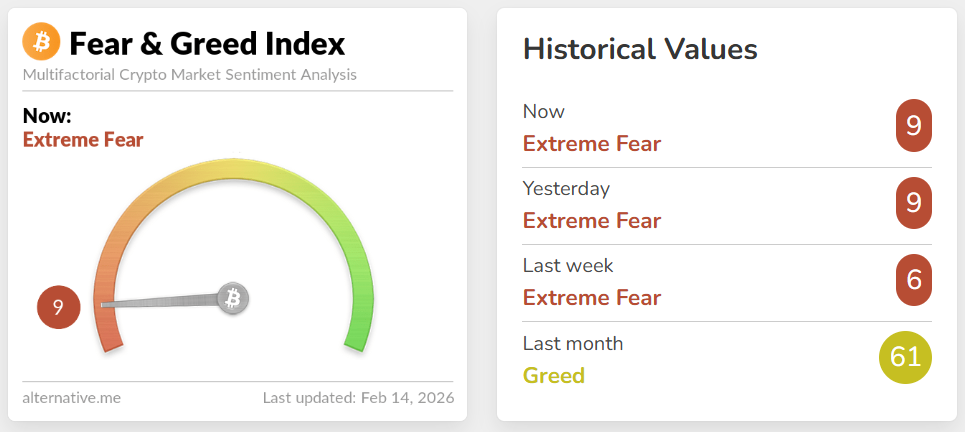 Source: Alternative.me
The index has stayed in extreme fear territory since early February. This shows investors remain nervous despite the price bounce.
Bitwise analysts reported $8.7 billion in bitcoin losses were realized last week. This ranks as the second-largest loss event ever recorded. Only the Three Arrows Capital collapse caused more losses.
Bitcoin treasury firms had over $21 billion in unrealized losses at one point. The recent recovery cut that number to $16.9 billion.
Supply Shifting Hands
The massive loss-taking could signal a capitulation event. This happens when weak investors sell to stronger holders.
Bitwise research noted that supply rotation from weaker to stronger hands often precedes market stabilization. However, this process takes time to complete.
Thinner weekend trading volumes helped support the current rally. Seller exhaustion also played a role in the recovery.
Danny Nelson from Bitwise told reporters that fear drives the market right now. Investors fear prices could drop lower.
This fear causes some to sell during rallies. They view price increases as exit opportunities rather than recovery signals.
The cryptocurrency has dropped 46% from its peak price. Bitcoin hit an all-time high of over $126,000 before the recent decline.
Bitcoin maintains a fixed supply of 21 million units. This scarcity differs from traditional currencies that governments can print without limit.
The blockchain celebrated its 17th birthday in January 2009. The network has never been hacked during its entire existence.
Prediction markets show rising expectations for Federal Reserve action. A 25 basis point cut in April seems increasingly possible to traders.
The post Bitcoin (BTC) Price: Reclaims $70K After Soft Inflation Data Sparks Rally appeared first on CoinCentral.
You May Also Like

Trump Media Submits New Bitcoin, ETH and Cronos ETF Filings
Bitcoin ETFs Outpace Ethereum With $2.9B Weekly Surge
