Key Insights: US-traded spot XRP ETF products pulled $51.3 million in net inflows across February 2-9, according to CoinGlass flow data. The XRP news stood in contrastKey Insights: US-traded spot XRP ETF products pulled $51.3 million in net inflows across February 2-9, according to CoinGlass flow data. The XRP news stood in contrast

XRP ETF Inflows Hit $51 Million in February as Bitcoin and Ethereum Products Bleed Capital
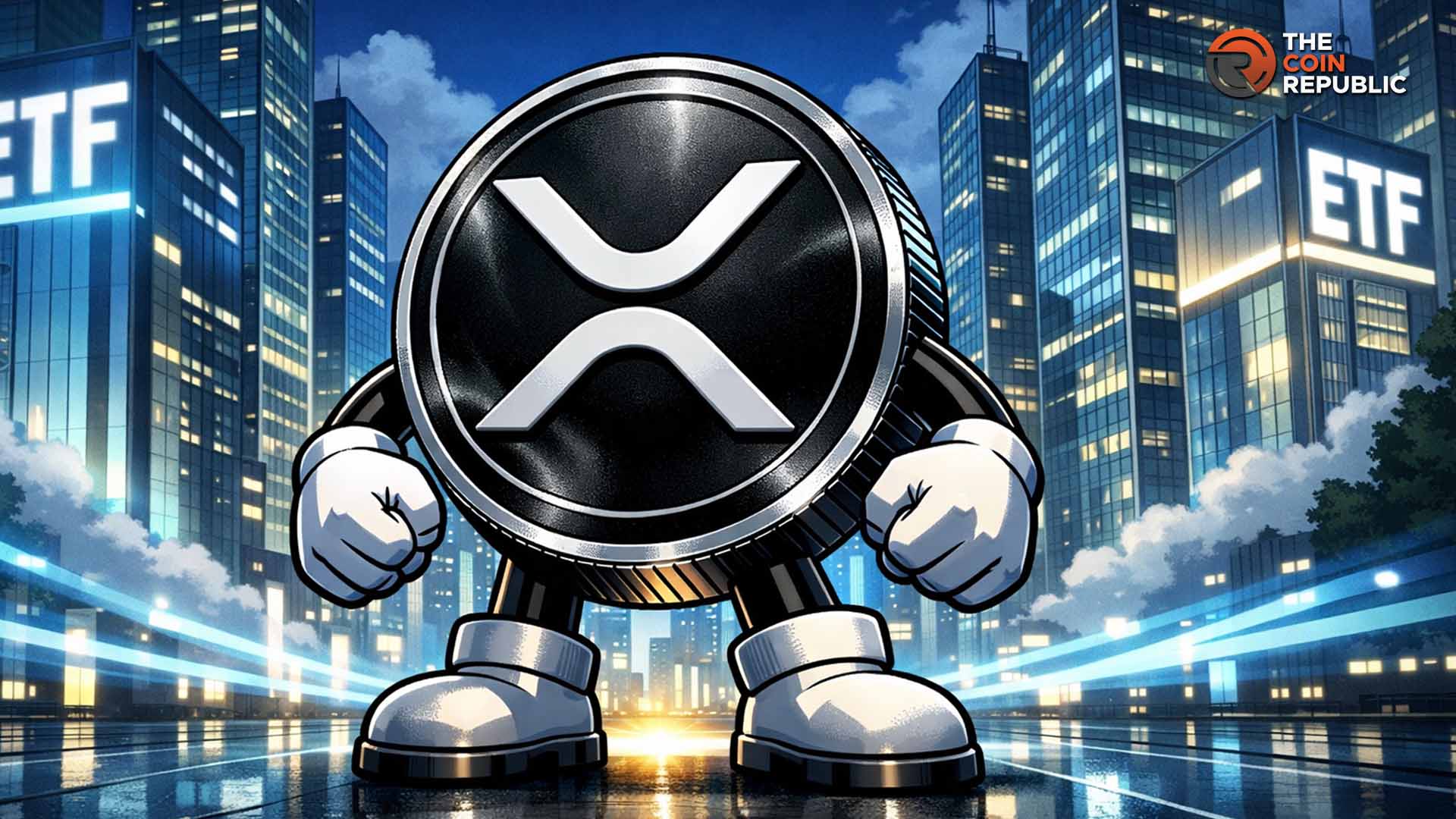
2026/02/11 14:45
5 min read
xrp etf xrp price

Key Insights:

  • XRP ETF products registered $51 million in net inflows during early February 2026, marking a sharp divergence from spot Bitcoin, Ethereum, and Solana ETFs that saw net outflows.
  • Franklin and Bitwise XRP ETF captured roughly $20 million each during the February 2-6 week, while 21Shares’ TOXR faced net redemptions.
  • The inflows represented approximately 5% of total all-time Ripple ETF flows, driven by fee waivers and distribution advantages.

US-traded spot XRP ETF products pulled $51.3 million in net inflows across February 2-9, according to CoinGlass flow data.

The XRP news stood in contrast to spot Bitcoin, Ethereum, and Solana ETF products, which registered net outflows during the same window.

The divergence occurred despite broader crypto sentiment remaining weak, with multiple outlets describing capital-starved conditions across digital asset markets.

Franklin and Bitwise Captured Most Weekly Creations of the XRP ETF

Net inflows in February clustered heavily in the Franklin XRP ETF (XRPZ) and the Bitwise XRP ETF (XRP), with each product pulling roughly $20 million.

CoinGlass data showed XRPZ received approximately $23.7 million and Bitwise XRP received approximately $20 million in February.

21Shares XRP ETF (TOXR) faced net redemptions of roughly $350,000 during the same period.

The flow concentration reflects early-category leader dynamics, with liquidity and spreads improving fastest in products that secure initial platform placement.

Franklin’s fund page emphasized “credible oversight” and “simplified access,” framing language that matters for broker-dealer shelf space.

Additionally, Franklin disclosed a 0.19% gross sponsor fee but showed a zero net sponsor fee as of early February 2026, indicating an active waiver.

The product tracks the CME CF XRP-Dollar Reference Rate, and lists an inception date of November 24, 2025.

Grayscale’s GXRP disclosed a zero gross expense ratio during a waiver period ending February 24, or upon reaching $1 billion in assets under management.

After the waiver expires, the fee steps up to 0.35%. 21Shares disclosed a 0.30% sponsor fee in its prospectus materials, with no waiver in effect.

The fee differential created a clean cost ladder across the category.

The waivers lowered the hurdle rate for allocators to trial XRP price exposure through exchange-traded wrappers, prompting incremental allocations labeled “mandate-compliant trial exposure” on a risk-off tape elsewhere.

XRP ETF Fund Flow | Source. CoinGlassXRP ETF Fund Flow | Source. CoinGlass

Primary-Market Creations Matter More Than Secondary Volume

The reported flows measured primary-market creations and redemptions, not secondary-market trading volume.

Official ETF creations represent share issuance designed to track XRP via a defined benchmark and trust mechanics. At the same time, secondary-market trading volume can run high with no net new underlying demand.

The products formalized XRP price exposure into benchmarked, exchange-traded wrappers with disclosed fees and operating mechanics.

As regulators allowed more spot-crypto wrappers to trade on major exchanges, those wrappers became part of the market’s plumbing, creating flow resiliency even when crypto sentiment was broadly weak.

XRP ETF: Sponsor-Fee Mechanics Creates Mechanical Selling Pressure

Issuer economics introduced a wrinkle in the “inflow equals price support” narrative.

21Shares’ prospectus explicitly stated the sponsor fee was payable in XRP and that the sponsor could elect to convert some or all of the sponsor fee XRP into cash by selling it.

That created steady, non-sentiment sell flow over time, meaning “net inflows” and “spot support” were related but not identical.

The mechanically generated supply could offset demand from creations, weakening any simplistic assumption that XRP ETF inflows translated directly into XRP price appreciation.

Grayscale’s GXRP showed intermittent redemptions during the February 2-9 window, including a net outflow on February 5.

The one-day outflow was most usefully framed as a “rotation signature” rather than category failure, especially while fee waivers were active and switching costs remained low.

Grayscale’s fee waiver ends on February 24, creating a clear calendar trigger to monitor fee-driven rotation.

If GXRP’s effective fee rises to 0.35% while Franklin continues to display a zero net sponsor fee, the week following expiration would test whether creations migrated into XRPZ and XRP, or whether category growth slowed.

The event study would cleanly separate “incremental XRP demand” from “wrapper switching.” The test mattered because the strongest defensible framing for early-February XRP ETF inflows was “microstructure-driven divergence.”

Time-bounded fee waivers, combined with a young AUM base, meant a handful of authorized participant creations could move the week’s total.

XRP ETF Fees by Product | Source: XXRP ETF Fees by Product | Source: X

Alt-ETP Battle Shifted to Distribution at Lowest Effective Cost

The XRP ETF divergence signaled the alt-ETP battle was shifting from “can you launch?” to “can you win distribution at the lowest effective cost.”

Flows should be interpreted as much through market structure, consisting of platform access, AP behavior, and fee cliffs, as through pure sentiment on XRP price.

If broader crypto ETF products experience outflows while XRP ETF products attract inflows, the divergence warrants two tests.

First, whether XRP inflows are concentrated into two low-effective-fee leaders, suggesting incremental demand. Second, whether those inflows correlated with spot performance and market depth or mostly reflected wrapper-to-wrapper switching.

The February 2-9 window showed the first test passed: flows clustered in XRPZ and XRP.

Franklin XRP ETF (XRPZ) traded on NYSE Arca, 21Shares XRP ETF (TOXR) traded on Cboe BZX, and Grayscale’s GXRP and Bitwise’s XRP traded as ETF vehicles on major US exchanges.

The $51 million in net inflows during early February represented roughly 5% of total all-time XRP ETF flows. The next observable catalyst is February 24, when Grayscale’s waiver expires, and the fee differential across the category widens further.

The post XRP ETF Inflows Hit $51 Million in February as Bitcoin and Ethereum Products Bleed Capital appeared first on The Coin Republic.

Market Opportunity
XRP Logo
XRP Price(XRP)
$1.3585
$1.3585$1.3585
-3.46%
USD
XRP (XRP) Live Price Chart
Disclaimer: The articles reposted on this site are sourced from public platforms and are provided for informational purposes only. They do not necessarily reflect the views of MEXC. All rights remain with the original authors. If you believe any content infringes on third-party rights, please contact [email protected] for removal. MEXC makes no guarantees regarding the accuracy, completeness, or timeliness of the content and is not responsible for any actions taken based on the information provided. The content does not constitute financial, legal, or other professional advice, nor should it be considered a recommendation or endorsement by MEXC.

You May Also Like

Aave V4 roadmap signals end of multichain sprawl
Aave V4 roadmap signals end of multichain sprawl

The post Aave V4 roadmap signals end of multichain sprawl appeared on BitcoinEthereumNews.com. Aave Labs has released its official launch roadmap for V4, laying out the final steps ahead of the major upgrade’s Q4 mainnet launch.  Alongside new architectural and security improvements, the roadmap introduces a fundamental shift in how user balances are tracked and highlights a strategic pullback from economically underperforming deployments across layer-2 and alternative layer-1 networks. The V4 release moves away from aTokens’ rebasing-style mechanics toward ERC-4626-style share accounting, a change that promises cleaner integrations, easier tax treatment, and better compatibility with downstream DeFi infrastructure.  In a recent technical development update, Aave Labs confirmed that “tokenization is to remain optional and built using ERC 4626 vaults,” and that internal accounting will eliminate the use of exchange rates or scaled balances. The goal is to “further improve the overall reliability of the protocol.” ERC-4626 is a widely adopted Ethereum standard that expresses user deposits as shares of a vault rather than balances that grow over time. In Aave V3, aTokens accrue interest by increasing a user’s balance directly — behavior that resembles rebasing tokens and often confuses integrations and portfolio accounting tools.  By contrast, ERC-4626 tracks yield through a rising price-per-share metric, leaving token balances unchanged. The result is more predictable behavior for integrators, auditors and tax software, as well as a clearer cost basis for users. The roadmap also outlines a series of release milestones, including a formal codebase publication, a public testnet launch with a redesigned interface, and the completion of a multi-layered security review involving formal verification and manual audits. Aave Labs said the roadmap reflects the protocol’s “final stages of review, testing, and deployment,” and that additional documentation and launch preparation materials will be released in the coming weeks. But the most pointed strategic shift comes not from the codebase, but from Aave’s own governance forums. “Aave…
Share
BitcoinEthereumNews2025/09/18 07:40
Wormhole Token Surges After Tokenomics Reset and W Reserve Launch
Wormhole Token Surges After Tokenomics Reset and W Reserve Launch

Wormhole, a leading interoperability protocol that enables asset transfers across multiple blockchains, has announced significant updates to its native tokenomics. These changes include the introduction of a token reserve and enhanced incentives for stakers, which could influence the protocol’s governance structure, as voting power is tied to the stake of Wormhole tokens. In a recent [...]
Share
Crypto Breaking News2025/09/18 03:18
Grayscale’s Multi-Crypto Exchange-Traded Product Gets SEC Approval

Grayscale’s Multi-Crypto Exchange-Traded Product Gets SEC Approval

Grayscale’s multi-crypto ETP receives SEC approval, offering new investment opportunities. SEC’s new crypto ETF standards could lead to dozens of launches. GDLC fund includes Bitcoin, Ether, XRP, Solana, and Cardano exposure. The U.S. Securities and Exchange Commission (SEC) has officially approved Grayscale’s Digital Large Cap Fund (GDLC), marking a significant development for the cryptocurrency industry. This fund will become the first multi-crypto asset exchange-traded product (ETP) available on the market, providing investors exposure to five prominent cryptocurrencies-Bitcoin, Ether, XRP, Solana, and Cardano. According to Grayscale’s CEO, Peter Mintzberg, the approval signals a significant milestone for both the company and the broader crypto industry. He has thanked the SEC Crypto Task Force for working hard on providing the much-needed regulatory clarity to the sector. This accreditation comes after it was previously delayed earlier in the year, as the SEC had put off the conversion of GDLC on the over-the-counter fund to a tradable ETF on NYSE Arca in the communal view of seeking additional examination. Grayscale Digital Large Cap Fund $GDLC was just approved for trading along with the Generic Listing Standards. The Grayscale team is working expeditiously to bring the FIRST multi #crypto asset ETP to market with Bitcoin, Ethereum, XRP, Solana, and Cardano#BTC #ETH $XRP $SOL… — Peter Mintzberg (@PeterMintzberg) September 17, 2025 The latest update on Grayscale’s website shows that GDLC has a net asset value of $57.7 per share and that its assets under management exceed $915 million. Multi-crypto investment is a much-needed diversification of an already fast-expanding digital asset market. Also Read: The Secret Behind $RLUSD’s Success: Building a Stablecoin for the Global Economy The SEC’s Accelerated Approval Process and Broader Impact on Crypto ETFs In addition to approving Grayscale’s fund, the SEC also introduced a new development for crypto ETF issuers. The agency approved, on an accelerated basis, the generic listing standards for cryptocurrency ETFs. This action should make the approval process less challenging, which will result in the introduction of a large number of new crypto ETFs, most of which may track such assets as XRP, Solana, and even Dogecoin. SEC Chairman Paul Atkins pointed out that these revised listing standards would enhance investor access to digital assets and innovation in the capital markets. Eric Balchunas, a senior ETF analyst at Bloomberg, says that the introduction of these standards will lead to the introduction of more than 100 crypto ETFs next year. This approval is in line with the SEC’s larger endeavors to simplify the regulations surrounding cryptocurrencies and related products, which may result in new opportunities for investors in the digital asset sector. It highlights a growing recognition of crypto’s place within traditional financial markets and could pave the way for a more robust crypto ETF market in the future. Also Read: Bitcoin, Ethereum and Solana Make Major Moves: Top Crypto Trends You Can’t Miss The post Grayscale’s Multi-Crypto Exchange-Traded Product Gets SEC Approval appeared first on 36Crypto.
Share
Coinstats2025/09/18 15:29