

Why Web3 Gamers Are Rushing To Moondrop, Moonbeam’s GLMillionaire With 1,000,000 GLMR On The Line
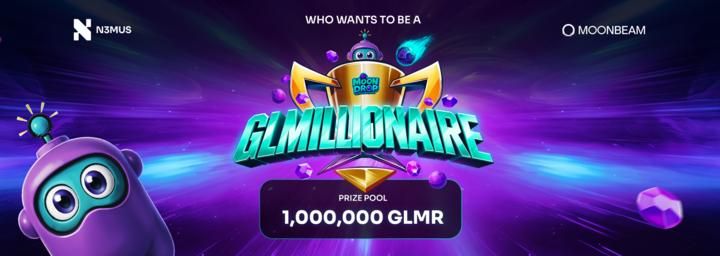
Can your best one minute run be worth part of 1,000,000 GLMR? Moondrop is a simple, high pressure reflex game, and week one of Moonbeam’s GLMillionaiRe puts a 1,000,000 GLMR prize pool behind it. Scores write onchain, winners clear KYC, and payouts arrive on a set schedule. The first tournament runs from August 21, 2025, 13:00 UTC to August 28, 2025, 12:59 UTC, and the upcoming battle rounds also follow a recurring schedule. Follow Moonbeam on X to stay up to date. If you like mobile skill games and real stakes, this is the entry point.
The game first, how Moondrop works and how to score
Moondrop is a fast session runner. You merge matching balls to increase your score and the round ends the instant your stack crosses a visible horizontal line. A single mistake ends a run, and a single perfect sequence can set a personal best. Because rounds are short, a day of play feels like focused sprints, not a grind.
\ 
If you have not played merge titles before, think of two identical balls combining into a higher value ball and a bigger score. Space is scarce, so every move trades risk for upside. That is why one excellent attempt can push you up the single game leaderboard even if earlier runs were average.
\ Moondrop runs on mobile and desktop. Scores are tied to the wallet you register with, so every attempt maps to one verifiable identity.
Quick Links for Web3 Games: Game site: moondropgame.com Moonbeam Gaming: moonbeam.network/gaming
How to enter and play your daily rounds
You enroll on N3MUS tournaments. Registration creates a Sequence smart wallet for you. Add GLMR with a card through the onramp or transfer GLMR from another wallet. Once funded, start playing Moondrop inside the event.
Each attempt costs 10 GLMR and only five games per day are prize eligible. The cap keeps volume advantages in check and makes each run matter. You can still practice outside those five, and the prize eligible attempts are the ones that decide the boards.
What GLMillionaiRe is and how winners are decided
GLMillionaiRe is a recurring, week long tournament built around Moondrop. Two leaderboards award the major prizes. One rewards the highest single game of the week. One rewards the highest total score across the week. The split creates two clear strategies. Chase one perfect run, or stack consistent daily totals.
\ Leaderboards refresh on a regular cadence during the week. After the last day, organizers run anti cheat checks and finalize results within a stated window. If there is a tie for a top prize, a livestream playoff decides it. Lower tier ties go to the highest single game score.
\
Week one prize, payout schedule, and why the timing matters
Week one begins with a 1,000,000 GLMR sponsor pool. The split is 45 percent to the top single game, 45 percent to the top total score, and 10 awards of 10,000 GLMR to the next ten finishers on the total board. Prizes pay in GLMR. Winners receive 10 percent within thirty days, and the remainder in equal monthly installments over nine months, subject to KYC within thirty days of tournament end.
\ From the second week onward, every paid game adds 10 GLMR to the prize pool and organizers do not take a rake. A no repeat champion rule applies at the top slot. A past first place winner can keep playing and cannot win first again. That keeps the top of the board open for new entrants.
\ Why this is newsworthy right now: the 1,000,000 GLMR pool exists only for week one. After that, pools scale with participation. If you want to compete when the fixed sponsor pot is at its largest and the field is still forming, the opening week is the window.
\
Fair play, compliance, and why onchain scoring matters
Fair play rests on four pillars. Scores are wallet based, duplicate accounts are monitored, winners complete KYC before payouts, and prize claims use multi signature approvals. Because scores are written onchain, the public can review the record and match it to the leaderboards. Eligibility excludes OFAC sanctioned regions and affiliates of organizing partners. Ties at the top are decided with livestreamed playoffs.
\ New to these terms, here is a quick guide: Onchain scoring means results are recorded to the blockchain so anyone can verify them later. Sequence wallet lets you sign in with email or social and still settle to the chain, so you do not handle seed phrases to play. KYC is identity verification used for prize claims and duplicate detection.
\
Can you participate without playing?
Spectators have a path through OddsHub, a decentralized prediction market. You can follow the event and trade preset outcomes like who will post the high score and what the final number will be. If you have not used prediction markets, think of them as small contracts that pay out if your chosen result happens. Prices move as the crowd updates its view.
\
Why Gamers Are Excited For Weekly Tournaments Rumbles
Short rounds and a hard stop line make Moondrop a clear skill test. One high variance run can move you up the single game board, and steady daily play builds your total score. The five attempts per day rule limits grinding and keeps time zones and free time more level across players.
\ Week one creates urgency for three reasons:
-
The 1,000,000 GLMR pool is fixed for the opener and is the largest guaranteed pot.
-
The no repeat champion rule means the top slot is available to a new winner in week one and in future weeks.
-
The entry funded model starts in week two, so the week one field gives you a clean baseline for how competitive the format feels.
\
Onchain scoring and scheduled verification address common leaderboard complaints. Players know when boards refresh and how finalization works. Because entries fund the pool after week one, participation directly grows future prizes, which is easy to measure and discuss, bringing more gamers to the fold for maximum gaming competiton and fun!
\
What to watch in week one
Participation shape. Look at unique players and daily attempts to see whether the five play cap is workable for casual and competitive users.
Audit outcomes. Track disqualified scores and the time from final game to final board to understand how anti cheat performs.
Onboarding friction. If Sequence login and the fiat onramp are simple, players should reach a first game quickly and support issues should be minimal.
\
Final Thoughts
I like that GLMillionaiRe starts with the game loop and puts clear rules around it. Moondrop is easy to learn and hard to perfect, which is the right base for a weekly ladder. The five play cap is a practical limiter that balances free time and spend, and the no repeat champion rule keeps the top slot open.
\ The 1,000,000 GLMR opening pool is a strong catalyst. It creates day one interest and gives players a measurable reason to try the format now. After week one, the player funded model is the right sustainability test. If players value the tournament at 10 GLMR per attempt, prize pools will sustain and grow. If not, the feedback loop will be direct and the team can adjust entry price, cadence, or game settings.
\ For long term trust, I want to see weekly stats on unique wallets, KYC completion, audit outcomes, and payout timelines. If those numbers are consistent and public, this format can become a template for skill first, onchain, auditable competitions. If you enjoy short, focused challenge and you want to compete while the opening prize is the largest, week one is the time to enter.
Don’t forget to like and share the story!
You May Also Like

The Role of Blockchain in Building Safer Web3 Gaming Ecosystems
- Immutable Ownership of Assets Blockchain records can be manipulated by anyone. If a player owns a sword, skin, or plot of land as an NFT, it is verifiably in their ownership, and it cannot be altered or deleted by the developer or even hacked. This has created a proven track record of ownership, providing control back to the players, unlike any centralised gaming platform where assets can be revoked.
- Decentralized Infrastructure Blockchain networks also have a distributed architecture where game data is stored in a worldwide network of nodes, making them much less susceptible to centralised points of failure and attacks. This decentralised approach makes it exponentially more difficult to hijack systems or even shut off the game’s economy.
- Secure Transactions with Cryptography Whether a player buys an NFT or trades their in-game tokens for other items or tokens, the transactions are enforced by cryptographic algorithms, ensuring secure, verifiable, and irreversible transactions and eliminating the risks of double-spending or fraudulent trades.
- Smart Contract Automation Smart contracts automate the enforcement of game rules and players’ economic exchanges for the developer, eliminating the need for intermediaries or middlemen, and trust for the developer. For example, if a player completes a quest that promises a reward, the smart contract will execute and distribute what was promised.
- Anti-Cheating and Fair Gameplay The naturally transparent nature of blockchain makes it extremely simple for anyone to examine a specific instance of gameplay and verify the economic outcomes from that play. Furthermore, multi-player games that enforce smart contracts on things like loot sharing or win sharing can automate and measure trustlessness and avoid cheating, manipulations, and fraud by developers.
- Cross-Platform Security Many Web3 games feature asset interoperability across platforms. This interoperability is made viable by blockchain, which guarantees ownership is maintained whenever assets transition from one game or marketplace to another, thereby offering protection to players who rely on transfers for security against fraud. Key Security Dangers in Web3 Gaming Although blockchain provides sound first principles of security, the Web3 gaming ecosystem is susceptible to threats. Some of the most serious threats include:
Vitalik Buterin Challenges Ethereum’s Layer 2 Paradigm
