The post LTC Technical Analysis Feb 5 appeared on BitcoinEthereumNews.com. LTC is trading in a strong downtrend and although RSI at 23 level gives an oversold signalThe post LTC Technical Analysis Feb 5 appeared on BitcoinEthereumNews.com. LTC is trading in a strong downtrend and although RSI at 23 level gives an oversold signal

LTC Technical Analysis Feb 5

LTC is trading in a strong downtrend and although RSI at 23 level gives an oversold signal, Bitcoin’s bearish structure creates additional risk in altcoins. Investors should watch the $55 support breakdown; with capital protection as priority, take maximum %1-2 risk in position sizing.

Market Volatility and Risk Environment

LTC’s current price is at $56.82 level and showed a %3.81 decline in the last 24 hours. Daily range was between $55.52 – $59.65, which means about %7.4 volatility – high fluctuation environment continues in crypto markets. Although RSI 23.25 is in oversold territory, the overall trend is downward; no close above EMA20 ($65.35) and Supertrend gives bearish signal ($69.58 resistance). 9 strong levels detected across multiple timeframes (1D/3D/1W): 1 support/1 resistance on 1D, 1S/2R on 3D, balanced 3S/3R on 1W but dominant bearish structure prevails. In this environment, volatility increases the necessity of stop loss against sudden spikes; ATR-based analysis shows daily average true range around %5-7, which raises capital erosion risk. No significant fundamental developments in news flow, but BTC dominance and general market fear (fear index high) make LTC more vulnerable. From risk management perspective, reducing positions and preserving liquidity is critical in high volatility periods.

Risk/Reward Ratio Assessment

Potential Reward: Target Levels

In bullish scenario, $82.38 target (score:13) offers %45 upside potential from current price; this could be possible with EMA20 breakout and RSI recovery. However, within downtrend this reward is not highly probable – although MTF levels are balanced, bearish momentum dominates. Short-term resistance $60.97 (score:66/100), if broken, movement toward $69.58 Supertrend possible, but overall risk/reward ratio remains weak.

Potential Risk: Stop Levels

Bearish target $30.69 (score:22), %46 below current level – this can be triggered by $55 support breakdown (score:85/100, strong). Risk/reward ratio stays below 1:1 for long positions; reward score low while risk score high. If $55.52 daily low breaks in short term, rapid drop to $50s possible with cascade effect. This asymmetry makes long entries risky for capital protection-focused investors; invalidation level must be clear.

Stop Loss Placement Strategies

Stop loss should be positioned according to technical structure: Ideal tight stop %1-2 below main support $55 (around $54.45), add ATR x1.5 ($4-5 buffer) accounting for volatility. Structural stop: Below last swing low ($55.52), $55 definitive support invalidation for trend breakdown. Trailing stop strategy – following Supertrend (sliding down from $69.58) to lock profits. Wide stops (below EMA20 $65) in high volatility increase capital risk; tight stops open to whipsaw. Educational example: Calculate via risk distance/entry difference – at $56.82 entry with $55 stop, %3.2 risk; from here reward target gives R/R 1:14 but unrealistic in downtrend. Always backtest; MTF levels-aligned stop (1W supports) provides long-term protection. Check detailed charts at LTC Spot Analysis and LTC Futures Analysis.

Position Sizing Considerations

Position size is determined with capital protection principle: Risk %1-2 of total portfolio per trade (fixed fractional). Optimize with Kelly Criterion: According to R/R and win rate (reduce if low win rate expected here). ATR-based: If daily ATR %6, size = stop distance x portfolio risk / ATR. Example: In $100k account %1 risk ($1k), $2 stop distance means 500 LTC position. Halve when volatility rises (like BTC dump). In crypto, portfolio risk for correlated assets shouldn’t exceed %5; max %20 per coin with diversification. These concepts prevent emotional trading – always use calculator, avoid overleverage (max 5x in futures).

Risk Management Outcomes

Main takeaways: Downtrend and BTC bearishness create high risk in LTC; $55 support key, expect rapid drawdown on breakdown. R/R asymmetric (risk > reward), oversold RSI may recover but momentum weak. Use ATR and MTF levels as guide in volatility management; reduce capital risk to %1. Long-term investors shouldn’t hunt bottoms, wait for structure breakdown. Proceed with stop loss discipline in every scenario – capital preservation above all.

Bitcoin Correlation

LTC highly correlated with BTC (~0.85); BTC at $70,376 with %6.29 decline and Supertrend bearish. If BTC supports $69,163 / $64,576 break, LTC cascades below $50. If resistances $71,048 broken, LTC may recover to $60, but BTC dominance crushes altcoins. BTC $57k critical support; if not held, LTC accelerates to bearish targets – hedge altcoin positions with BTC key levels.

This analysis uses Chief Analyst Devrim Cacal’s market views and methodology.

Market Analyst: Sarah Chen

Technical analysis and risk management specialist

This analysis is not investment advice. Do your own research.

Source: https://en.coinotag.com/analysis/ltc-technical-analysis-february-5-2026-risk-and-stop-loss

Market Opportunity
Litecoin Logo
Litecoin Price(LTC)
$55.08
$55.08$55.08
+1.34%
USD
Litecoin (LTC) Live Price Chart
Disclaimer: The articles reposted on this site are sourced from public platforms and are provided for informational purposes only. They do not necessarily reflect the views of MEXC. All rights remain with the original authors. If you believe any content infringes on third-party rights, please contact [email protected] for removal. MEXC makes no guarantees regarding the accuracy, completeness, or timeliness of the content and is not responsible for any actions taken based on the information provided. The content does not constitute financial, legal, or other professional advice, nor should it be considered a recommendation or endorsement by MEXC.

You May Also Like

Cashing In On University Patents Means Giving Up On Our Innovation Future

Cashing In On University Patents Means Giving Up On Our Innovation Future

The post Cashing In On University Patents Means Giving Up On Our Innovation Future appeared on BitcoinEthereumNews.com. “It’s a raid on American innovation that would deliver pennies to the Treasury while kneecapping the very engine of our economic and medical progress,” writes Pipes. Getty Images Washington is addicted to taxing success. Now, Commerce Secretary Howard Lutnick is floating a plan to skim half the patent earnings from inventions developed at universities with federal funding. It’s being sold as a way to shore up programs like Social Security. In reality, it’s a raid on American innovation that would deliver pennies to the Treasury while kneecapping the very engine of our economic and medical progress. Yes, taxpayer dollars support early-stage research. But the real payoff comes later—in the jobs created, cures discovered, and industries launched when universities and private industry turn those discoveries into real products. By comparison, the sums at stake in patent licensing are trivial. Universities collectively earn only about $3.6 billion annually in patent income—less than the federal government spends on Social Security in a single day. Even confiscating half would barely register against a $6 trillion federal budget. And yet the damage from such a policy would be anything but trivial. The true return on taxpayer investment isn’t in licensing checks sent to Washington, but in the downstream economic activity that federally supported research unleashes. Thanks to the bipartisan Bayh-Dole Act of 1980, universities and private industry have powerful incentives to translate early-stage discoveries into real-world products. Before Bayh-Dole, the government hoarded patents from federally funded research, and fewer than 5% were ever licensed. Once universities could own and license their own inventions, innovation exploded. The result has been one of the best returns on investment in government history. Since 1996, university research has added nearly $2 trillion to U.S. industrial output, supported 6.5 million jobs, and launched more than 19,000 startups. Those companies pay…
Share
BitcoinEthereumNews2025/09/18 03:26
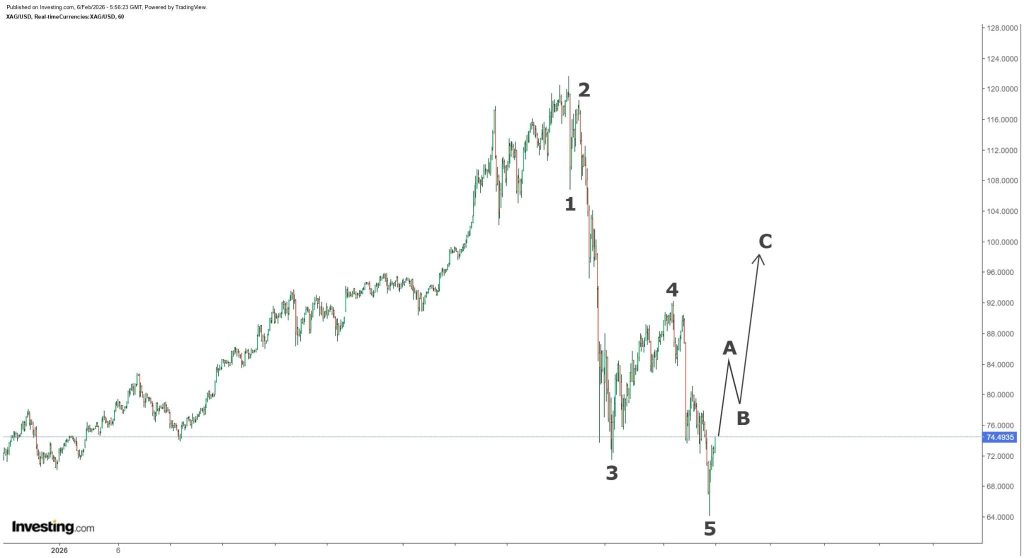
Silver Price Crash Is Over “For Real This Time,” Analyst Predicts a Surge Back Above $90

Silver Price Crash Is Over “For Real This Time,” Analyst Predicts a Surge Back Above $90

Silver has been taking a beating lately, and the Silver price hasn’t exactly been acting like a safe haven. After running up into the highs, the whole move reversed
Share
Captainaltcoin2026/02/07 03:15
Citi Caps Year-End at $4,300, But ETF outflows Challenge Outlook

Citi Caps Year-End at $4,300, But ETF outflows Challenge Outlook

The post Citi Caps Year-End at $4,300, But ETF outflows Challenge Outlook appeared on BitcoinEthereumNews.com. Ethereum Price Prediction: Citi Caps Year-End at $4,300, But ETF outflows Challenge Outlook Disclaimer: The information found on NewsBTC is for educational purposes only. It does not represent the opinions of NewsBTC on whether to buy, sell or hold any investments and naturally investing carries risks. You are advised to conduct your own research before making any investment decisions. Use information provided on this website entirely at your own risk. Related News © 2025 NewsBTC. All Rights Reserved. This website uses cookies. By continuing to use this website you are giving consent to cookies being used. Visit our Privacy Center or Cookie Policy. I Agree Source: https://www.newsbtc.com/news/ethereum/ethereum-price-prediction-citi-caps-year-end-at-4300-but-etf-outflows-challenge-outlook/
Share
BitcoinEthereumNews2025/09/18 14:30