President Donald Trump erupted Tuesday at The New York Times over a recent article that revealed the president had “backtracked” on his previous vow to extract President Donald Trump erupted Tuesday at The New York Times over a recent article that revealed the president had “backtracked” on his previous vow to extract

Trump rages as NY Times fails to 'adjust' article about him

2 min read

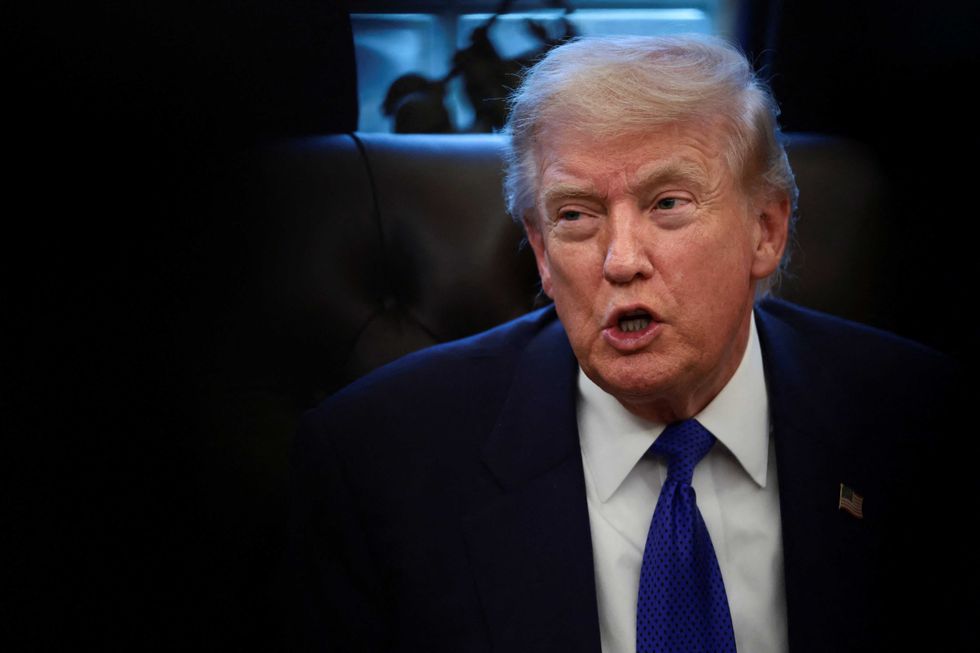
President Donald Trump erupted Tuesday at The New York Times over a recent article that revealed the president had “backtracked” on his previous vow to extract millions of dollars from Harvard over allegations that it had mishandled antisemitism on its campus.

“Why hasn’t the Fake News New York Times adjusted its phony article on the corruption and antisemitism which has taken place at Harvard?” Trump wrote on his social media platform Truth Social.

“They never call for facts, or factchecks, because the Times’ is a corrupt, unprincipled, and pathetic vehicle of the Left. They wrote only negatively about me in the last Election, and I won in a landslide.”

Harvard was one of many targets of the Trump administration’s efforts to exert more control over Ivy League schools, an effort that was couched in claims that higher education leaders had failed to adequately respond to instances of antisemitism. A number of universities saw massive protests beginning in 2024 amid Israel’s siege on Gaza calling on their institutes to divest from Israel.

Regarding Harvard, Trump had demanded the university fork over $200 million to his administration to resolve the dispute, but according to the Times, had backtracked on that demand, according to multiple Harvard and Trump officials who spoke with the outlet on the condition of anonymity.

“To anyone who knows, they have ZERO credibility, a ‘Rag’ at the lowest level,” Trump continued. “I look forward to watching their rapidly falling circulation force them to finally close their doors. That would be great news for America!”

Disclaimer: The articles reposted on this site are sourced from public platforms and are provided for informational purposes only. They do not necessarily reflect the views of MEXC. All rights remain with the original authors. If you believe any content infringes on third-party rights, please contact [email protected] for removal. MEXC makes no guarantees regarding the accuracy, completeness, or timeliness of the content and is not responsible for any actions taken based on the information provided. The content does not constitute financial, legal, or other professional advice, nor should it be considered a recommendation or endorsement by MEXC.
Tags:

You May Also Like

FCA komt in 2026 met aangepaste cryptoregels voor Britse markt

FCA komt in 2026 met aangepaste cryptoregels voor Britse markt

De Britse financiële waakhond, de FCA, komt in 2026 met nieuwe regels speciaal voor crypto bedrijven. Wat direct opvalt: de toezichthouder laat enkele klassieke financiële verplichtingen los om beter aan te sluiten op de snelle en grillige wereld van digitale activa. Tegelijkertijd wordt er extra nadruk gelegd op digitale beveiliging,... Het bericht FCA komt in 2026 met aangepaste cryptoregels voor Britse markt verscheen het eerst op Blockchain Stories.
Share
Coinstats2025/09/18 00:33
Cashing In On University Patents Means Giving Up On Our Innovation Future
Cashing In On University Patents Means Giving Up On Our Innovation Future

The post Cashing In On University Patents Means Giving Up On Our Innovation Future appeared on BitcoinEthereumNews.com. “It’s a raid on American innovation that would deliver pennies to the Treasury while kneecapping the very engine of our economic and medical progress,” writes Pipes. Getty Images Washington is addicted to taxing success. Now, Commerce Secretary Howard Lutnick is floating a plan to skim half the patent earnings from inventions developed at universities with federal funding. It’s being sold as a way to shore up programs like Social Security. In reality, it’s a raid on American innovation that would deliver pennies to the Treasury while kneecapping the very engine of our economic and medical progress. Yes, taxpayer dollars support early-stage research. But the real payoff comes later—in the jobs created, cures discovered, and industries launched when universities and private industry turn those discoveries into real products. By comparison, the sums at stake in patent licensing are trivial. Universities collectively earn only about $3.6 billion annually in patent income—less than the federal government spends on Social Security in a single day. Even confiscating half would barely register against a $6 trillion federal budget. And yet the damage from such a policy would be anything but trivial. The true return on taxpayer investment isn’t in licensing checks sent to Washington, but in the downstream economic activity that federally supported research unleashes. Thanks to the bipartisan Bayh-Dole Act of 1980, universities and private industry have powerful incentives to translate early-stage discoveries into real-world products. Before Bayh-Dole, the government hoarded patents from federally funded research, and fewer than 5% were ever licensed. Once universities could own and license their own inventions, innovation exploded. The result has been one of the best returns on investment in government history. Since 1996, university research has added nearly $2 trillion to U.S. industrial output, supported 6.5 million jobs, and launched more than 19,000 startups. Those companies pay…
Share
BitcoinEthereumNews2025/09/18 03:26
Trump foe devises plan to starve him of what he 'craves' most

Trump foe devises plan to starve him of what he 'craves' most

A longtime adversary of President Donald Trump has a plan for a key group to take away what Trump craves the most — attention. EX-CNN journalist Jim Acosta, who
Share
Rawstory2026/02/04 01:19
