The post Crypto Exchanges Rating and Review Methodology appeared on BitcoinEthereumNews.com. What this methodology applies to This methodology is used for reviewingThe post Crypto Exchanges Rating and Review Methodology appeared on BitcoinEthereumNews.com. What this methodology applies to This methodology is used for reviewing

Crypto Exchanges Rating and Review Methodology

What this methodology applies to

This methodology is used for reviewing:

  • Centralized crypto exchanges (CEXs)
  • Decentralized exchanges (DEXs)
  • Hybrid platforms that combine elements of both

It applies to:

  • Usage-based exchange lists (such as low-fee or no-KYC exchanges).
  • Region-specific exchange lists.
  • Individual exchange reviews.

Other product categories on Coingape, such as crypto cards, DeFi platforms, or wallets, follow their own evaluation standards.

How exchanges are selected

We do not attempt to review every exchange that exists. An exchange is considered only if it meets basic usability and transparency criteria. In general, a platform must:

  • Be live and accessible to users at the time of review
  • Support real trading activity, not just token swaps or previews
  • Publicly disclose core information such as fees, supported assets, and trading features

Platforms that are inactive, paused, restricted without notice, or lack clear documentation are usually excluded. Exchanges that are no longer open to new users may also be left out to avoid confusing readers.

Where our information comes from

All exchange reviews are based on publicly available information and hands-on research where possible.

Common sources include:

  • Official exchange websites and documentation
  • Fee schedules and trading rule disclosures
  • Public announcements and regulatory statements
  • Proof-of-reserves reports or audit disclosures, where available
  • User-facing product interfaces and support materials

Crypto exchanges often apply different rules depending on region. When terms differ by country, we focus on the most commonly applicable version and flag major regional differences when they materially affect access, fees, or features.

Core factors we look at

While different lists emphasize different priorities, the same core areas are reviewed across all exchange content.

Fees and liquidity

We look at trading fees, spreads, withdrawal costs, and how transparent the fee structure is. Liquidity matters as well. Thin order books or inconsistent pricing can significantly affect execution, especially during volatile markets.

We look at trading fees, spreads, withdrawal costs, and how transparent the fee structure is. Liquidity matters as well. Thin order books or inconsistent pricing can significantly affect execution, especially during volatile markets.

Security and custody

Security practices are a key part of any exchange review. This includes custody models, account protections, past incidents, and how the platform has handled issues when they occurred.

Security practices are a key part of any exchange review. This includes custody models, account protections, past incidents, and how the platform has handled issues when they occurred.

Compliance and jurisdiction

We consider where an exchange operates, what regulatory signals are visible, and whether the platform is upfront about licensing or restrictions. This is especially important for region-based exchange lists.

We consider where an exchange operates, what regulatory signals are visible, and whether the platform is upfront about licensing or restrictions. This is especially important for region-based exchange lists.

Trading features and markets

Spot trading, derivatives, margin, copy trading, bots, and API access are reviewed based on what the exchange claims to support and how usable those features are in practice.

Spot trading, derivatives, margin, copy trading, bots, and API access are reviewed based on what the exchange claims to support and how usable those features are in practice.

User experience

Ease of use, platform stability, app availability, and customer support all matter. An exchange that looks good on paper but is hard to use or unreliable tends to score lower.

Ease of use, platform stability, app availability, and customer support all matter. An exchange that looks good on paper but is hard to use or unreliable tends to score lower.

Track record and reputation

Longevity, public perception, and how an exchange has responded to past challenges are taken into account. We do not treat reputation alone as proof of quality, but it is part of the broader picture.

Longevity, public perception, and how an exchange has responded to past challenges are taken into account. We do not treat reputation alone as proof of quality, but it is part of the broader picture.

How star ratings are assigned

On individual exchange review pages, we use a 5-star rating system to summaries how a platform performs overall.

The star rating is not based on a single metric. It reflects how an exchange performs across the core areas covered in this methodology, including fees, security practices, trading features, compliance signals, usability, and track record.

Each exchange is reviewed against the same set of considerations. Strengths and weaknesses are weighed together to arrive at a final score rather than relying on any one standout feature.

Star ratings are meant to be comparative, not predictive. A higher rating means an exchange performs better relative to others we’ve reviewed, but it does not mean the platform is risk-free or suitable for every user.

What the star ranges generally indicate

  • 4.5 – 5 stars: Strong overall performance with few major drawbacks for most users. 
  • 4.0 – 4.4 stars: Solid exchanges with clear strengths, but some limitations depending on use case or region. 
  • 3.5 – 3.9 stars: Functional platforms that work well for certain users, but come with notable trade-offs. 
  • Below 3.5 stars: Exchanges with meaningful limitations, higher risk, or usability concerns that may not suit most users. 

The written review always provides more context than the star rating alone. Readers should use the full review to understand why a platform received a particular score.

How rankings work across different lists

Not all exchange lists are ranked the same way.

For example:

  • Low-fee exchange lists give more weight to trading and withdrawal costs
  • No-KYC exchange lists focus more on privacy, access limits, and custody risk
  • Region-specific lists place higher emphasis on compliance and availability

All rankings are built on the same underlying review approach, with certain factors weighted more heavily depending on the intent of the list.

Independence and commercial relationships

Exchange reviews and rankings on Coingape are not pay-to-play.

Some exchanges may have commercial or affiliate relationships with Coingape, while others may not. These relationships do not influence how platforms are evaluated or ranked. All exchanges are reviewed using the same standards.

Affiliate links, where present, are disclosed clearly on the page.

Source: https://coingape.com/cryptocurrency-exchanges/rating-and-review-methodology/

Disclaimer: The articles reposted on this site are sourced from public platforms and are provided for informational purposes only. They do not necessarily reflect the views of MEXC. All rights remain with the original authors. If you believe any content infringes on third-party rights, please contact [email protected] for removal. MEXC makes no guarantees regarding the accuracy, completeness, or timeliness of the content and is not responsible for any actions taken based on the information provided. The content does not constitute financial, legal, or other professional advice, nor should it be considered a recommendation or endorsement by MEXC.

You May Also Like

HitPaw API is Integrated by Comfy for Professional Image and Video Enhancement to Global Creators

HitPaw API is Integrated by Comfy for Professional Image and Video Enhancement to Global Creators

SAN FRANCISCO, Feb. 7, 2026 /PRNewswire/ — HitPaw, a leader in AI-powered visual enhancement solutions, announced Comfy, a global content creation platform, is
Share
AI Journal2026/02/08 09:15
Journalist gives brutal review of Melania movie: 'Not a single person in the theater'

Journalist gives brutal review of Melania movie: 'Not a single person in the theater'

A Journalist gave a brutal review of the new Melania documentary, which has been criticized by those who say it won't make back the huge fees spent to make it,
Share
Rawstory2026/02/08 09:08
Jerome Powell’s Press Conference: Crucial Insights Unveiled for the Market’s Future

Jerome Powell’s Press Conference: Crucial Insights Unveiled for the Market’s Future

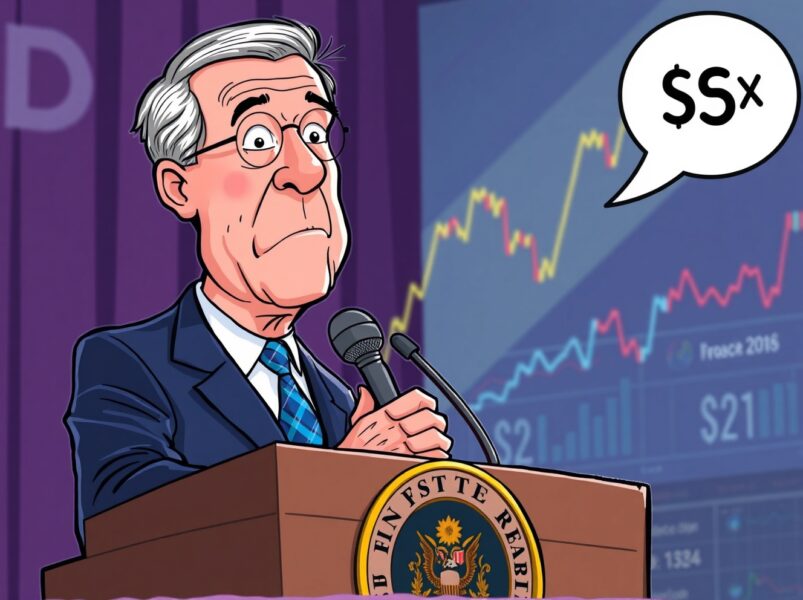
BitcoinWorld Jerome Powell’s Press Conference: Crucial Insights Unveiled for the Market’s Future The financial world, including the dynamic cryptocurrency market, often hangs on every word from the Federal Reserve. Recently, Jerome Powell’s press conference following the Federal Open Market Committee (FOMC) meeting concluded, leaving investors and analysts dissecting his remarks for clues about the future economic direction. This event is always a pivotal moment, shaping expectations for inflation, interest rates, and the overall stability of global markets. What Were the Key Takeaways from Jerome Powell’s Press Conference? During Jerome Powell’s press conference, the Fed Chair provided an update on the central bank’s monetary policy decisions and its economic outlook. His statements often reiterate the Fed’s dual mandate: achieving maximum employment and stable prices. This time was no different, with a strong emphasis on managing persistent inflation. Key points from the recent discussion included: Inflation Control: Powell emphasized the Fed’s unwavering commitment to bringing inflation back down to its 2% target. He reiterated that the fight against rising prices remains the top priority, even if it entails some economic slowdown. Interest Rate Policy: While the Fed’s stance on future interest rate adjustments was discussed, the path remains data-dependent. Powell indicated that decisions would continue to be made meeting-by-meeting, based on incoming economic data. Economic Projections: The updated Summary of Economic Projections (SEP) offered insights into the Fed’s forecasts for GDP growth, unemployment, and inflation. These projections help market participants gauge the central bank’s expectations for the economy’s trajectory. Quantitative Tightening (QT): The ongoing process of reducing the Fed’s balance sheet, known as quantitative tightening, was also a topic. This reduction in liquidity in the financial system has broad implications for asset prices. How Did Jerome Powell’s Remarks Impact Cryptocurrency Markets? The conclusion of Jerome Powell’s press conference often sends ripples through traditional financial markets, and cryptocurrencies are increasingly sensitive to these macroeconomic shifts. Digital assets, once thought to be uncorrelated, now frequently react to the Fed’s monetary policy signals. Higher interest rates, for instance, tend to make riskier assets like cryptocurrencies less attractive. This is because investors might prefer safer, interest-bearing investments. Consequently, we often see increased volatility in Bitcoin (BTC) and Ethereum (ETH) prices immediately following such announcements. The tightening of financial conditions, driven by the Fed, reduces overall liquidity in the system, which can put downward pressure on asset valuations across the board. However, some argue that this growing correlation signifies crypto’s increasing integration into the broader financial ecosystem. It suggests that institutional investors and mainstream finance are now paying closer attention to digital assets, treating them more like other risk-on investments. Navigating the Economic Landscape After Jerome Powell’s Press Conference For cryptocurrency investors, understanding the implications of Jerome Powell’s press conference is crucial for making informed decisions. The Fed’s policy trajectory directly influences the availability of capital and investor sentiment, which are key drivers for crypto valuations. Here are some actionable insights for navigating this environment: Stay Informed: Regularly monitor Fed announcements and economic data releases. Understanding the macroeconomic backdrop is as important as analyzing individual crypto projects. Assess Risk Tolerance: In periods of economic uncertainty and tighter monetary policy, a reassessment of personal risk tolerance is wise. Diversification within your crypto portfolio and across different asset classes can mitigate potential downsides. Focus on Fundamentals: While market sentiment can be swayed by macro news, projects with strong fundamentals, clear use cases, and robust development teams tend to perform better in the long run. Long-Term Perspective: Cryptocurrency markets are known for their volatility. Adopting a long-term investment horizon can help weather short-term fluctuations driven by macro events like Fed meetings. The challenges include potential continued volatility and reduced liquidity. However, opportunities may arise from market corrections, allowing strategic investors to accumulate assets at lower prices. In summary, Jerome Powell’s press conference provides essential guidance on the Fed’s economic strategy. Its conclusions have a profound impact on financial markets, including the dynamic world of cryptocurrencies. Staying informed, understanding the nuances of monetary policy, and maintaining a strategic investment approach are paramount for navigating the evolving economic landscape. The Fed’s actions underscore the interconnectedness of traditional finance and the burgeoning digital asset space. Frequently Asked Questions (FAQs) Q1: What is the Federal Open Market Committee (FOMC)? A1: The FOMC is the monetary policy-making body of the Federal Reserve System. It sets the federal funds rate target and directs open market operations, influencing the availability of money and credit in the U.S. economy. Q2: How do the Fed’s interest rate decisions typically affect cryptocurrency markets? A2: Generally, when the Fed raises interest rates, it makes borrowing more expensive and reduces liquidity in the financial system. This often leads investors to shy away from riskier assets like cryptocurrencies, potentially causing prices to decline. Conversely, lower rates can stimulate investment in riskier assets. Q3: What does “data-dependent” mean in the context of Fed policy? A3: “Data-dependent” means that the Federal Reserve’s future monetary policy decisions, such as interest rate adjustments, will primarily be based on the latest economic data. This includes inflation reports, employment figures, and GDP growth, rather than a predetermined schedule. Q4: Should I change my cryptocurrency investment strategy based on Jerome Powell’s press conference? A4: While it’s crucial to be aware of the macroeconomic environment shaped by Jerome Powell’s press conference, drastic changes to a well-researched investment strategy may not always be necessary. It’s recommended to review your portfolio, assess your risk tolerance, and consider if your strategy aligns with the current economic outlook, focusing on long-term fundamentals. If you found this analysis helpful, please consider sharing it with your network! Your insights and shares help us reach more readers interested in the intersection of traditional finance and the exciting world of cryptocurrencies. Spread the word! To learn more about the latest crypto market trends, explore our article on key developments shaping Bitcoin price action. This post Jerome Powell’s Press Conference: Crucial Insights Unveiled for the Market’s Future first appeared on BitcoinWorld.
Share
Coinstats2025/09/18 16:25