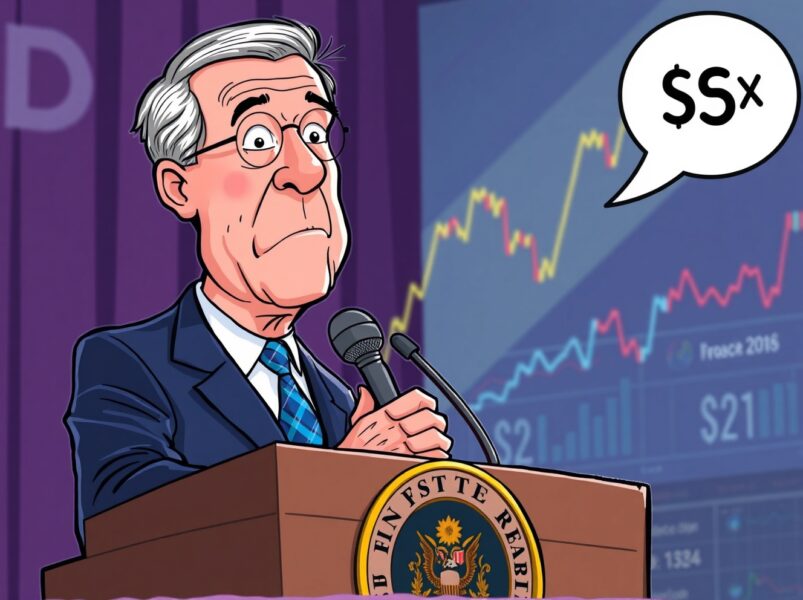
The post Indian Rupee faces backlash from FIIs selling in Indian stock market appeared on BitcoinEthereumNews.com. The Indian Rupee (INR) holds onto weekly lossesThe post Indian Rupee faces backlash from FIIs selling in Indian stock market appeared on BitcoinEthereumNews.com. The Indian Rupee (INR) holds onto weekly losses

Indian Rupee faces backlash from FIIs selling in Indian stock market

The Indian Rupee (INR) holds onto weekly losses against the US Dollar (USD) at open on Friday. The USD/INR pair trades close to its all-time high of 92.00 posted on Wednesday. The outlook for the pair remains broadly firm as the Indian Rupee is expected to continue facing backlash amid the consistent withdrawal of foreign funds from the Indian stock market.

Foreign Institutional Investors (FIIs) are consistently offloading their stake in the Indian equity market amid the absence of a trade deal announcement between the United States (US) and India. However, negotiators from both nations have been expressing optimism about reaching a consensus soon.

On Wednesday, US President Donald Trump also praised Indian Prime Minister (PM) Narendra Modi during his visit to the World Economic Forum (WEF) at Davos, and expressed confidence that both nations will have a good deal. “I have great respect for your Prime Minister. He’s a fantastic man and a friend of mine. We are going to have a good deal,” Trump said, Moneycontrol reported.

So far in January, FIIs have remained net sellers in 14 of 15 trading days and have sold shares worth Rs. 36,591.01 crore.

On the economic data front, India’s flash HSBC Purchasing Managers’ Index (PMI) data for January has come in stronger than expected. The Composite PMI rose sharply to 59.5 from 57.8 in December, driven by strong output in both manufacturing and the services sector. The Manufacturing PMI came in at 56.8, higher than the prior reading of 55.0. The Services PMI expanded to 59.3 from 58.0 in December.

Going forward, there will be an extended weekend in the Indian markets as they will remain closed on Monday due to Republic Day.

Daily Digest Market Movers: US Dollar weakens despite US-EU disputes being resolved

  • The US Dollar’s rally against the Indian Rupee hits a pause after posting a fresh all-time high as the former faces selling pressure despite resolving geopolitical and trade disputes between the US and the European Union (EU) over Greenland’s entitlement.
  • At the time of writing, the US Dollar Index (DXY), which tracks the Greenback’s value against six major currencies, wobbles near the two-week low of 98.26.
  • US-EU disputes resolved after President Donald Trump rolled back 10% tariffs imposed on several members of the old continent and ruled out fears of military action on Greenland, after meeting with NATO Secretary General, Mark Rutte, in which they reached a framework of a “future deal with respect to Greenland, and in fact, the entire Arctic Region”.
  • Market experts believe that the US-NATO framework is a temporary solution, but Trump’s “America First” priority, even at the cost of other nations’ reputation, is unfavorable for the US Dollar in the long run.
  • “While a Greenland deal solves the immediate problem of tariffs and invasion, it doesn’t solve the core issue of the seeming alienation of allies from one another. And that’s not a good place to be if you want to preserve the USD’s reserve-currency status,” analysts at Macquarie Group said.
  • On the monetary policy front, investors keenly await the announcement of the Federal Reserve’s (Fed) next Chair, which is expected soon. US President Trump said on Thursday that he has decided on the successor to Chair Jerome Powell, and will announce soon. “I’ll be telling you soon. I have somebody that I think will be very good,” Trump said.
  • According to recent comments from White House officials, National Economic Council Director Kevin Hassett, BlackRock executive Rick Rieder, current Fed Governor Christopher Waller, and Michelle Bowman, and former Fed governor Kevin Warsh are top contenders to replace Fed’s Powell.

Technical Analysis: USD/INR holds onto gains near 92.00

USD/INR trades firmly at 91.8115 as of writing. The 20-day Exponential Moving Average (EMA) trends higher at 90.8253 and underpins the advance. Price holds above this rising 20-day EMA, keeping the near-term bias upward.

The 14-day Relative Strength Index (RSI) at 72.84 (overbought) signals stretched momentum. Immediate support sits at the 20-day EMA, and bulls would retain control as long as the price is above it.

A pullback toward the average at 90.8253 could attract buyers, while a close below it would shift focus to consolidation.

(The technical analysis of this story was written with the help of an AI tool.)

Indian Rupee FAQs

The Indian Rupee (INR) is one of the most sensitive currencies to external factors. The price of Crude Oil (the country is highly dependent on imported Oil), the value of the US Dollar – most trade is conducted in USD – and the level of foreign investment, are all influential. Direct intervention by the Reserve Bank of India (RBI) in FX markets to keep the exchange rate stable, as well as the level of interest rates set by the RBI, are further major influencing factors on the Rupee.

The Reserve Bank of India (RBI) actively intervenes in forex markets to maintain a stable exchange rate, to help facilitate trade. In addition, the RBI tries to maintain the inflation rate at its 4% target by adjusting interest rates. Higher interest rates usually strengthen the Rupee. This is due to the role of the ‘carry trade’ in which investors borrow in countries with lower interest rates so as to place their money in countries’ offering relatively higher interest rates and profit from the difference.

Macroeconomic factors that influence the value of the Rupee include inflation, interest rates, the economic growth rate (GDP), the balance of trade, and inflows from foreign investment. A higher growth rate can lead to more overseas investment, pushing up demand for the Rupee. A less negative balance of trade will eventually lead to a stronger Rupee. Higher interest rates, especially real rates (interest rates less inflation) are also positive for the Rupee. A risk-on environment can lead to greater inflows of Foreign Direct and Indirect Investment (FDI and FII), which also benefit the Rupee.

Higher inflation, particularly, if it is comparatively higher than India’s peers, is generally negative for the currency as it reflects devaluation through oversupply. Inflation also increases the cost of exports, leading to more Rupees being sold to purchase foreign imports, which is Rupee-negative. At the same time, higher inflation usually leads to the Reserve Bank of India (RBI) raising interest rates and this can be positive for the Rupee, due to increased demand from international investors. The opposite effect is true of lower inflation.

Source: https://www.fxstreet.com/news/usd-inr-trades-firmly-near-lifetime-highs-ahead-of-extended-weekend-in-india-202601230556


Disclaimer: The articles reposted on this site are sourced from public platforms and are provided for informational purposes only. They do not necessarily reflect the views of MEXC. All rights remain with the original authors. If you believe any content infringes on third-party rights, please contact [email protected] for removal. MEXC makes no guarantees regarding the accuracy, completeness, or timeliness of the content and is not responsible for any actions taken based on the information provided. The content does not constitute financial, legal, or other professional advice, nor should it be considered a recommendation or endorsement by MEXC.

You May Also Like

HitPaw API is Integrated by Comfy for Professional Image and Video Enhancement to Global Creators

HitPaw API is Integrated by Comfy for Professional Image and Video Enhancement to Global Creators

SAN FRANCISCO, Feb. 7, 2026 /PRNewswire/ — HitPaw, a leader in AI-powered visual enhancement solutions, announced Comfy, a global content creation platform, is
Share
AI Journal2026/02/08 09:15
Journalist gives brutal review of Melania movie: 'Not a single person in the theater'

Journalist gives brutal review of Melania movie: 'Not a single person in the theater'

A Journalist gave a brutal review of the new Melania documentary, which has been criticized by those who say it won't make back the huge fees spent to make it,
Share
Rawstory2026/02/08 09:08
Jerome Powell’s Press Conference: Crucial Insights Unveiled for the Market’s Future

Jerome Powell’s Press Conference: Crucial Insights Unveiled for the Market’s Future

BitcoinWorld Jerome Powell’s Press Conference: Crucial Insights Unveiled for the Market’s Future The financial world, including the dynamic cryptocurrency market, often hangs on every word from the Federal Reserve. Recently, Jerome Powell’s press conference following the Federal Open Market Committee (FOMC) meeting concluded, leaving investors and analysts dissecting his remarks for clues about the future economic direction. This event is always a pivotal moment, shaping expectations for inflation, interest rates, and the overall stability of global markets. What Were the Key Takeaways from Jerome Powell’s Press Conference? During Jerome Powell’s press conference, the Fed Chair provided an update on the central bank’s monetary policy decisions and its economic outlook. His statements often reiterate the Fed’s dual mandate: achieving maximum employment and stable prices. This time was no different, with a strong emphasis on managing persistent inflation. Key points from the recent discussion included: Inflation Control: Powell emphasized the Fed’s unwavering commitment to bringing inflation back down to its 2% target. He reiterated that the fight against rising prices remains the top priority, even if it entails some economic slowdown. Interest Rate Policy: While the Fed’s stance on future interest rate adjustments was discussed, the path remains data-dependent. Powell indicated that decisions would continue to be made meeting-by-meeting, based on incoming economic data. Economic Projections: The updated Summary of Economic Projections (SEP) offered insights into the Fed’s forecasts for GDP growth, unemployment, and inflation. These projections help market participants gauge the central bank’s expectations for the economy’s trajectory. Quantitative Tightening (QT): The ongoing process of reducing the Fed’s balance sheet, known as quantitative tightening, was also a topic. This reduction in liquidity in the financial system has broad implications for asset prices. How Did Jerome Powell’s Remarks Impact Cryptocurrency Markets? The conclusion of Jerome Powell’s press conference often sends ripples through traditional financial markets, and cryptocurrencies are increasingly sensitive to these macroeconomic shifts. Digital assets, once thought to be uncorrelated, now frequently react to the Fed’s monetary policy signals. Higher interest rates, for instance, tend to make riskier assets like cryptocurrencies less attractive. This is because investors might prefer safer, interest-bearing investments. Consequently, we often see increased volatility in Bitcoin (BTC) and Ethereum (ETH) prices immediately following such announcements. The tightening of financial conditions, driven by the Fed, reduces overall liquidity in the system, which can put downward pressure on asset valuations across the board. However, some argue that this growing correlation signifies crypto’s increasing integration into the broader financial ecosystem. It suggests that institutional investors and mainstream finance are now paying closer attention to digital assets, treating them more like other risk-on investments. Navigating the Economic Landscape After Jerome Powell’s Press Conference For cryptocurrency investors, understanding the implications of Jerome Powell’s press conference is crucial for making informed decisions. The Fed’s policy trajectory directly influences the availability of capital and investor sentiment, which are key drivers for crypto valuations. Here are some actionable insights for navigating this environment: Stay Informed: Regularly monitor Fed announcements and economic data releases. Understanding the macroeconomic backdrop is as important as analyzing individual crypto projects. Assess Risk Tolerance: In periods of economic uncertainty and tighter monetary policy, a reassessment of personal risk tolerance is wise. Diversification within your crypto portfolio and across different asset classes can mitigate potential downsides. Focus on Fundamentals: While market sentiment can be swayed by macro news, projects with strong fundamentals, clear use cases, and robust development teams tend to perform better in the long run. Long-Term Perspective: Cryptocurrency markets are known for their volatility. Adopting a long-term investment horizon can help weather short-term fluctuations driven by macro events like Fed meetings. The challenges include potential continued volatility and reduced liquidity. However, opportunities may arise from market corrections, allowing strategic investors to accumulate assets at lower prices. In summary, Jerome Powell’s press conference provides essential guidance on the Fed’s economic strategy. Its conclusions have a profound impact on financial markets, including the dynamic world of cryptocurrencies. Staying informed, understanding the nuances of monetary policy, and maintaining a strategic investment approach are paramount for navigating the evolving economic landscape. The Fed’s actions underscore the interconnectedness of traditional finance and the burgeoning digital asset space. Frequently Asked Questions (FAQs) Q1: What is the Federal Open Market Committee (FOMC)? A1: The FOMC is the monetary policy-making body of the Federal Reserve System. It sets the federal funds rate target and directs open market operations, influencing the availability of money and credit in the U.S. economy. Q2: How do the Fed’s interest rate decisions typically affect cryptocurrency markets? A2: Generally, when the Fed raises interest rates, it makes borrowing more expensive and reduces liquidity in the financial system. This often leads investors to shy away from riskier assets like cryptocurrencies, potentially causing prices to decline. Conversely, lower rates can stimulate investment in riskier assets. Q3: What does “data-dependent” mean in the context of Fed policy? A3: “Data-dependent” means that the Federal Reserve’s future monetary policy decisions, such as interest rate adjustments, will primarily be based on the latest economic data. This includes inflation reports, employment figures, and GDP growth, rather than a predetermined schedule. Q4: Should I change my cryptocurrency investment strategy based on Jerome Powell’s press conference? A4: While it’s crucial to be aware of the macroeconomic environment shaped by Jerome Powell’s press conference, drastic changes to a well-researched investment strategy may not always be necessary. It’s recommended to review your portfolio, assess your risk tolerance, and consider if your strategy aligns with the current economic outlook, focusing on long-term fundamentals. If you found this analysis helpful, please consider sharing it with your network! Your insights and shares help us reach more readers interested in the intersection of traditional finance and the exciting world of cryptocurrencies. Spread the word! To learn more about the latest crypto market trends, explore our article on key developments shaping Bitcoin price action. This post Jerome Powell’s Press Conference: Crucial Insights Unveiled for the Market’s Future first appeared on BitcoinWorld.
Share
Coinstats2025/09/18 16:25