

Digitap ($TAP) vs. XRP: Predicting a 10X Rally for $TAP Following the Visa Card Global Rollout
The post Digitap ($TAP) vs. XRP: Predicting a 10X Rally for $TAP Following the Visa Card Global Rollout appeared first on Coinpedia Fintech News
Payments are heating up again as stablecoins scale and start eating into global payment corridors. The market wants better money products, and banking altcoins to buy look like the main adoption trade of the year.
The Digitap ($TAP) crypto presale has begun its global Visa card rollout, and now investors are asking, can this small-cap crypto become a consumer banking giant in 2026? Already one of the most watched banking setups in January, its live product has put it among the most interesting altcoins to buy, even among investors who usually ignore presales.
With the stablecoin supply booming, regulation improving, and demand for digital-first banking experiencing hocketstick growth, it is increasingly clear to smart money that banking could be the leading trade this year.
Who wins the title of best crypto to buy now? XRP, the legacy institutional payments major, or Digitap, the consumer banking product designed for the stablecoin era. Read on to find out.
Is XRP Still a Leading Altcoin to Buy in the Payments Race?
XRP has one of the strongest legacies in crypto and still enjoys support from even institutional buyers, thanks to its new wave of ETF products. It launched more than a decade ago with a simple mission of modernizing cross-border payments.
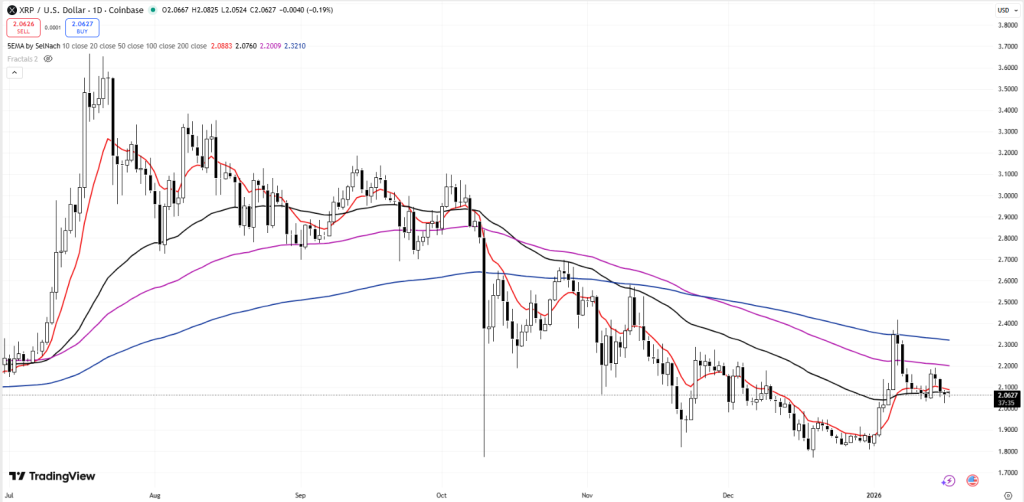
While XRP has been in a steady downtrend since summer last year, it recently broke out, and XRP bulls want to see a continuation at these levels. Legacy rails are still way too expensive and too slow—that reason alone is why retail and institutional buyers keep returning to XRP when the payments narrative heats up.
But XRP’s biggest problem is stablecoin. While Ripple has already shipped its own stablecoin, XRP has a roughly $124 billion market cap, while the ledger processes no meaningful volume. While stablecoin transaction volume skyrockets. XRP is priced like a finished product with global adoption, and upside is likely muted from its current price.
For investors looking for the next generation of altcoins to buy in the payments lane, Digitap looks much more attractive, especially after 10x price predictions following its global Visa card rollout.
Digitap: Next-Gen Banking Altcoin Built for Consumer Adoption
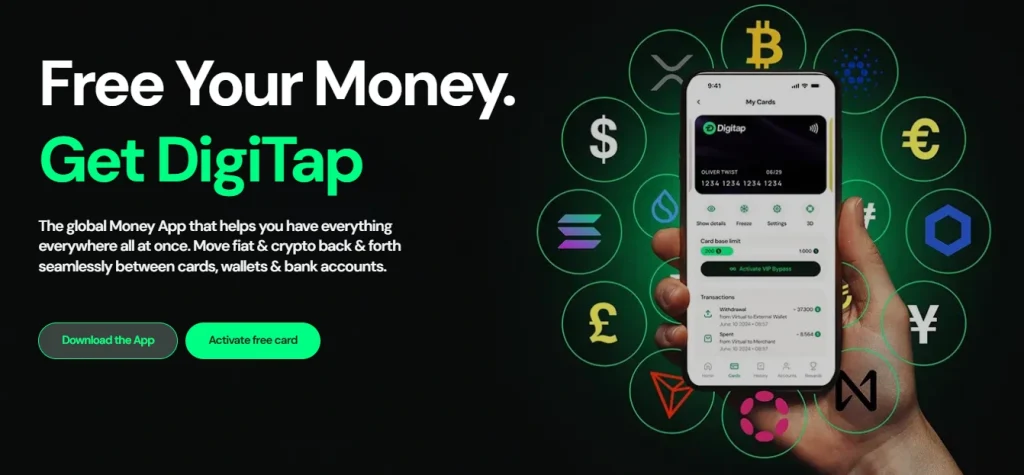
Digitap has built the world’s first omni-bank—available for download on iOS and Android today. blurring the line between fiat and crypto. Built for the modern digital-first reality, Digitap is taking stablecoins and blockchains and packaging them into a familiar neobank interface, and delivering an app that makes money move faster and is more cost-effective.
The Digitap crypto presale focuses on doing the basics, but doing them very well. But what is omni-banking? It is a simple idea: blur the line between fiat and crypto. Give users a single dashboard where they can move, swap, send, trade, receive, and stake more than 20 fiat currencies and 100 crypto assets.
There is no longer any need to juggle multiple apps, and now all eyes are on the Visa card rollout. One of the largest problems faced by crypto users is that their on-chain assets and real-world money are completely separate. Digitap’s Visa card removes this friction, enabling crypto to be spent with millions of merchants globally.
The AI engine finds the best possible swap price, whether that’s a DEX or OTC desk at the point of purchase. And these users earn cashback rewards in $TAP. But what’s driving the 10X price predictions for $TAP, still available at $0.0439? Spending is habitual, and when a product becomes part of a user’s daily life, it starts to scale.
Additionally, Digitap’s focus on delivering stablecoins to non-crypto gives it a much larger addressable market than other altcoins to buy in the payment race.
$TAP vs. XRP: The Adoption Curve Will Decide Which is the Best Crypto to Buy Now
Both projects have very different strategies. Ripple’s approach is institutional-first, whereas Digitap’s strategy is consumer-first. This matters because remittances and cross-border payments are bottom-up industries. Small flows driven by daily life make up these markets, and that’s what gives the Digitap crypto presale an advantage.
Whereas regular people cannot use XRP, Digitap has purposefully designed an interface that feels familiar. It is a modern fintech app that hides crypto under the hood. It is better suited for the 1.4 billion underbanked users who need better access to financial products.
$TAP also inches ahead as the best crypto to buy now on the tokenomics front. It leans into a profit-sharing ownership model, allocating 50% of platform profits to the token flywheel. This real yield from banking profits powering token burns and staking rewards, the presale price of $0.0439, and the ongoing rollout of services are why $TAP fairly deserves its 10X price forecast.
Discover the future of crypto cards with Digitap by checking out their live Visa card project here:
- Presale https://presale.digitap.app
- Website: https://digitap.app
- Social: https://linktr.ee/digitap.app
- Win $250K: https://gleam.io/bfpzx/digitap-250000-giveaway
You May Also Like

Cashing In On University Patents Means Giving Up On Our Innovation Future

XRP Ledger Unlocks Permissioned Domains With 91% Validator Backing
