

Crypto market in the PVP era: How can retail investors break through?
Original text: RVM , compiled by Yuliya, PANews
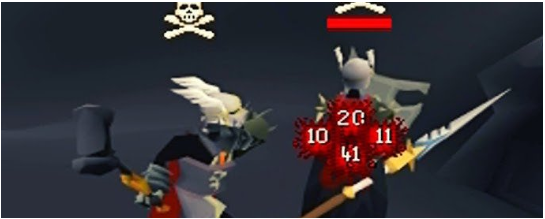
In the digital world of RuneScape, one of the most notorious predatory tactics used in the Wild Area is "baiting." This technique involves exploiting the naivety and greed of unsuspecting players, luring them deep into the dangerous Wild Area - a high-risk player-versus-player (PVP) zone - with false promises of safety, profit opportunities, or goodwill.
The mechanic is simple yet effective. The inducer will pose as a helpful ally, offering an enticing reward or favor, carefully crafting a narrative to build trust and lower the victim's guard. Once the victim enters a wilderness area, the illusion is broken and the predator's true intentions are revealed - to ambush the target, strip them of their belongings, and leave them penniless.
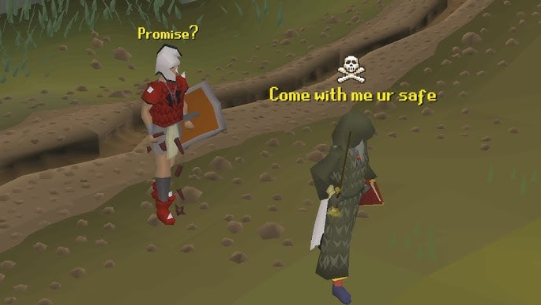
This age-old tactic, born out of psychological manipulation and opportunism, is a great example of how social dynamics and trust can be weaponized in a zero-sum environment to extract value from others. It’s a profound warning: the promise of security or guaranteed returns often masks an asymmetric setup designed to benefit the initiator at the expense of the participant.
Market Status

Liquidity fragmentation and short-lived narratives
-
Too many projects and blockchains: The cryptocurrency ecosystem is rapidly expanding, covering multiple blockchains, protocols, and tokens. This explosive growth has seriously distracted traders, and a large number of new projects and "hot narratives" have emerged, competing for capital inflows. Each project and narrative is trying to gain a share of the limited market, but this competition has led to a fragmented market.
-
High-speed liquidity rotation: Liquidity in the market is shifting from one "hot spot" to another at an unprecedented speed. Once a narrative loses its appeal, participants will quickly abandon it and pursue the next opportunity. This pattern leads to short-term surges and rapid declines in prices, forming "short-lived market" from which most traders fail to realize profits.
Key conclusion: Due to the emergence of a large number of projects and the frequent rotation of liquidity, it is difficult for any single narrative to sustain long-term price increases, and traders need to pay more attention to liquidity dynamics.
Superposition of interests and differentiation of market sentiment
Incentive-driven opinion leaders: In the crypto market, key opinion leaders (KOLs) often promote projects based on their personal interests. They use social media to guide market sentiment and drive short-term popularity of projects. This behavior makes the market narrative lack consistency and further exacerbates the division of market sentiment.
Split market signals: Current market sentiment is full of contradictions. On the one hand, some macroeconomic indicators seem to indicate the arrival of a "bull market"; on the other hand, retail traders generally lose money, and market sentiment appears extremely pessimistic. This inconsistency of signals increases market volatility and confuses traders even more.
Key conclusion: Interest-driven rhetoric and conflicting signals in the market make the trading environment more complicated, and traders need to be wary of seemingly "authoritative" opinions.
Bitcoin trading and the phantom altcoin season
Seizing the Bitcoin Rise: In this round of the market, the traders who made the most money were concentrated in the early stages of Bitcoin's rise. They seized the opportunity to rise earlier than retail traders through precise timing. However, many retail investors were disappointed with Bitcoin's "low return expectations" and turned their funds to altcoins in an attempt to obtain higher returns.
Misjudgment by retail traders: Retail traders tend to avoid Bitcoin, believing that its market capitalization is too high and its potential upside is limited. They try to find the "next Bitcoin" and put their money into altcoins with lower market capitalization but great potential. However, this strategy mostly fails as the expected "altcoin season" did not come as expected, leaving many people in deep losses.
Key takeaway: Professional traders have seen significant returns from Bitcoin’s rally, while retail traders have missed out by trying to bet on altcoins.
Solana vs Ethereum: Meme Tokens and Liquidity Traps
-
Short-lived meme craze: The popularity of meme tokens is represented by Pump.fun. Such platforms have spawned a series of new tokens that rely on hype and virality. These assets lack actual value support but attract a large amount of retail funds. This phenomenon is essentially a speculative cycle: early participants try to profit from subsequent capital inflows rather than based on the long-term development prospects of the project.
-
An open Ponzi scheme? The survival of Meme tokens depends on continued attention and increasing liquidity. Market participants generally recognize its speculative nature - building a position before others buy at a higher price, and this recognition creates a short-lived pump cycle.
-
Ethereum, the former king of Memes: Ethereum led the market frenzy with NFTs during the 2021 bull market cycle, and again achieved significant gains relative to Bitcoin through tokens such as $PEPE and $MOG in early 2024, bringing considerable returns to early participants.
However, on the eve of Trump's election, the overall market gradually turned sideways and a lot of momentum disappeared. As of mid-2024, there are few opportunities for easy profits, and current Meme traders face two major challenges:
-
The rise of professional market players: Trading meme tokens with a market cap of billions of dollars now actually involves competing against professional players and algorithmic market makers who dominate liquidity.
-
High entry valuation: Meme tokens are currently generally overvalued and it is difficult to reproduce exponential growth.
Key Takeaways: Both the Solana and Ethereum ecosystems have become flooded with micro-cap tokens, further diluting liquidity. The early easy profit period has passed, replaced by a riskier market environment dominated by professional traders.
Hyperliquid and the pursuit of excess returns
-
Airdrop Bonus: Hyperliquid has attracted a large number of active traders and liquidity with its generous airdrop plan and innovative product portfolio. However, the influx of large-scale funds has also fueled reckless speculation.
-
Traders are losing money: According to platform data (such as profit and loss charts), most users who trade short-term on Hyperliquid are losing money, especially when chasing hot spots. Although the platform has development potential, the frequent rotation between meme coins and other high-risk assets significantly increases the probability of losses.
Key takeaway: Even on innovative platforms, the zero-sum nature of aggressive speculation remains. Traders frequently switch between tokens in search of excess returns, but these gains often evaporate quickly in the face of professional competition.
Comprehensive PVP: Insiders, Institutions and VCs
-
Asymmetric information advantage: Insiders and institutional investors are often able to plan ahead, and they have information that ordinary investors cannot obtain. When retail investors follow price trends and market narratives, they often miss the biggest profit opportunities.
-
The pace of listing and market impact: The "listing trend" - the phenomenon of tokens skyrocketing after the announcement of listing on major exchanges - further exacerbates the advantage of insiders. Insiders can accumulate chips in advance, while latecomers can only take over at high prices.
Key conclusion: The cryptocurrency market is essentially a high-risk "player versus player" (PVP) game. Big money players take advantage of information asymmetry and early layout to maximize profits at the expense of the information disadvantaged group.
Altcoin Overextension and the Trump Coin Incident
-
Dual tokens’ liquidity sucking: Trump and Melania tokens perfectly illustrate how new tokens can drain the last of the liquidity from an already exhausted market. This phenomenon is like a huge “liquidity black hole” that devours the remaining funds in the market.
-
Retail investors are the last to take the risk: As with most frenzy-driven token issuances, insiders have reaped most of the profits, while ordinary traders who entered the market later have suffered deep losses, which has further exacerbated the market's pessimism and confidence crisis.
Key conclusion: The depletion of market liquidity and the continuous issuance of new tokens have exacerbated the losses of ordinary participants, creating a market dilemma of "no one to take over".
Where will the market go in the future?
-
Rebound Potential Analysis: Despite the bleak outlook for the altcoin market, Bitcoin's continued institutional adoption remains bullish. At $105,000, Bitcoin maintains a strong uptrend. Positive news from the government or major regulators could reignite the overall bullish sentiment.
-
Stay alert to future market trends: Even if liquidity returns and market enthusiasm reappears, participants still need to remain highly vigilant. The market is still dominated by professional trading institutions and insiders, and the competition environment is extremely fierce.
-
Shorten trading cycles: In a fully competitive PVP market, it is often safer to enter and exit quickly than to rely on long-term trends. The early days of easy buy-and-hold meme coins (such as in previous cycles or early 2024) seem to be over for the time being.
Key conclusion: If macro conditions cooperate and new participants enter the market, the market may regain a positive atmosphere, but caution is still the top priority. Traders should recognize the PVP nature of the current market and avoid over-investing in short-term market narratives.
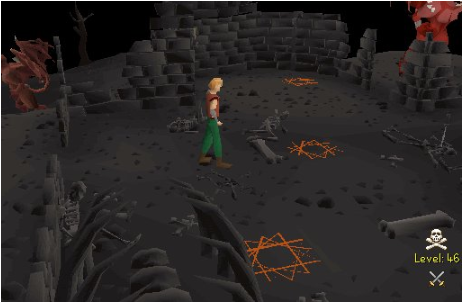
Deep in the mountains and wilderness - it is recommended to proceed with caution
Final Thoughts
A persistent theme in today’s crypto ecosystem is the fragmentation of funding and attention. This dynamic, combined with the powerful influence of insiders and rapidly shifting market narratives, puts the average retail investor at a disadvantage. While significant upside is still possible in a macro environment favorable to Bitcoin, market participants must approach any gains with a strategic and risk-controlled mindset.
Practical advice:
-
Set realistic expectations - The days of easy 10x returns may be over for now.
-
Diversify wisely - Don’t over-spread your funds across multiple hype coins.
-
Stay flexible - Shorter holding periods and aggressive profit taking can help in a PVP environment.
-
Pursue quality - Focus on projects with real value and strong fundamentals rather than simply chasing hype.
Finally, the era of "everyone wins" may be over - the market game is more brutal and information asymmetry does exist. But as long as you remain vigilant and are good at identifying real opportunities, savvy market participants can still make profits in this "wilderness".
You May Also Like

The Role of Blockchain in Building Safer Web3 Gaming Ecosystems
- Immutable Ownership of Assets Blockchain records can be manipulated by anyone. If a player owns a sword, skin, or plot of land as an NFT, it is verifiably in their ownership, and it cannot be altered or deleted by the developer or even hacked. This has created a proven track record of ownership, providing control back to the players, unlike any centralised gaming platform where assets can be revoked.
- Decentralized Infrastructure Blockchain networks also have a distributed architecture where game data is stored in a worldwide network of nodes, making them much less susceptible to centralised points of failure and attacks. This decentralised approach makes it exponentially more difficult to hijack systems or even shut off the game’s economy.
- Secure Transactions with Cryptography Whether a player buys an NFT or trades their in-game tokens for other items or tokens, the transactions are enforced by cryptographic algorithms, ensuring secure, verifiable, and irreversible transactions and eliminating the risks of double-spending or fraudulent trades.
- Smart Contract Automation Smart contracts automate the enforcement of game rules and players’ economic exchanges for the developer, eliminating the need for intermediaries or middlemen, and trust for the developer. For example, if a player completes a quest that promises a reward, the smart contract will execute and distribute what was promised.
- Anti-Cheating and Fair Gameplay The naturally transparent nature of blockchain makes it extremely simple for anyone to examine a specific instance of gameplay and verify the economic outcomes from that play. Furthermore, multi-player games that enforce smart contracts on things like loot sharing or win sharing can automate and measure trustlessness and avoid cheating, manipulations, and fraud by developers.
- Cross-Platform Security Many Web3 games feature asset interoperability across platforms. This interoperability is made viable by blockchain, which guarantees ownership is maintained whenever assets transition from one game or marketplace to another, thereby offering protection to players who rely on transfers for security against fraud. Key Security Dangers in Web3 Gaming Although blockchain provides sound first principles of security, the Web3 gaming ecosystem is susceptible to threats. Some of the most serious threats include:

Vitalik Buterin Challenges Ethereum’s Layer 2 Paradigm
