

Why Iran Is Turning to Crypto for Overseas Weapons Sales
This article was first published on The Bit Journal.
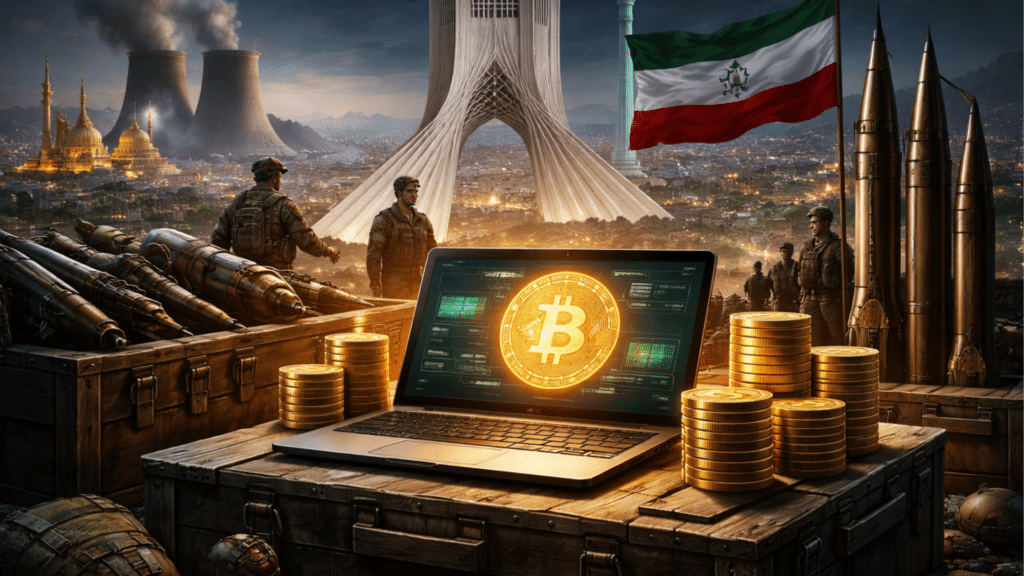
Iran crypto arms sales have taken a clear and unusual shape after Tehran confirmed that foreign governments can now pay for advanced military weapons using digital currencies. This development comes at a time when Western pressure over Iran’s nuclear programme has increased.
The policy, revealed through verified defence export documents, is not a proposal for the future but an active system that has been in place for almost a year. It shows a calculated effort by Iran to keep its strategic arms exports moving while access to traditional financial channels remains restricted.
How Have Sanctions and Nuclear Tensions Shaped Iran’s Shift to Crypto Payments?
The origins of Iran crypto arms sales can be traced to years of sanctions that have restricted Iran’s access to the global banking system. Iran’s Ministry of Defence Export Center, known as Mindex, is responsible for managing all foreign arms sales. Promotional material reviewed by the Financial Times shows that Mindex has been accepting payments in cryptocurrency, barter deals, and Iranian rials since early last year.
 Why Iran Is Turning to Crypto for Overseas Weapons Sales 3
The timing of this disclosure stands out. Western countries have stepped up diplomatic and economic pressure on Tehran over its nuclear programme, leading analysts to see the shift in payment methods as a practical response to financial restrictions rather than a symbolic move.
How significant is this move in global arms trading?
Security experts say Iran crypto arms sales represent one of the first known examples of a country openly offering advanced military equipment in exchange for digital currencies. Instead of relying on secretive or informal methods often linked to sanctions evasion, Mindex is using a clear, organised, and state-supported system.
A regional defence analyst explained that this approach shows a move away from short-term fixes toward a more established structure, adding that cryptocurrency payments offer stability and certainty when traditional banking options are not available.
What weapons are involved and how wide is Iran’s reach?
At the centre of Iran crypto arms sales is Mindex’s claim that it has defence-related dealings with 35 countries. Its product list includes Emad ballistic missiles, Shahed drones, Shahid Soleimani-class warships, short-range air defence systems, anti-ship cruise missiles, rockets, and small arms.
While no prices are made public, buyers are allowed to inspect the equipment in person inside Iran, provided they receive security approval. Payments can also be arranged either within Iran or from abroad, giving buyers more flexibility in how deals are completed.
How does Mindex address sanctions and delivery concerns?
The setup behind Iran crypto arms sales is largely online and easy to access. Mindex operates a multilingual website that has been verified through archived data, registration records, and technical checks. The site is hosted on an Iranian cloud service that is already under U.S. Treasury sanctions and has been linked by U.S. officials to Iran’s intelligence network.
Buyers are directed through a digital portal supported by a chatbot. In the site’s FAQ section, Mindex openly responds to concerns about sanctions, saying that Iran’s approach to getting around restrictions allows contracts to be completed and weapons to reach buyers without disruption.
Why is cryptocurrency central to Iran’s strategy?
Sanctions continue to be the main force behind Iran crypto arms sales. Western governments have made it clear that anyone using traditional banking systems to do business with Iran could be cut off from U.S., EU, and U.K. financial networks. Cryptocurrencies offer a way to complete payments without going through those tightly controlled systems.
U.S. officials have earlier accused Iran of using digital currencies to support oil sales and transfer large amounts of money outside regulated financial channels. In September, people linked to Iran’s Revolutionary Guards were sanctioned for running what authorities described as a crypto-based shadow banking network.
How does broader crypto enforcement shape the context?
The growth of Iran crypto arms sales is happening at a time when governments around the world are closely watching the misuse of cryptocurrency. Israel recently said it had seized 187 crypto wallets believed to be connected to militant financing.
At the same time, Western officials have warned that BRICS countries are looking into alternative payment systems to reduce their dependence on dollar-based sanctions. Together, these developments highlight rising concern that digital assets are increasingly being used by sanctioned states and groups to keep trade moving and maintain access to funds.
What role does Iran’s domestic crypto market play?
Iran’s growing use of cryptocurrency at home helps support Iran crypto arms sales. An estimated 5 million people in Iran are active crypto traders, and incoming crypto transactions rose by 11.8% compared with the previous year in 2025.
 Why Iran Is Turning to Crypto for Overseas Weapons Sales 4
This activity is backed by local exchanges such as Bit24, Excoino, and Nobitex. Even after the Nobitex security breach in June 2025, which led to losses estimated between $80–90 million, analysts say overall crypto adoption in the country continued to move forward.
Conclusion
Iran crypto arms sales highlight how sanctioned states are adjusting to financial isolation by building and formalising alternative payment systems. Iran ranked 18th worldwide in arms exports in 2024, according to SIPRI, and analysts believe its role could grow further as traditional arms exporters face increasing limitations.
For regulators and policymakers, this development raises concerns about how effective sanctions will remain in the future. For market watchers and security analysts, it sends a clear message that cryptocurrency is no longer on the sidelines and is becoming an increasingly important part of state-level defence trade.
Glossary
Mindex: Iran’s government agency that handles all foreign weapons sales.
Digital Payments: Paying online using cryptocurrency or other digital money.
Shadow Banking: Moving money outside regular banks through unofficial channels.
Barter: Trading goods or services directly without using money.
Domestic Crypto Market: Cryptocurrency trading inside Iran on local exchanges.
Frequently Asked Questions About Iran Crypto Arms Sales
Why is Iran using cryptocurrency for weapons?
Iran is using cryptocurrency to bypass Western sanctions and continue selling military equipment.
What weapons are included in these sales?
The weapons include missiles, drones, warships, short-range air defence systems, rockets, and small arms.
How do buyers pay and receive the weapons?
Buyers can pay in cryptocurrency, barter, or Iranian rials, and inspections are allowed in Iran with security approval.
Does Iran have a domestic crypto market?
Yes, about 5 million Iranians trade cryptocurrency, and local exchanges support this growing market.
Could Iran crypto arms sales affect global military trade?
Yes, experts say it could change how sanctioned countries sell weapons and handle payments worldwide.
Sources
Cryptonews
Mexc
Read More: Why Iran Is Turning to Crypto for Overseas Weapons Sales">Why Iran Is Turning to Crypto for Overseas Weapons Sales
You May Also Like
FCA komt in 2026 met aangepaste cryptoregels voor Britse markt
Ethereum Price Prediction: ETH Targets $10,000 In 2026 But Layer Brett Could Reach $1 From $0.0058
