The post Chainlink vs. Hyperliquid—Who Will be the DeFi Leader in 2026? Here’s What Charts Say! appeared on BitcoinEthereumNews.com. The post Chainlink vs. HyperliquidThe post Chainlink vs. Hyperliquid—Who Will be the DeFi Leader in 2026? Here’s What Charts Say! appeared on BitcoinEthereumNews.com. The post Chainlink vs. Hyperliquid

Chainlink vs. Hyperliquid—Who Will be the DeFi Leader in 2026? Here’s What Charts Say!

The post Chainlink vs. Hyperliquid—Who Will be the DeFi Leader in 2026? Here’s What Charts Say! appeared first on Coinpedia Fintech News

The battle for leadership in the DeFi space is becoming increasingly clear as two major contenders trade very differently heading into 2026. Chainlink price and HYPE have both delivered strong performances over the past year, but recent price action suggests the balance may be shifting again.

HYPE price dominated much of 2025, briefly flipping LINK in market momentum as speculative interest surged across newer DeFi narratives. However, as market conditions tighten, it would be interesting to watch whether Hyperliquid sustains itself as the leader of the DeFi space or Chainlink regains its dominance. 

Chainlink has quietly delivered one of the cleaner defensive structures among large-cap DeFi tokens. Despite the broader downtrend, LINK bounced decisively from the $10 zone and printed a strong green candle, signaling sustained buyer interest at long-term trendline support. Since then, the bulls have been holding firmly above the support, hinting towards a bigger move to be on the horizon. 

The recent downturn had dragged the LINK price below the rising parallel channel, but the bulls held the 200-day MA strongly, which is expected to revive a strong bullish momentum. The weekly RSI displays strength as it attempts a recovery before hitting the lower threshold. All these indicators signal a bullish move, but only the LINK price manages to break the support of the rising parallel channel. Once the token enters the pattern, a rise beyond $20 could be imminent. 

HYPE Price Faces Its First Real Structural Test

HYPE’s rise in 2025 was undeniable. The token delivered a sharp expansion phase, outperforming many peers even as competition intensified following strong entries from emerging DeFi players like ASTER. That move firmly established HYPE as a serious large-cap contender. However, current price action shows rejection at the golden pocket resistance, with bulls still struggling to flip this zone into durable support. While the broader trend remains constructive, the inability to reclaim this level cleanly suggests hesitation rather than acceleration at this stage.

Unlike LINK, HYPE seems to have been stuck under a strong bearish influence. The token is constantly printing lower highs and lows, while the current price action suggests a drop to 0.236 FIB at $20 could be on the horizon. The RSI is unable to break the descending trend line, which is acting as a resistance; besides, the draining OBV substantiates the bearish claim. Therefore, Hyperliquid appears to be poised for a continued pullback, while a rebound can be expected at the local support at $20. 

What the Charts Are Telling Traders

The contrast between the two setups is clear:

  • LINK is defending a multi-year trendline and showing strength during market weakness.
  • HYPE is consolidating after a strong run but still needs confirmation above key resistance.

This does not invalidate HYPE’s longer-term potential. Instead, it highlights a short-term rotation in relative strength, where capital favors assets showing stability over those still resolving resistance.

Conclusion: Which Looks Better Right Now?

Both LINK and HYPE are likely to remain relevant throughout 2026, given their large-cap status and deep integration within DeFi. However, based on current price action alone, Chainlink presents the cleaner setup. Holding long-term support while printing higher-timeframe strength gives LINK a tactical edge for traders looking for asymmetric positioning.

HYPE’s 2025 rally was a major win, but until resistance flips into support, LINK appears better positioned for the next leg—not because of hype, but because the charts are doing the talking.

Source: https://coinpedia.org/price-analysis/chainlink-vs-hyperliquid-who-will-be-the-defi-leader-in-2026-heres-what-charts-say/

Market Opportunity
DeFi Logo
DeFi Price(DEFI)
$0.000544
$0.000544$0.000544
-0.36%
USD
DeFi (DEFI) Live Price Chart
Disclaimer: The articles reposted on this site are sourced from public platforms and are provided for informational purposes only. They do not necessarily reflect the views of MEXC. All rights remain with the original authors. If you believe any content infringes on third-party rights, please contact [email protected] for removal. MEXC makes no guarantees regarding the accuracy, completeness, or timeliness of the content and is not responsible for any actions taken based on the information provided. The content does not constitute financial, legal, or other professional advice, nor should it be considered a recommendation or endorsement by MEXC.

You May Also Like

The Channel Factories We’ve Been Waiting For

The Channel Factories We’ve Been Waiting For

The post The Channel Factories We’ve Been Waiting For appeared on BitcoinEthereumNews.com. Visions of future technology are often prescient about the broad strokes while flubbing the details. The tablets in “2001: A Space Odyssey” do indeed look like iPads, but you never see the astronauts paying for subscriptions or wasting hours on Candy Crush.  Channel factories are one vision that arose early in the history of the Lightning Network to address some challenges that Lightning has faced from the beginning. Despite having grown to become Bitcoin’s most successful layer-2 scaling solution, with instant and low-fee payments, Lightning’s scale is limited by its reliance on payment channels. Although Lightning shifts most transactions off-chain, each payment channel still requires an on-chain transaction to open and (usually) another to close. As adoption grows, pressure on the blockchain grows with it. The need for a more scalable approach to managing channels is clear. Channel factories were supposed to meet this need, but where are they? In 2025, subnetworks are emerging that revive the impetus of channel factories with some new details that vastly increase their potential. They are natively interoperable with Lightning and achieve greater scale by allowing a group of participants to open a shared multisig UTXO and create multiple bilateral channels, which reduces the number of on-chain transactions and improves capital efficiency. Achieving greater scale by reducing complexity, Ark and Spark perform the same function as traditional channel factories with new designs and additional capabilities based on shared UTXOs.  Channel Factories 101 Channel factories have been around since the inception of Lightning. A factory is a multiparty contract where multiple users (not just two, as in a Dryja-Poon channel) cooperatively lock funds in a single multisig UTXO. They can open, close and update channels off-chain without updating the blockchain for each operation. Only when participants leave or the factory dissolves is an on-chain transaction…
Share
BitcoinEthereumNews2025/09/18 00:09
Solana Prepares Major Consensus Upgrade with Alpenglow Protocol

Solana Prepares Major Consensus Upgrade with Alpenglow Protocol

TLDR: Alpenglow reduces Solana finality from 12.8 seconds to 100-150 milliseconds, a 100-fold improvement. Votor enables one or two-round block finalization through
Share
Blockonomi2026/01/03 02:29
The Role of Reference Points in Achieving Equilibrium Efficiency in Fair and Socially Just Economies

The Role of Reference Points in Achieving Equilibrium Efficiency in Fair and Socially Just Economies

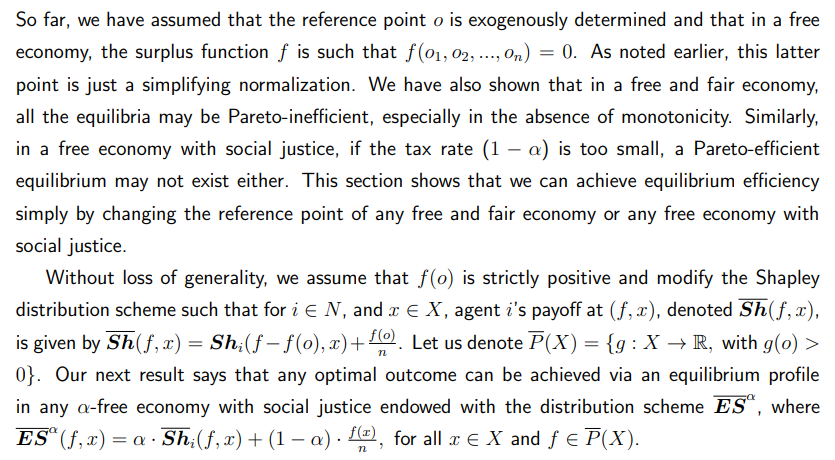
This article explores how a simple change in the reference point can achieve a Pareto-efficient equilibrium in both free and fair economies and those with social justice.
Share
Hackernoon2025/09/17 22:30