The post L&F’s $2.9B Tesla Cybertruck Battery Deal Shrinks to $7K Amid Delays appeared on BitcoinEthereumNews.com. L&F Co.’s $2.9 billion battery supply deal withThe post L&F’s $2.9B Tesla Cybertruck Battery Deal Shrinks to $7K Amid Delays appeared on BitcoinEthereumNews.com. L&F Co.’s $2.9 billion battery supply deal with

L&F’s $2.9B Tesla Cybertruck Battery Deal Shrinks to $7K Amid Delays

  • Tesla Cybertruck delays and poor sales killed the high-nickel cathode order.

  • L&F shares fell over 70% from 2023 peak amid EV market slump.

  • Chairman’s fortune dropped from $800 million to $134 million on Bloomberg index.

L&F Tesla battery deal collapses from $2.9B to $7k: Cybertruck delays crush EV supplier. Shares plunge 70%, chairman loses $660M. Explore impacts on battery sector. Stay informed on EV supply chain shifts.

What Happened to L&F’s $2.9 Billion Tesla Battery Deal?

L&F Co.’s $2.9 billion Tesla battery deal for Cybertruck high-nickel cathodes officially downgraded to $7,386 this week. Production delays and insufficient demand halted deliveries, turning a landmark contract into negligible value. The collapse reflects broader EV market challenges, severely impacting L&F’s valuation and leadership wealth.

Why Did Tesla Cybertruck Delays Derail the L&F Contract?

Tesla’s Cybertruck faced repeated production setbacks since its debut, limiting output and curbing buyer interest. L&F, a specialist in high-nickel cathodes essential for EV batteries, relied on this order for direct supply. With minimal Cybertruck rollout, deliveries never materialized, reducing the contract value by 99%.

L&F confirmed the downgrade in recent filings, aligning with a 70% share price drop from 2023 highs when the deal was announced. According to Bloomberg Billionaires Index, CEO Hur Jae-hong’s listed holdings plummeted from $800 million to $134 million. Investor sentiment eroded earlier due to heavy dependence on LG Energy Solution Ltd., which comprises 80% of sales.

Analyst Changmin Lee from KB Securities notes supplies likely ceased last year. “L&F had probably already stopped supplying cathodes to Tesla since last year,” Lee stated. The materials targeted specific Cybertruck variants, and stalling production nullified the agreement. Lee expects limited further market reaction, as the loss was already anticipated in forecasts.

Frequently Asked Questions

What Caused the Collapse of L&F’s Tesla Battery Supply Agreement?

Tesla Cybertruck manufacturing delays and subdued customer demand led to the contract’s termination. Initially valued at $2.9 billion for high-nickel cathodes, it dropped to $7,386 as orders evaporated. L&F’s filings confirm the shift, amid global EV slowdowns affecting supply chains.

How Will L&F Recover from the Tesla Deal Loss?

L&F maintains indirect Tesla exposure via LG Energy Solution for Model Y batteries, sustaining 80% of sales. Upcoming Rivian production in 2026, SK On supplies for Hyundai EVs, and Redwood Materials partnership aid diversification. Analyst Anna Lee from Yuanta Securities Korea highlights potential 2026 rebound via AI data center energy storage.

Key Takeaways

  • Cybertruck Woes Exposed Risks: Tesla delays highlighted supplier vulnerabilities in EV battery deals.
  • Share Impact Substantial: L&F stock down 70% since 2023, reflecting order loss and EV demand dip.
  • Diversification Key Forward: Bolster partnerships like Rivian and SK On to reduce LG reliance below 50% by 2025.

Conclusion

The dramatic fall of L&F Tesla battery deal from billions to mere thousands underscores EV sector volatility and production hurdles. While chairman Hur Jae-hong faces a $660 million personal hit per Bloomberg Billionaires Index, ongoing ties with LG Energy Solution and emerging Rivian supplies offer recovery paths. Analysts like Changmin Lee and Anna Lee foresee short-term pressures but long-term uplift from energy storage demands. Monitor battery supply chain developments for investment cues.

L&F’s Broader Business Challenges and Opportunities

Beyond the headline-grabbing Tesla setback, L&F navigates a complex landscape. The company’s cathode production focuses on high-nickel materials prized for energy density in premium EVs. However, reliance on LG Energy Solution—accounting for the bulk of revenue—prompted diversification bids like the 2021 Redwood Materials pact with JB Straubel’s recycling firm.

That alliance aimed to halve LG dependency by 2025 through U.S. market entry. Cybertruck fallout strains this timeline, yet recent wins persist. A March agreement positions L&F for Rivian cathode deliveries starting 2026, targeting next-gen vehicles. Mid-nickel cathodes already flow to SK On for Hyundai powertrains, broadening the customer base.

EV demand softening worldwide compounds issues. Tesla’s angular Cybertruck garnered buzz but struggled with scaling, mirroring industry delays at Ford and others. L&F shares mirrored this trend, eroding post-2023 peaks amid battery price wars and raw material flux.

Analyst Perspectives on L&F’s EV Battery Future

Experts temper gloom with pragmatism. Changmin Lee emphasizes the Tesla contract’s niche role: limited to certain Cybertruck batteries, its evaporation minimally alters operations. “The recent filing will likely be extremely limited in terms of market impact,” Lee observed, citing pre-discounted forecasts.

Anna Lee projects resilience. “A short-term damper in investor sentiment is inevitable,” she noted, but pivots to positives: “There is an increasing possibility that the sector will regain attention in 2026, specifically centering on energy storage systems for AI data centers.” This forward view taps surging data center power needs, where high-nickel tech could shine.

L&F’s filings reveal no full Tesla severance. Indirect Model Y contributions via LG persist uninterrupted, stabilizing near-term cash flows. Still, the $2.9 billion evaporation dents prestige, challenging the firm’s aggressive growth narrative.

Implications for the EV Battery Supply Chain

The episode spotlights supply chain fragility. High-nickel cathodes demand precision; delays upstream ripple downstream. L&F, as a South Korean leader, exemplifies mid-tier suppliers squeezed between giants like LG and CATL. Global EV sales growth slowed to single digits in 2024, per industry trackers, pressuring margins.

For investors, L&F represents high-beta EV exposure: upside in booms, steep falls in busts. Chairman Hur’s fortune swing—from billionaire aspirations to stark losses—mirrors founder stakes in volatile sectors. Bloomberg Billionaires Index tracks this precisely, underscoring personal capital at risk.

Strategic shifts matter. Accelerating Rivian and SK On ramps, plus Redwood synergies, could restore momentum. AI-driven energy storage emerges as wildcard growth, demanding stable, high-performance batteries. L&F’s tech stack positions it well, if execution follows.

In summary, while the L&F Tesla battery deal collapse marks a painful chapter, diversified pipelines and analyst optimism signal endurance. EV stakeholders should watch 2026 milestones amid evolving demand drivers.

Source: https://en.coinotag.com/lfs-2-9b-tesla-cybertruck-battery-deal-shrinks-to-7k-amid-delays
Market Opportunity
SynFutures Logo
SynFutures Price(F)
$0.006809
$0.006809$0.006809
-4.59%
USD
SynFutures (F) Live Price Chart
Disclaimer: The articles reposted on this site are sourced from public platforms and are provided for informational purposes only. They do not necessarily reflect the views of MEXC. All rights remain with the original authors. If you believe any content infringes on third-party rights, please contact [email protected] for removal. MEXC makes no guarantees regarding the accuracy, completeness, or timeliness of the content and is not responsible for any actions taken based on the information provided. The content does not constitute financial, legal, or other professional advice, nor should it be considered a recommendation or endorsement by MEXC.

You May Also Like

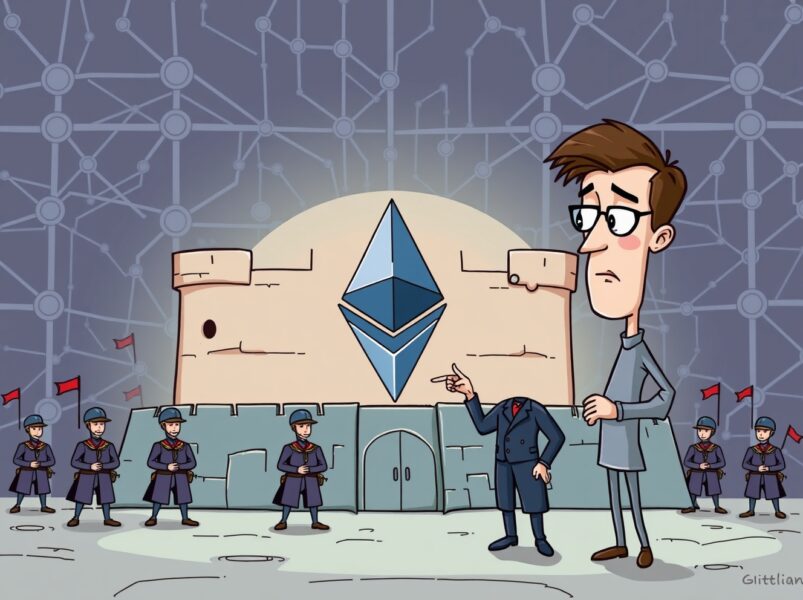
Crucial ETH Unstaking Period: Vitalik Buterin’s Unwavering Defense for Network Security

Crucial ETH Unstaking Period: Vitalik Buterin’s Unwavering Defense for Network Security

BitcoinWorld Crucial ETH Unstaking Period: Vitalik Buterin’s Unwavering Defense for Network Security Ever wondered why withdrawing your staked Ethereum (ETH) isn’t an instant process? It’s a question that often sparks debate within the crypto community. Ethereum founder Vitalik Buterin recently stepped forward to defend the network’s approximately 45-day ETH unstaking period, asserting its crucial role in safeguarding the network’s integrity. This lengthy waiting time, while sometimes seen as an inconvenience, is a deliberate design choice with profound implications for security. Why is the ETH Unstaking Period a Vital Security Measure? Vitalik Buterin’s defense comes amidst comparisons to other networks, like Solana, which boast significantly shorter unstaking times. He drew a compelling parallel to military operations, explaining that an army cannot function effectively if its soldiers can simply abandon their posts at a moment’s notice. Similarly, a blockchain network requires a stable and committed validator set to maintain its security. The current ETH unstaking period isn’t merely an arbitrary delay. It acts as a critical buffer, providing the network with sufficient time to detect and respond to potential malicious activities. If validators could instantly exit, it would open doors for sophisticated attacks, jeopardizing the entire system. Currently, Ethereum boasts over one million active validators, collectively staking approximately 35.6 million ETH, representing about 30% of the total supply. This massive commitment underpins the network’s robust security model, and the unstaking period helps preserve this stability. Network Security: Ethereum’s Paramount Concern A shorter ETH unstaking period might seem appealing for liquidity, but it introduces significant risks. Imagine a scenario where a large number of validators, potentially colluding, could quickly withdraw their stake after committing a malicious act. Without a substantial delay, the network would have limited time to penalize them or mitigate the damage. This “exit queue” mechanism is designed to prevent sudden validator exodus, which could lead to: Reduced decentralization: A rapid drop in active validators could concentrate power among fewer participants. Increased vulnerability to attacks: A smaller, less stable validator set is easier to compromise. Network instability: Frequent and unpredictable changes in validator numbers can lead to performance issues and consensus failures. Therefore, the extended period is not a bug; it’s a feature. It’s a calculated trade-off between immediate liquidity for stakers and the foundational security of the entire Ethereum ecosystem. Ethereum vs. Solana: Different Approaches to Unstaking When discussing the ETH unstaking period, many point to networks like Solana, which offers a much quicker two-day unstaking process. While this might seem like an advantage for stakers seeking rapid access to their funds, it reflects fundamental differences in network architecture and security philosophies. Solana’s design prioritizes speed and immediate liquidity, often relying on different consensus mechanisms and validator economics to manage security risks. Ethereum, on the other hand, with its proof-of-stake evolution from proof-of-work, has adopted a more cautious approach to ensure its transition and long-term stability are uncompromised. Each network makes design choices based on its unique goals and threat models. Ethereum’s substantial value and its role as a foundational layer for countless dApps necessitate an extremely robust security posture, making the current unstaking duration a deliberate and necessary component. What Does the ETH Unstaking Period Mean for Stakers? For individuals and institutions staking ETH, understanding the ETH unstaking period is crucial for managing expectations and investment strategies. It means that while staking offers attractive rewards, it also comes with a commitment to the network’s long-term health. Here are key considerations for stakers: Liquidity Planning: Stakers should view their staked ETH as a longer-term commitment, not immediately liquid capital. Risk Management: The delay inherently reduces the ability to react quickly to market volatility with staked assets. Network Contribution: By participating, stakers contribute directly to the security and decentralization of Ethereum, reinforcing its value proposition. While the current waiting period may not be “optimal” in every sense, as Buterin acknowledged, simply shortening it without addressing the underlying security implications would be a dangerous gamble for the network’s reliability. In conclusion, Vitalik Buterin’s defense of the lengthy ETH unstaking period underscores a fundamental principle: network security cannot be compromised for the sake of convenience. It is a vital mechanism that protects Ethereum’s integrity, ensuring its stability and trustworthiness as a leading blockchain platform. This deliberate design choice, while requiring patience from stakers, ultimately fortifies the entire ecosystem against potential threats, paving the way for a more secure and reliable decentralized future. Frequently Asked Questions (FAQs) Q1: What is the main reason for Ethereum’s long unstaking period? A1: The primary reason is network security. A lengthy ETH unstaking period prevents malicious actors from quickly withdrawing their stake after an attack, giving the network time to detect and penalize them, thus maintaining stability and integrity. Q2: How long is the current ETH unstaking period? A2: The current ETH unstaking period is approximately 45 days. This duration can fluctuate based on network conditions and the number of validators in the exit queue. Q3: How does Ethereum’s unstaking period compare to other blockchains? A3: Ethereum’s unstaking period is notably longer than some other networks, such as Solana, which has a two-day period. This difference reflects varying network architectures and security priorities. Q4: Does the unstaking period affect ETH stakers? A4: Yes, it means stakers need to plan their liquidity carefully, as their staked ETH is not immediately accessible. It encourages a longer-term commitment to the network, aligning staker interests with Ethereum’s stability. Q5: Could the ETH unstaking period be shortened in the future? A5: While Vitalik Buterin acknowledged the current period might not be “optimal,” any significant shortening would likely require extensive research and network upgrades to ensure security isn’t compromised. For now, the focus remains on maintaining robust network defenses. Found this article insightful? Share it with your friends and fellow crypto enthusiasts on social media to spread awareness about the critical role of the ETH unstaking period in Ethereum’s security! To learn more about the latest Ethereum trends, explore our article on key developments shaping Ethereum’s institutional adoption. This post Crucial ETH Unstaking Period: Vitalik Buterin’s Unwavering Defense for Network Security first appeared on BitcoinWorld.
Share
Coinstats2025/09/18 15:30
Shiba Inu Price Forecast: Why This New Trending Meme Coin Is Being Dubbed The New PEPE After Record Presale

Shiba Inu Price Forecast: Why This New Trending Meme Coin Is Being Dubbed The New PEPE After Record Presale

While Shiba Inu (SHIB) continues to build its ecosystem and PEPE holds onto its viral roots, a new contender, Layer […] The post Shiba Inu Price Forecast: Why This New Trending Meme Coin Is Being Dubbed The New PEPE After Record Presale appeared first on Coindoo.
Share
Coindoo2025/09/18 01:13
The U.S. Financial Accounting Standards Board plans to study in 2026 whether crypto assets such as stablecoins can be classified as cash equivalents.

The U.S. Financial Accounting Standards Board plans to study in 2026 whether crypto assets such as stablecoins can be classified as cash equivalents.

PANews reported on December 31 that the Financial Accounting Standards Board (FASB) plans to study in 2026 whether certain crypto assets can be classified as cash
Share
PANews2025/12/31 16:50