Historic Uniswap Governance Proposal Passes: 100 Million UNI Tokens to be Burned
BitcoinWorld
Historic Uniswap Governance Proposal Passes: 100 Million UNI Tokens to be Burned
In a landmark decision for decentralized finance, the Uniswap community has overwhelmingly passed a pivotal Uniswap governance proposal. This vote, dubbed UNIFICation, marks a transformative moment for the world’s leading decentralized exchange, setting in motion a plan to permanently burn a massive 100 million UNI tokens and activate a new fee mechanism. Let’s break down what this means for UNI holders and the broader DeFi ecosystem.
What Does This Uniswap Governance Proposal Actually Do?
The recently passed Uniswap governance proposal is not a single change but a comprehensive package. Founder Hayden Adams announced its success after it received a staggering 125.34 million votes in favor, with only 742 against. This near-unanimous support highlights strong community alignment. The core actions are twofold and significant:
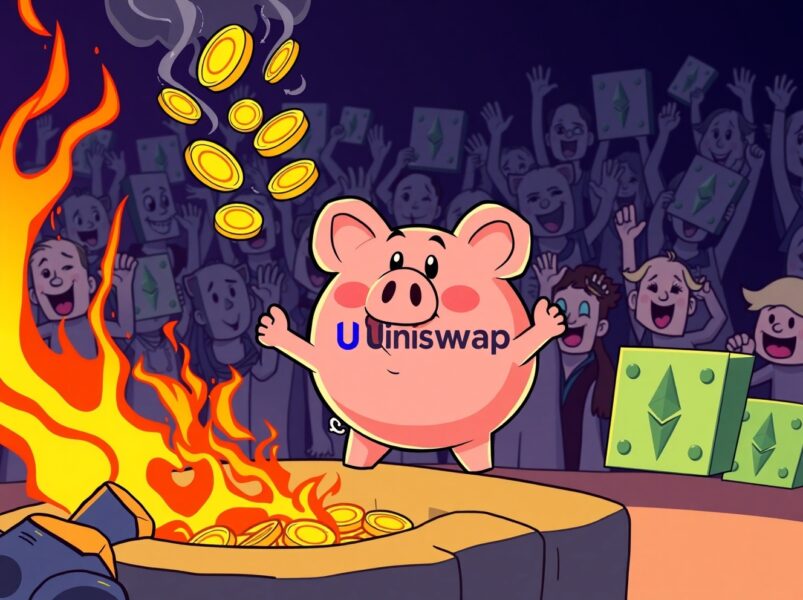
- Token Burn: It authorizes the immediate burning of 100 million UNI from the protocol’s treasury. This reduces the total supply, a move often viewed as bullish for token economics.
- Fee Switch Activation: It activates a long-discussed fee mechanism on the Ethereum mainnet. A portion of trading fees will now be collected by the protocol, and critically, these collected UNI fees will also be continuously burned.
Why is Burning 100M UNI Such a Big Deal?
Token burning is a powerful economic tool. By permanently removing tokens from circulation, the available supply decreases. If demand remains steady or increases, basic economic principles suggest this could create upward pressure on the token’s price. This Uniswap governance proposal directly addresses UNI’s tokenomics, shifting it towards a more deflationary model. The community’s decisive vote signals a collective desire to enhance the long-term value accrual for UNI holders, moving beyond its initial role as solely a governance token.
How Will the New Fee Mechanism Work?
The activation of the fee switch is arguably the most operational part of this Uniswap governance proposal. For the first time on the mainnet, the Uniswap protocol will capture a small percentage of the fees generated by trades. This creates a sustainable revenue stream for the treasury. However, the proposal cleverly ties this to the burn mechanism. Instead of just accumulating, the UNI collected as fees will be sent to the burn address. This creates a virtuous cycle: more protocol usage generates more fees, which leads to more tokens being burned, potentially increasing scarcity over time.
What Challenges or Risks Does This Vote Present?
While the benefits are clear, no major Uniswap governance proposal is without considerations. Some community members might have preferred the fee revenue to be used for grants, development, or other ecosystem initiatives instead of burning. Furthermore, activating fees could theoretically make Uniswap slightly less competitive against other DEXs that don’t charge a protocol fee, though its liquidity and brand are immense advantages. The governance process itself, however, has proven robust, demonstrating the DAO’s ability to execute complex, impactful decisions.
What’s the Future Impact of This Governance Decision?
This successful Uniswap governance proposal sets a powerful precedent. It proves that large, decentralized communities can coordinate to enact significant economic changes. For UNI holders, the immediate effect is a supply shock. Looking ahead, the continuous burn from fees aligns the protocol’s financial success directly with token holder value. It transforms UNI from a passive governance instrument into an asset with built-in deflationary mechanics tied to network usage. This could attract a new class of investors focused on sound crypto-economics.
In summary, the UNIFICation proposal is a masterstroke in decentralized governance. By burning a huge chunk of supply and linking future revenue to further burns, the Uniswap DAO has taken decisive action to strengthen UNI’s fundamental value proposition. This vote is more than a single event; it’s the start of a new, self-reinforcing economic model for the flagship DeFi protocol.
Frequently Asked Questions (FAQs)
Q1: How many UNI tokens are being burned?
A: The proposal mandates the burning of 100 million UNI tokens from the treasury.
Q2: What is the ‘fee switch’ that was activated?
A: It’s a mechanism that allows the Uniswap protocol to collect a small percentage of trading fees on the Ethereum mainnet, which will now be burned.
Q3: Will this make using Uniswap more expensive for traders?
A: The fee is a protocol fee, separate from the existing liquidity provider fees. Its impact on the final cost for traders is part of the proposal’s design and will be observed.
Q4: What was the vote result?
A: The proposal passed with overwhelming support: 125.34 million votes for and only 742 against.
Q5: Does this affect UNI’s total supply?
A: Yes, burning 100 million tokens reduces the total circulating supply, and the continuous burn of fee revenue will reduce it further over time.
Q6: What is the goal of this proposal?
A: The primary goals are to make UNI more scarce (deflationary) and to align the protocol’s success directly with value for UNI token holders.
Found this deep dive into the historic Uniswap vote helpful? Share this article on Twitter or LinkedIn to spark a conversation with fellow DeFi enthusiasts about the future of protocol-owned value and decentralized governance!
To learn more about the latest DeFi trends, explore our article on key developments shaping Ethereum and the future of decentralized finance.
This post Historic Uniswap Governance Proposal Passes: 100 Million UNI Tokens to be Burned first appeared on BitcoinWorld.
You May Also Like

From random auctions to forward contracts, how does ETHGas transform block space into a priced resource?

Headwind Helps Best Wallet Token