BitcoinWorld Bittensor Halving: The Monumental Shift Cutting TAO Issuance in Half In a landmark event for decentralized AI, the Bittensor halving is now completeBitcoinWorld Bittensor Halving: The Monumental Shift Cutting TAO Issuance in Half In a landmark event for decentralized AI, the Bittensor halving is now complete

Bittensor Halving: The Monumental Shift Cutting TAO Issuance in Half
2025/12/15 22:50
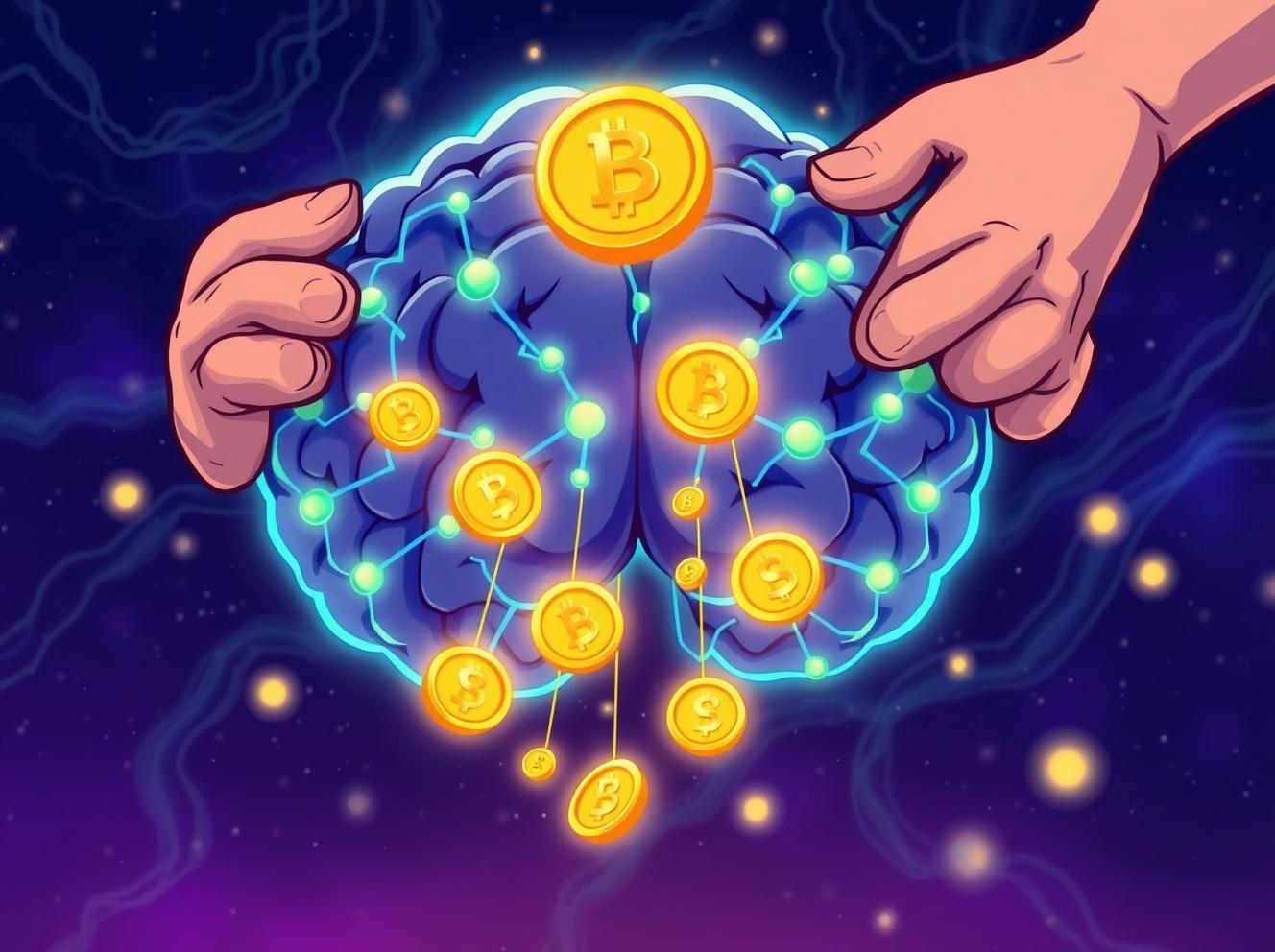
Cartoon illustration of the Bittensor halving event reducing digital coin flow from a neural network.

BitcoinWorld

Bittensor Halving: The Monumental Shift Cutting TAO Issuance in Half

In a landmark event for decentralized AI, the Bittensor halving is now complete. This fundamental protocol upgrade has slashed the daily creation of new TAO tokens by 50%, a move that sends ripples through its ecosystem and the broader crypto market. If you’re invested in the future of machine intelligence networks, understanding this pivotal moment is crucial.

What Exactly is the Bittensor Halving?

Simply put, a halving is a pre-programmed reduction in the reward for mining or validating blocks on a blockchain. For Bittensor, this first-ever Bittensor halving event has cut the daily issuance of its native TAO token from 7,200 to just 3,600. This isn’t a random decision; it’s a core economic mechanism baked into Bittensor’s code to control inflation and enhance token scarcity over time.

Why Does This Bittensor Halving Matter So Much?

This event is a major test for the network’s economic model. Let’s break down the immediate and potential long-term effects.

  • Scarcity & Value: Basic economics suggests that reducing the new supply of an asset, while demand holds or grows, can create upward pressure on its price. The Bittensor halving directly engineers this scarcity.
  • Network Security & Incentives: Validators and miners are rewarded with TAO. Halving their reward tests the network’s resilience. Will sufficient participants remain to secure the network based on future fee revenue and token appreciation?
  • A Sign of Maturity: Successfully executing a scheduled halving is a rite of passage for serious blockchain projects. It demonstrates protocol reliability and a long-term, deflationary vision.

What Challenges Could This New Era Bring?

However, this transition isn’t without its hurdles. The reduced block reward might initially discourage some smaller validators, potentially leading to a temporary centralization of network power among larger players. Furthermore, the project’s value proposition must now rely more heavily on real utility and adoption of its decentralized AI marketplace, rather than just mining rewards.

Therefore, the community and developers must double down on building compelling applications atop Bittensor. The true success of this Bittensor halving will be measured by whether the network can thrive in this new, leaner issuance regime.

Actionable Insights for the TAO Community

What should you do in light of this change? First, monitor network metrics like validator count and hash rate stability over the coming weeks. Second, focus on the fundamentals: is developer activity on Bittensor increasing? Are new, useful AI models being submitted? The Bittensor halving shifts the investment thesis from pure tokenomics to a blend of economics and tangible utility.

The Final Verdict on Bittensor’s New Chapter

In conclusion, the first Bittensor halving is a transformative event that tightens the token’s supply and challenges its ecosystem to mature. It’s a bold step towards sustainable, value-driven growth. While short-term volatility is possible, this mechanism is designed to benefit long-term holders and strengthen the network’s economic foundations. The world of decentralized AI just got a lot more interesting.

Frequently Asked Questions (FAQs)

Q: How often will Bittensor halvings occur?
A: While the exact schedule can be protocol-dependent, similar to Bitcoin, Bittensor halvings are scheduled events that occur at specific block heights, reducing issuance periodically.

Q: Does the halving make TAO mining unprofitable?
A: Not necessarily. It increases the efficiency barrier. Miners with higher operational costs may be squeezed out, while those with optimized setups continue, betting on TAO’s future value appreciation.

Q: Will this affect the speed or cost of using the Bittensor network?
A: The halving targets token issuance, not network throughput. Transaction speeds and costs are primarily governed by network congestion and subnet parameters, not directly by the halving event.

Q: Should I buy TAO before or after a halving?
A: There’s no guaranteed rule. Historically, halvings create bullish long-term narratives, but short-term price action is unpredictable. Always base investment decisions on thorough research and personal risk assessment.

Q: What happens to the total supply of TAO now?
A: The total maximum supply remains capped. The halving simply extends the time it will take to reach that cap, slowing the rate of new TAO entering circulation.

Q: How does this compare to Bitcoin’s halving?
A> The core concept is identical: a programmed reduction in block rewards to control inflation. However, the underlying assets and their purposes—Bitcoin as digital gold, Bittensor as a decentralized AI network—are fundamentally different.

Found this deep dive into the Bittensor halving helpful? Share this article with your network on X (Twitter) or LinkedIn to spark a conversation about the future of decentralized AI and token economics! Knowledge grows when it’s shared.

To learn more about the latest cryptocurrency trends, explore our article on key developments shaping blockchain protocol upgrades and their market impact.

This post Bittensor Halving: The Monumental Shift Cutting TAO Issuance in Half first appeared on BitcoinWorld.

Market Opportunity
Bittensor Logo
Bittensor Price(TAO)
$262.93
$262.93$262.93
-3.43%
USD
Bittensor (TAO) Live Price Chart
Disclaimer: The articles reposted on this site are sourced from public platforms and are provided for informational purposes only. They do not necessarily reflect the views of MEXC. All rights remain with the original authors. If you believe any content infringes on third-party rights, please contact [email protected] for removal. MEXC makes no guarantees regarding the accuracy, completeness, or timeliness of the content and is not responsible for any actions taken based on the information provided. The content does not constitute financial, legal, or other professional advice, nor should it be considered a recommendation or endorsement by MEXC.

You May Also Like

Volante Technologies Customers Successfully Navigate Critical Regulatory Deadlines for EU SEPA Instant and Global SWIFT Cross-Border Payments

Volante Technologies Customers Successfully Navigate Critical Regulatory Deadlines for EU SEPA Instant and Global SWIFT Cross-Border Payments

PaaS leader ensures seamless migrations and uninterrupted payment operations LONDON–(BUSINESS WIRE)–Volante Technologies, the global leader in Payments as a Service
Share
AI Journal2025/12/16 17:16
Fed Acts on Economic Signals with Rate Cut

Fed Acts on Economic Signals with Rate Cut

In a significant pivot, the Federal Reserve reduced its benchmark interest rate following a prolonged ten-month hiatus. This decision, reflecting a strategic response to the current economic climate, has captured attention across financial sectors, with both market participants and policymakers keenly evaluating its potential impact.Continue Reading:Fed Acts on Economic Signals with Rate Cut
Share
Coinstats2025/09/18 02:28
Google's AP2 protocol has been released. Does encrypted AI still have a chance?

Google's AP2 protocol has been released. Does encrypted AI still have a chance?

Following the MCP and A2A protocols, the AI Agent market has seen another blockbuster arrival: the Agent Payments Protocol (AP2), developed by Google. This will clearly further enhance AI Agents' autonomous multi-tasking capabilities, but the unfortunate reality is that it has little to do with web3AI. Let's take a closer look: What problem does AP2 solve? Simply put, the MCP protocol is like a universal hook, enabling AI agents to connect to various external tools and data sources; A2A is a team collaboration communication protocol that allows multiple AI agents to cooperate with each other to complete complex tasks; AP2 completes the last piece of the puzzle - payment capability. In other words, MCP opens up connectivity, A2A promotes collaboration efficiency, and AP2 achieves value exchange. The arrival of AP2 truly injects "soul" into the autonomous collaboration and task execution of Multi-Agents. Imagine AI Agents connecting Qunar, Meituan, and Didi to complete the booking of flights, hotels, and car rentals, but then getting stuck at the point of "self-payment." What's the point of all that multitasking? So, remember this: AP2 is an extension of MCP+A2A, solving the last mile problem of AI Agent automated execution. What are the technical highlights of AP2? The core innovation of AP2 is the Mandates mechanism, which is divided into real-time authorization mode and delegated authorization mode. Real-time authorization is easy to understand. The AI Agent finds the product and shows it to you. The operation can only be performed after the user signs. Delegated authorization requires the user to set rules in advance, such as only buying the iPhone 17 when the price drops to 5,000. The AI Agent monitors the trigger conditions and executes automatically. The implementation logic is cryptographically signed using Verifiable Credentials (VCs). Users can set complex commission conditions, including price ranges, time limits, and payment method priorities, forming a tamper-proof digital contract. Once signed, the AI Agent executes according to the conditions, with VCs ensuring auditability and security at every step. Of particular note is the "A2A x402" extension, a technical component developed by Google specifically for crypto payments, developed in collaboration with Coinbase and the Ethereum Foundation. This extension enables AI Agents to seamlessly process stablecoins, ETH, and other blockchain assets, supporting native payment scenarios within the Web3 ecosystem. What kind of imagination space can AP2 bring? After analyzing the technical principles, do you think that's it? Yes, in fact, the AP2 is boring when it is disassembled alone. Its real charm lies in connecting and opening up the "MCP+A2A+AP2" technology stack, completely opening up the complete link of AI Agent's autonomous analysis+execution+payment. From now on, AI Agents can open up many application scenarios. For example, AI Agents for stock investment and financial management can help us monitor the market 24/7 and conduct independent transactions. Enterprise procurement AI Agents can automatically replenish and renew without human intervention. AP2's complementary payment capabilities will further expand the penetration of the Agent-to-Agent economy into more scenarios. Google obviously understands that after the technical framework is established, the ecological implementation must be relied upon, so it has brought in more than 60 partners to develop it, almost covering the entire payment and business ecosystem. Interestingly, it also involves major Crypto players such as Ethereum, Coinbase, MetaMask, and Sui. Combined with the current trend of currency and stock integration, the imagination space has been doubled. Is web3 AI really dead? Not entirely. Google's AP2 looks complete, but it only achieves technical compatibility with Crypto payments. It can only be regarded as an extension of the traditional authorization framework and belongs to the category of automated execution. There is a "paradigm" difference between it and the autonomous asset management pursued by pure Crypto native solutions. The Crypto-native solutions under exploration are taking the "decentralized custody + on-chain verification" route, including AI Agent autonomous asset management, AI Agent autonomous transactions (DeFAI), AI Agent digital identity and on-chain reputation system (ERC-8004...), AI Agent on-chain governance DAO framework, AI Agent NPC and digital avatars, and many other interesting and fun directions. Ultimately, once users get used to AI Agent payments in traditional fields, their acceptance of AI Agents autonomously owning digital assets will also increase. And for those scenarios that AP2 cannot reach, such as anonymous transactions, censorship-resistant payments, and decentralized asset management, there will always be a time for crypto-native solutions to show their strength? The two are more likely to be complementary rather than competitive, but to be honest, the key technological advancements behind AI Agents currently all come from web2AI, and web3AI still needs to keep up the good work!
Share
PANews2025/09/18 07:00