The post Dogecoin Price in ‘Accumulation Territory’ According to Bubble-Risk Model  appeared on BitcoinEthereumNews.com. Dogecoin price faces an 18% decline as the 20-day EMA slope provides dynamic resistance against coin buyers A risk model from Bridge Oracle shows no bubble conditions for DO On-chain data shows that crypto whales have bought at least 1 million DOGE tokens in the last 48 hours, accenting heavy conviction from large buyers. DOGE, the largest meme cryptocurrency by market cap, is down 2.8% during Thursday’s U.S. market hours. The downtick follows a slowdown in broader market momentum as Bitcoin wavers around $94,000. Despite the intraday selling, the Dogecoin price shows potential for a bullish rebound amid the formation of a widely known “end of correction trend” pattern. The latest on-chain data support the bullish thesis as whales show a renewed accumulation trend. Dogecoin Price Trend Diverges From Whale Behavior By press time, Dogecoin price trades at $0.148, having fallen some 80 percent from the high of $0.74 in May 2021. The recent 24-hour fall has brought the price lower than the 20-day moving averages, cementing the longer-term bearish structure that has been a feature of the past four years for most of that time. However, the latest on-chain data reveal a different picture below the surface. In a recent tweet, Bridge Oracle CEO Sina Estavi highlights their proprietary bubble-risk model for Dogecoin, stating that the current readings are well below thresholds associated with major tops in 2017-2018 and 2021.  The model monitors key metrics, including realized profit ratios, exchange inflows from new investors, and social sentiment extremes. None of these factors currently registers in the danger zone, placing the asset in what the firm calls “accumulation territory.” Concurrent wallet-tracking data published by analyst Ali Martinez shows addresses with a balance of at least 1 million DOGE added a total of 480 million coins in the last two days.… The post Dogecoin Price in ‘Accumulation Territory’ According to Bubble-Risk Model  appeared on BitcoinEthereumNews.com. Dogecoin price faces an 18% decline as the 20-day EMA slope provides dynamic resistance against coin buyers A risk model from Bridge Oracle shows no bubble conditions for DO On-chain data shows that crypto whales have bought at least 1 million DOGE tokens in the last 48 hours, accenting heavy conviction from large buyers. DOGE, the largest meme cryptocurrency by market cap, is down 2.8% during Thursday’s U.S. market hours. The downtick follows a slowdown in broader market momentum as Bitcoin wavers around $94,000. Despite the intraday selling, the Dogecoin price shows potential for a bullish rebound amid the formation of a widely known “end of correction trend” pattern. The latest on-chain data support the bullish thesis as whales show a renewed accumulation trend. Dogecoin Price Trend Diverges From Whale Behavior By press time, Dogecoin price trades at $0.148, having fallen some 80 percent from the high of $0.74 in May 2021. The recent 24-hour fall has brought the price lower than the 20-day moving averages, cementing the longer-term bearish structure that has been a feature of the past four years for most of that time. However, the latest on-chain data reveal a different picture below the surface. In a recent tweet, Bridge Oracle CEO Sina Estavi highlights their proprietary bubble-risk model for Dogecoin, stating that the current readings are well below thresholds associated with major tops in 2017-2018 and 2021.  The model monitors key metrics, including realized profit ratios, exchange inflows from new investors, and social sentiment extremes. None of these factors currently registers in the danger zone, placing the asset in what the firm calls “accumulation territory.” Concurrent wallet-tracking data published by analyst Ali Martinez shows addresses with a balance of at least 1 million DOGE added a total of 480 million coins in the last two days.…

Dogecoin Price in ‘Accumulation Territory’ According to Bubble-Risk Model

  • Dogecoin price faces an 18% decline as the 20-day EMA slope provides dynamic resistance against coin buyers
  • A risk model from Bridge Oracle shows no bubble conditions for DO
  • On-chain data shows that crypto whales have bought at least 1 million DOGE tokens in the last 48 hours, accenting heavy conviction from large buyers.

DOGE, the largest meme cryptocurrency by market cap, is down 2.8% during Thursday’s U.S. market hours. The downtick follows a slowdown in broader market momentum as Bitcoin wavers around $94,000. Despite the intraday selling, the Dogecoin price shows potential for a bullish rebound amid the formation of a widely known “end of correction trend” pattern. The latest on-chain data support the bullish thesis as whales show a renewed accumulation trend.

Dogecoin Price Trend Diverges From Whale Behavior

By press time, Dogecoin price trades at $0.148, having fallen some 80 percent from the high of $0.74 in May 2021. The recent 24-hour fall has brought the price lower than the 20-day moving averages, cementing the longer-term bearish structure that has been a feature of the past four years for most of that time.

However, the latest on-chain data reveal a different picture below the surface. In a recent tweet, Bridge Oracle CEO Sina Estavi highlights their proprietary bubble-risk model for Dogecoin, stating that the current readings are well below thresholds associated with major tops in 2017-2018 and 2021. 

The model monitors key metrics, including realized profit ratios, exchange inflows from new investors, and social sentiment extremes. None of these factors currently registers in the danger zone, placing the asset in what the firm calls “accumulation territory.”

Concurrent wallet-tracking data published by analyst Ali Martinez shows addresses with a balance of at least 1 million DOGE added a total of 480 million coins in the last two days. This volume is equivalent to about $71 million at current prices.

Historically, whale buying has often coincided with major market reversals and sharp price recoveries, as they often bolsters market sentiment.

Dogecoin Price Risks 18% Decline As the Key EMA Slope Stands Guard

With today’s price decline, the Dogecoin price sparks a fresh bearish reversal from the 20-day exponential moving average at $0.152. This EMA slope acts as dynamic resistance against DOGE buyers, maintaining a sell-the-bounce sentiment among market participants. 

In the last two months, the memecoin has shown two such reversals from this resistance, which resulted in a price decline of roughly 27%.

If history repeats, the coin price could plunge at least another 18% to test the bottom trendline of the falling wedge pattern at $0.12. A bearish alignment between the daily EMAs (20, 50, 100, and 200) accentuates the broader bearish trend in this asset.

Since mid-September 2025, this chart pattern has been carrying a steady mid-term correction in this memecoin, as the price strictly resonates within two downsloping trendlines.

The converging nature of these trendlines indicates a gradual weakness in bearish momentum while simultaneously bolstering buyers to regain strength. Thus, the potential retest of the bottom trendline could provide sufficient bottom support for buyers to renew recovery momentum.

DOGE/USDT -1d chart

A bullish breakout from the wedge range is crucial to end the current correction trend in DOGE.

Source: https://www.cryptonewsz.com/dogecoin-price-bubble-risk-model/

Market Opportunity
Hyperbridge Logo
Hyperbridge Price(BRIDGE)
$0.01625
$0.01625$0.01625
+2.26%
USD
Hyperbridge (BRIDGE) Live Price Chart
Disclaimer: The articles reposted on this site are sourced from public platforms and are provided for informational purposes only. They do not necessarily reflect the views of MEXC. All rights remain with the original authors. If you believe any content infringes on third-party rights, please contact [email protected] for removal. MEXC makes no guarantees regarding the accuracy, completeness, or timeliness of the content and is not responsible for any actions taken based on the information provided. The content does not constitute financial, legal, or other professional advice, nor should it be considered a recommendation or endorsement by MEXC.

You May Also Like

Cashing In On University Patents Means Giving Up On Our Innovation Future

Cashing In On University Patents Means Giving Up On Our Innovation Future

The post Cashing In On University Patents Means Giving Up On Our Innovation Future appeared on BitcoinEthereumNews.com. “It’s a raid on American innovation that would deliver pennies to the Treasury while kneecapping the very engine of our economic and medical progress,” writes Pipes. Getty Images Washington is addicted to taxing success. Now, Commerce Secretary Howard Lutnick is floating a plan to skim half the patent earnings from inventions developed at universities with federal funding. It’s being sold as a way to shore up programs like Social Security. In reality, it’s a raid on American innovation that would deliver pennies to the Treasury while kneecapping the very engine of our economic and medical progress. Yes, taxpayer dollars support early-stage research. But the real payoff comes later—in the jobs created, cures discovered, and industries launched when universities and private industry turn those discoveries into real products. By comparison, the sums at stake in patent licensing are trivial. Universities collectively earn only about $3.6 billion annually in patent income—less than the federal government spends on Social Security in a single day. Even confiscating half would barely register against a $6 trillion federal budget. And yet the damage from such a policy would be anything but trivial. The true return on taxpayer investment isn’t in licensing checks sent to Washington, but in the downstream economic activity that federally supported research unleashes. Thanks to the bipartisan Bayh-Dole Act of 1980, universities and private industry have powerful incentives to translate early-stage discoveries into real-world products. Before Bayh-Dole, the government hoarded patents from federally funded research, and fewer than 5% were ever licensed. Once universities could own and license their own inventions, innovation exploded. The result has been one of the best returns on investment in government history. Since 1996, university research has added nearly $2 trillion to U.S. industrial output, supported 6.5 million jobs, and launched more than 19,000 startups. Those companies pay…
Share
BitcoinEthereumNews2025/09/18 03:26
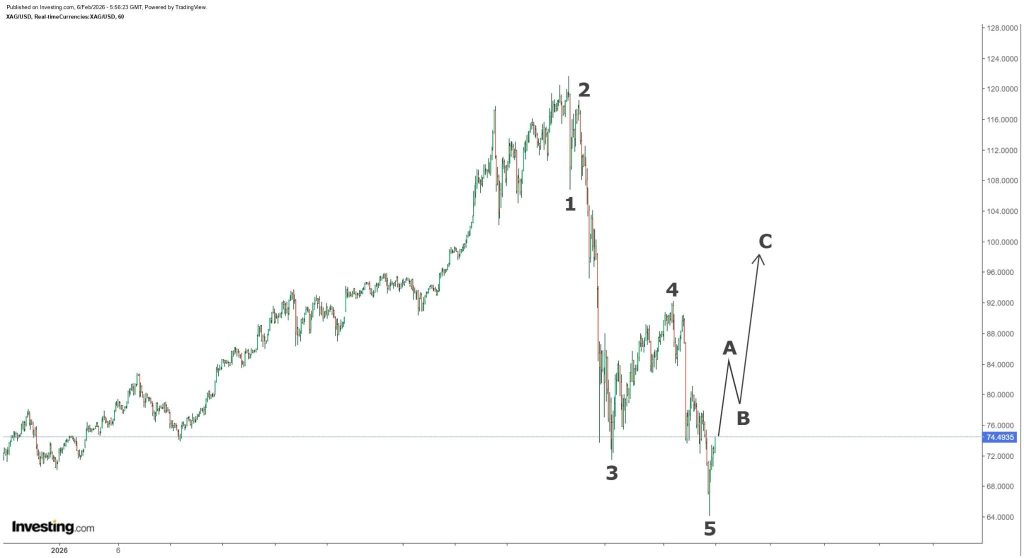
Silver Price Crash Is Over “For Real This Time,” Analyst Predicts a Surge Back Above $90

Silver Price Crash Is Over “For Real This Time,” Analyst Predicts a Surge Back Above $90

Silver has been taking a beating lately, and the Silver price hasn’t exactly been acting like a safe haven. After running up into the highs, the whole move reversed
Share
Captainaltcoin2026/02/07 03:15
Citi Caps Year-End at $4,300, But ETF outflows Challenge Outlook

Citi Caps Year-End at $4,300, But ETF outflows Challenge Outlook

The post Citi Caps Year-End at $4,300, But ETF outflows Challenge Outlook appeared on BitcoinEthereumNews.com. Ethereum Price Prediction: Citi Caps Year-End at $4,300, But ETF outflows Challenge Outlook Disclaimer: The information found on NewsBTC is for educational purposes only. It does not represent the opinions of NewsBTC on whether to buy, sell or hold any investments and naturally investing carries risks. You are advised to conduct your own research before making any investment decisions. Use information provided on this website entirely at your own risk. Related News © 2025 NewsBTC. All Rights Reserved. This website uses cookies. By continuing to use this website you are giving consent to cookies being used. Visit our Privacy Center or Cookie Policy. I Agree Source: https://www.newsbtc.com/news/ethereum/ethereum-price-prediction-citi-caps-year-end-at-4300-but-etf-outflows-challenge-outlook/
Share
BitcoinEthereumNews2025/09/18 14:30