A recent research paper from Columbia University has embroiled the trending topic of "prediction markets" in controversy. The authors analyzed two years of historical data from the blockchain platform Polymarket and found that approximately 25% of the trading volume may have been wash trading—that is, the same entity buying and selling between its own accounts to create false activity. During certain event weeks, such as the US presidential election or a major sporting event, this percentage could even surge to 60%. Although the study has not undergone formal peer review, it is enough to pierce through a corner of the frenzy surrounding prediction markets. Because in the past six months, the popularity of this sector has been almost "visible to the naked eye": relaxed regulations, backing from giants, a surge in capital, and increased political support—prediction markets are becoming the most watched "new financial species" in 2025. From "fringe gambling" to "new financial species" The prediction market is not complicated to play: you can bet on events such as "whether Trump will win the election", "whether the Federal Reserve will cut interest rates", and "which country the next Nobel Prize winner will be from". The platform forms a "market probability" based on the prices of the two parties, which is regarded as a manifestation of "collective intelligence". In 2025, this "voting with money" method ushered in a triple opportunity for explosive growth: Deregulation In May of this year, the U.S. Commodity Futures Trading Commission (CFTC) withdrew its lawsuit against Kalshi, formally acknowledging that forecasting contracts can be legally traded under certain frameworks. In September, the CFTC issued a No-Action Letter to Polymarket, allowing it to reopen the U.S. market. This means that the forecasting market is moving from a "gray area" to "regulatory visibility," clearing the biggest obstacle for capital intervention. Capital + Political Bets Immediately afterwards, funds poured in: In August, Polymarket received investment from 1789 Capital, in which Donald Trump Jr., Trump's eldest son, holds a stake. Then, following ICE, the parent company of the New York Stock Exchange, investing $2 billion in September to boost Polymarket's valuation to $8 billion, and rival Kalshi's valuation reaching $5 billion in October with a lead investment from a16z and Sequoia Capital, market enthusiasm continues to rise sharply. According to the latest news from Bloomberg, Polymarket is seeking a new round of financing with a higher valuation of $12 billion to $15 billion, while Kalshi's valuation is believed to have exceeded $10 billion. Behind this frenzy of capital investment, the deep involvement of political forces cannot be ignored. The "market-friendly" regulatory environment fostered by the Trump administration paved the way for predicting a market boom. The CFTC's shift in attitude and ICE's massive investments were interpreted by the market as clear policy signals. Even more noteworthy is the Trump family's direct involvement: Donald Trump Jr. not only invested in Polymarket through 1789 Capital, but also served as an advisor to Kalshi. ICE CEO Jeff Sprecher—who is also the husband of former U.S. Small Business Administration Commissioner Kelly Loeffler—personally spearheaded the investment in Polymarket; Meanwhile, Trump's social media platform Truth Social also announced the launch of its own encrypted prediction platform, "Truth Predict". The combined forces of capital, policy, and family influence are propelling prediction markets from fringe experimentation to the mainstream financial stage. Giants drive mainstream adoption In October, Google announced that it would integrate real-time forecast data from Polymarket and Kalshi into Google Finance search results. For example, when users search for "who will be president in 2028" or "probability of a Fed rate cut", a real-time data chart of the forecast market will appear below the results. This means that, for the first time, the prediction market has been "embedded" into the world's largest information portal, becoming part of the public information flow. Google did not disclose the specific cooperation model with the two companies, but for the market, this move can be regarded as a "mainstream milestone": the prediction market has changed from a "betting tool for cryptocurrency players" to a data product that is visible to ordinary users and can be cited by the media. The results are clear: Polymarket's trading volume hit a record high in October, with monthly trading volume exceeding $3 billion, and the number of users increased by 93.7% compared to September. How serious is the "fake transaction" that Columbia University is questioning? Returning to the research data from the Columbia University paper: Approximately a quarter of Polymarket's transactions between 2024 and 2025 exhibited suspicious patterns: frequent wash trades between accounts, extremely short transaction intervals, and almost no holding settlements. These characteristics are remarkably similar to the "volume-boosting" practices prevalent in the past NFT market. The report authors speculate that there are three main motivations for market-predicting wash trading: ① To compete for future token airdrops or incentive points; ② To generate market buzz and attract new users; ③ Some market makers stabilize the price range by creating "fake transactions". In other words, some people might repeatedly place "fake orders" in the market to boost activity levels, accumulate points, and obtain future token rewards. This is not uncommon in the crypto space: from NFTs to DeFi, almost every round of innovation has been accompanied by "data manipulation," but even so, the "water" in prediction markets is not the highest in the industry. For comparison: In the early days, unregulated Bitcoin exchanges had over 70% of their trading volume being fake (according to a 2019 report by Bitwise). In the NFT market, during periods of market boom, the proportion of washing trading ranged from 20% to 50%. In comparison, Polymarket's average of 25% is considered "moderately high." Furthermore, Kalshi has stronger compliance and stricter KYC procedures, making the overall "authenticity" of the industry far surpass that of the early days of the cryptocurrency market. Therefore, from an industry perspective, the "inflated" prediction market is not a catastrophic problem. In addition, differing opinions have emerged within the industry regarding the conclusions of the Columbia University study. Former AWS engineer yassinelanda.eth offered several rebuttals after reviewing the paper. He argues that the study has methodological limitations—its conclusions are based on a single on-chain data model, while platforms like Polymarket actually possess more complex signaling systems to identify genuine users and distribute rewards fairly. Furthermore, the study's conclusions are highly sensitive to the parameters set during analysis, and the severity of the problems it reveals may not be consistent. He further pointed out a key characteristic of prediction markets: in this field, valuable signals are far more important than raw trading volume. Simply engaging in a "left-hand to right-hand" volume-boosting cycle cannot generate genuine profit (PNL). Today, advanced on-chain monitoring and recommendation systems can effectively distinguish between informed, genuine trading flows and market noise from market makers, bots, and self-traded transactions, and reduce the weight of the latter in recommendations and rewards. In his view, the core criterion for judging a prediction market should not be the easily manipulated surface data of "total trading volume," but rather: Prediction accuracy: How accurate are the market results? Calibration degree: Whether the predicted probability matches the actual frequency of occurrence. Bid-ask spreads and market depth: How good is market liquidity and how high are transaction costs? Slippage during news events: Whether prices react quickly and smoothly to new information, rather than fluctuating wildly. These indicators of market quality and information efficiency are the true core of measuring the value of the forecasting market. Gambling fever resurgence: When "betting" becomes the prevailing sentiment of the times As observed by Lydia Grant, a sociologist at the University of Chicago, "Prediction markets, in a sense, perpetuate the American belief system—allowing people to gain a false sense of control through the act of 'betting' amidst great uncertainty." This statement accurately captures the pulse of American society today. Faced with high inflation, political polarization, and class stratification, a "gambler's mentality" is quietly becoming a common outlet for emotions. From sports betting to cryptocurrencies, and now to prediction markets, more and more Americans are entrusting their fate to probability and releasing their anxieties through betting odds. When Wall Street giants also get involved, this trend gains both capital and institutional validation. The massive investments by institutions like ICE indicate that the mainstream financial world is viewing prediction markets as the infrastructure for next-generation "event-driven" risk pricing, rather than just a peripheral gambling game. As SynFutures CEO Rachel Lin points out, "The real value of the prediction market lies in its ability to quantify things that traditional finance cannot price, such as policy decisions, technological breakthroughs, and geopolitical risks." Meanwhile, Polymarket's launch of the POLY token and other initiatives have injected new momentum into the ecosystem's development. Research firm Delphi Digital believes that future predictive "terminals" integrating multi-market data and AI analysis could very well usher in a new trading arena similar to the Meme coin craze. Of course, challenges remain. U.S. regulators are still debating the definition of "derivatives" versus "gambling," and this lingering policy cloud remains the final hurdle in predicting the market's full mainstream adoption. However, the convergence of capital, technology, and social sentiment is irreversible. People think they are predicting the future, but they don't realize that this nationwide gamble has become the most accurate reflection of our times.A recent research paper from Columbia University has embroiled the trending topic of "prediction markets" in controversy. The authors analyzed two years of historical data from the blockchain platform Polymarket and found that approximately 25% of the trading volume may have been wash trading—that is, the same entity buying and selling between its own accounts to create false activity. During certain event weeks, such as the US presidential election or a major sporting event, this percentage could even surge to 60%. Although the study has not undergone formal peer review, it is enough to pierce through a corner of the frenzy surrounding prediction markets. Because in the past six months, the popularity of this sector has been almost "visible to the naked eye": relaxed regulations, backing from giants, a surge in capital, and increased political support—prediction markets are becoming the most watched "new financial species" in 2025. From "fringe gambling" to "new financial species" The prediction market is not complicated to play: you can bet on events such as "whether Trump will win the election", "whether the Federal Reserve will cut interest rates", and "which country the next Nobel Prize winner will be from". The platform forms a "market probability" based on the prices of the two parties, which is regarded as a manifestation of "collective intelligence". In 2025, this "voting with money" method ushered in a triple opportunity for explosive growth: Deregulation In May of this year, the U.S. Commodity Futures Trading Commission (CFTC) withdrew its lawsuit against Kalshi, formally acknowledging that forecasting contracts can be legally traded under certain frameworks. In September, the CFTC issued a No-Action Letter to Polymarket, allowing it to reopen the U.S. market. This means that the forecasting market is moving from a "gray area" to "regulatory visibility," clearing the biggest obstacle for capital intervention. Capital + Political Bets Immediately afterwards, funds poured in: In August, Polymarket received investment from 1789 Capital, in which Donald Trump Jr., Trump's eldest son, holds a stake. Then, following ICE, the parent company of the New York Stock Exchange, investing $2 billion in September to boost Polymarket's valuation to $8 billion, and rival Kalshi's valuation reaching $5 billion in October with a lead investment from a16z and Sequoia Capital, market enthusiasm continues to rise sharply. According to the latest news from Bloomberg, Polymarket is seeking a new round of financing with a higher valuation of $12 billion to $15 billion, while Kalshi's valuation is believed to have exceeded $10 billion. Behind this frenzy of capital investment, the deep involvement of political forces cannot be ignored. The "market-friendly" regulatory environment fostered by the Trump administration paved the way for predicting a market boom. The CFTC's shift in attitude and ICE's massive investments were interpreted by the market as clear policy signals. Even more noteworthy is the Trump family's direct involvement: Donald Trump Jr. not only invested in Polymarket through 1789 Capital, but also served as an advisor to Kalshi. ICE CEO Jeff Sprecher—who is also the husband of former U.S. Small Business Administration Commissioner Kelly Loeffler—personally spearheaded the investment in Polymarket; Meanwhile, Trump's social media platform Truth Social also announced the launch of its own encrypted prediction platform, "Truth Predict". The combined forces of capital, policy, and family influence are propelling prediction markets from fringe experimentation to the mainstream financial stage. Giants drive mainstream adoption In October, Google announced that it would integrate real-time forecast data from Polymarket and Kalshi into Google Finance search results. For example, when users search for "who will be president in 2028" or "probability of a Fed rate cut", a real-time data chart of the forecast market will appear below the results. This means that, for the first time, the prediction market has been "embedded" into the world's largest information portal, becoming part of the public information flow. Google did not disclose the specific cooperation model with the two companies, but for the market, this move can be regarded as a "mainstream milestone": the prediction market has changed from a "betting tool for cryptocurrency players" to a data product that is visible to ordinary users and can be cited by the media. The results are clear: Polymarket's trading volume hit a record high in October, with monthly trading volume exceeding $3 billion, and the number of users increased by 93.7% compared to September. How serious is the "fake transaction" that Columbia University is questioning? Returning to the research data from the Columbia University paper: Approximately a quarter of Polymarket's transactions between 2024 and 2025 exhibited suspicious patterns: frequent wash trades between accounts, extremely short transaction intervals, and almost no holding settlements. These characteristics are remarkably similar to the "volume-boosting" practices prevalent in the past NFT market. The report authors speculate that there are three main motivations for market-predicting wash trading: ① To compete for future token airdrops or incentive points; ② To generate market buzz and attract new users; ③ Some market makers stabilize the price range by creating "fake transactions". In other words, some people might repeatedly place "fake orders" in the market to boost activity levels, accumulate points, and obtain future token rewards. This is not uncommon in the crypto space: from NFTs to DeFi, almost every round of innovation has been accompanied by "data manipulation," but even so, the "water" in prediction markets is not the highest in the industry. For comparison: In the early days, unregulated Bitcoin exchanges had over 70% of their trading volume being fake (according to a 2019 report by Bitwise). In the NFT market, during periods of market boom, the proportion of washing trading ranged from 20% to 50%. In comparison, Polymarket's average of 25% is considered "moderately high." Furthermore, Kalshi has stronger compliance and stricter KYC procedures, making the overall "authenticity" of the industry far surpass that of the early days of the cryptocurrency market. Therefore, from an industry perspective, the "inflated" prediction market is not a catastrophic problem. In addition, differing opinions have emerged within the industry regarding the conclusions of the Columbia University study. Former AWS engineer yassinelanda.eth offered several rebuttals after reviewing the paper. He argues that the study has methodological limitations—its conclusions are based on a single on-chain data model, while platforms like Polymarket actually possess more complex signaling systems to identify genuine users and distribute rewards fairly. Furthermore, the study's conclusions are highly sensitive to the parameters set during analysis, and the severity of the problems it reveals may not be consistent. He further pointed out a key characteristic of prediction markets: in this field, valuable signals are far more important than raw trading volume. Simply engaging in a "left-hand to right-hand" volume-boosting cycle cannot generate genuine profit (PNL). Today, advanced on-chain monitoring and recommendation systems can effectively distinguish between informed, genuine trading flows and market noise from market makers, bots, and self-traded transactions, and reduce the weight of the latter in recommendations and rewards. In his view, the core criterion for judging a prediction market should not be the easily manipulated surface data of "total trading volume," but rather: Prediction accuracy: How accurate are the market results? Calibration degree: Whether the predicted probability matches the actual frequency of occurrence. Bid-ask spreads and market depth: How good is market liquidity and how high are transaction costs? Slippage during news events: Whether prices react quickly and smoothly to new information, rather than fluctuating wildly. These indicators of market quality and information efficiency are the true core of measuring the value of the forecasting market. Gambling fever resurgence: When "betting" becomes the prevailing sentiment of the times As observed by Lydia Grant, a sociologist at the University of Chicago, "Prediction markets, in a sense, perpetuate the American belief system—allowing people to gain a false sense of control through the act of 'betting' amidst great uncertainty." This statement accurately captures the pulse of American society today. Faced with high inflation, political polarization, and class stratification, a "gambler's mentality" is quietly becoming a common outlet for emotions. From sports betting to cryptocurrencies, and now to prediction markets, more and more Americans are entrusting their fate to probability and releasing their anxieties through betting odds. When Wall Street giants also get involved, this trend gains both capital and institutional validation. The massive investments by institutions like ICE indicate that the mainstream financial world is viewing prediction markets as the infrastructure for next-generation "event-driven" risk pricing, rather than just a peripheral gambling game. As SynFutures CEO Rachel Lin points out, "The real value of the prediction market lies in its ability to quantify things that traditional finance cannot price, such as policy decisions, technological breakthroughs, and geopolitical risks." Meanwhile, Polymarket's launch of the POLY token and other initiatives have injected new momentum into the ecosystem's development. Research firm Delphi Digital believes that future predictive "terminals" integrating multi-market data and AI analysis could very well usher in a new trading arena similar to the Meme coin craze. Of course, challenges remain. U.S. regulators are still debating the definition of "derivatives" versus "gambling," and this lingering policy cloud remains the final hurdle in predicting the market's full mainstream adoption. However, the convergence of capital, technology, and social sentiment is irreversible. People think they are predicting the future, but they don't realize that this nationwide gamble has become the most accurate reflection of our times.

Data inflation? How can Polymarket be valued at tens of billions?

2025/11/13 15:00
8 min read

A recent research paper from Columbia University has embroiled the trending topic of "prediction markets" in controversy.

The authors analyzed two years of historical data from the blockchain platform Polymarket and found that approximately 25% of the trading volume may have been wash trading—that is, the same entity buying and selling between its own accounts to create false activity. During certain event weeks, such as the US presidential election or a major sporting event, this percentage could even surge to 60%.

Although the study has not undergone formal peer review, it is enough to pierce through a corner of the frenzy surrounding prediction markets. Because in the past six months, the popularity of this sector has been almost "visible to the naked eye": relaxed regulations, backing from giants, a surge in capital, and increased political support—prediction markets are becoming the most watched "new financial species" in 2025.

From "fringe gambling" to "new financial species"

The prediction market is not complicated to play: you can bet on events such as "whether Trump will win the election", "whether the Federal Reserve will cut interest rates", and "which country the next Nobel Prize winner will be from". The platform forms a "market probability" based on the prices of the two parties, which is regarded as a manifestation of "collective intelligence".

In 2025, this "voting with money" method ushered in a triple opportunity for explosive growth:

Deregulation

In May of this year, the U.S. Commodity Futures Trading Commission (CFTC) withdrew its lawsuit against Kalshi, formally acknowledging that forecasting contracts can be legally traded under certain frameworks.

In September, the CFTC issued a No-Action Letter to Polymarket, allowing it to reopen the U.S. market.

This means that the forecasting market is moving from a "gray area" to "regulatory visibility," clearing the biggest obstacle for capital intervention.

Capital + Political Bets

Immediately afterwards, funds poured in:

In August, Polymarket received investment from 1789 Capital, in which Donald Trump Jr., Trump's eldest son, holds a stake.

Then, following ICE, the parent company of the New York Stock Exchange, investing $2 billion in September to boost Polymarket's valuation to $8 billion, and rival Kalshi's valuation reaching $5 billion in October with a lead investment from a16z and Sequoia Capital, market enthusiasm continues to rise sharply.

According to the latest news from Bloomberg, Polymarket is seeking a new round of financing with a higher valuation of $12 billion to $15 billion, while Kalshi's valuation is believed to have exceeded $10 billion.

Behind this frenzy of capital investment, the deep involvement of political forces cannot be ignored.

The "market-friendly" regulatory environment fostered by the Trump administration paved the way for predicting a market boom. The CFTC's shift in attitude and ICE's massive investments were interpreted by the market as clear policy signals.

Even more noteworthy is the Trump family's direct involvement: Donald Trump Jr. not only invested in Polymarket through 1789 Capital, but also served as an advisor to Kalshi.

ICE CEO Jeff Sprecher—who is also the husband of former U.S. Small Business Administration Commissioner Kelly Loeffler—personally spearheaded the investment in Polymarket;

Meanwhile, Trump's social media platform Truth Social also announced the launch of its own encrypted prediction platform, "Truth Predict".

The combined forces of capital, policy, and family influence are propelling prediction markets from fringe experimentation to the mainstream financial stage.

Giants drive mainstream adoption

In October, Google announced that it would integrate real-time forecast data from Polymarket and Kalshi into Google Finance search results. For example, when users search for "who will be president in 2028" or "probability of a Fed rate cut", a real-time data chart of the forecast market will appear below the results.
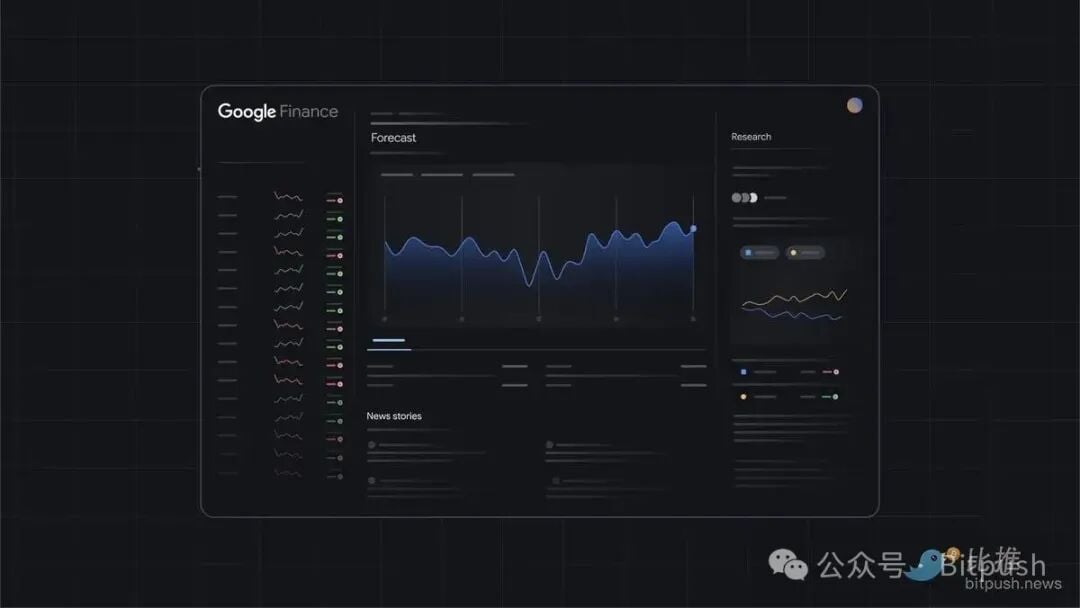
This means that, for the first time, the prediction market has been "embedded" into the world's largest information portal, becoming part of the public information flow.

Google did not disclose the specific cooperation model with the two companies, but for the market, this move can be regarded as a "mainstream milestone": the prediction market has changed from a "betting tool for cryptocurrency players" to a data product that is visible to ordinary users and can be cited by the media.

The results are clear: Polymarket's trading volume hit a record high in October, with monthly trading volume exceeding $3 billion, and the number of users increased by 93.7% compared to September.

How serious is the "fake transaction" that Columbia University is questioning?

Returning to the research data from the Columbia University paper: Approximately a quarter of Polymarket's transactions between 2024 and 2025 exhibited suspicious patterns: frequent wash trades between accounts, extremely short transaction intervals, and almost no holding settlements. These characteristics are remarkably similar to the "volume-boosting" practices prevalent in the past NFT market.

The report authors speculate that there are three main motivations for market-predicting wash trading:

① To compete for future token airdrops or incentive points;

② To generate market buzz and attract new users;

③ Some market makers stabilize the price range by creating "fake transactions".

In other words, some people might repeatedly place "fake orders" in the market to boost activity levels, accumulate points, and obtain future token rewards. This is not uncommon in the crypto space: from NFTs to DeFi, almost every round of innovation has been accompanied by "data manipulation," but even so, the "water" in prediction markets is not the highest in the industry. For comparison:

In the early days, unregulated Bitcoin exchanges had over 70% of their trading volume being fake (according to a 2019 report by Bitwise).

In the NFT market, during periods of market boom, the proportion of washing trading ranged from 20% to 50%.

In comparison, Polymarket's average of 25% is considered "moderately high." Furthermore, Kalshi has stronger compliance and stricter KYC procedures, making the overall "authenticity" of the industry far surpass that of the early days of the cryptocurrency market. Therefore, from an industry perspective, the "inflated" prediction market is not a catastrophic problem.

In addition, differing opinions have emerged within the industry regarding the conclusions of the Columbia University study.

Former AWS engineer yassinelanda.eth offered several rebuttals after reviewing the paper.

He argues that the study has methodological limitations—its conclusions are based on a single on-chain data model, while platforms like Polymarket actually possess more complex signaling systems to identify genuine users and distribute rewards fairly. Furthermore, the study's conclusions are highly sensitive to the parameters set during analysis, and the severity of the problems it reveals may not be consistent.

He further pointed out a key characteristic of prediction markets: in this field, valuable signals are far more important than raw trading volume. Simply engaging in a "left-hand to right-hand" volume-boosting cycle cannot generate genuine profit (PNL). Today, advanced on-chain monitoring and recommendation systems can effectively distinguish between informed, genuine trading flows and market noise from market makers, bots, and self-traded transactions, and reduce the weight of the latter in recommendations and rewards.

In his view, the core criterion for judging a prediction market should not be the easily manipulated surface data of "total trading volume," but rather:

Prediction accuracy: How accurate are the market results?

Calibration degree: Whether the predicted probability matches the actual frequency of occurrence.

Bid-ask spreads and market depth: How good is market liquidity and how high are transaction costs?

Slippage during news events: Whether prices react quickly and smoothly to new information, rather than fluctuating wildly.

These indicators of market quality and information efficiency are the true core of measuring the value of the forecasting market.

Gambling fever resurgence: When "betting" becomes the prevailing sentiment of the times

As observed by Lydia Grant, a sociologist at the University of Chicago, "Prediction markets, in a sense, perpetuate the American belief system—allowing people to gain a false sense of control through the act of 'betting' amidst great uncertainty."

This statement accurately captures the pulse of American society today. Faced with high inflation, political polarization, and class stratification, a "gambler's mentality" is quietly becoming a common outlet for emotions. From sports betting to cryptocurrencies, and now to prediction markets, more and more Americans are entrusting their fate to probability and releasing their anxieties through betting odds.

When Wall Street giants also get involved, this trend gains both capital and institutional validation. The massive investments by institutions like ICE indicate that the mainstream financial world is viewing prediction markets as the infrastructure for next-generation "event-driven" risk pricing, rather than just a peripheral gambling game.

As SynFutures CEO Rachel Lin points out, "The real value of the prediction market lies in its ability to quantify things that traditional finance cannot price, such as policy decisions, technological breakthroughs, and geopolitical risks."

Meanwhile, Polymarket's launch of the POLY token and other initiatives have injected new momentum into the ecosystem's development. Research firm Delphi Digital believes that future predictive "terminals" integrating multi-market data and AI analysis could very well usher in a new trading arena similar to the Meme coin craze.

Of course, challenges remain. U.S. regulators are still debating the definition of "derivatives" versus "gambling," and this lingering policy cloud remains the final hurdle in predicting the market's full mainstream adoption.

However, the convergence of capital, technology, and social sentiment is irreversible. People think they are predicting the future, but they don't realize that this nationwide gamble has become the most accurate reflection of our times.

Market Opportunity
Major Logo
Major Price(MAJOR)
$0.08262
$0.08262$0.08262
-1.38%
USD
Major (MAJOR) Live Price Chart
Disclaimer: The articles reposted on this site are sourced from public platforms and are provided for informational purposes only. They do not necessarily reflect the views of MEXC. All rights remain with the original authors. If you believe any content infringes on third-party rights, please contact [email protected] for removal. MEXC makes no guarantees regarding the accuracy, completeness, or timeliness of the content and is not responsible for any actions taken based on the information provided. The content does not constitute financial, legal, or other professional advice, nor should it be considered a recommendation or endorsement by MEXC.

You May Also Like

Taiko Makes Chainlink Data Streams Its Official Oracle

Taiko Makes Chainlink Data Streams Its Official Oracle

The post Taiko Makes Chainlink Data Streams Its Official Oracle appeared on BitcoinEthereumNews.com. Key Notes Taiko has officially integrated Chainlink Data Streams for its Layer 2 network. The integration provides developers with high-speed market data to build advanced DeFi applications. The move aims to improve security and attract institutional adoption by using Chainlink’s established infrastructure. Taiko, an Ethereum-based ETH $4 514 24h volatility: 0.4% Market cap: $545.57 B Vol. 24h: $28.23 B Layer 2 rollup, has announced the integration of Chainlink LINK $23.26 24h volatility: 1.7% Market cap: $15.75 B Vol. 24h: $787.15 M Data Streams. The development comes as the underlying Ethereum network continues to see significant on-chain activity, including large sales from ETH whales. The partnership establishes Chainlink as the official oracle infrastructure for the network. It is designed to provide developers on the Taiko platform with reliable and high-speed market data, essential for building a wide range of decentralized finance (DeFi) applications, from complex derivatives platforms to more niche projects involving unique token governance models. According to the project’s official announcement on Sept. 17, the integration enables the creation of more advanced on-chain products that require high-quality, tamper-proof data to function securely. Taiko operates as a “based rollup,” which means it leverages Ethereum validators for transaction sequencing for strong decentralization. Boosting DeFi and Institutional Interest Oracles are fundamental services in the blockchain industry. They act as secure bridges that feed external, off-chain information to on-chain smart contracts. DeFi protocols, in particular, rely on oracles for accurate, real-time price feeds. Taiko leadership stated that using Chainlink’s infrastructure aligns with its goals. The team hopes the partnership will help attract institutional crypto investment and support the development of real-world applications, a goal that aligns with Chainlink’s broader mission to bring global data on-chain. Integrating real-world economic information is part of a broader industry trend. Just last week, Chainlink partnered with the Sei…
Share
BitcoinEthereumNews2025/09/18 03:34
August Crypto Market Review: ETH Leads the Rise, Institutional Funding and Macro Factors Dominate Market Trends

August Crypto Market Review: ETH Leads the Rise, Institutional Funding and Macro Factors Dominate Market Trends

By Jianing Wu , Galaxy Digital Compiled by Tim, PANews August saw various crossover signals between the macro economy and the crypto market. In traditional markets, investors faced conflicting inflation signals: the CPI released at the beginning of the month came in below expectations, but the subsequent Producer Price Index (PPI) came in above expectations. This was coupled with weakening employment data and growing market expectations that the Federal Reserve would begin cutting interest rates in September. At the end of the month's Fed meeting in Jackson Hole, Wyoming, Chairman Powell struck a dovish tone, emphasizing the "shifting balance of risks" brought about by rising unemployment, which reinforced expectations of a shift toward easing monetary policy. The stock market closed higher in a volatile session, with the S&P 500 fluctuating with the data releases. Defensive assets like gold outperformed at the end of the month. The crypto market reflected this macro uncertainty, with increased volatility. Bitcoin hit an all-time high of over $124,000 in mid-August before retreating to around $110,000, while Ethereum's gains for the entire month outpaced Bitcoin's. After experiencing its largest single-day outflow at the beginning of the month, Ethereum ETFs quickly attracted strong inflows, briefly surpassing Bitcoin's despite Ethereum's smaller market capitalization. However, the recovery in demand pushed ETH prices to a new high near $4,953, and the ETH/BTC exchange rate rose to 0.04 for the first time since November 2024. The fluctuations in ETF trading highlight that institutional position adjustments are increasingly influencing price trends, and ETH is clearly the leader in this cycle. In terms of laws and policies, regulators are gradually pushing forward reforms to reshape the industry landscape. The U.S. Department of Labor has opened the door to allocating crypto assets to 401(k) pension plans, while the U.S. SEC has explicitly stated that certain liquidity pledge businesses do not fall under the category of securities. Application trends at the market structure and institutional levels are deepening. Treasury Secretary Bessant disclosed for the first time that strategic Bitcoin reserves now hold between 120,000 and 170,000 coins, revealing the government's cumulative cryptocurrency holdings for the first time. Business activity is also accelerating: Stablecoin issuers Stripe and Circle announced plans to develop independent L1 blockchains, while Wyoming became the first state government in the US to issue a dollar-denominated stablecoin. Google also joined the enterprise blockchain fray with its "Universal Ledger" system. Meanwhile, crypto treasury companies continue to increase their asset allocation efforts. Overall, August reinforced two key trends. On the one hand, macro volatility and policy uncertainty triggered significant market volatility in both the equity and crypto markets; on the other, the underlying trend of market institutionalization is accelerating, from ETF flows to widespread adoption by sovereign institutions and corporations. These intertwining forces are likely to continue to dominate market movements as the autumn approaches, with the Federal Reserve's policy shift and ongoing structural demand likely setting the tone for the next phase of the cycle. 1. Spikes, Breakouts, and Reversals In the first half of August, Ethereum led the market, outperforming Bitcoin and driving a broad rally in altcoins. The Bloomberg Galaxy Crypto Index shows that Bitcoin hit an all-time high of $124,496 on August 13 before reversing course, closing the month at $109,127, down from $116,491 at the beginning of the month. A week later, on August 22, Ethereum broke through the previous cycle high, reaching $4,953, surpassing the November 2021 high of $4,866 and ending a four-year consolidation. Ethereum's strong performance is particularly noteworthy given its underperformance for much of this cycle. Since its April low near $1,400, the price of Ether has more than tripled, driven by strong ETF flows and purchases by crypto treasury firms. U.S. spot Ethereum ETFs saw net inflows of approximately $4 billion in August, the second-strongest month after July. In contrast, U.S. spot Bitcoin ETFs saw net outflows of approximately $639 million. However, despite a price decline in the last two weeks of August, Bitcoin ETF inflows turned positive. As market expectations for aggressive interest rate cuts from the Federal Reserve grew, Bitcoin's store-of-value narrative regained focus. As the likelihood of a rate cut increased, Bitcoin's correlation with gold strengthened significantly that month. Besides ETFs, crypto treasury firms remain a significant source of demand. These firms continued to increase their holdings throughout August, with Ethereum-focused treasuries in particular injecting significant capital. Because Ethereum's market capitalization is smaller than Bitcoin's, corporate capital inflows have a disproportionate impact on spot prices. A $1 billion allocation to Ethereum can significantly impact the market landscape, far more than a similar amount allocated to Bitcoin. Furthermore, significant funds remain undeployed among publicly disclosed crypto treasury firms, suggesting further positive market conditions. The total cryptocurrency market capitalization climbed to a record high of $4.2 trillion that month, demonstrating the deep correlation between crypto assets and broader market trends. Rising expectations of interest rate cuts boosted risk appetite in both the stock and crypto markets, while ETF inflows and corporate reserve accumulation directly contributed to record highs for BTC and ETH. Despite market volatility near the end of the month, the interplay of loose macro policies, institutional capital flows, and crypto treasury reserve needs has maintained the crypto market's central position in the risk asset narrative. 2. Each company launches its own L1 public chain Favorable regulations are giving businesses more confidence to enter the crypto market directly. In late July, US SEC Chairman Paul Atkins announced the launch of "Project Crypto," an initiative aimed at promoting the on-chain issuance and trading of stocks, bonds, and other financial instruments. This initiative marks a key step in the integration of traditional market infrastructure with blockchain technology. Encouraged by this, businesses are breaking through the limitations of existing blockchain applications and launching their own Layer 1 networks. In August, three major companies announced the launch of new L1 blockchains. Circle launched Arc, which is compatible with the EVM and uses its USDC stablecoin as its native gas token. Arc features compliance and privacy features, a built-in on-chain foreign exchange settlement engine, and will launch with a permissioned validator set. Following its acquisitions of stablecoin infrastructure provider Bridge and crypto wallet service provider Privy, Stripe launched Tempo Chain, also compatible with the EVM and focused on stablecoin payments and enterprise applications. Google released the Google Cloud Universal Ledger (GCUL), a private permissioned blockchain focused on payments and asset issuance. It supports Python-based smart contracts and has attracted CME Group as a pilot partner. The logic behind enterprise blockchain development boils down to value capture, control, and independent design. By owning the underlying protocol, companies like Circle avoid paying network fees to third parties and profit directly from transaction activity. Stripe, on the other hand, can more tightly integrate its proprietary blockchain with payment systems, developing new features for customers without relying on the governance mechanisms of other chains. Both companies view control as a key element of compliant operations, particularly as regulators increase their scrutiny of illicit financial activities. Choosing to build on L1 rather than L2 avoids being constrained by other blockchain networks in terms of settlement or consensus mechanisms. Reactions from the crypto-native community have been mixed. Many believe that projects like Arc and GCUL, while borrowing technical standards from existing L1 chains, are inferior in design and exclude Ethereum and other native assets. Critics point out that permissioned validators and corporate-led governance models undermine decentralization and user autonomy. These debates echo the failed wave of "enterprise blockchains" in the mid-2010s, which ultimately failed to attract real users. Despite skepticism, these companies' moves are significant. Stripe processes over $1 trillion in payments annually, holding approximately 17% of the global payment processing market. If Tempo can achieve lower costs or offer better developer tools, competitors may be forced to follow suit. Google's entry demonstrates that major tech companies view blockchain as the next evolutionary level of financial infrastructure. If these companies can bring their scale, distribution capabilities, and regulatory resources to this area, the impact could be profound. In addition to businesses launching their own Layer 1 chains, other developments reinforce the trend of economic activity migrating on-chain. U.S. Secretary of Commerce Lutnick announced that GDP data will be published on public blockchains via oracle networks such as Chainlink and Python. Galaxy tokenized its shares to test on-chain secondary market trading. These initiatives demonstrate that businesses and governments are beginning to embed blockchain technology into core financial and data infrastructure, despite ongoing debate over the appropriate balance between compliance and decentralization. 3. Hot Trend: Crypto Treasury Companies The crypto treasury trends we highlighted in our earlier report continue. Bitcoin, Ethereum, and Solver (SOL) holdings continue to accumulate, with Ethereum showing the strongest performance. Holdings data shows a sharp rise in ETH's crypto treasury throughout August, primarily driven by Bitmine's reserves, which increased from approximately 625,000 ETH at the beginning of August to over 2 million currently. Solver holdings also maintained steady growth, while BTC holdings continued their slower but steady accumulation. Compared to ETF fund flows, the activity of crypto treasury companies appears relatively flat. In July and August, ETF fund inflows were stronger than those of crypto treasury companies, and the cumulative balance of ETFs also exceeded the cumulative size of crypto treasury companies. This divergence is becoming increasingly apparent as premiums on crypto treasury stocks shrink across the board. Earlier this summer, price-to-earnings ratios for crypto treasury companies were significantly higher than their net asset values, but these premiums have gradually returned to more normal levels, signaling a growing caution among stock market investors. The stock price fluctuations are evident: KindlyMD (Nakamoto's parent company) has fallen from a peak of nearly $25 in late May to around $5, while Bitmine has fallen from $62 in early August to around $46. Selling pressure intensified in late August amid reports that Nasdaq may tighten its oversight of acquisitions of crypto treasury companies through stock offerings. This news accelerated the sell-off in shares of Ethereum-focused crypto treasury companies. Bitcoin-focused companies, such as Strategy (formerly MicroStrategy, ticker symbol: MSTR), were less affected because their acquisition strategies rely more on debt financing than equity issuance. 4. Hot Trend: Copycat Season Another hot trend is the rotation into altcoins. Bitcoin's dominance has gradually declined, from approximately 60% at the beginning of August to 56.5% by the end of the month, while Ethereum's market share has risen from 11.7% to 13.6%. Data indicates a rotation out of Bitcoin into Ethereum and other cryptocurrencies, which aligns with the outperformance of Ethereum ETFs and inflows into crypto treasury firms. While Bitcoin ETF inflows have rebounded in recent weeks, the overall trend remains unchanged: this cycle continues to expand beyond Bitcoin, with Ethereum and altcoins gaining incremental market share. 5. Our views and predictions As markets head into the final weeks of September, all eyes are on the Federal Reserve. Labor market weakness is solidifying expectations of a near-term rate cut and reinforcing risk assets. The jobs report underscores that the economic slowdown may be deeper than initially reported, raising questions about how much easing policy will be needed to cushion the economy. Meanwhile, the long end of the yield curve is flashing warning signs. Persistently high 10-year and 30-year Treasury yields reflect market concerns that inflation may be sticky and that fiscal pressures may ultimately force central banks to finance debt and spending through money printing. Expectations of short-term interest rate cuts are driving a rebound in risky assets, but the tug-of-war between short-term support from rate cuts and long-term concerns pushing yields and precious metals higher will determine the sustainability of this rebound. This conflicting dynamic has a direct impact on cryptocurrencies: Bitcoin's correlation with gold as a store of value and hedge is growing, while Ethereum and altcoins remain more sensitive to shifts in overall risk appetite.
Share
PANews2025/09/18 17:40
Why PEPE May Become the Most Important Meme Coin of This Cycle

Why PEPE May Become the Most Important Meme Coin of This Cycle

Pepe has moved back into focus during a period when the wider crypto market feels slow and uncertain. Conversation around PEPE price now centers on long-term relevance
Share
Captainaltcoin2026/02/11 16:00