In Q2, the XRP Ledger recorded a $131.6 million market cap in tokenized real-world assets, climbing to a new high of $364 million in Q3. The XRPL network continues to expand its decentralized finance ecosystem, with total value locked rising to $90 million. Messari, a leading crypto market intelligence firm, has reported that Ripple (XRP) [...]]]>In Q2, the XRP Ledger recorded a $131.6 million market cap in tokenized real-world assets, climbing to a new high of $364 million in Q3. The XRPL network continues to expand its decentralized finance ecosystem, with total value locked rising to $90 million. Messari, a leading crypto market intelligence firm, has reported that Ripple (XRP) [...]]]>

Is XRPL the Next Institutional Blockchain? Q3 Data Suggests So

  • In Q2, the XRP Ledger recorded a $131.6 million market cap in tokenized real-world assets, climbing to a new high of $364 million in Q3.
  • The XRPL network continues to expand its decentralized finance ecosystem, with total value locked rising to $90 million.

Messari, a leading crypto market intelligence firm, has reported that Ripple (XRP) ended the third quarter of 2025 as the fourth-largest cryptocurrency by market capitalization, reaching an all-time high quarterly close of $170.3 billion, up 29% quarter-over-quarter (QoQ).

This performance outpaced the combined market capitalization growth of Bitcoin (BTC), Ethereum (ETH), and Solana (SOL), which collectively rose by just 13.3% QoQ.

In the past year, XRP’s price has seen an increase of 406% to now be priced at $2.65, and with the Securities and Exchange Commission (SEC) expected to approve XRP exchange-traded funds soon, this number may surge past the $3.20 threshold.

XRPL’s Network Growth

The XRP Ledger (XRPL) is a decentralized, open-source blockchain launched in 2012 that enables fast, low-cost, and energy-efficient digital transactions. It was designed specifically for payments, remittances, and tokenized asset transfers.

As part of the ledger’s mechanism to maintain network integrity, XRP has burned approximately 14.2 million XRP, which is valued at around $40.5 million as of Q3.

The XRP Ledger has also recorded strong network growth, with average daily transactions rising 8.9% quarter-over-quarter, from 1.6 million to 1.8 million, while average daily active addresses increased 15.4%, climbing from 21,900 to 25,300.

Q3 marked the fifth straight quarter where active receiver addresses surpassed sender addresses on the XRP Ledger. Despite this engagement, the number of daily receiver addresses declined by 30.1% quarter-over-quarter, falling from 72,000 to 50,300, while daily sender addresses grew by 15.4%.

During the same period, the XRP Ledger handled 57 types of transactions, ranging from payments and escrow creations to NFT burns and account deletions, with Payment and OfferCreate remaining the most active transaction categories.

The report reads, “Although the XRPL’s ecosystem hosts many of the same features as programmable settlement networks, such as Ethereum, Solana, and Cardano, the XRPL does not natively support smart contracts.” To address this gap, Ripple announced plans to introduce native smart contracts directly on the XRPL.

The first of these planned extensions, called “Smart Escrows,” will allow developers to create custom release conditions for assets, a feature expected to roll out in Q1 2026.

The XRPL now hosts over 32,000 listed assets, with Sologenic (SOLO) as the dominant token, accounting for 27.9% of the total market cap at the end of Q3.

RWA tokenization and RLUSD

The real-world asset (RWA) market is projected to reach an estimated $16 trillion by 2030, and the XRP Ledger has already established itself in this sector. In Q3, the XRPL achieved an all-time high RWA market cap of $364.2 million, representing a remarkable 215.3% increase quarter-over-quarter from $115.5 million.

To date, 24 tokenized RWAs have been integrated onto RWA.xyz on the XRPL, with more expected in the coming quarters. Notable projects include Montis Group Limited (MGL), where UK-regulated Archax provides investors access to multiple RWAs on the XRPL.

Ondo’s Short-Term U.S. Government Bond Fund (OUSG), a tokenized treasury fund, allows qualified purchasers and institutions to move in and out using RLUSD, and as CNF highlighted, Ctrl Alt has issued seven tokenized real estate properties on the XRPL.

In 2024, Ripple Labs introduced its own USD-pegged stablecoin, RLUSD, entering the market to compete with established players like USDC and USDT. RLUSD had reached a combined market cap of $789.3 million across the XRPL and Ethereum, with $88.8 million of that on the XRPL alone.

This represents a 34.7% increase quarter-over-quarter, making RLUSD the largest stablecoin on the XRPL to date.

According to Messari, stablecoins on the XRPL have struggled to gain the same level of adoption seen on networks like Ethereum (ETH), TRON, and Solana (SOL). However, that may soon change. On July 18, the GENIUS Act became the first U.S. federal law specifically addressing payment-stablecoins. stablecoins on the XRPL to be passed.

The framework is expected to drive the adoption of stablecoins in payments, remittances, and cross-border flows. One survey estimated that stablecoins could facilitate $2.1 trillion to $4.2 trillion in cross-border volume by 2030.

]]>
Market Opportunity
XRP Logo
XRP Price(XRP)
$1.4187
$1.4187$1.4187
-0.71%
USD
XRP (XRP) Live Price Chart
Disclaimer: The articles reposted on this site are sourced from public platforms and are provided for informational purposes only. They do not necessarily reflect the views of MEXC. All rights remain with the original authors. If you believe any content infringes on third-party rights, please contact [email protected] for removal. MEXC makes no guarantees regarding the accuracy, completeness, or timeliness of the content and is not responsible for any actions taken based on the information provided. The content does not constitute financial, legal, or other professional advice, nor should it be considered a recommendation or endorsement by MEXC.

You May Also Like

Trump 'ashamed' of 'unpatriotic and disloyal' Supreme Court after tariff decision
Trump 'ashamed' of 'unpatriotic and disloyal' Supreme Court after tariff decision

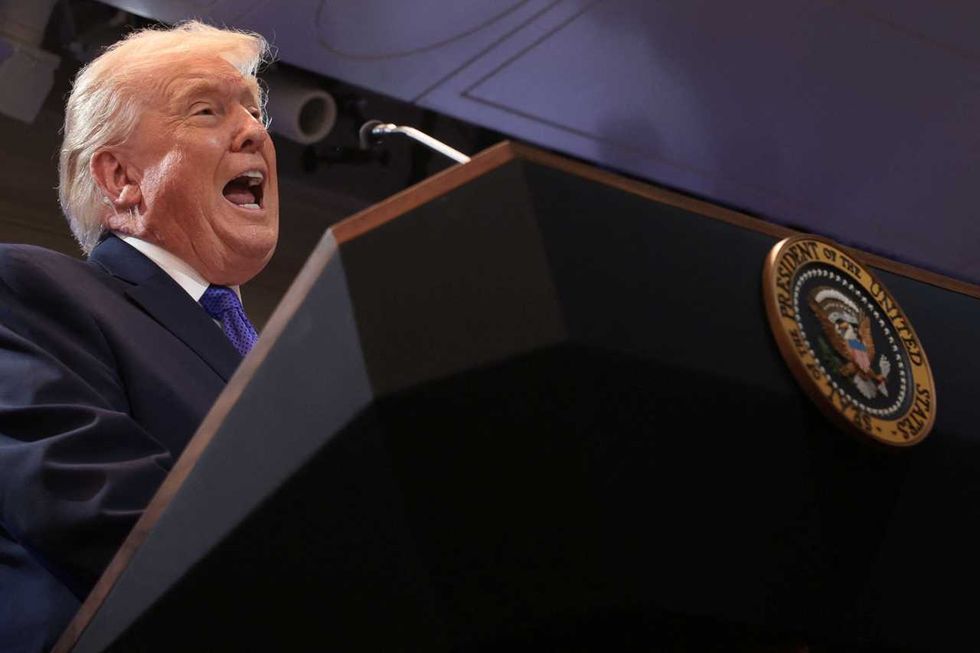
President Donald Trump blasted members of the Supreme Court who ruled against his ability to impose tariffs in a 6-3 decision.During a White House news conference
Share
Rawstory2026/02/21 03:13
The Evolution of Fashion Trends in 2026

The Evolution of Fashion Trends in 2026

Fashion is an ever-changing reflection of culture, technology, and personal identity. In 2026, fashion trends are influenced not only by designers and celebrities
Share
Techbullion2026/02/21 03:34
Google's AP2 protocol has been released. Does encrypted AI still have a chance?

Google's AP2 protocol has been released. Does encrypted AI still have a chance?

Following the MCP and A2A protocols, the AI Agent market has seen another blockbuster arrival: the Agent Payments Protocol (AP2), developed by Google. This will clearly further enhance AI Agents' autonomous multi-tasking capabilities, but the unfortunate reality is that it has little to do with web3AI. Let's take a closer look: What problem does AP2 solve? Simply put, the MCP protocol is like a universal hook, enabling AI agents to connect to various external tools and data sources; A2A is a team collaboration communication protocol that allows multiple AI agents to cooperate with each other to complete complex tasks; AP2 completes the last piece of the puzzle - payment capability. In other words, MCP opens up connectivity, A2A promotes collaboration efficiency, and AP2 achieves value exchange. The arrival of AP2 truly injects "soul" into the autonomous collaboration and task execution of Multi-Agents. Imagine AI Agents connecting Qunar, Meituan, and Didi to complete the booking of flights, hotels, and car rentals, but then getting stuck at the point of "self-payment." What's the point of all that multitasking? So, remember this: AP2 is an extension of MCP+A2A, solving the last mile problem of AI Agent automated execution. What are the technical highlights of AP2? The core innovation of AP2 is the Mandates mechanism, which is divided into real-time authorization mode and delegated authorization mode. Real-time authorization is easy to understand. The AI Agent finds the product and shows it to you. The operation can only be performed after the user signs. Delegated authorization requires the user to set rules in advance, such as only buying the iPhone 17 when the price drops to 5,000. The AI Agent monitors the trigger conditions and executes automatically. The implementation logic is cryptographically signed using Verifiable Credentials (VCs). Users can set complex commission conditions, including price ranges, time limits, and payment method priorities, forming a tamper-proof digital contract. Once signed, the AI Agent executes according to the conditions, with VCs ensuring auditability and security at every step. Of particular note is the "A2A x402" extension, a technical component developed by Google specifically for crypto payments, developed in collaboration with Coinbase and the Ethereum Foundation. This extension enables AI Agents to seamlessly process stablecoins, ETH, and other blockchain assets, supporting native payment scenarios within the Web3 ecosystem. What kind of imagination space can AP2 bring? After analyzing the technical principles, do you think that's it? Yes, in fact, the AP2 is boring when it is disassembled alone. Its real charm lies in connecting and opening up the "MCP+A2A+AP2" technology stack, completely opening up the complete link of AI Agent's autonomous analysis+execution+payment. From now on, AI Agents can open up many application scenarios. For example, AI Agents for stock investment and financial management can help us monitor the market 24/7 and conduct independent transactions. Enterprise procurement AI Agents can automatically replenish and renew without human intervention. AP2's complementary payment capabilities will further expand the penetration of the Agent-to-Agent economy into more scenarios. Google obviously understands that after the technical framework is established, the ecological implementation must be relied upon, so it has brought in more than 60 partners to develop it, almost covering the entire payment and business ecosystem. Interestingly, it also involves major Crypto players such as Ethereum, Coinbase, MetaMask, and Sui. Combined with the current trend of currency and stock integration, the imagination space has been doubled. Is web3 AI really dead? Not entirely. Google's AP2 looks complete, but it only achieves technical compatibility with Crypto payments. It can only be regarded as an extension of the traditional authorization framework and belongs to the category of automated execution. There is a "paradigm" difference between it and the autonomous asset management pursued by pure Crypto native solutions. The Crypto-native solutions under exploration are taking the "decentralized custody + on-chain verification" route, including AI Agent autonomous asset management, AI Agent autonomous transactions (DeFAI), AI Agent digital identity and on-chain reputation system (ERC-8004...), AI Agent on-chain governance DAO framework, AI Agent NPC and digital avatars, and many other interesting and fun directions. Ultimately, once users get used to AI Agent payments in traditional fields, their acceptance of AI Agents autonomously owning digital assets will also increase. And for those scenarios that AP2 cannot reach, such as anonymous transactions, censorship-resistant payments, and decentralized asset management, there will always be a time for crypto-native solutions to show their strength? The two are more likely to be complementary rather than competitive, but to be honest, the key technological advancements behind AI Agents currently all come from web2AI, and web3AI still needs to keep up the good work!
Share
PANews2025/09/18 07:00