

Milk & Mocha’s $HUGS Token Presale: How Weekly Burns Create Real Scarcity and Buyer Rewards
In a meme coin market flooded with hype but short on fundamentals, one new entrant is proving that charm and smart tokenomics can coexist. The Milk & Mocha $HUGS token, inspired by the world famous bear duo adored by millions, is shaking up crypto presales with an inventive, deflationary structure that rewards early adopters while continuously reducing supply.
As analysts take notice, many are calling it the most innovative new meme coin presale of 2025, not because of its branding, but because of its disciplined, transparent economic design built around weekly burn events and competitive rewards.
The New Standard in Meme Coin Economics
Most meme coins follow a predictable path: rapid issuance, early speculation, and eventual inflation. $HUGS flips that script. Its multi-stage presale runs across 40 weekly rounds, each with a unique pricing structure and supply limit.
Here’s where it gets clever: every week, any unsold tokens from that round are permanently burned, reducing the total circulating supply. Simultaneously, a reward pool is distributed to the top buyers of that week, turning each presale stage into a gamified, competitive event.
In other words, every week ends with fewer tokens in existence and more engagement from the community. It’s a self-reinforcing cycle of scarcity and participation that has investors calling $HUGS the new meme coin presale to watch this season.
How the Weekly Burns Work
Each presale stage functions as a microcosm of the entire ecosystem:
- Tokens are sold at a set price until the week ends or the stage fills.
- A portion of $HUGS is allocated to a Weekly Reward Pool.
- When the stage closes, the top buyers share the reward pool, including a $35,000 prize split among the top three contributors.
Any tokens that remain unsold in that round are sent to a burn address, verifiably removing them from circulation forever.

This weekly burn mechanism ensures that the token supply becomes progressively scarcer while rewarding active participants. Over time, this creates deflationary pressure that can support long-term value stability, a rare feature in the meme coin category.
A Deflationary Mechanic with On-Chain Proof
What sets $HUGS apart from other projects is that every burn event is fully transparent and on-chain. The burn address and transaction hash are published weekly on the presale dashboard, allowing anyone to verify the exact number of tokens destroyed.
This level of transparency is unusual in meme coin presales, where trust is often based on vague promises or unverifiable figures. By proving every burn, Milk & Mocha gives participants a concrete reason to believe in the token’s scarcity model.
It’s not just narrative-driven deflation; it’s provable, auditable deflation. And in the context of a rapidly evolving market, that’s a big part of why many are calling $HUGS the most trustworthy new meme coin presale of 2025.
The Reward System: Engagement Meets Incentive
The burn mechanics aren’t the only innovation at play. Each week’s Leaderboard Challenge transforms the presale into a social, competitive experience.
Top buyers are rewarded from the weekly prize pool:
- 🥇 1st Place: $20,000
- 🥈 2nd Place: $10,000
- 🥉 3rd Place: $5,000
This structure encourages community engagement and repeat participation, as users strive to climb the leaderboard and claim a share of the rewards. It’s an incentive loop that goes beyond passive investing, turning token acquisition into an active, gamified experience.
Combined with the deflationary burns, it ensures that every week brings a fresh wave of excitement, a rarity among typical presale structures.
Transparency as a Growth Driver
Every element of the $HUGS ecosystem, from burns to rewards, is recorded on-chain and displayed through the Milk & Mocha dashboard. This dashboard acts as a real-time transparency hub, showcasing weekly burn data, prize winners, and ongoing stage performance.
This open-data approach aligns with the project’s broader philosophy: trust through verification. Rather than relying solely on brand reputation, $HUGS uses blockchain accountability to prove that it’s built differently.
As investors increasingly prioritize safety and transparency in the meme coin sector, this commitment to openness gives the project an edge, reinforcing its position as the top new meme coin presale of 2025.
Why It Matters: Real Deflation in a Speculative World
The genius of Milk & Mocha’s design lies in its simplicity. By continuously burning supply and rewarding activity, it solves two of crypto’s oldest challenges: inflationary pressure and community apathy.
In a typical presale, unsold tokens linger, eventually diluting future value. But $HUGS ensures that every round closes with a tighter supply curve, benefiting both early and long-term participants.
This mechanism aligns perfectly with the brand’s ethos, cozy, sustainable, and community-focused, proving that even the cutest meme coin can have serious economics behind it.
The Broader Ecosystem: More Than a Presale
While the presale mechanics are the current spotlight, the Milk & Mocha roadmap extends far beyond. The $HUGS token will fuel:
- Staking with 50% APY for long-term holders
- NFT collectibles with upgradeable rarity
- DAO governance for community-led decision-making
- Merch store integration, accepting $HUGS for exclusive products
- Charity pools supporting real-world causes voted on by holders
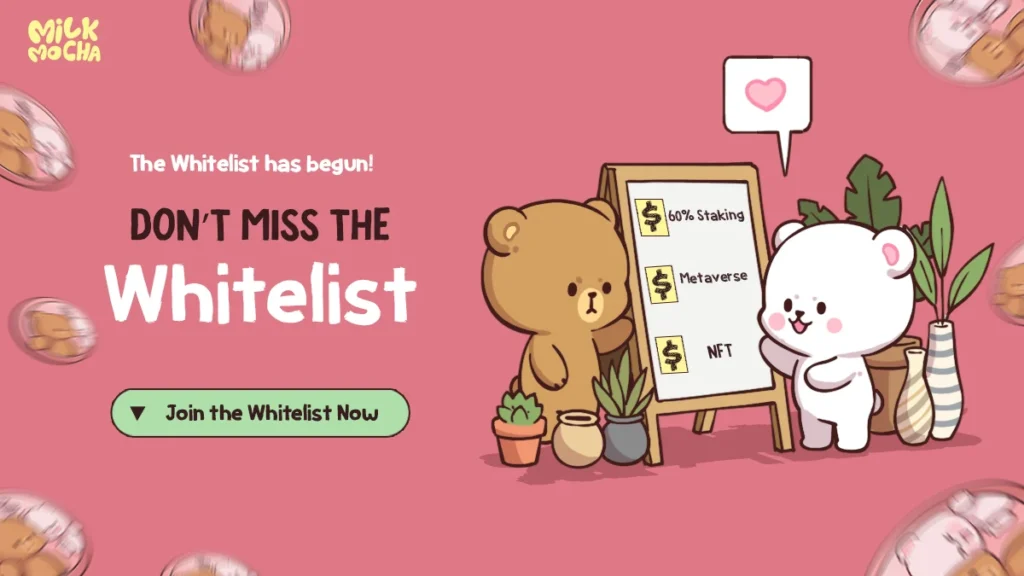
Every one of these layers feeds back into the core economic loop, creating ongoing demand, regular burns, and active community participation.
Final Thoughts
In a sea of fleeting meme coins, the Milk & Mocha $HUGS token is demonstrating how thoughtful tokenomics can turn a fun idea into a sustainable ecosystem.
Its weekly burn model, transparent operations, and reward-driven community make it one of the most sophisticated projects to emerge in the meme coin space. As the presale continues to attract global attention, analysts are already pointing to $HUGS as a case study in deflationary design done right and potentially the best new meme coin presale of the year.
Because in the world of Milk & Mocha, every hug counts and every burn builds lasting value.
Explore Milk & Mocha Now:
Website: https://www.milkmocha.com/
X: https://x.com/Milkmochahugs
Telegram: https://t.me/MilkMochaHugs
Instagram: https://www.instagram.com/milkmochahugs/
You May Also Like

The Role of Blockchain in Building Safer Web3 Gaming Ecosystems
- Immutable Ownership of Assets Blockchain records can be manipulated by anyone. If a player owns a sword, skin, or plot of land as an NFT, it is verifiably in their ownership, and it cannot be altered or deleted by the developer or even hacked. This has created a proven track record of ownership, providing control back to the players, unlike any centralised gaming platform where assets can be revoked.
- Decentralized Infrastructure Blockchain networks also have a distributed architecture where game data is stored in a worldwide network of nodes, making them much less susceptible to centralised points of failure and attacks. This decentralised approach makes it exponentially more difficult to hijack systems or even shut off the game’s economy.
- Secure Transactions with Cryptography Whether a player buys an NFT or trades their in-game tokens for other items or tokens, the transactions are enforced by cryptographic algorithms, ensuring secure, verifiable, and irreversible transactions and eliminating the risks of double-spending or fraudulent trades.
- Smart Contract Automation Smart contracts automate the enforcement of game rules and players’ economic exchanges for the developer, eliminating the need for intermediaries or middlemen, and trust for the developer. For example, if a player completes a quest that promises a reward, the smart contract will execute and distribute what was promised.
- Anti-Cheating and Fair Gameplay The naturally transparent nature of blockchain makes it extremely simple for anyone to examine a specific instance of gameplay and verify the economic outcomes from that play. Furthermore, multi-player games that enforce smart contracts on things like loot sharing or win sharing can automate and measure trustlessness and avoid cheating, manipulations, and fraud by developers.
- Cross-Platform Security Many Web3 games feature asset interoperability across platforms. This interoperability is made viable by blockchain, which guarantees ownership is maintained whenever assets transition from one game or marketplace to another, thereby offering protection to players who rely on transfers for security against fraud. Key Security Dangers in Web3 Gaming Although blockchain provides sound first principles of security, the Web3 gaming ecosystem is susceptible to threats. Some of the most serious threats include:

Aussivo Debuts Verification Layer For Cloud at Token2049, Pioneering Blockchain Transparency