Crude Oil Volatility Intensifies as US Retaliates Against Iran Near Hormuz Strait
TLDR
- Brent crude plunged more than 4% to approximately $72 per barrel Friday; WTI declined 3% to roughly $69
- Commercial traffic through the Strait of Hormuz climbed to the highest volume since conflict escalated in late February
- An Iranian attack drone targeted a Singapore-flagged container vessel on Thursday
- US forces retaliated Friday with strikes against Iranian drone storage facilities, missile depots, and radar installations
- Crude prices staged a partial comeback in late Friday trading following confirmation of American military action
Crude oil markets experienced dramatic volatility on Friday, plunging in early trading before staging a recovery after the United States conducted military operations against Iranian targets in response to a drone assault on a commercial ship navigating the Strait of Hormuz.
Brent crude tumbled over 4% during regular trading hours, settling near the $72 per barrel level. West Texas Intermediate experienced a roughly 3% decline to approximately $69 — marking its first closing price beneath $70 since the Iran conflict intensified in late February. Both benchmark grades have now surrendered approximately 25–27% of their value during the past month.
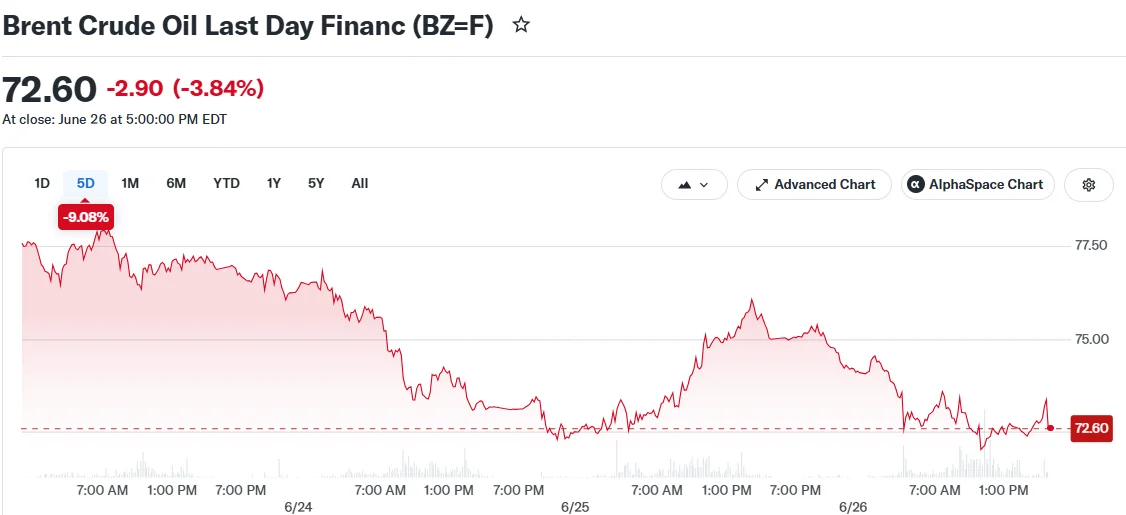 Brent Crude Oil Last Day Financ (BZ=F)
The initial selloff occurred as maritime traffic navigating through the Strait of Hormuz climbed to its most robust levels since hostilities commenced. This development alleviated concerns regarding potential oil supply interruptions and applied downward pressure on crude valuations.
Factors Behind the Crude Selloff
Washington and Tehran finalized a 60-day memorandum of understanding during the previous week, temporarily halting active conflict. The agreement incorporates provisions for restoring commercial shipping operations through the Strait of Hormuz, alongside nuclear negotiations contingent upon sanctions relief.
As maritime vessels resumed more normal transit patterns through the strategic waterway, market participants reduced the conflict-related risk premium that had accumulated in oil futures.
The Drone Attack That Shifted Market Sentiment
On Thursday, Iran launched an attack on the Singapore-flagged container vessel Ever Lovely using what American officials characterized as a one-way attack drone. The commercial ship suffered damage during its passage through the strait.
US Central Command announced that American military aircraft targeted Iranian missile storage locations, drone facilities, and coastal radar systems on Friday. The command characterized the operation as a “powerful response to yesterday’s attack.”
The military exchange generated renewed uncertainty about the sustainability of the ceasefire arrangement. Trump had previously indicated he would authorize resumed military operations if Iran breached the agreement’s provisions.
Notwithstanding the strikes, commercial shipping maintained its movement through the strait on Friday. Central Command confirmed it would continue facilitating safe passage coordination for commercial maritime traffic.
An outstanding issue involves whether Iran will implement transit fees for vessels passing through Hormuz. Oman informed European officials that certain tolls might eventually be imposed — a matter of continuing dispute between Washington and Tehran.
Crude oil prices climbed back above session lows in late Friday trading after confirmation of the US military strikes.
The post Crude Oil Volatility Intensifies as US Retaliates Against Iran Near Hormuz Strait appeared first on Blockonomi.
You May Also Like
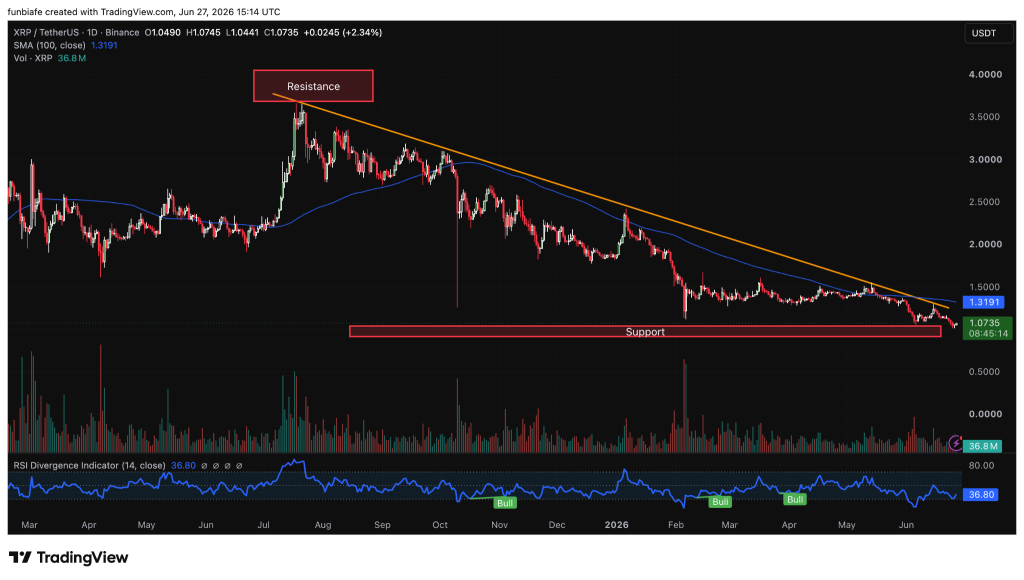
What Happens to the XRP Price if the Crypto Bear Market Gets Worse?

The Manchester City Donnarumma Doubters Have Missed Something Huge

Solana SOL Reclaims $72, But Fading On-Chain Metrics Signal Weakening DEX Momentum